




Rolling Steel Door Won’t Coil Evenly Into the Hood: Diagnostic & Decision Guide
Published: Nov 18, 2026
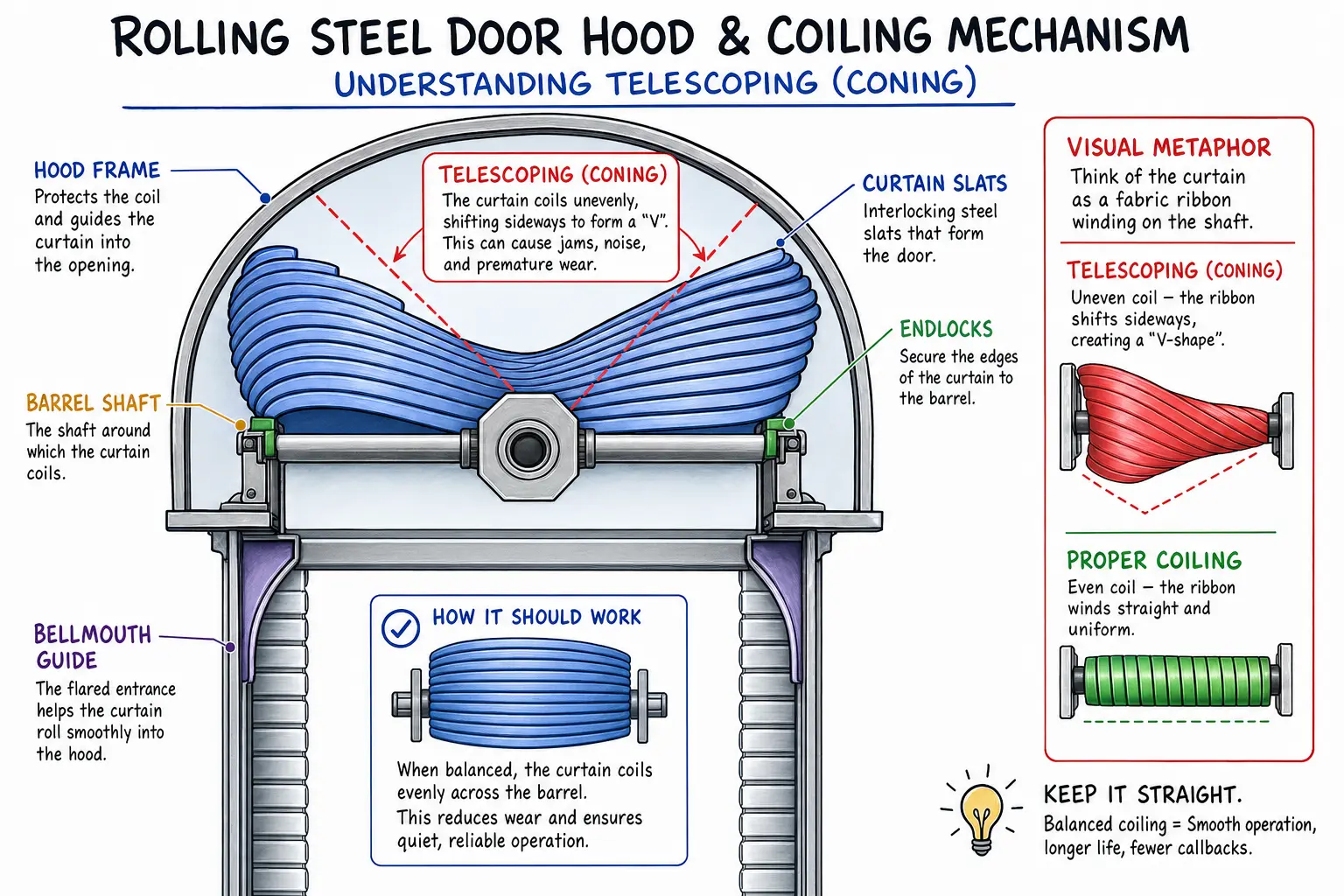
When a commercial roll-up curtain starts coiling tightly on one side while bunching up or scraping against the overhead housing on the other, your facility faces an immediate operational threat. Known across the overhead door industry as telescoping or coning, this mechanical failure causes interlocking 24- or 22-gauge steel slats to drift laterally as the barrel rotates.
Ignoring uneven coiling quickly escalates from minor scraping noises to severe slat distortion, jammed guide tracks, motor burnout, or catastrophic curtain failure. While standard sectional doors operate on linear tracks, heavy coiling doors depend on precise weight distribution and structural alignment to store high-density kinetic energy safely inside the hood enclosure.
5 Mechanical Root Causes of Uneven Hood Coiling
Understanding why a rolling curtain skews requires evaluating five core structural components:
1. Counterbalance Spring Tension Differential
Commercial coiling barrels house internal torsion springs under immense rotational torque. According to DASMA Technical Data Sheet #272, manual operation force should never exceed 35 lbs of hand-chain effort. When internal springs age unevenly across the pipe axle shaft, one side loses torque faster than the other, causing asymmetric curtain lifting. Reviewing symptoms of compromised industrial roller door spring tension helps identify early torque loss before full curtain jamming occurs.
2. Endlock Shear and Slat Drift
Endlocks are cast metal or stamped steel guides riveted to the edges of alternating slats to prevent lateral movement. Field engineering data indicates that over 68% of severe telescoping incidents in doors over 14 feet tall stem from sheared endlock rivets. Once two or three consecutive endlocks shear off, individual slats migrate laterally into the mounting bracket or hood baffle.
3. Mounting Bracket and Axle Out-of-Plumb
Per DASMA TDS #260, if the drive-end or tension-end mounting brackets are out of level by even 1/8 of an inch, gravity pulls the descending curtain toward the lower side. This angle causes the steel curtain to telescope diagonally into the hood enclosure.
4. Barrel Shaft Pipe Deflection
Under heavy curtain loads, inadequate structural support creates center sagging. Under ANSI/DASMA 102 standards, barrel shaft deflection must not exceed 0.03 inches per foot of span. Excessive deflection causes the curtain center to coil tighter than the outer edges, creating a V-shaped roll inside the hood. Structural issues like garage door header sagging directly amplify pipe deflection.
5. Flared Bellmouth Alignment Errors
The bellmouth—the flared entry point at the top of the vertical guide tracks—directs slats smoothly into the overhead hood. If worn, bent, or unlubricated, it pushes incoming slats sideways during opening cycles.
Step-by-Step Diagnostic Inspection Protocol
Facilities prioritizing proactive commercial facility door maintenance can execute a structured visual inspection before placing a service call:
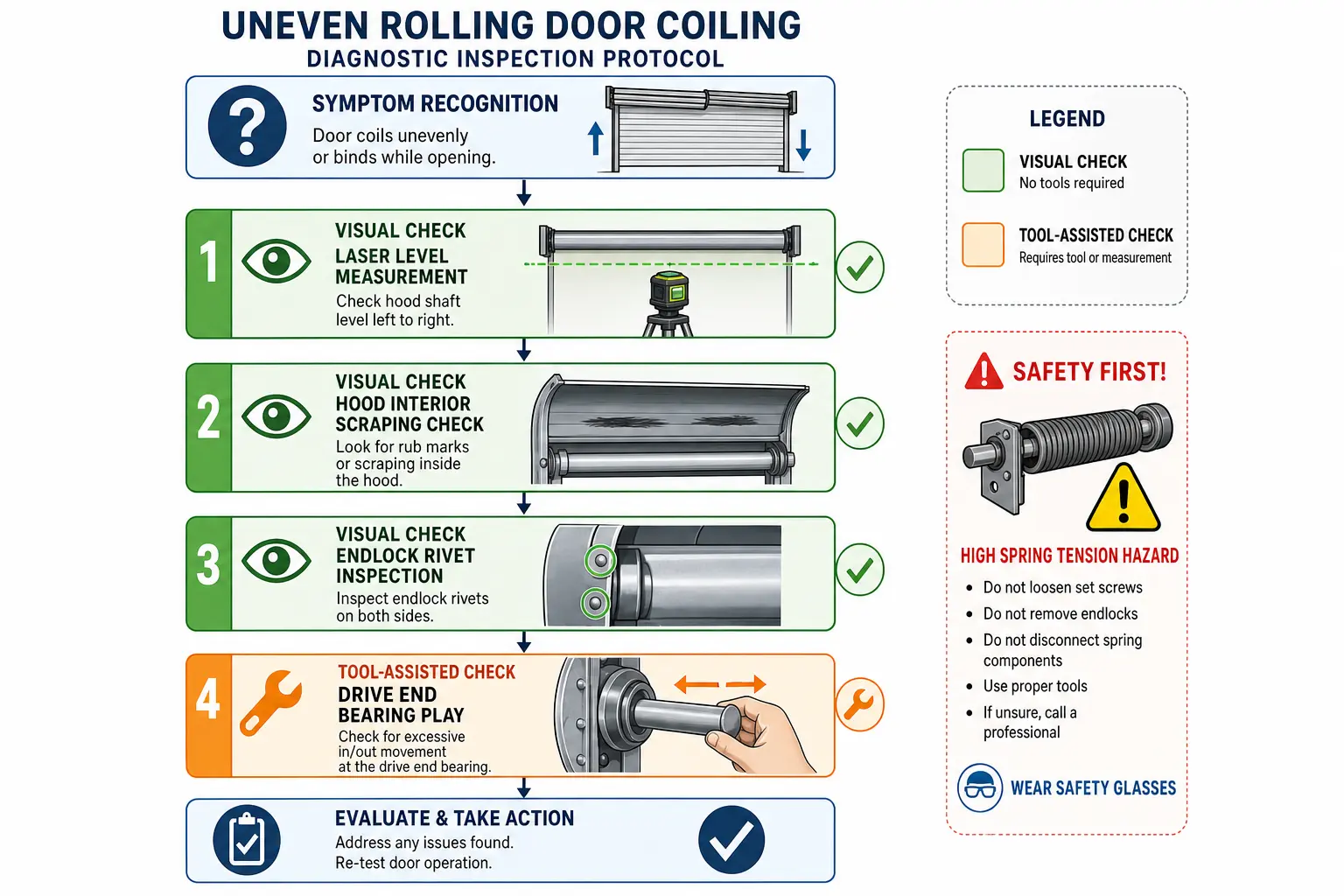
- Inspect Hood Interior: Look for metal shavings or paint scraping along inner hood endplates, signaling lateral curtain friction.
- Verify Endlock Integrity: View vertical curtain edges to locate missing, cracked, or loose endlock rivets.
- Measure Bracket Elevation: Use a digital laser level to verify that drive and tension brackets are level across the header span.
- Inspect Drive Collars and Fasteners: Check drive collar set screws for slippage that leads to curtain drift; unaligned hardware indicates urgent doors on demand mechanical attention.
DIY Risk Matrix vs. Professional Service
Torsion spring assemblies on commercial coiling doors store 500 to 1,200 ft-lbs of torque. Attempting spring adjustments without specialized winding tools creates severe safety hazards.
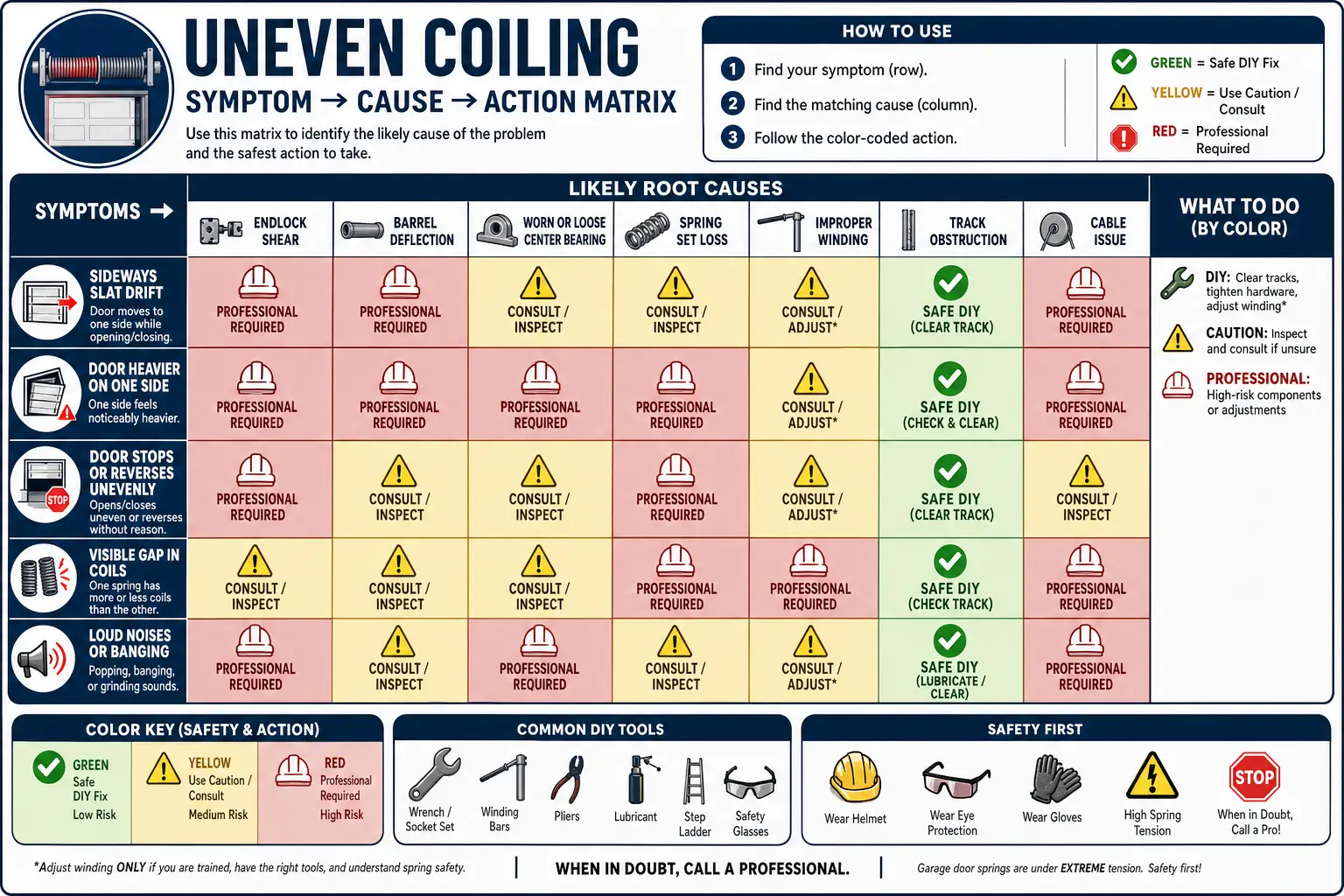
For complex failures on heavy commercial roll up doors, engaging certified technicians prevents extended downtime and protects facility safety.
Frequently Asked Questions
Can I fix a telescoping rolling steel door by tapping the slats back into place?
Tapping slats back into alignment is only a temporary workaround. If the underlying mechanical cause—such as sheared endlock rivets, uneven spring tension, or an out-of-level mounting bracket—is not corrected, the curtain will continue to drift sideways during subsequent operation cycles.
How do I know if my rolling steel door needs replacement instead of repair?
If barrel deflection exceeds ANSI/DASMA limits (0.03 inches per foot of span) or over 30% of individual interlocking slats are creased and binding inside guide channels, complete replacement is typically more cost-effective than continuous piecemeal repairs.
What causes a rolling steel door to make loud popping sounds near the hood?
Loud popping sounds usually indicate sheared endlock rivets catching on the bellmouth entry or torsion spring coils binding against the inner axle shaft. Prompt inspection by a technician is recommended to avoid binding and motor failure.
Professional Solutions for Reliable Facility Operations
Diagnosing and correcting coiling failures requires experienced technicians equipped with specialized tools and commercial replacement components. Up & Down Garage Doors delivers multi-state coverage backed by certified technicians, 24/7 emergency availability, and transparent pricing. Contact us today for reliable commercial garage door repair texas and multi-regional service.
You May Also Like
Commercial Rolling Steel Door Frozen in the Guides: Emergency Thawing & Long-Term Prevention
Published Date: Nov 13, 2026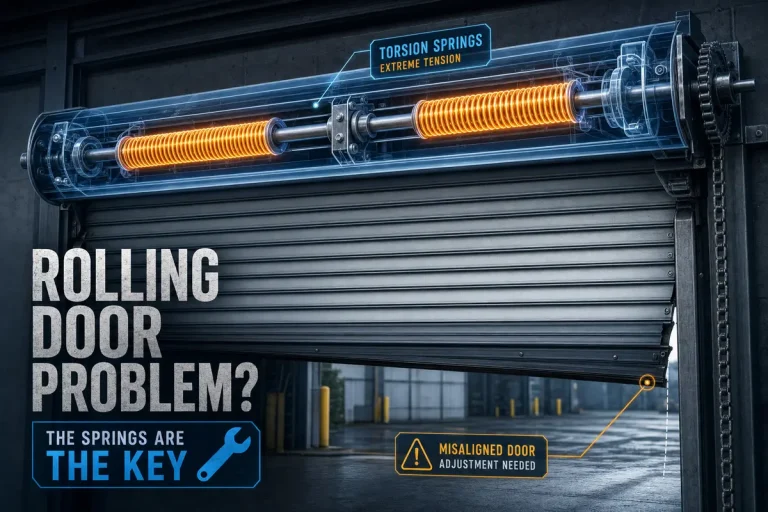
Rolling Steel Door Tension Adjustment: Signs the Barrel Needs It
Published Date: Nov 11, 2026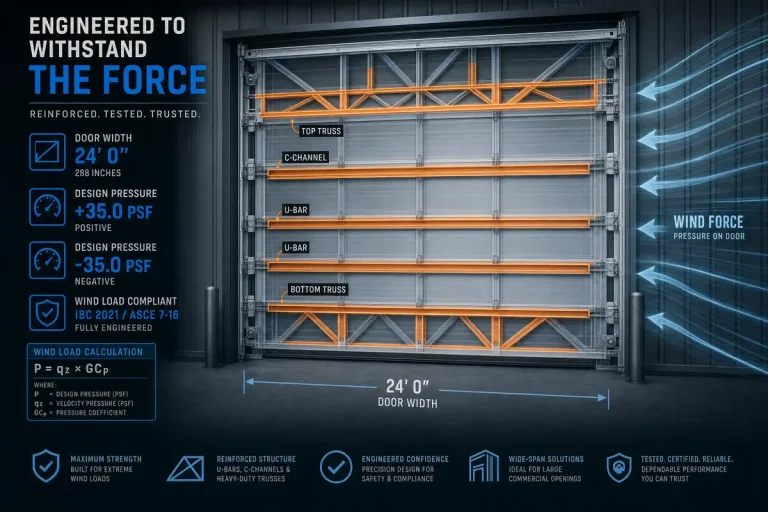
Commercial Sectional Door Strut Schedules by Width and Wind Zone
Published Date: Nov 6, 2026