




Rollers Popping Out of the Track: Causes and Safe Repair
Published: Oct 23, 2026
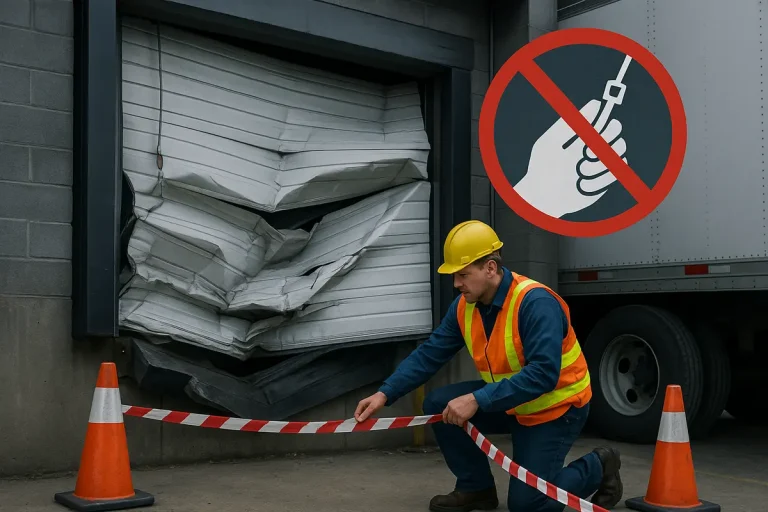
When a loud grinding noise shakes your garage and a roller pops free, the immediate instinct is to force the door back down or grab a pair of pliers. However, standard residential garage doors weigh between 150 and 350+ pounds. Pushing against a bound mechanism can cause sudden frame failure or structural dropping. According to the U.S. Consumer Product Safety Commission (CPSC), garage doors account for 20,000 to 30,000 emergency room injuries every year, largely due to uncontrolled spring tension releases and falling doors.
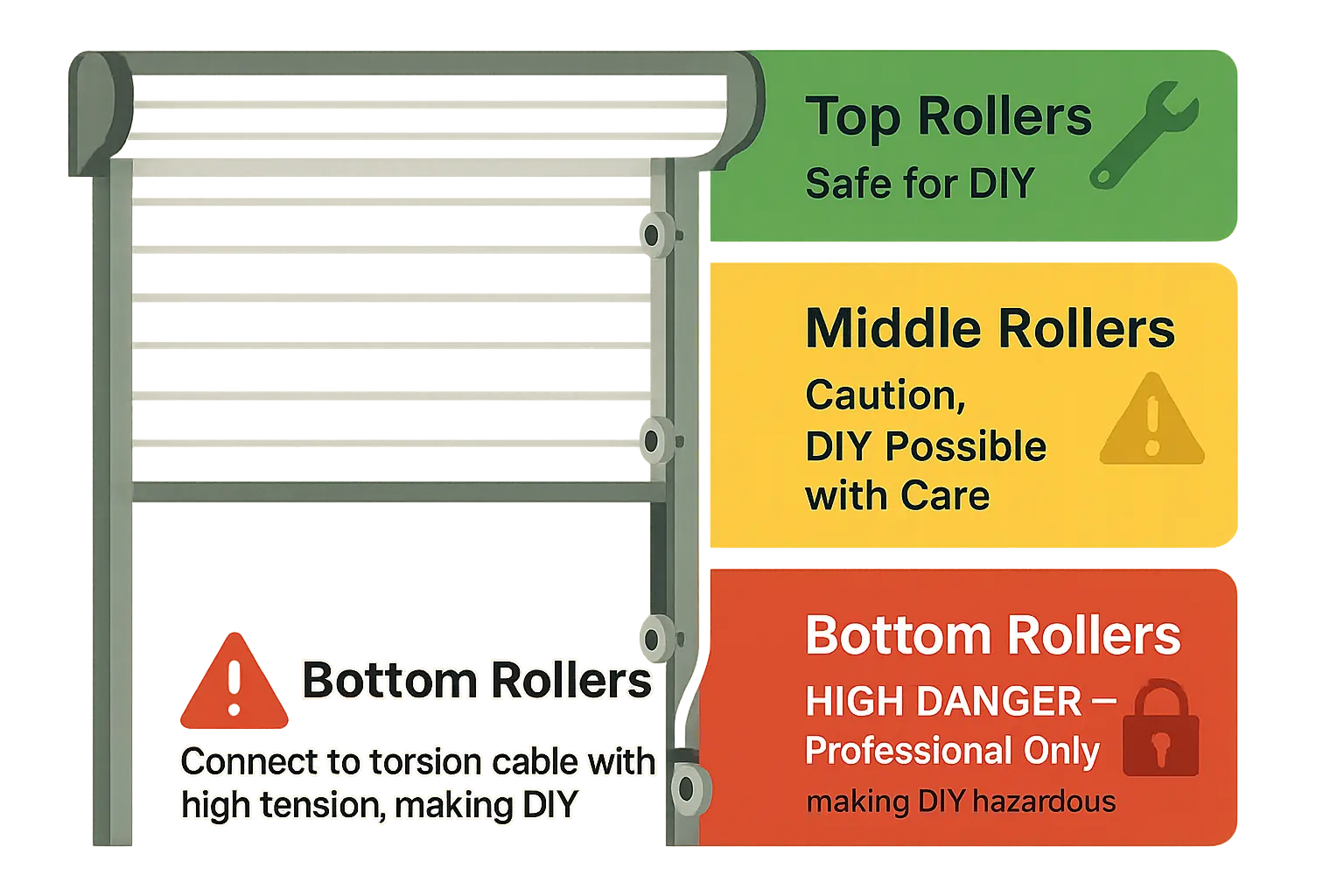
Before attempting any fix, perform an immediate safety triage based on roller position:
- Top and Middle Rollers: Lower risk. These guide individual door panels along the track and can generally be serviced safely at home using proper technique.
- Bottom Rollers: HIGH DANGER. The bottom roller bracket serves as the anchor point for the high-tension lift cable attached directly to the live spring system under hundreds of pounds of pressure. Never unbolt a bottom bracket yourself.
The Anatomy of a Derailment: 6 Hidden Root Causes
A roller rarely jumps out without a mechanical trigger. Identifying why it slipped out prevents a repeat occurrence.
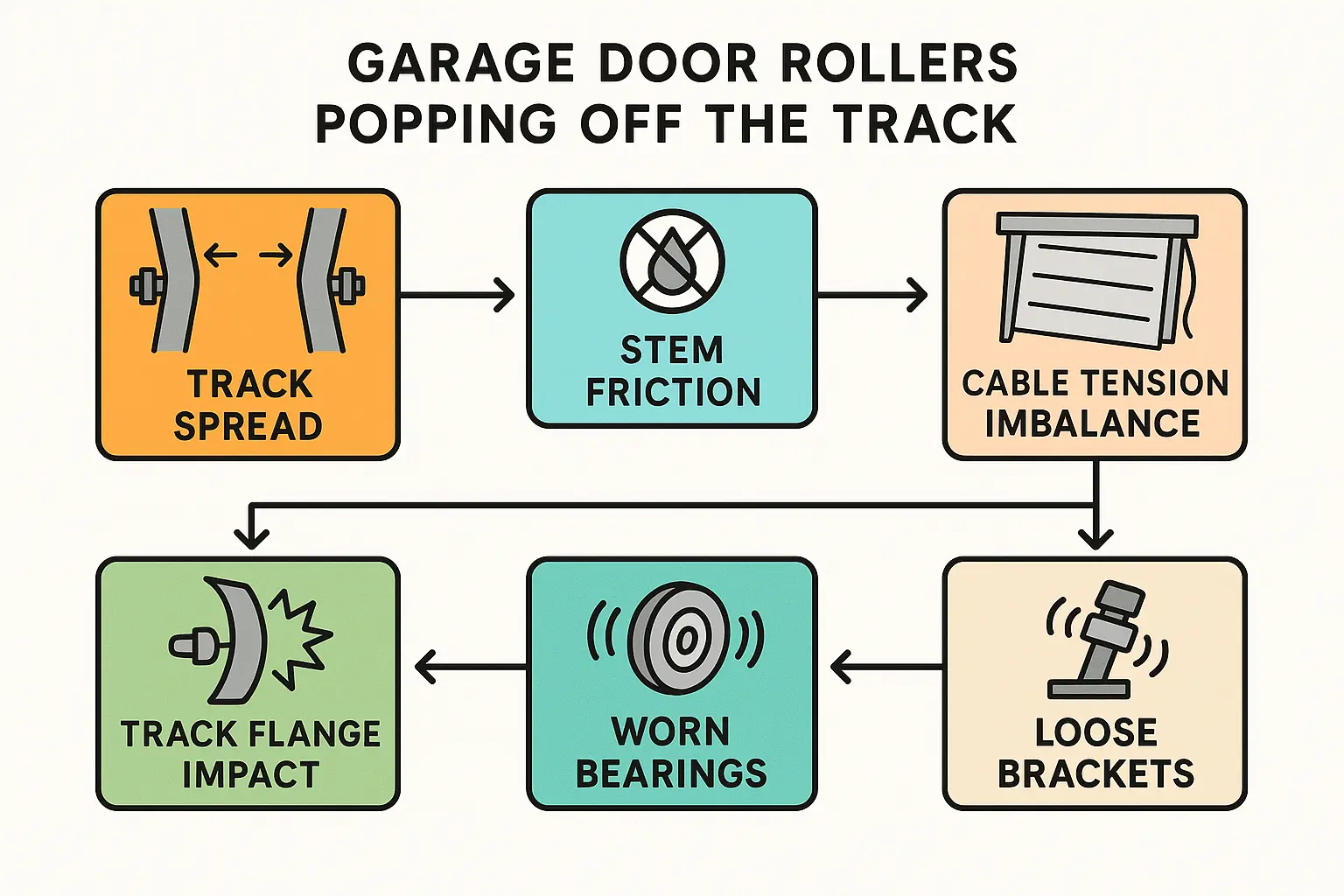
- Track Spread: Loose ceiling angle iron hangers allow tracks to drift apart over time, widening the gap until the roller stem slips out.
- Stem Friction: Unlubricated roller axles seize inside the hinge barrel, dragging the wheel out sideways during panel movement.
- Cable Tension Imbalance: A frayed or slipped lift cable causes the door to rise crookedly, wedging panels and popping wheels off the track lip.
- Track Flange Impact: Minor vehicle or equipment bumps bend the metal track lip, creating a ramp that guides rollers out.
- Worn Bearings: Ovalized or broken internal roller bearings cause severe wheel wobble until the roller jumps the curve.
- Loose Mounting Brackets: Daily operation vibrations loosen wall brackets, causing track alignment to shift out of tolerance.
Addressing these root issues is fundamental to preserving overall garage door health.
Safe DIY Repair: The Hinge-Unbolting Method
Standard DIY guides often advise using pliers to bend open steel tracks. Bending damages track steel, causing repeated derailments. For top and middle rollers, use the professional Hinge-Unbolting Method:
- Disconnect Power: Unplug the automatic opener unit to eliminate accidental travel.
- Secure the Door: Place locking C-clamps on the tracks directly underneath the lowest intact roller set to lock door movement completely.
- Unbolt the Hinge: Leaving the track intact, unbolt the hinge bracket from the panel where the roller popped free.
- Position the Roller: Place the roller wheel back into the track channel, then align the stem into the hinge sleeve.
- Reattach the Hinge: Secure the hinge back to the panel using original hardware, ensuring correct alignment.
- Test System Operation: Remove clamps, reconnect power, and perform basic garage door opener troubleshooting steps while testing manually.
Roller Buyer's Guide: Material Upgrades
Upgrading worn factory parts during a repair dramatically improves performance across all types of garage doors.
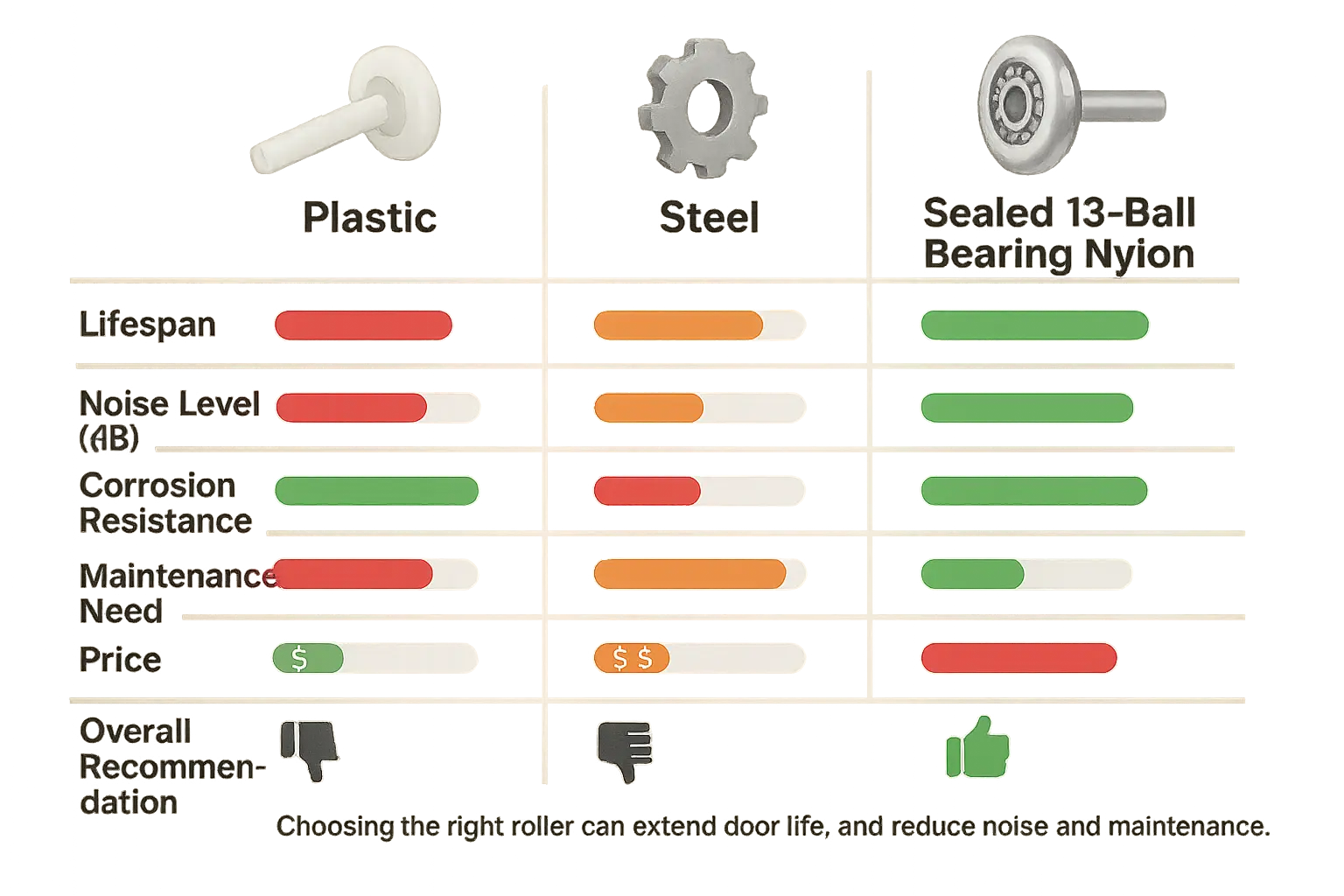
- Factory Plastic (Unshielded): ~10,000 cycles (3–5 years). Noise level: 75+ dB (Loud). Prone to cracking under heat and weight.
- Standard Steel (Open Bearing): 10,000–15,000 cycles. Noise level: 70 dB. Requires bi-annual greasing to prevent stem friction and corrosion.
- Sealed 13-Ball Bearing Nylon: 100,000 cycles (15–20 years). Noise level: 60–64 dB (Whisper quiet). Sealed against dirt and maintenance-free.
Contractor Pricing Shield: Evaluating Repair Costs
If your situation involves bottom rollers, severe track bends, or cable slack, professional service is essential. Keep these cost benchmarks in mind:
- DIY Replacement Parts: $15–$35 for a 10-pack of heavy-duty sealed nylon rollers.
- Fair Professional Realignment: $100–$180 for labor, track alignment, and resetting popped rollers.
- Fair Full Roller Upgrade & Tune-Up: $150–$300, including commercial parts and complete system calibration.
- Red Flag Quotes: Estimates exceeding $500 for basic track adjustments without new spring or cable installation indicate excessive overcharging.
Relying on experienced professionals like Up and Down Garage Doors ensures transparent pricing, expert diagnostic evaluation, and safety compliance.
Frequently Asked Questions
Can I bend my garage door track back into shape with pliers?
Prying metal tracks open with pliers distorts structural integrity and leaves weak spots where wheels will continue popping out. Unbolting top or middle hinges allows safe roller insertion without damaging track geometry.
Why does the same roller keep popping out of the track?
Repeated derailments at one point usually indicate track spread from loose hanging brackets, severe stem friction inside an unlubricated hinge, or localized track damage from past impacts.
How much should it cost to fix a garage door off track?
A standard service call for track realignment ranges between $100 and $180. A complete roller upgrade and full alignment tune-up typically costs between $150 and $300.
Next Steps for Safe Operation
Managing a derailed roller promptly prevents permanent panel distortion and home safety hazards. While top and middle rollers can often be corrected using the hinge-unbolting method, bottom roller, spring, and cable repairs demand expert intervention. Work with qualified technicians to keep your garage door quiet, balanced, and secure.
You May Also Like