




Your Garage Door Is Talking: A Homeowner’s Guide to Wear & Tear Signs
Published: Oct 26, 2026
Your garage door speaks a language of its own. It’s a subtle dialect of creaks, groans, and jerky movements that are easy to ignore during the morning rush. But these aren’t just random noises—they’re early warnings. Listening now can mean the difference between a simple adjustment and a costly, middle-of-the-night emergency.
Most homeowners don’t think about their garage door until it stops working. Yet, this heavy, complex piece of machinery is often the largest moving part of a home. While a well-maintained door can last 15 to 30 years, its critical components have much shorter lifespans. Torsion springs are rated for about 10,000 cycles, or roughly 10 years of average use, while openers typically last 10 to 15 years. Neglecting the early signs of wear doesn’t just shorten these lifespans; it compromises your home’s security and your family’s safety.
This guide will teach you how to translate those subtle cues. We’ll walk through the common sounds and sights of wear and tear, helping you confidently identify what needs attention now and what requires a professional eye.
Decoding the Sounds: Auditory Cues of Trouble
Often, the first sign of a problem is something you hear. Closing your eyes and just listening can tell you a lot about the health of your garage door system.
Squeaking or Grinding
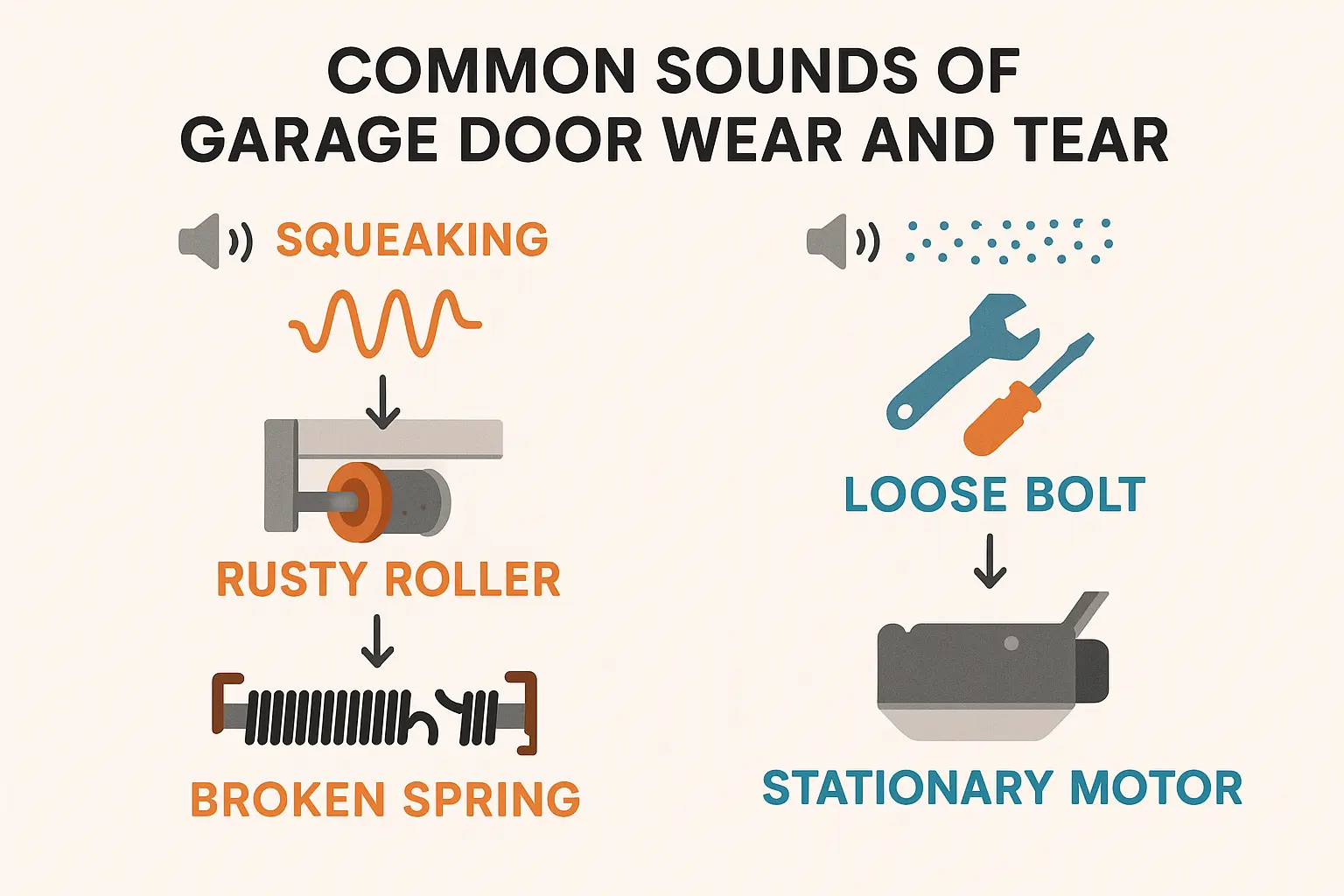
A high-pitched squeak or a rough, grinding noise is the most common complaint. It’s your door’s way of crying out for lubrication.
- What it Means: This sound usually points to metal-on-metal friction. The culprits are often dry rollers, hinges, or springs. Over time, this friction accelerates wear and can strain the garage door opener.
- What to Do: This is often a safe DIY fix. You can learn exactly how to lubricate your garage door with the right products. A crucial tip: never use WD-40. It’s a solvent, not a lubricant, and can strip away existing grease, attracting dirt that worsens the problem. Opt for a silicone or white lithium grease spray instead.
Rattling or Clanking
Loud rattling or clanking sounds often indicate that something has come loose.
- What it Means: The vibrations from daily operation can loosen nuts, bolts, and screws over time. The noise could be coming from the tracks, the opener’s chain, or the panels themselves.
- What to Do: Perform a careful visual inspection with the door closed. See if you can spot any loose hardware and gently tighten it with a wrench. If the rattling persists, it may be a sign that your garage door system needs a tune-up from a professional who can check the system’s balance and alignment.
A Loud Pop or Bang
This is the one sound you never want to ignore. It’s sudden, loud, and almost always means one thing.
- What it Means: A garage door spring has broken. The springs are under immense tension to lift the door’s weight. When one fails, it releases its energy with a powerful, explosive sound. You’ll likely see a visible gap in the spring coil above your door.
- What to Do: Do not attempt to open the door. Trying to operate the door with a broken spring can burn out your opener motor or cause the door to come off its tracks. This is not a DIY repair. The tension in the remaining spring is extremely dangerous, so a professional garage door spring replacement is the only safe option.
Seeing the Stress: Visual Cues of Component Wear
Some problems don’t make a sound. A monthly visual check can help you spot signs of stress and fatigue before they lead to a system failure.
Uneven Movement or a Sagging Door
Does your door seem to lurch or move jerkily? Does it look slightly crooked when it closes?
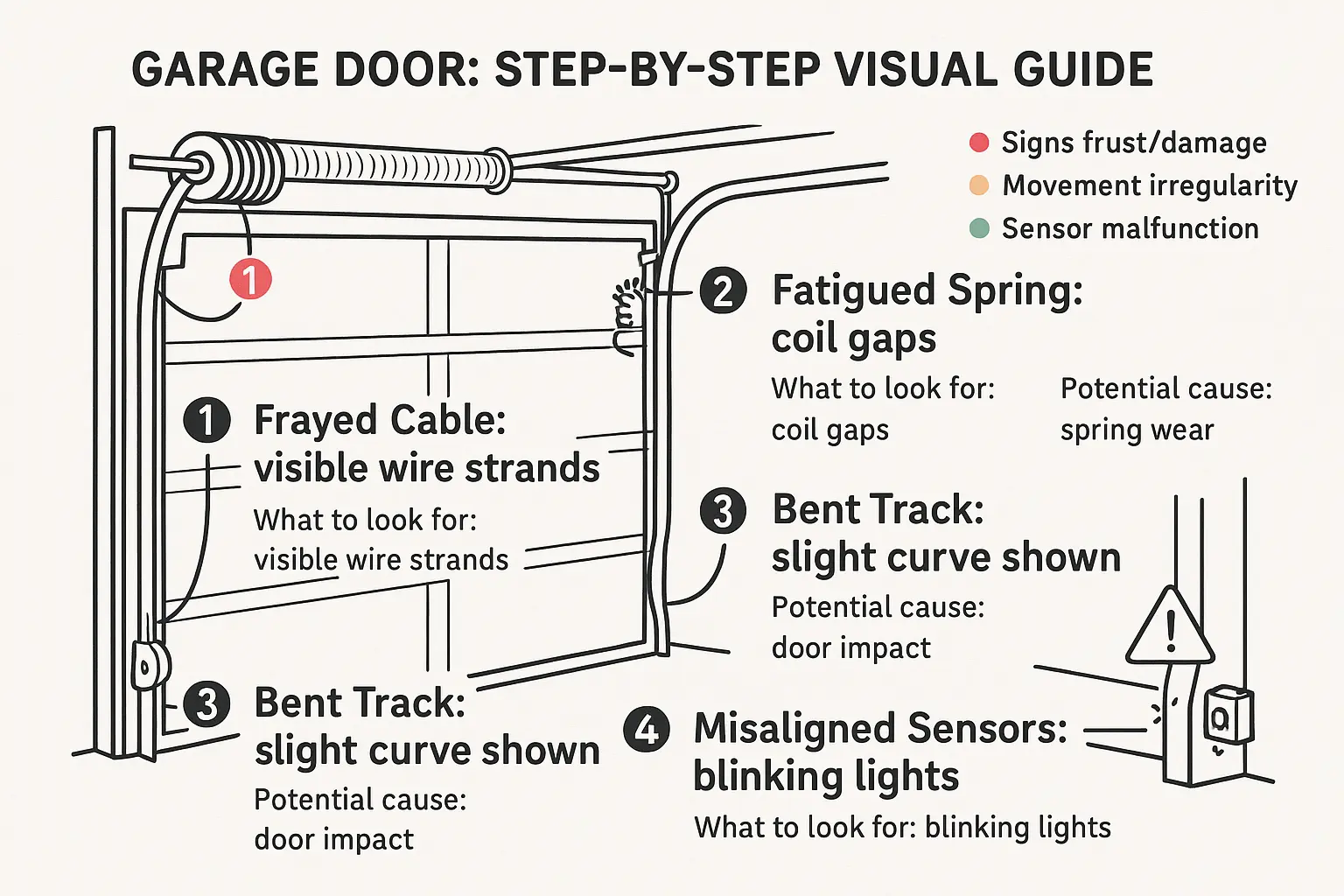
- What it Means: This points to an imbalance in the system. The cause could be anything from worn-out rollers and misaligned tracks to uneven tension in the springs or cables. An unbalanced door puts significant strain on the opener and can lead to more serious damage.
- What to Do: Look at the tracks for any obvious bends, debris, or loose mounting brackets. If the door has come off its tracks entirely, it’s best to call for help. While some guides explain how to put the garage door back on track, it can be a risky job without the right tools and experience.
Fraying or Rusty Cables
The lifting cables are the connection between the spring’s power and the door’s weight. Their integrity is non-negotiable.
- What it Means: These high-tension steel cables can wear down over their 7-10 year lifespan, especially in humid climates. Look for small broken strands (fraying) or spots of rust near the bottom of the door. A fraying cable is a weak cable, and it’s only a matter of time before it snaps.
- What to Do: This is a critical safety issue. If you see fraying, stop using the door and call a professional immediately. Like springs, cables are under extreme tension and can cause severe injury if they break.
Fatigued Springs
Before a spring makes that final “bang,” it often shows visual signs of fatigue.
- What it Means: The torsion springs, located on a metal bar above the door, do the heavy lifting. As they approach the end of their 10,000-cycle life, you might notice elongated coils or visible gaps between them. Another key test: if you disconnect the opener and try to lift the door manually, a door with healthy springs should feel relatively light (around 10-15 lbs) and stay put when you leave it halfway open. If it feels heavy or slams shut, the springs are failing.
- What to Do: Proper garage door spring maintenance can extend their life, but replacement is inevitable. This is a job reserved for trained technicians due to the high risk involved.
Malfunctioning Safety Sensors
The two small “eyes” near the bottom of your door tracks are a vital safety feature.
- What it Means: If your door reverses suddenly after starting to close, the safety sensors are likely the cause. The lights on the sensors are your diagnostic tool. A blinking light on one sensor often means they are misaligned or something is obstructing their beam.
- What to Do: First, ensure nothing is blocking the sensors. Clean the lenses with a soft cloth. Then, check their alignment—both sensors should have a solid green or amber light indicating a good connection. Our complete guide to garage door sensors can walk you through more detailed troubleshooting.
The Preventative Prescription: Your Maintenance Checklist
The best way to deal with wear and tear is to get ahead of it. A simple garage door inspection a few times a year can catch most of these issues early.
- Monthly (5 Minutes):
- Watch & Listen: Operate the door and pay close attention to its sound and movement.
- Check Sensors: Place a small object (like a roll of paper towels) in the door’s path to ensure it reverses upon detection.
- Annually (20 Minutes):
- Lubricate Moving Parts: Hit all hinges, rollers, and springs with a proper garage door lubricant.
- Tighten Hardware: Check and tighten any loose nuts and bolts on the door and track.
- Inspect Components: Look closely at the cables, rollers, and springs for the visual signs of wear we’ve discussed.
- Test Door Balance: Disconnect the opener and test the manual lift.
In recent years, smart technology has become a powerful ally. Around 41% of service providers have started using digital diagnostic tools, and many modern openers come with apps that can monitor usage cycles and alert you to potential issues, making preventative care easier than ever.
Beyond DIY: When to Call a Professional
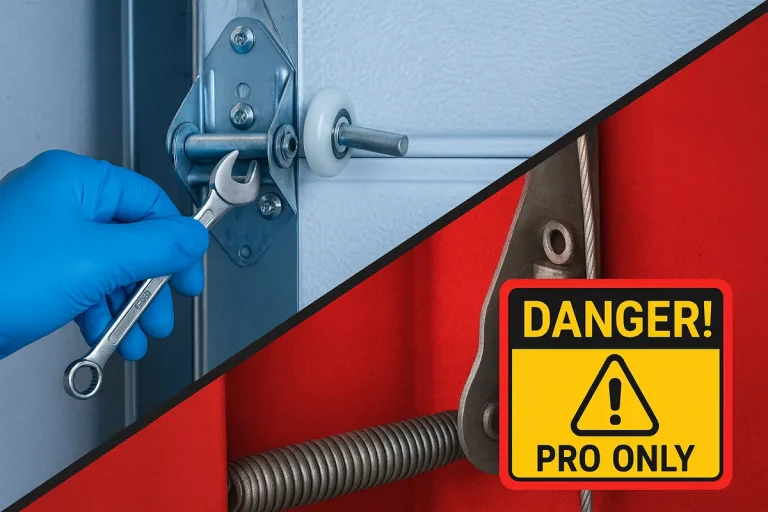
Knowing your limits is key to staying safe. While tasks like lubrication and sensor cleaning are great for homeowners, some repairs demand professional expertise.
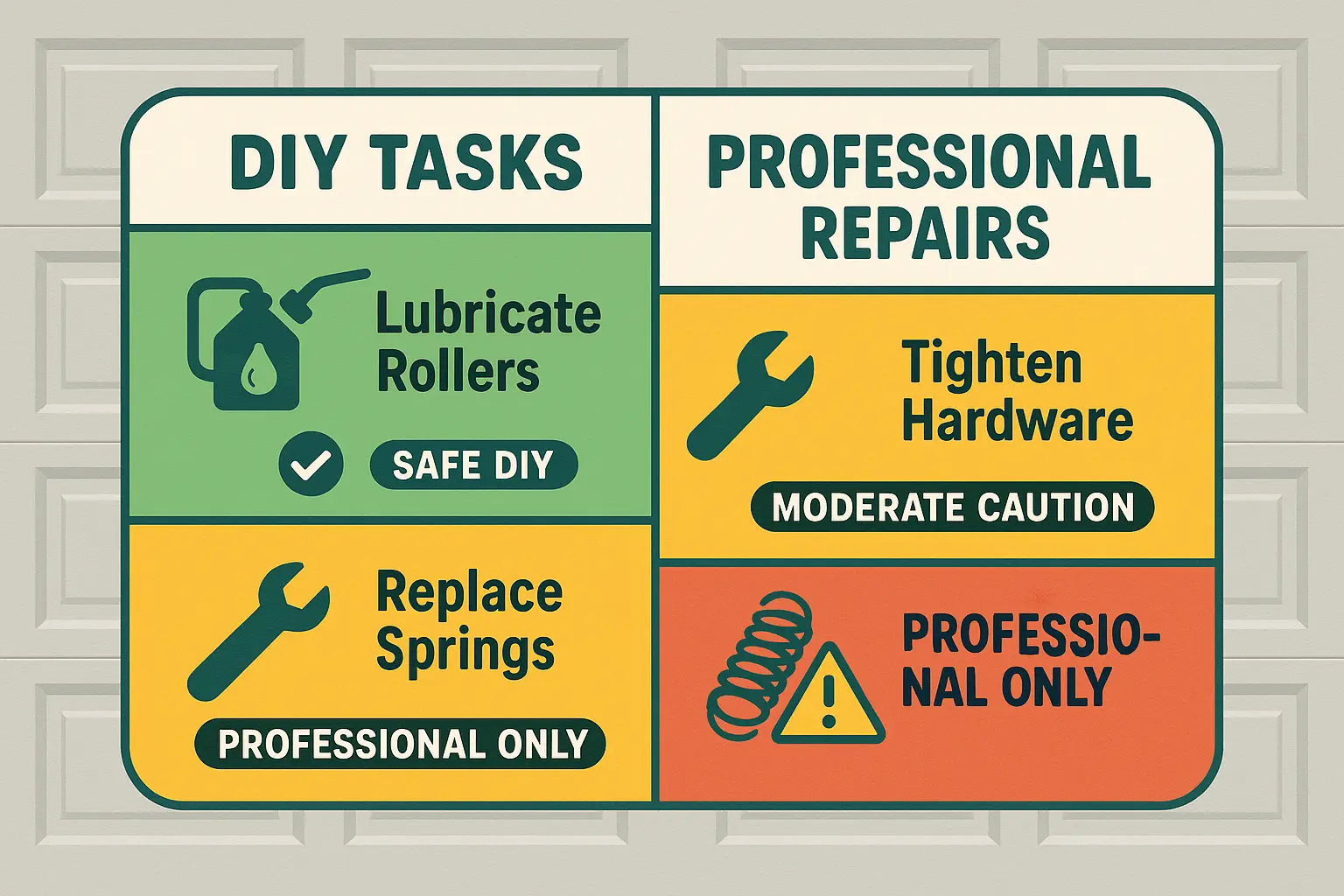
Always call a professional for issues involving springs or cables. The high tension makes them incredibly dangerous. You should also rely on an expert for track realignments, panel replacements, or any problem you can’t confidently diagnose. A trained technician has the specialized tools and experience to do the job safely and correctly the first time.
Frequently Asked Questions
Is a noisy garage door an emergency?Not usually an immediate emergency, but it’s an urgent warning. Grinding and squeaking mean parts are wearing down faster than they should. Ignoring the noise will eventually lead to a breakdown, which often happens at the most inconvenient time.
How often should I get a professional inspection?We recommend a professional tune-up and safety inspection once a year. A technician can spot subtle issues you might miss, balance the door perfectly, and ensure all safety features are working correctly, ultimately extending the life of your system.
What’s the most dangerous part of a garage door to fix myself?Without a doubt, the springs and cables. The immense tension stored in these parts can be lethal if released improperly. There’s no DIY fix that’s worth the risk of severe injury.
Can I ignore a small dent in a garage door panel?While a small dent may seem cosmetic, it can affect the door’s balance and put extra stress on rollers and tracks. It can also compromise the panel’s structural integrity and insulation, potentially leading to higher energy bills. It’s best to have it assessed.
Invest in Awareness, Invest in Safety
Your garage door is more than just an entryway; it’s a complex system essential to your home’s security and daily function. By learning to listen to its warnings and understanding the visual signs of stress, you empower yourself to act proactively. You can handle the small things with confidence and know exactly when to call for trusted, professional help.
Don’t wait for a small noise to become a major headache. If you’ve noticed any of these signs or simply want the peace of mind that comes with a professional inspection, our team is here to help 24/7.
You May Also Like