




Why We Recommend To Update to Heavy Duty Garage Hardware
Published: Aug 27, 2026
Your garage door is likely the largest and heaviest moving object in your home. For many, it’s also the primary entrance. Yet, when we think about home security, we often focus on the front door lock or the alarm system, completely overlooking the small pieces of hardware that hold the entire garage door together: the hinges and rollers.
These components are the “weak points” that are frequently overlooked by homeowners but are often targeted by intruders. Standard, builder-grade hardware can bend, break, or be pried open under force. Upgrading to heavy-duty hinges and rollers isn’t just a maintenance task; it’s one of the most effective security enhancements you can make.
Let’s walk through how these small parts play a huge role in fortifying your home.
The Anatomy of a Secure Garage Door System
Think of your garage door’s hardware as its skeleton. Each part has a critical job, and if one fails, the whole system is compromised.
- Hinges: The Door’s Spine. These are the flat metal plates that connect the horizontal sections (panels) of your garage door. They allow the door to bend and pivot smoothly as it moves along the track.
- Rollers: The Door’s Joints. These are the small wheels that sit inside the hinges and travel within the metal tracks on either side of the door. They guide the door’s movement, ensuring it opens and closes without friction.
When these components are flimsy, they don’t just wear out faster; they create a significant security vulnerability.
Decoding the Numbers - The Definitive Guide to Gauges, Sizes, and Materials
Choosing the right hardware can feel confusing, especially with all the numbers and industry terms. But understanding these specifications is the key to making an informed choice that drastically improves your home’s security.
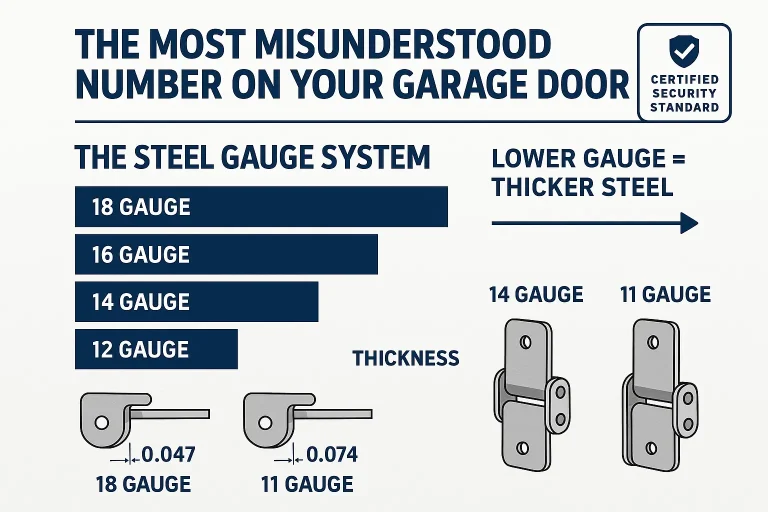
The Most Misunderstood Number on Your Garage Door: The Gauge Myth
Here’s the single most important—and most frequently misunderstood—concept when it comes to garage door hardware: the steel gauge. Many sources incorrectly state that a higher gauge number means thicker, stronger steel.
This is the exact opposite of the truth.
With steel, the gauge system works in reverse: the lower the gauge number, the thicker and stronger the steel. An 11-gauge hinge is significantly thicker, heavier, and more resistant to bending and brute force than a standard 18-gauge hinge. This single detail is crucial for security.
What Do the Numbers on Garage Door Hinges Mean?
You’ve probably noticed that your hinges are stamped with numbers like #1, #2, and #3. These numbers aren’t about strength; they’re about placement. Because the tracks on a garage door get wider as they go up, the roller needs to be positioned further from the edge of the door on higher panels.
- #1 Hinges: These are the most common and are used to connect all the center panels of your door.
- #2, #3, #4 Hinges (and so on): These are placed progressively higher up the door, between the corresponding panels. A standard 7-foot door will typically use #1, #2, and #3 hinges.
When upgrading, you simply need to buy heavy-duty versions of the same numbered hinges currently on your door. For a deeper dive into the specifics, our guide explains more about why garage door hinges are numbered.
From Plastic to Nylon: Choosing the Right Rollers
Garage door rollers may all look similar, but their material and construction make a world of difference in performance, longevity, and security.
- Plastic Rollers: These are the most basic and cheapest option. They have no ball bearings and wear out quickly, becoming noisy and brittle. Under stress, they can easily crack or break.
- Steel Rollers: More durable than plastic, these rollers typically have exposed ball bearings. They can handle heavier doors but are very loud and require frequent lubrication to prevent rust and seizing.
- Sealed Nylon Rollers: This is the premium choice for security and performance. The nylon wheel is incredibly quiet, and the sealed ball bearings (typically 10-13) are protected from dirt and grime. This design ensures a smooth, quiet operation for years.
The choice between nylon vs. steel garage door rollers is clear when security is the goal. A smooth, quiet roller is less likely to bind or seize under pressure, ensuring the door operates reliably. Furthermore, quiet operation prevents auditory tip-offs to potential intruders when you come and go.
From Standard to Fortress - How to Choose Hardware for Maximum Security
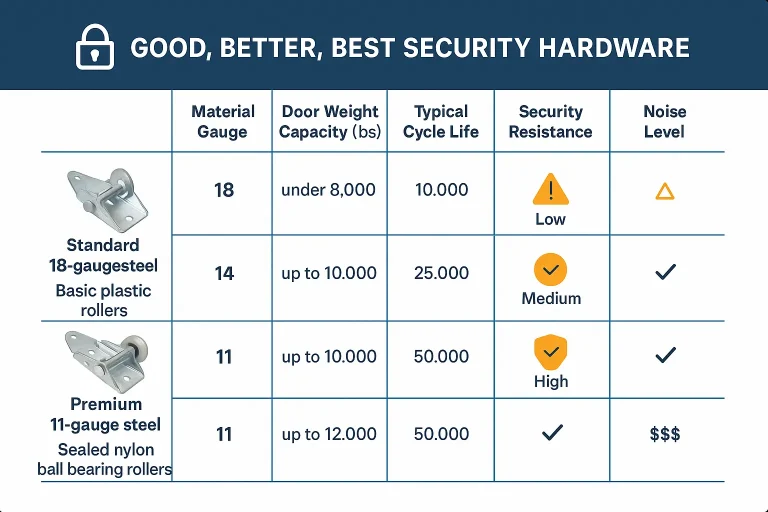
Now that you understand the specs, let’s connect them directly to how they stop a break-in. An intruder attempting to force a garage door will often try to pry the panels apart or kick the bottom of the door in. This is where your hardware’s strength is tested.
- Heavy-Duty Hinges (14-Gauge or Lower): A standard 18-gauge hinge is thin enough to bend or break under the force of a crowbar. An upgrade to a 14-gauge hinge provides a massive increase in rigidity. For reference, standard hardware is often rated for doors under 150 lbs, while 14-gauge hinges can support doors up to 400 lbs. This thickness is your first line of defense against prying and forced entry.
- Sealed Ball-Bearing Rollers: If a door is forced, cheap plastic rollers can shatter, causing the door to come off its track and creating an opening for entry. The durable construction of sealed nylon rollers with steel stems ensures they stay in the track, even under extreme pressure, keeping the door system intact. If you’re considering a garage door roller replacement, choosing the best rollers is a critical security decision.
- Better Fasteners: Heavy-duty hardware is only as strong as the screws holding it in place. Ensure you’re using appropriately sized, self-tapping screws that securely bite into the door’s steel frame, not just the outer skin.
By combining these elements, you’re not just performing maintenance; you’re making critical garage door security upgrades that create a truly fortified barrier.
Your 3-Step Security Upgrade Plan
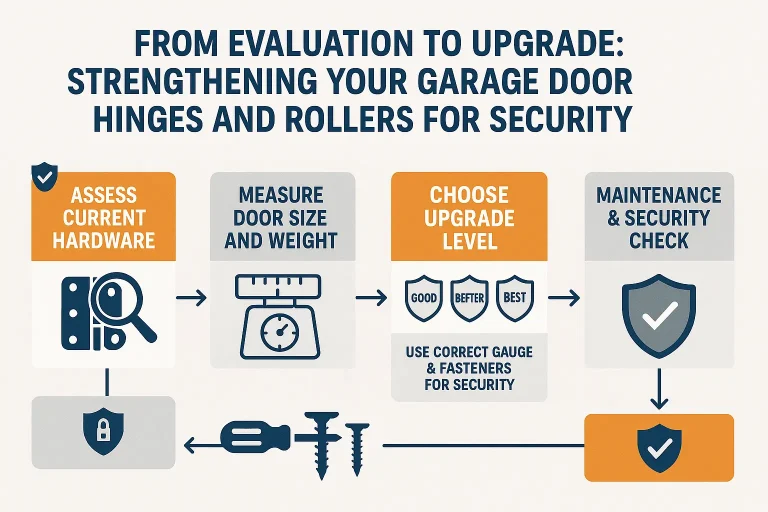
Ready to take action? Here’s a simple plan to assess your current hardware and choose the right upgrades.
Step 1: Assess Your Current Hardware
Take a close look at your hinges. Are they thin and flimsy-looking? Can you see any signs of stress, cracking, or rust? Check your rollers. Are they wobbly, noisy, or made of plastic? If the answer is yes to any of these, it’s time for an upgrade. A visual inspection is often all you need to spot vulnerabilities.
Step 2: Identify and Measure
Check the numbers stamped on your existing hinges (#1, #2, etc.) to know what to purchase. For rollers, you’ll need to measure the diameter of the wheel (most residential doors use 2-inch rollers) and the length of the stem.
Step 3: Choose Your Upgrade Level
- Good (Major Improvement): Upgrade to 14-gauge hinges and 10-ball bearing steel rollers.
- Better (Quieter & More Durable): Upgrade to 14-gauge hinges and 10-ball bearing sealed nylon rollers.
- Best (Maximum Security & Longevity): Upgrade to commercial-grade 11-gauge hinges and 13-ball bearing sealed nylon rollers. This is the ultimate setup for peace of mind.
Frequently Asked Questions (FAQ)
Are 11-gauge garage door hinges considered heavy-duty?
Absolutely. 11-gauge is typically considered commercial-grade and is one of the thickest, strongest options available for residential doors. It offers maximum resistance to bending and prying.
How do heavy-duty parts really make a garage door more secure?
They reinforce the door’s structural integrity. Thicker steel hinges resist bending from a crowbar, while durable nylon rollers prevent the door from being easily forced off its track. It turns the entire door into a much stronger, more cohesive barrier.
Can I replace just one broken hinge?
While you can, it’s not recommended. If one hinge has failed due to age or stress, the others are likely in a similar condition. It’s best practice to replace all hinges at once to ensure uniform strength and prevent future failures. If you see a broken hinge on your garage door, it’s a sign that the whole set may be compromised.
Is this a DIY project?
Replacing rollers and hinges can be a DIY project for those with the right tools and knowledge. However, it involves working with a heavy door under spring tension, which can be dangerous. If you are not completely comfortable, it’s always safest to call a professional.
Your First Line of Defense
Securing your garage door is a fundamental part of protecting your home. By investing in heavy-duty hinges and rollers, you are hardening your home’s largest entry point against potential threats. It’s a small change that delivers significant peace of mind.
If you want to learn more about how to secure your garage door, there are many strategies to consider. For professional advice on the best hardware for your specific door, don’t hesitate to reach out to the experts at Up & Down Garage Doors. We’re here to help you make your home as safe as it can be.
You May Also Like