





How a Stuck Garage Door Impacts Your Daily Schedule
Published: Jun 10, 2026
It’s the moment every busy homeowner dreads. You’ve brewed the coffee, grabbed your keys, and you’re mentally running through your day’s schedule. You press the button on the garage door opener, and… nothing. Or worse, a grinding noise followed by an awkward, half-open halt. Your car is trapped, the clock is ticking, and your perfectly planned morning has just been thrown into chaos.
A stuck garage door is more than a mechanical failure; it’s a schedule-wrecker. It’s the difference between making that critical 9 a.m. meeting and sending an apologetic email. It’s the stress of arranging a last-minute carpool for the kids. This single point of failure can unravel your entire day. But it doesn’t have to. This guide is your emergency action plan to navigate the panic, safely assess the situation, and understand how to prevent it from ever happening again.
Foundation: Your First 60 Seconds - An Emergency Safety Triage
Before you try anything, take a deep breath and a step back. Your garage door is the largest moving object in your home, and a malfunctioning one can be dangerous. This initial 60-second assessment is about one thing: safety.
Look and listen. Do you see or hear any of these red flags?
- A Loud Pop or Bang: This often signals a broken torsion spring, the large, tightly wound spring above the door that does the actual lifting.
- Visible Spring Gap: Look at the torsion spring. If you see a distinct 2-3 inch gap in the coils where there wasn’t one before, it’s broken.
- Snapped or Frayed Cables: The lift cables on either side of the door are under extreme tension. If one is broken or looks like a frayed rope, do not proceed.
- The Door is Crooked or Off-Track: If the door is hanging at an angle, it’s unstable.
If you notice any of these issues, your troubleshooting is done. Stop immediately and do not touch the door or the opener. These are not DIY fixes; they require specialized tools and knowledge to handle safely. Your next step is to call a professional.
Building: Safe DIY Troubleshooting for Common Glitches
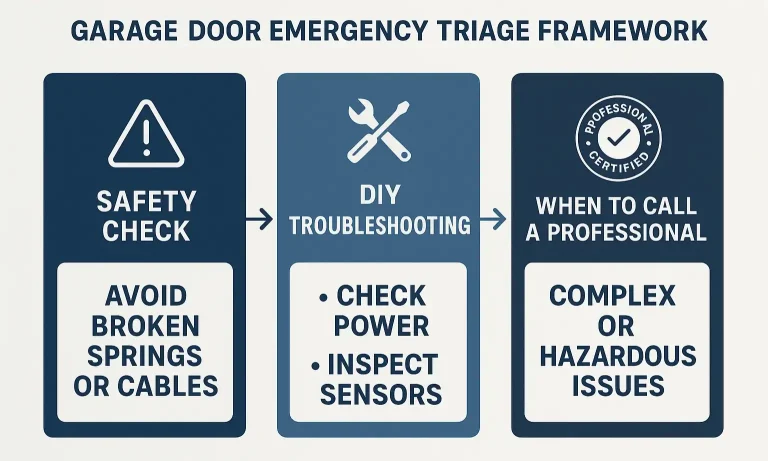
If you passed the initial safety check, the problem might be something you can resolve yourself in just a few minutes. Let’s walk through the most common, low-risk culprits using a simple triage framework.
Step 1: Check the Power & Locks
It sounds almost too simple, but it happens all the time. First, check if the motor unit is plugged into the ceiling outlet. Look for a green light on the unit to confirm it has power. Next, check the manual lock on the inside of your garage door. If someone accidentally slid the bolt lock, the opener will try—and fail—to lift the physically locked door.
Step 2: Inspect the Photo-Eye Sensors
Near the bottom of your garage door tracks are two small sensors that face each other. They project an invisible beam that, when broken, prevents the door from closing. However, if they get knocked out of alignment, they can also prevent the door from operating at all. Check for blinking lights on the sensors; a steady light usually means they are aligned correctly. If one is blinking, gently adjust it until the light becomes solid. You can learn more with our detailed guide on how to align garage door sensors.
Step 3: Use the Manual Emergency Release Cord
If the power is on and the sensors are aligned, the issue may be with the opener motor itself. To get your car out, you’ll need to use the manual release. Look for a red cord hanging from the track-mounted opener.
Crucial Safety Warning: Only use the emergency release when the garage door is fully closed. If you disengage the opener with the door partially open, its full weight could cause it to slam shut, posing a serious risk of injury or damage.
With the door closed, pull the red cord down and back (towards the motor) to disengage the trolley. You should now be able to lift the door by hand. If it feels extremely heavy or won’t budge, you likely have a broken spring, and you should not force it. For a complete overview of the process, review the essentials of manual garage door safety.
Mastery: Understanding the 'Why' Behind the Blockage
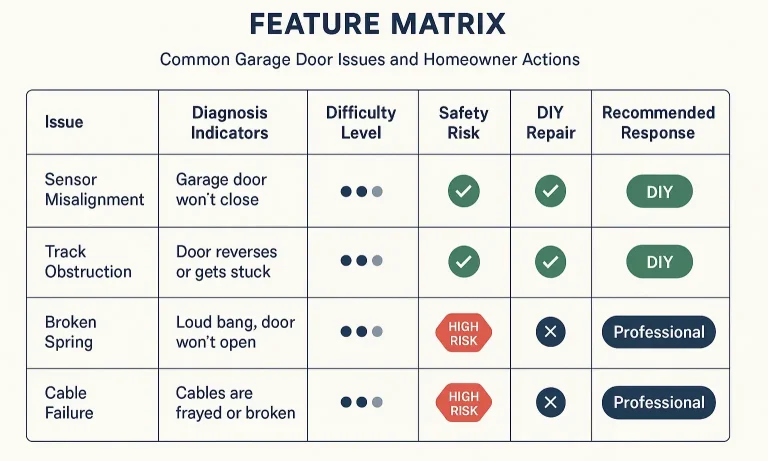
Once you’ve managed the immediate crisis, you can shift from “panic” mode to “diagnosis” mode. Understanding the core components helps you grasp why the door got stuck and why some repairs are best left to experts.
The Three Core Systems
- The Balance System (Springs & Cables): This is the muscle. The torsion or extension springs are calibrated to counteract the door’s weight, making it feel light enough to lift. When a spring breaks, the opener is trying to lift the door’s dead weight of hundreds of pounds—a task it’s not designed for. This is the most common reason a door gets stuck and refuses to be lifted manually. Attempting to replace a garage door spring yourself is extremely dangerous due to the immense tension involved.
- The Guidance System (Tracks & Rollers): This is the skeleton. The tracks guide the rollers to ensure the door moves smoothly up and down. Debris, dents, or misaligned tracks can cause rollers to pop out, jamming the door.
- The Operator System (The Motor): This is the brain. Worn gears, a faulty logic board, or mis-set travel limits can all cause the opener to stop working correctly, even if the door itself is perfectly balanced.
Action: From Quick Fix to Long-Term Reliability
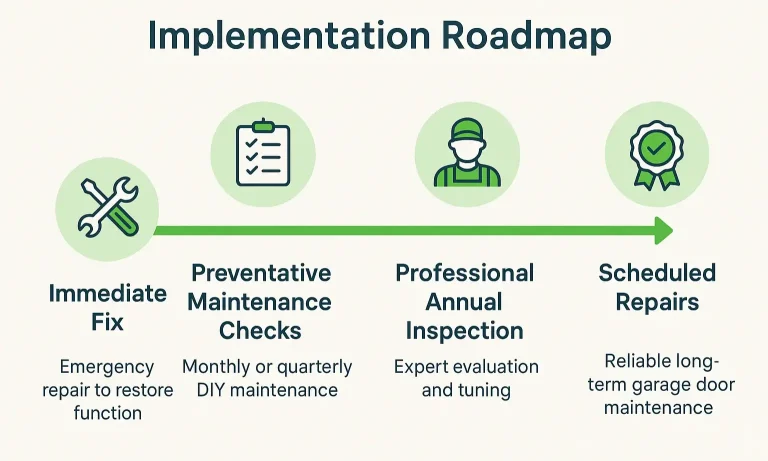
A stuck garage door rarely happens out of the blue. It’s often the final, noisy cry for help after months of subtle warnings—a new squeak, a slight hesitation, or a jerky motion. Turning today’s emergency into tomorrow’s reliability is about shifting from a reactive fix to proactive care.
A simple maintenance routine can prevent 90% of commuter-chaos scenarios:
- Monthly Visual Inspection: Take two minutes to watch the door operate. Look at the springs, cables, and rollers. Listen for any new or unusual noises.
- Bi-Annual Lubrication: Use a silicone or lithium-based garage door lubricant (never WD-40, which attracts dirt) on the hinges, rollers, and springs to keep things moving quietly.
- Annual Professional Tune-Up: A technician can spot wear and tear you might miss, balance the door, adjust the opener settings, and ensure all safety features are working. This small investment is the ultimate prevention against major failures.
Understanding the garage door is stuck common causes is the first step. For residents in our service areas, our local guides, like this Houston garage door repair guide TX, offer more specific advice.
Frequently Asked Questions (FAQ) About Stuck Garage Doors
Why did my garage door get stuck?
The most frequent culprits are a broken torsion spring, misaligned safety sensors, an object obstructing the tracks, or a simple loss of power to the opener.
Can I open a stuck garage door manually?
Yes, you can usually open it by pulling the red emergency release cord while the door is fully closed. However, if the door feels incredibly heavy, the spring is likely broken, and you should not force it. Learning how to open a stuck garage door from the outside safely is also a valuable skill.
Is it dangerous to fix my own garage door?
Some fixes, like cleaning tracks or aligning sensors, are safe for homeowners. However, any repair involving springs or cables is extremely dangerous due to the high tension and should only be performed by a trained professional. For enhanced safety, you might consider having a professional install an exterior emergency release for access during power outages.
Why shouldn’t I use WD-40 on my garage door?
WD-40 is a solvent and degreaser, not a long-term lubricant. It can strip away existing grease and attract dust and grime, making the problem worse over time. Always use a lubricant specifically designed for garage doors.
Take Control of Your Commute
Your garage door should be a source of convenience, not chaos. By understanding how to perform a quick safety check, troubleshoot minor issues, and recognize the signs of a serious problem, you can regain control of your morning.
Proactive maintenance is the key to preventing that panicked, “I’m trapped!” feeling. If you’ve walked through these steps and your door is still stuck, or if you’ve identified a dangerous issue like a broken spring, don’t hesitate. Our expert technicians are available 24/7 to safely and efficiently get your day back on track.
You May Also Like
How Timely Garage Door Repairs Can Save Homeowners Money & Stress
A garage door is an essential part of overall home defense. It keeps your family safe, protects your belongings, and simplifies everyday life. However, like any other mechanism, it’s not immune to wear and tear. Over…
Published Date: Feb 19, 2025
Garage Door Opener Settings Won’t Erase or Reset Properly
You’ve followed the manual. You’ve held down the "learn" button for what feels like an eternity. You may have even unplugged the unit, hoping for a magical reboot. Yet, here you are. The remote still doesn't work,…
Published Date: Jun 9, 2026
Sectional vs. Rolling Steel Commercial Doors: Which is Best
Choosing a commercial garage door can feel like a simple line item on a facility budget, but it’s one of the most critical decisions you’ll make for your business's security, efficiency, and profitability. The wrong…
Published Date: Jun 9, 2026