





Sectional vs. Rolling Steel Commercial Doors: Which is Best
Published: Jun 9, 2026
Choosing a commercial garage door can feel like a simple line item on a facility budget, but it’s one of the most critical decisions you’ll make for your business’s security, efficiency, and profitability. The wrong door can lead to soaring energy bills, create security vulnerabilities, and cause operational bottlenecks. The right one, however, becomes a silent, reliable partner in your daily success.
Many business owners get stuck comparing two of the most common options: sectional doors and rolling steel doors. The conversation often gets bogged down in technical specs, but the real question isn’t “Which door is better?” It’s “Which door is the right solution for my business’s unique problems?”
Let’s reframe the choice. This isn’t just about doors; it’s about asset protection and energy management. We’ll explore the critical differences to help you decide which system best aligns with your top priorities.
The 2-Minute Explainer: How They Work
Before we dive into the details, let’s clarify the fundamental operational difference.
Sectional Doors
Imagine your residential garage door, but built for commercial-grade work. Sectional garage doors are made of several large, horizontal panels hinged together. These panels run on a track system that guides them up and back along the ceiling when the door opens.
- Key Feature: Requires significant backroom (horizontal space along the ceiling) to accommodate the door when open.
- Best For: Applications where insulation and visibility (via windows) are high priorities, and ceiling space is available.
Rolling Steel Doors
Also known as coiling doors, these are constructed from many small, interlocking steel slats that form a single “curtain.” When the door opens, this curtain coils tightly around a drum located directly above the door opening.
- Key Feature: Extremely compact, requiring minimal headroom and no backroom.
- Best For: High-traffic environments, facilities with limited ceiling space, and situations where maximum durability and security are non-negotiable.
The Head-to-Head Comparison: Matching a Door to Your Business Needs
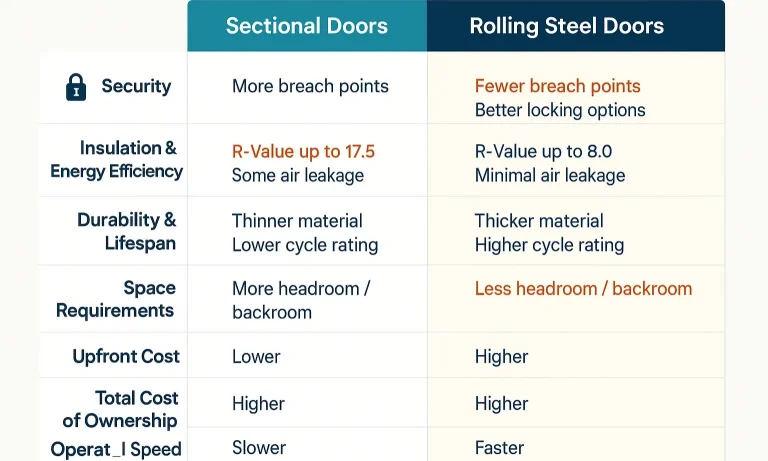
The best choice becomes clear when you weigh the trade-offs against your daily operational demands. While there are many factors to consider, the decision often boils down to five core business needs: security, insulation, durability, space, and total cost of ownership.
1. Security
Sectional Doors: Good overall. They have fewer moving parts, but the panel seams can sometimes present vulnerability points to a determined breach.
Rolling Steel Doors: Excellent. The interlocking metal slats form a highly formidable, seamless barrier against forced entry.
The Bottom Line: For facilities prioritizing high security, a heavy-gauge rolling steel door is significantly superior.
2. Insulation
Sectional Doors: Excellent. They utilize thick, continuous insulated panels that can achieve very high R-values (a measure of thermal resistance).
Rolling Steel Doors: Fair to Good. While insulated slats are available, the articulated joint design inherently limits their maximum R-value.
The Bottom Line: For climate-controlled warehouses or cold storage facilities, sectional doors offer the best thermal protection.
3. Durability
Sectional Doors: Good. They are rated for thousands of operational cycles, but their tracks and large panel faces are more susceptible to forklift or vehicle impact damage.
Rolling Steel Doors: Excellent. These are specifically built for high-frequency use and industrial abuse, often featuring individual slats that can be replaced if damaged.
The Bottom Line: Rolling steel doors have a much longer operational lifespan in punishing, high-traffic commercial environments.
4. Space Requirements
Sectional Doors: High. They require significant backroom overhead because the panels must retract horizontally along the ceiling.
Rolling Steel Doors: Low. They roll upward into a compact, self-contained coil directly above the door header.
The Bottom Line: If your ceiling space is restricted by lighting, fire sprinklers, racking, or cranes, rolling steel is often your only viable option.
5. Total Cost of Ownership
Sectional Doors: They feature a lower upfront capital cost but come with a higher risk of expensive panel repairs if struck by equipment.
Rolling Steel Doors: They require a higher upfront investment but provide extreme structural longevity and fewer long-term maintenance issues.
The Bottom Line: Rolling steel is a larger initial investment that reliably pays off over time through durability and lower overall repair costs.
Deep Dive: Unpacking Security and Insulation
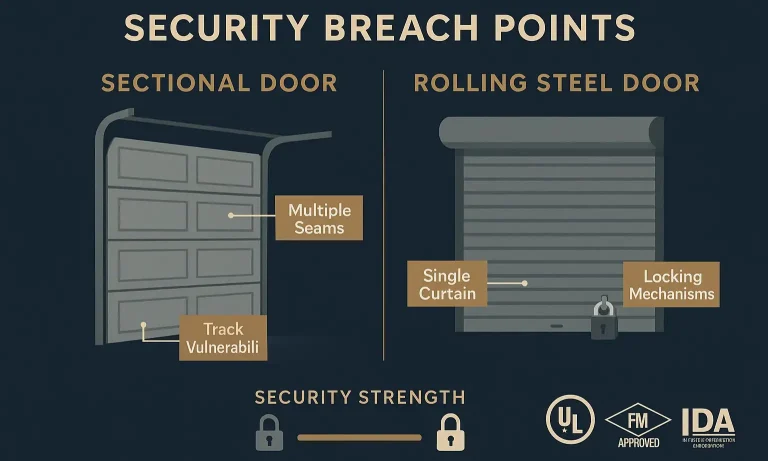
Let’s move beyond the chart and tackle the two biggest concerns for business owners: protecting your property and controlling your energy costs.
Security: Beyond the “Steel Is Strong” Myth
It’s easy to assume any steel door is secure, but the reality is more nuanced. True security lies in the design, not just the material. One of the most important aspects of a garage door security features comparison is understanding where a door is most vulnerable.
- Sectional Door Vulnerability: The primary weakness of a sectional door is its seams. While strong, the multiple panels create potential pry points. Furthermore, the tracks that guide the door can be a target for experienced intruders.
- Rolling Steel Door Strength: A rolling steel door forms a continuous, solid curtain with no seams to exploit. The slats interlock, and the guides are typically heavier-duty, making it incredibly difficult to pry open or force out of its tracks.
Aha Moment: Security isn’t just about resisting brute force; it’s about minimizing the number of breach points. A rolling steel door has far fewer weak spots by design.
Insulation: The Real ROI of R-Value
For any climate-controlled business, from a heated auto shop to a refrigerated food warehouse, insulation is paramount. While sectional doors boast higher R-values on paper, that number doesn’t tell the whole story.
- Sectional Door Advantage: Their thick, foam-core panels are exceptional at preventing thermal transfer. If your primary goal is to maintain a stable indoor temperature, the raw insulating power of a sectional door is hard to beat.
- The Hidden Factor: Air Sealing: A door’s R-value is meaningless if frigid air is leaking in around the edges. This is where rolling steel doors can sometimes have an edge. High-quality rolling doors often come with advanced perimeter seals, including lintel brushes and bottom astragals, that create an incredibly tight closure.
Aha Moment: Don’t just ask about R-value; ask about the quality of the perimeter seals. The true benefits of garage door insulation come from a combination of panel R-value and minimizing air leakage. An insulated rolling door with superior seals might outperform a high R-value sectional door with poor sealing in certain high-wind or extreme weather environments.
The Application Guide: Which Door is Right for Your Business?
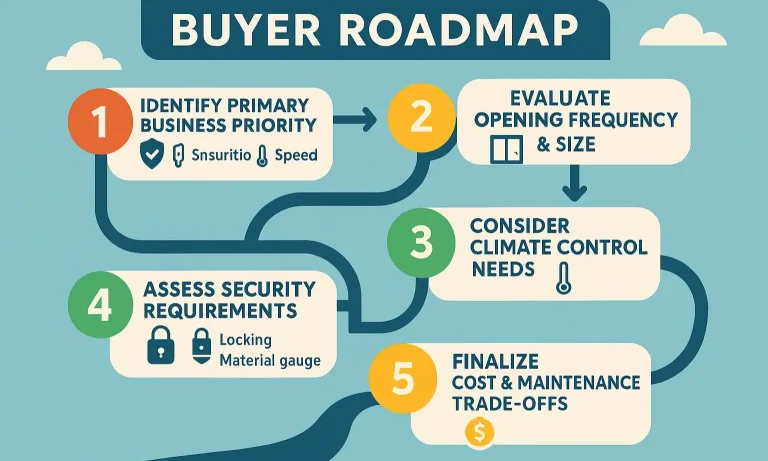
Theory is great, but let’s apply this to the real world. Here’s a breakdown of how different businesses might choose between a sectional roll up garage door system.
The Warehouse & Loading Dock
Priorities: High-cycle durability, speed, and impact resistance.
The Verdict: Rolling Steel. Loading docks are brutal environments. A rolling door can handle tens of thousands of cycles and is more forgiving of accidental bumps from forklifts. The speed of high-performance models also minimizes the time the bay is open, helping with climate control at busy roll-up vs sectional loading docks.
The Auto Repair Shop
Priorities: Excellent insulation for employee comfort, natural light, and wide, clear openings.
The Verdict: Insulated Sectional. A sectional door with a full row of windows provides a brighter, more pleasant work environment. The superior insulation helps keep the large bay comfortable in winter and summer, reducing HVAC strain.
The Downtown Retail Storefront
Priorities: Maximum overnight security and a compact footprint that doesn’t interfere with interior displays.
The Verdict: Rolling Steel. A rolling security grille or solid steel door is the industry standard for storefronts. It provides an imposing barrier after hours and coils away completely during the day, maximizing valuable retail space.
The Climate-Controlled Facility (Food Storage, Pharmaceutical)
Priorities: The absolute best thermal seal and highest possible R-value to maintain strict temperature and humidity levels.
The Verdict: Insulated Sectional. In applications where even a minor temperature fluctuation can spoil inventory, the thick, continuous insulation of a sectional door is the clear winner. Paired with high-end perimeter seals, it creates a virtual walk-in cooler.
Beyond the Basics: Total Cost of Ownership
It’s tempting to focus on the upfront price, but a commercial door is a long-term investment. Consider these factors:
- Maintenance: Both doors require regular garage door maintenance to ensure safe operation. However, the robust simplicity of a rolling steel door often means less frequent and less complex service calls over its lifespan.
- Repairs: If a forklift hits a sectional door, you may need to replace one or more entire panels, which can be costly and lead to downtime. If the same happens to a rolling steel door, you can often replace just the damaged slats, making for a quicker and cheaper repair.
- Lifespan: Rolling steel doors are built for grueling, high-cycle environments. If your door will open and close more than a dozen times a day, investing in a system with high cycle commercial garage doors components will pay for itself by avoiding premature failure.
Frequently Asked Questions (FAQ)
What is the typical cost difference between the two?
Generally, a standard sectional door has a lower upfront cost than a rolling steel door of the same size. However, prices for both can vary widely based on size, insulation, motor type, and security features.
Which door lasts longer?
In a high-use, demanding industrial environment, a rolling steel door will typically have a longer operational lifespan due to its simpler, more robust construction.
What is the most reliable type of garage door?
Reliability depends entirely on matching the door to its application. A sectional door in a climate-controlled showroom is extremely reliable. A rolling steel door on a busy loading dock is also extremely reliable. The problems arise when you install a door not designed for its environment—like a light-duty sectional door in a high-cycle warehouse.
Your Next Step: Making an Informed Decision
Choosing the right commercial door is a strategic decision. By shifting your focus from a simple product comparison to a problem-solving mindset, the right choice becomes much clearer.
Start by defining your number one priority. Is it impenetrable security? Is it rock-solid climate control? Or is it long-term durability in a high-traffic zone? Once you know what matters most, you can confidently select the door that will serve as a valuable asset for your business for years to come.
If you’re ready to explore the specific options that fit your facility’s needs, our team of experts is here to help you weigh the trade-offs and find the perfect solution.
You May Also Like
High-Cycle Commercial Doors for Distribution Centers and Warehouses
That sound you hear isn’t just a truck backing up to the dock. It’s the rhythm of your entire operation. Every time a loading dock door groans open and slowly closes, it’s a beat in that rhythm. But what if that beat…
Published Date: Jun 8, 2026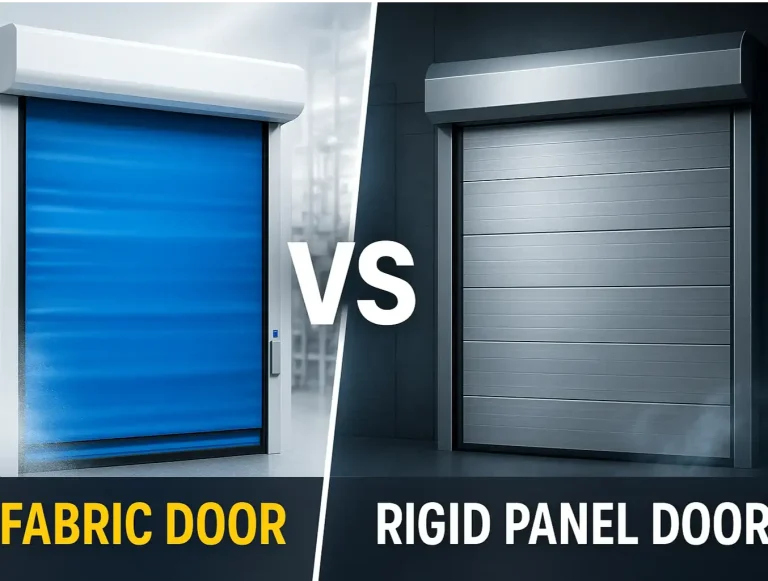
High-Speed Fabric vs. Rigid Panel Doors for Manufacturing
Choosing a new high-speed door for your facility can feel like a simple equipment purchase. You look at specs, compare prices, and pick one. But here’s an insight many facility managers learn the hard way: the wrong…
Published Date: Jun 5, 2026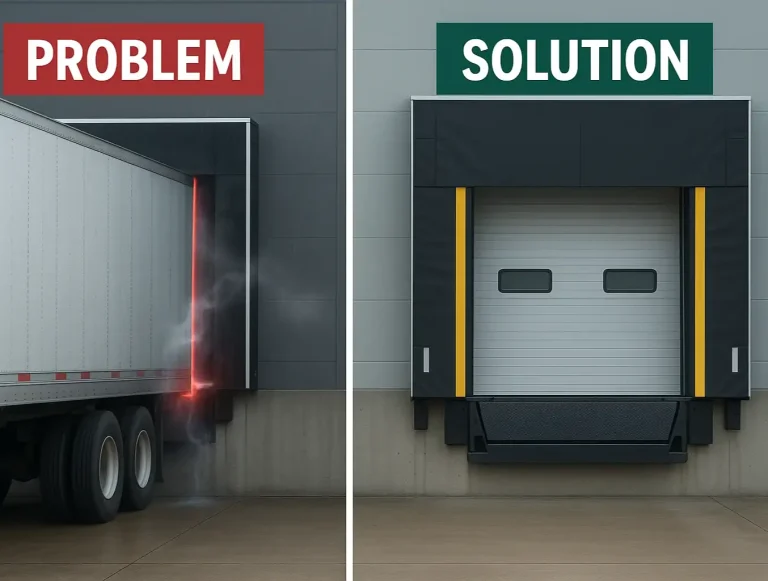
Shelter Integration with Overhead Loading Dock Doors
That gap between the truck and your loading dock wall? It might look small, but it’s a massive drain on your resources. Every day, it’s leaking heated or cooled air, inviting in rain and pests, and creating potential…
Published Date: Jun 4, 2026