





High-Cycle Commercial Doors for Distribution Centers and Warehouses
Published: Jun 8, 2026
That sound you hear isn’t just a truck backing up to the dock. It’s the rhythm of your entire operation. Every time a loading dock door groans open and slowly closes, it’s a beat in that rhythm. But what if that beat is too slow? What if it’s letting your conditioned air—and your profits—escape with every cycle?
For many distribution centers and warehouses, the commercial garage door is an afterthought—a simple barrier between inside and out. But in a high-traffic environment, that “simple barrier” is actually a critical piece of machinery. A standard door, designed for a few cycles a day, will quickly become a bottleneck, a safety hazard, and a constant drain on your maintenance budget when forced to perform in a high-cycle world.
This guide is for facility managers who suspect their doors are costing them more than they realize. We’ll move beyond the basics and explore how choosing the right high-performance system can transform your loading dock from a liability into a competitive advantage.
1. The Bottleneck at Your Dock
Imagine Dock 4 on a busy Tuesday. A truck has been waiting for five minutes while the old sectional door slowly grinds its way open. During that time, two forklift operators are idle, the shipping lane is backing up, and expensive refrigerated air is pouring out of your facility. The door finally opens, the pallet is loaded, and the slow process reverses. This happens 150 times a day at that single dock.
This isn’t just an inconvenience; it’s a series of cascading operational costs:
- Wasted Labor: Idle staff waiting for doors translates directly to lost productivity.
- Energy Loss: A slow door is an open door for longer. In climate-controlled facilities, this means your HVAC system is constantly fighting to maintain temperature, leading to skyrocketing energy bills.
- Downtime & Repairs: A standard door used in a high-cycle application will break down. Its springs, cables, and opener are not engineered for constant use, leading to frequent and costly service calls.
- Safety Risks: Older, slower doors often lack modern safety features, increasing the risk of accidents with personnel and equipment.
The first “aha moment” for many managers is realizing their loading dock doors aren’t just doors; they are dynamic components of their workflow.
2. Foundation: The Anatomy of a Commercial Door System
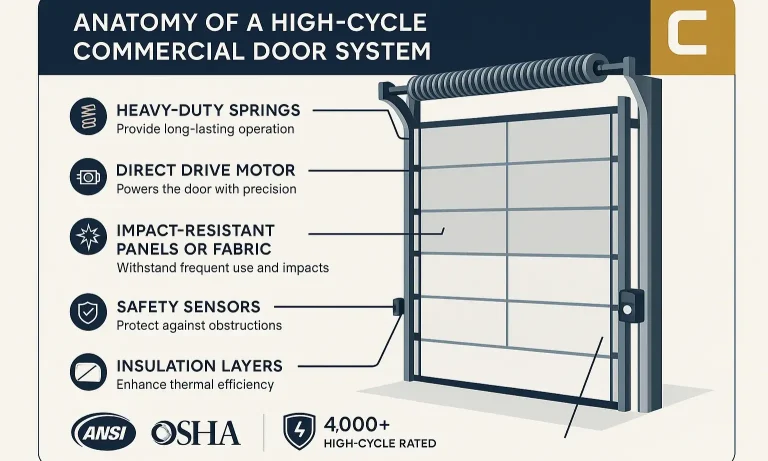
Before we can talk about high-performance solutions, let’s clarify some foundational terms. The logistics world is full of jargon, and “door” can mean many things.
Dock Door vs. Grade-Level Door: This is the most common point of confusion. A Dock Door is elevated off the ground, designed for trucks to back directly up to it for loading and unloading. A Grade-Level Door (or drive-in door) is at ground level, allowing vehicles like forklifts or vans to drive directly into the building.
While they serve different functions, both can be required to operate hundreds of times a day. Understanding the guts of these doors reveals why a standard model just can’t keep up. A true commercial door system is more than just panels; it’s an ecosystem of engineered parts designed for performance.
While they serve different functions, both can be required to operate hundreds of times a day. Understanding the guts of these doors reveals why a standard model just can’t keep up. A true commercial door system is more than just panels; it’s an ecosystem of engineered parts designed for performance.
Every component, from the torsion springs to the weather seals, is put under immense stress in a busy warehouse. Understanding their expected garage door component lifespans is key to planning effective maintenance and avoiding unexpected failures.
3. Building: The "High-Cycle" Difference
So, what actually makes a door “high-cycle”? It’s not just a marketing term. It’s an engineering classification for doors built to withstand 100 or more cycles (one open and one close) per day without premature failure.
A standard commercial door spring might be rated for 10,000 to 15,000 cycles. In a busy warehouse, you could burn through that in less than a year. High-cycle doors use springs rated for 50,000, 100,000, or even more cycles.
But it goes beyond springs. The “high-cycle” designation impacts the entire system:
- Motor: Instead of a standard chain- or belt-drive opener, high-performance doors often use powerful, direct-drive operators. A robust commercial high cycle garage opener is the heart of the system, delivering speed and reliability.
- Speed: High-speed doors can open at up to 100 inches per second, compared to the 8-12 inches per second of a standard sectional door. The advantages of high performance doors in terms of saved time and energy are enormous.
- Materials: These doors are built to last, using everything from heavy-gauge steel to impact-resistant fabric that can literally “break away” upon forklift impact and be reset in minutes.
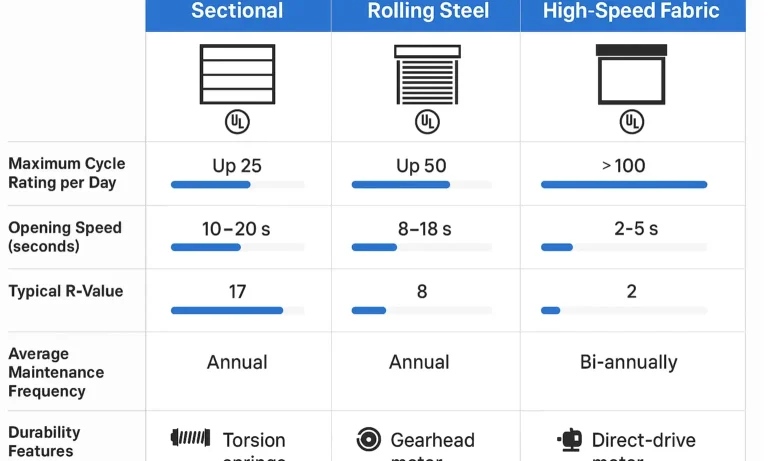
Choosing the right type of door depends entirely on your facility’s specific needs. Let’s compare the three most common options for warehouses.
Deciding between roll-up vs sectional loading docks is a critical first step, but for high-traffic areas, high-speed fabric doors often provide the best long-term value despite a higher initial investment.
4. Mastery: The 5-Factor Selection Framework
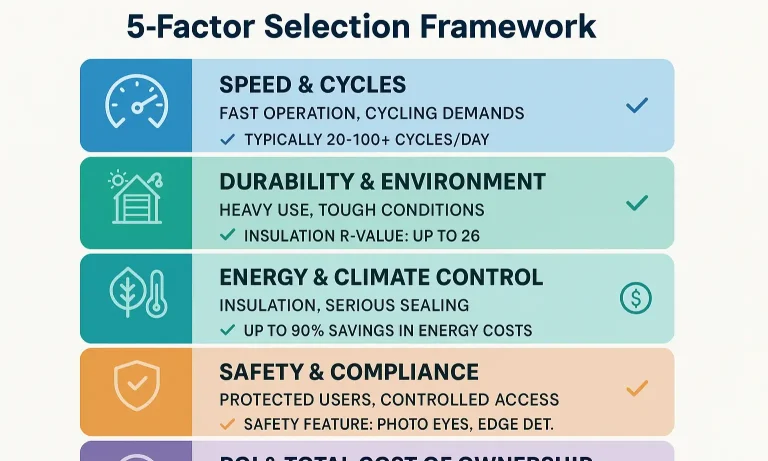
Choosing the right door feels complex, but it becomes much clearer when you frame the decision around your core business problems. Instead of getting lost in technical specs, use this 5-factor framework to guide your thinking.
Factor 1: Speed & Cycles
Key Question: How many times per hour/day does this door need to open?
What to Consider: Don’t guess. Perform a cycle count on your busiest docks for a few days. This number is the single most important factor in your decision. Underestimating it is the most common and costly mistake.
Factor 2: Durability & Environment
Key Question: What kind of abuse will this door face?
What to Consider: Is forklift traffic heavy? An impactable or breakaway door can save thousands in panel replacement costs. Is the environment corrosive or subject to wash-downs (e.g., food processing)? You may need stainless steel tracks and components.
Factor 3: Energy & Climate Control
Key Question: How much is energy loss at this door costing me?
What to Consider: For refrigerated or climate-controlled warehouses, speed is paramount. The faster a door closes, the less energy you lose. Also, look at the door’s R-value (a measure of insulation) and the quality of its perimeter seals.
Factor 4: Safety & Compliance
Key Question: How can this door protect my people and products?
What to Consider: Modern high-performance doors come with advanced safety features. Photo-eye sensors are standard, but also consider light curtains (which create a full grid of light to detect obstructions) and reversing edges. Following proper garage door safety rules is non-negotiable in a commercial setting.
Factor 5: ROI & Total Cost of Ownership
Key Question: What is the long-term value, not just the upfront price?
What to Consider: This is where it all comes together. A high-speed door might cost more initially, but it can pay for itself in 1-2 years through energy savings, productivity gains (reduced wait times), and lower maintenance costs. A reliable LiftMaster commercial garage door opener, for example, reduces downtime and service calls.
5. Action: Your Pre-Purchase Checklist
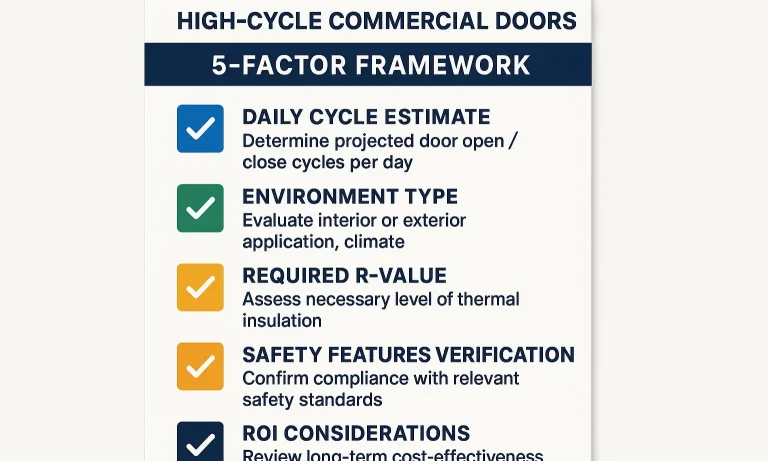
Feeling more prepared? When you’re ready to talk to a vendor, you should be leading the conversation. Use this checklist to ensure you’re asking the right questions and providing the right information to get a door that truly fits your operation.
Thinking through these points before you even request a quote will save you time, money, and future headaches. Proactive planning and a solid garage door maintenance schedule are the keys to maximizing the life and performance of your investment.
Frequently Asked Questions
What is the difference between a dock door and a bay door?
While the terms are often used interchangeably, “dock door” specifically refers to an elevated door at a loading dock. “Bay door” is a more general term that can refer to any large opening in a building, including grade-level doors. In a warehouse context, most people mean “dock door” when they say “bay door.”
What size commercial overhead door do I need?
The standard size for a dock door is typically 8′ wide x 10′ high or 9′ wide x 10′ high. However, this depends on the types of trucks you service and the loads you handle. It’s best to consult with a professional to ensure your door openings are designed correctly for your fleet.
What are common problems with overhead doors?
In high-cycle environments, the most common failures are broken torsion springs, frayed or broken cables, misaligned tracks from minor impacts, and worn-out opener motors. Many of these issues are minimized by choosing a door system specifically engineered as one of the many commercial high cycle doors available.
Can you manually operate a commercial garage door if the power goes out?
Yes, most commercial doors have a manual disengage and a chain hoist system. This allows you to manually open or close the door by pulling on a chain, though it can be physically demanding. It’s a critical feature for ensuring you can secure your facility during a power outage.
Your Next Move
Your commercial doors are more than just openings in a wall. They are critical control points for your facility’s efficiency, security, and energy consumption. By moving beyond the “one-size-fits-all” mindset and applying a framework based on your unique operational needs, you can make an investment that pays dividends for years to come.
The journey starts with understanding your true costs and identifying the bottlenecks. With the right knowledge, you can specify a door system that accelerates your workflow, protects your people, and strengthens your bottom line.
You May Also Like
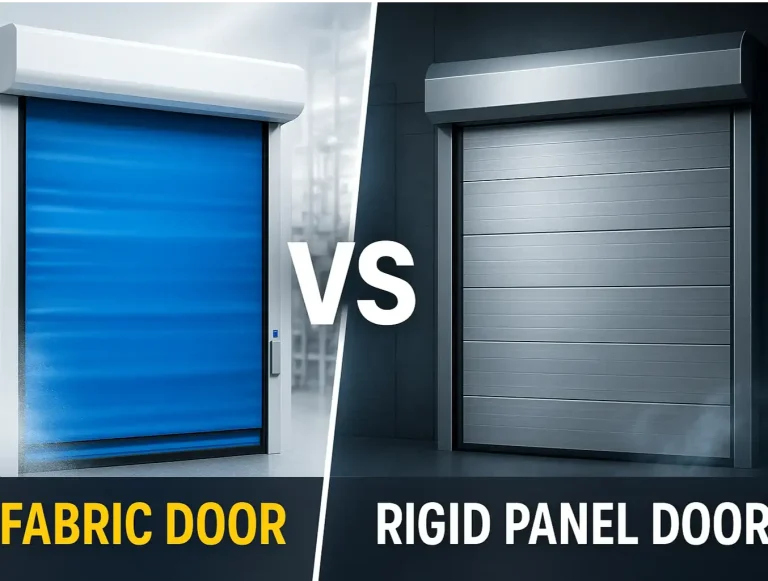
High-Speed Fabric vs. Rigid Panel Doors for Manufacturing
Choosing a new high-speed door for your facility can feel like a simple equipment purchase. You look at specs, compare prices, and pick one. But here’s an insight many facility managers learn the hard way: the wrong…
Published Date: Jun 5, 2026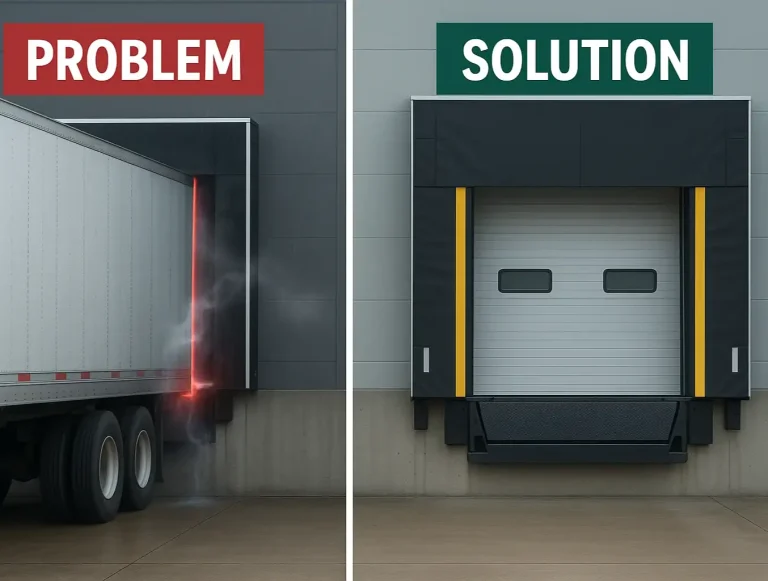
Shelter Integration with Overhead Loading Dock Doors
That gap between the truck and your loading dock wall? It might look small, but it’s a massive drain on your resources. Every day, it’s leaking heated or cooled air, inviting in rain and pests, and creating potential…
Published Date: Jun 4, 2026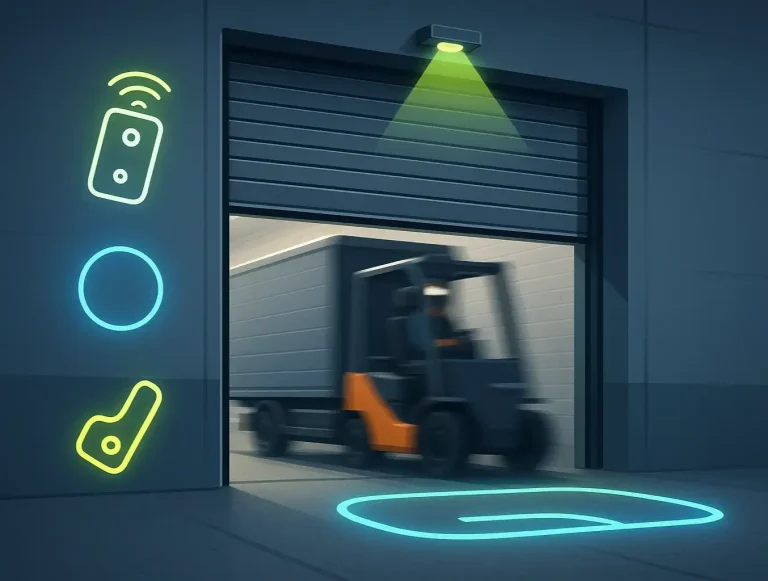
Activating Commercial Garage Doors
Imagine a busy warehouse. Every day, dozens of trucks arrive and depart. Each time, the driver has to stop, get out, walk to a wall-mounted button, wait for the massive door to open, get back in the truck, and drive…
Published Date: Jun 3, 2026