





Difference Between Garage Door Spring Repair vs. Full System Failure
Published: Jun 11, 2026
Imagine this: You’re rushing out the door one morning, you hit the garage door remote, and instead of the familiar whir, you hear a startlingly loud BANG. The door groans, moves a few inches, and stops dead. That sound wasn’t just a part breaking; it was the starting pistol for a race against your bank account.
Most homeowners in this situation ask one question: “How much will this cost to fix?”
But the more important question is: “How much could I have saved?”
The difference between addressing a weakening garage door spring early and waiting for it to snap is not a matter of a few dollars. It’s often the difference between a predictable, manageable repair and an unexpected, four-figure financial disaster. Let’s break down the two paths you can take—and the dramatically different costs of each.
Foundation: The Hardest Working Part of Your Home
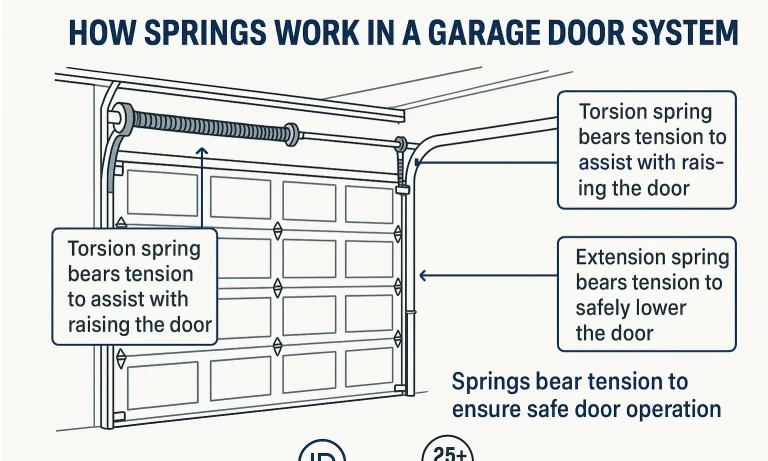
Before we talk money, let’s understand the hero of this story: the garage door spring. Whether you have large, coiled torsion springs above the door or longer, thinner extension springs along the sides, their job is the same. They act as a counterbalance, holding hundreds of pounds of tension to make your heavy garage door feel light enough for you (or your automatic opener) to lift.
Think about it—they do the heavy lifting every single time you open or close the door.
Most springs are rated for about 10,000 cycles (one open and one close). If your family uses the door four times a day, you’ll hit that 10,000-cycle mark in about seven years. They are designed to wear out, and when they do, they’re not just failing; they’re passing a massive burden onto the rest of your garage door system.
The Whisper Before the BANG: Early Warning Signs
A spring rarely just snaps without warning. It sends out distress signals first. Learning to spot these is your ticket to avoiding a catastrophic failure. Paying attention to these subtle clues is crucial, as they are often clear garage door spring replacement signs you need to watch for.
Here are the key “whispers” to listen for:
- The Door Feels Heavy: Disconnect the automatic opener and try to lift the door by hand. If it feels incredibly heavy or you can’t lift it at all, the springs are no longer doing their job.
- Jerky or Crooked Movement: Does the door shudder on its way up or down? Does one side seem to lift faster than the other? This indicates an imbalance, often caused by a failing spring.
- Visible Gaps in the Coils: Look at the torsion spring above your door. When the door is closed, the coils should be tight. If you see a 2-3 inch gap, the spring has lost tension and is broken.
- Loud Noises: Grinding, squeaking, or screeching sounds during operation mean the springs and other components are under immense strain.
- A well-balanced door will stay put or move very slowly.
- A door with bad springs will slam shut or drift down quickly.
Your Quick Safety Check: The Balance Test
You can safely test your door’s balance yourself. First, make sure the door is closed. Then, pull the red emergency release cord on your opener to disconnect it. Now, carefully lift the door by hand to about waist height and let go.
If it slams shut, you’ve confirmed the springs are failing. Re-engage the opener, but avoid using the door until a professional can take a look.
Action: Your 3-Step Action Plan
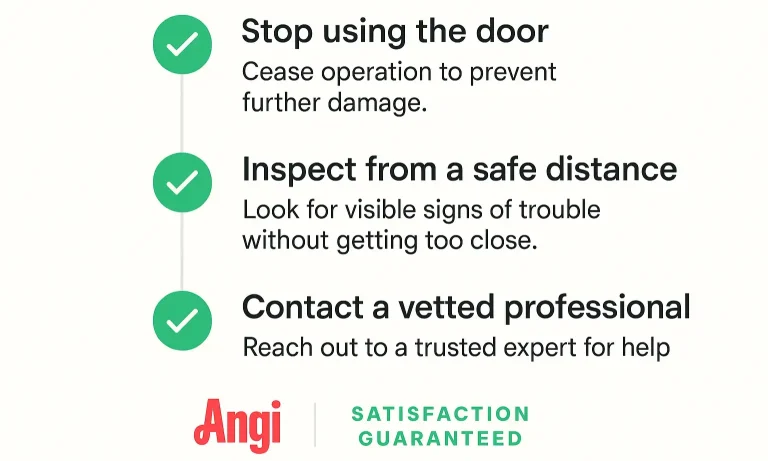
If you recognize any of the warning signs, or if you’ve already experienced a spring failure, here’s what to do next to protect yourself and your property.
- Stop Using the Door Immediately. This is the most important step. Do not try to operate the door, especially with the automatic opener. You risk burning out the motor or causing more damage. If your car is inside, find another way to get around until the door is fixed.
- Inspect from a Safe Distance. Look for the signs we mentioned: a visible gap in the spring, frayed or snapped cables, or bent tracks. Do not touch anything. The springs, even when broken, can be under extreme tension and are incredibly dangerous.
- Call a Qualified Professional. Spring replacement is not a DIY project. It’s one of the most dangerous home repairs a person can attempt without proper training and tools. A professional technician can safely replace the springs, rebalance the door, and inspect the entire system for collateral damage.
The debate over DIY vs. professional garage door spring maintenance is settled when it comes to springs—safety must come first. When you need help, a 24/7 service ensures you can get prompt assistance, avoiding the stress of being stuck. Whether you need an emergency garage door repair or a scheduled check-up, an expert can handle it safely.
Frequently Asked Questions
I heard a loud bang from my garage. What was it?
That was almost certainly one of your garage door springs breaking. The sound is caused by the coils snapping under immense tension, releasing their energy instantly.
Can I manually open my garage door if the spring is broken?
It is not recommended. The door will be incredibly heavy (potentially 200-400 lbs) and can slam shut without warning, causing serious injury or damage. Disconnect the opener and leave the door closed until it can be professionally repaired.
My door has two springs. Only one broke. Should I replace both?
Yes, absolutely. Garage door springs are installed at the same time and have the same lifecycle. If one has failed, the other is not far behind. Replacing both at once saves you money on a second service call in the near future and ensures your door remains properly balanced. A professional can help you understand what’s involved to replace a garage door spring.
How can I make my new springs last longer?
Regular garage door spring maintenance is key. A technician can lubricate the springs and other moving parts and check the door’s balance annually. This simple check-up can extend the life of your entire system.
What’s the difference between torsion and extension springs?
Torsion springs are mounted on a bar above the garage door and are the modern standard for safety and durability. Extension springs run along the horizontal tracks on each side of the door and are more common on older homes. Torsion springs provide better balance and a more controlled motion.
By understanding the true cost of waiting, you can make an informed choice that saves you time, money, and a massive headache. Listen for the whispers, and you’ll never have to hear the bang.
You May Also Like
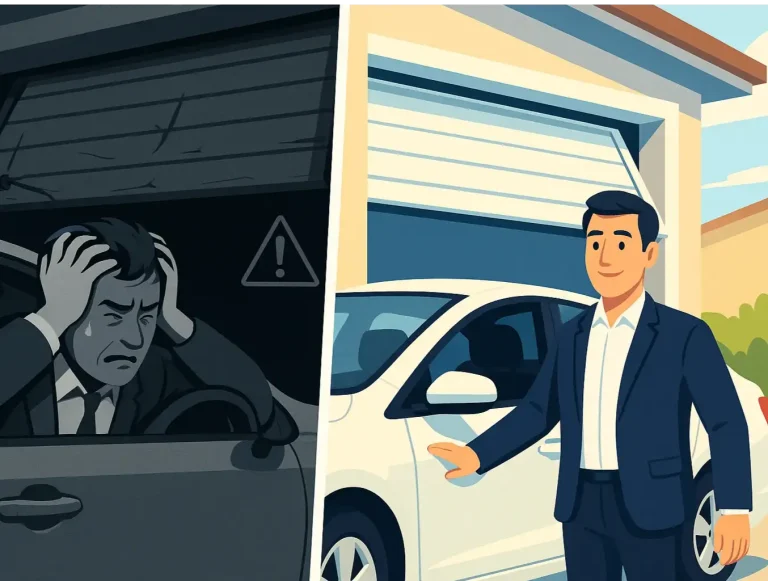
How a Stuck Garage Door Impacts Your Daily Schedule
It’s the moment every busy homeowner dreads. You’ve brewed the coffee, grabbed your keys, and you’re mentally running through your day’s schedule. You press the button on the garage door opener, and… nothing. Or…
Published Date: Jun 10, 2026
How Timely Garage Door Repairs Can Save Homeowners Money & Stress
A garage door is an essential part of overall home defense. It keeps your family safe, protects your belongings, and simplifies everyday life. However, like any other mechanism, it’s not immune to wear and tear. Over…
Published Date: Feb 19, 2025
Clearing Smart Garage Door Opener Wi-Fi & App Integrations Before Sale
Selling your home is a whirlwind of packing, paperwork, and planning. In the chaos, it's easy to overlook a critical digital detail: your smart garage door opener. You might remember to hand over the physical…
Published Date: Jun 11, 2026