





Full-View Aluminum & Glass Garage Doors: Modern Design
Published: May 20, 2026
Ever drive past a home and do a double-take? Not because of the landscaping or the paint color, but because the garage door was a stunning wall of glass that seemed to blend the indoors with the out. You’re not just seeing things. You’re seeing the rise of one of the most transformative trends in home design: the full-view aluminum and glass garage door.
Once reserved for high-end restaurants and fire stations, these doors are now making a bold statement on homes across the country. They’re more than just a way to park your car; they’re an architectural feature that floods your space with natural light and instantly elevates your home’s curb appeal. But beyond the striking visuals lies a series of practical questions. How much privacy do you really get? Are they energy efficient? Are they durable?
You’ve come to the right place. This guide is designed to walk you through everything you need to know, moving beyond inspiration photos to give you the confidence to decide if one of these innovative garage door designs for modern homes is the right choice for you.
Foundation: What Exactly Is a Full-View Garage Door?
At its core, a full-view garage door is beautifully simple. It consists of two primary components:
- An Aluminum Frame: This creates the structure of the door. The frame is typically lightweight, durable, and naturally resistant to rust and corrosion, making it a great choice for various climates.
- Glass Panels: These large glass sections (often called “lites”) are fitted into the aluminum frame, making up the majority of the door’s surface area.
The magic of these glass garage doors’ modern style for homes is how they transform a traditionally solid, imposing feature into something light, airy, and elegant. They can make a small garage feel larger, turn a converted garage into a bright living space, or even serve as a moveable wall between an indoor and outdoor entertaining area.
Building Your Door: The 4 Key Decisions You'll Make
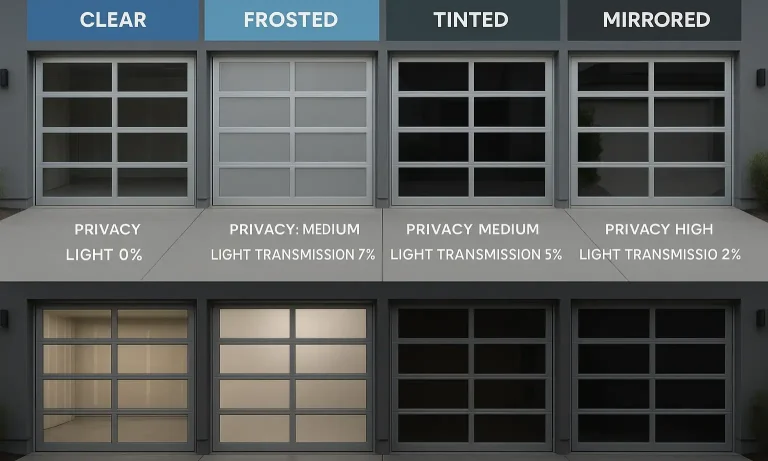
Choosing a full-view door isn’t a single decision; it’s a series of choices that balance aesthetics, privacy, and performance. Let’s break down the four key areas you’ll need to consider.
Decision #1: Glass & Privacy Options (The Aesthetic Heart)
This is where the vision for your door truly comes to life. The type of glass you choose dictates not only the look but also the level of natural light and, most importantly, privacy.
A common mistake is only considering how the glass looks during the day. The real test of privacy comes at night when the lights are on inside your garage.
Here are the most common glass options:
- Clear Glass: Offers maximum light and a completely unobstructed view. It’s perfect for spaces where privacy is not a concern, like a showroom, a studio, or a garage that opens onto a private backyard.
- Frosted (or Satin Etch) Glass: This is a popular choice for balancing light and privacy. It allows ample daylight to filter through while obscuring shapes and details inside. At night, with interior lights on, it will still create a “glow,” and silhouettes may be visible up close.
- Tinted Glass (Bronze, Gray, etc.): Tinted glass reduces glare and UV rays while offering a sleek, modern look. It provides moderate privacy during the day but, like clear glass, becomes transparent when it’s dark outside and bright inside.
- Mirrored Glass: Provides maximum privacy during the day by creating a reflective surface on the exterior. However, this effect reverses at night, making the interior fully visible from the outside when lights are on.
While these doors are visually stunning, it’s natural to ask how to secure a garage door made primarily of glass. Most manufacturers use tempered or laminated safety glass, which is much stronger and safer than standard glass.
Decision #2: Frame & Finish (The Structural Backbone)
The aluminum frame does more than just hold the glass; it defines the door’s style and ensures its longevity. You can typically choose from a variety of finishes to perfectly match your home’s exterior:
- Standard Anodized Finishes: Clear anodized aluminum (a matte silver look) is the classic choice. You can also find options like dark bronze or black anodized finishes. Anodizing is an electrochemical process that makes the aluminum surface more durable and corrosion-resistant.
- Powder Coating: For ultimate customization, powder coating offers a huge spectrum of colors. This durable finish is applied as a dry powder and then cured under heat, creating a hard finish that is tougher than conventional paint.
If you have a very specific vision, it’s worth exploring options for custom garage doors to get the precise color and configuration you want.
Decision #3: Insulation & Efficiency (The Comfort Factor)
Here we arrive at one of the most critical—and often overlooked—decisions. A wall of glass can potentially be a major source of heat loss in the winter and heat gain in the summer. However, modern full-view doors offer solutions to mitigate this.
The key term to understand is R-value. In simple terms, R-value measures a material’s resistance to heat flow. The higher the R-value, the better it insulates. Understanding the garage door R-value is crucial, especially if your garage is attached to your home or if you plan to use it as a living space.
You’ll have two main levers to pull for insulation:
1. Insulated Glass: Standard doors may use single-pane glass, which offers virtually no insulation. The upgrade is insulated double-pane glass, where two panes are separated by a sealed air or gas-filled space. This can significantly improve the R-value.
2. Insulated Frame: The aluminum frame itself can be a source of heat transfer. Some manufacturers offer thermally broken frames, which have a barrier between the interior and exterior frame pieces to reduce temperature conduction.
The challenge is that features that maximize light (like clear, single-pane glass) offer the lowest R-value, while more insulated options might slightly reduce clarity. This chart helps visualize that trade-off.
Mastery: The Practical Realities Most Guides Miss
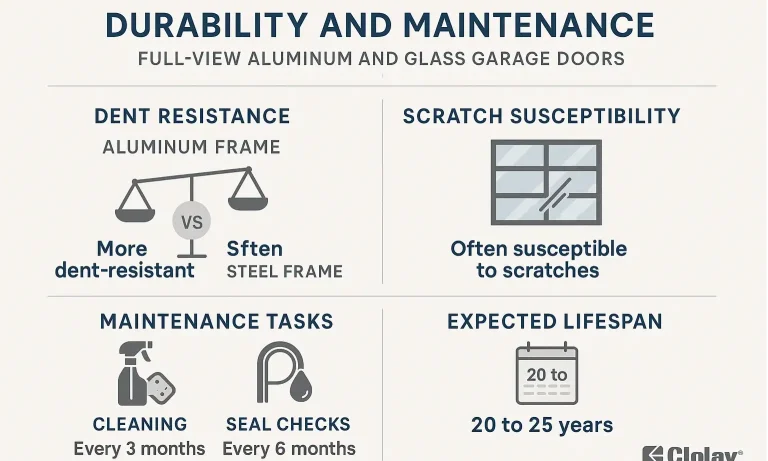
You’ve designed your dream door in your head. Now, let’s talk about the real-world considerations that ensure you’ll be happy with it for years to come.
Durability & Maintenance Considerations
A common concern is the durability of the aluminum frame. How does it compare to steel? Aluminum is rust-proof and very resilient to weather, but it is a softer metal than steel, making it more susceptible to dents from a significant impact (think stray baseballs or a bump from a car).
The debate over the pros and cons of choosing an aluminum garage door versus steel often comes down to this trade-off: aluminum offers a sleeker, more modern aesthetic and rust resistance, while steel offers superior dent resistance.
Maintenance is surprisingly simple. The frame and glass can be cleaned with mild soap and water. Like any garage door, it’s wise to get professional annual garage door maintenance to inspect springs, cables, and the opener. Should a panel get damaged, the decision to repair vs. replace will depend on the extent of the damage, but individual sections can often be replaced.
Opener & Hardware Requirements
Glass is heavier than the typical steel or aluminum panels used in other doors, especially if you opt for insulated double-pane glass. This means you can’t just attach any old opener.
A full-view door requires:
- A powerful and reliable opener: A robust belt or chain drive motor is often recommended to handle the extra weight smoothly and safely.
- Properly calibrated springs: The torsion springs must be correctly sized and tensioned to counterbalance the door’s specific weight. This is a critical safety feature and should always be handled by a professional.
- Sufficient headroom: These doors operate on a standard track system, but it’s always good to confirm your garage has the necessary clearance. If not, solutions for garage door openers with low headroom are available.
FAQ: Answering Your Top Questions
What are the main disadvantages of aluminum garage doors?
The primary drawbacks are a higher initial cost compared to steel doors and a greater susceptibility to denting. Additionally, achieving a high R-value for insulation requires more expensive glass and frame options.
Are glass garage doors secure?
Yes. They are built with safety glass (tempered or laminated) that is very difficult to break. The aluminum frames are sturdy, and when paired with a quality lock and opener, they are just as secure as many other garage door types.
Can you see through frosted glass garage doors at night?
From a distance, no. Up close, if someone is standing right next to the glass, a silhouette or vague shape might be visible when the interior is brightly lit. They offer a high degree of privacy but are not 100% opaque under all lighting conditions.
Do glass garage doors let in a lot of heat or cold?
A basic, single-pane glass door will offer poor insulation. However, a door equipped with insulated double-pane glass and a thermally broken frame can provide reasonable energy efficiency suitable for most climates, especially for attached garages.
Action: Your Project Checklist
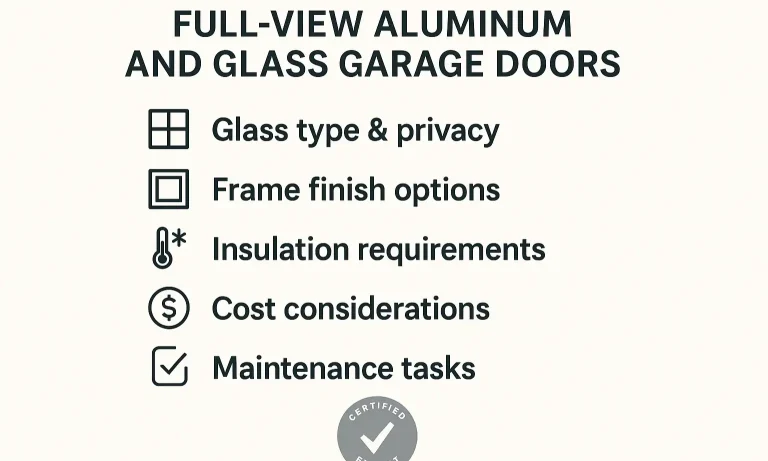
Feeling empowered? As you move forward, use this checklist to guide your conversation with a garage door professional and ensure you cover all your bases.
A full-view aluminum and glass garage door is more than an upgrade; it’s a statement. It’s a commitment to modern design, natural light, and a seamless connection between your living spaces and the world outside. By understanding the key decisions around glass, frames, insulation, and durability, you can move from inspiration to installation with total confidence, creating a stunning focal point for your home that you’ll love for years to come.
You May Also Like
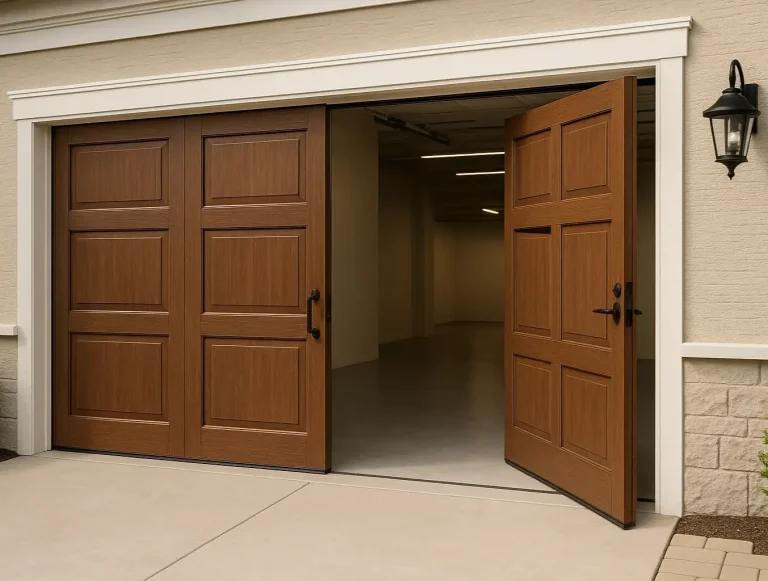
A Modern Look at a Classic Style for Functionality and Aesthetics
Your garage is more than just a place to park your car. It's a workshop, a home gym, a storage hub, or even the band's practice space. But if you have to open the entire heavy door every time you want to grab a tool…
Published Date: May 14, 2026
Explore Different Types of Garage Doors
Choosing the right garage door is about making your home more secure and looking better. Finding the one that meets your needs and your home’s style can be overwhelming with so many options. Whether you’re looking…
Published Date: Sep 25, 2024
The Pros and Cons of Choosing an Aluminum Garage Door
Looking for a sleek, low-maintenance garage door? An aluminum garage door is a smart choice for homeowners and businesses seeking modern style with minimal upkeep. From natural rust resistance to full-glass designs,…
Published Date: Dec 15, 2025