





A Modern Look at a Classic Style for Functionality and Aesthetics
Published: May 14, 2026
Your garage is more than just a place to park your car. It’s a workshop, a home gym, a storage hub, or even the band’s practice space. But if you have to open the entire heavy door every time you want to grab a tool or step inside, you’re not using the space to its full potential.
What if your garage door opened like a grand entrance? Imagine swinging open just one side to walk in, effortlessly blending your indoor and outdoor living spaces. This isn’t a futuristic concept; it’s a modern take on a classic design: the side-hinged garage door.
Often called “swing-out” or “barn-style” doors, these are making a major comeback, and for good reason. They offer a unique blend of timeless aesthetics and everyday functionality that traditional overhead doors simply can’t match.
The Classic Choice, Modernized: What Are Side-Hinged Doors?
Side-hinged garage doors function much like the doors inside your home, consisting of two panels hinged at the sides of the frame that swing open from the center. This simple, elegant mechanism has been around for centuries, but modern versions are engineered with advanced materials, high-quality insulation, and robust security features.
The primary benefit for most homeowners is that this design completely frees up the garage ceiling. Because there are no tracks, springs, or openers hanging overhead, the space has a much cleaner aesthetic and provides the vertical clearance necessary for high-storage racks or even a car lift.
Advantages of Side-Hinged Doors
One of the most practical benefits is effortless pedestrian access; you can simply open one leaf of the door to walk in or out without moving the entire unit. They are also known for their quiet operation and durability. Since the mechanics are straightforward, there are fewer moving parts to fail, which typically results in less operational noise and lower long-term maintenance requirements. Architecturally, these doors offer a sophisticated, classic look that enhances the curb appeal of many home styles.
Potential Drawbacks to Consider
However, there are trade-offs to this design. The most significant requirement is outward swing clearance, meaning you must keep your driveway clear of vehicles or snow to allow the doors to open. Heavy winds can also make the panels difficult to catch or close safely. From a technical standpoint, sloped driveways can make installation difficult, and while automation is possible, it requires specialized swing-arm openers that are more complex than standard overhead versions. Finally, homeowners should be prepared for a higher initial cost, as these units are often more expensive than standard sectional doors.
Building: The Complete Buyer's Guide
Thinking a side-hinged door might be right for you? The journey from curiosity to decision involves a few key factors. Before you start the process of buying a new garage door, let’s break down the essential choices you’ll need to make.
Choosing Your Material: Durability Meets Design
The material you choose impacts everything from curb appeal to long-term upkeep. Understanding the pros and cons of garage door materials is crucial for making a choice you’ll be happy with for years to come.
- Steel: The workhorse of modern garage doors. It’s durable, low-maintenance, and can be insulated effectively. Steel doors come pre-finished in various colors and can even be embossed with a wood-grain texture for a classic look without the upkeep.
- Wood: Unmatched in natural beauty and warmth. Wood offers incredible design flexibility, from rustic carriage house styles to sleek, modern designs. It requires more maintenance (staining or painting every few years) and is typically the most expensive option, but for many, the aesthetic is worth it. When considering wood, it’s also important to think about the framing; choosing the best wood for garage door frame construction is key to longevity.
- GRP (Glass Reinforced Polyester) / Composite: This material provides the look of wood without the maintenance. It’s resistant to rotting, warping, and dents, making it a great choice for harsh climates.
Insulation Explained: It’s More Than Just Temperature
Insulation in a garage door is measured by its R-value—the higher the number, the better the thermal resistance. But it’s not just about keeping your garage warm in the winter and cool in the summer. A well-insulated door also:
- Reduces Noise: It dampens sound from the street.
- Increases Durability: Insulated panels are stronger and more resistant to dings and dents.
- Improves Energy Efficiency: If your garage is attached to your home, a properly insulated door can help lower your energy bills. Knowing how to seal a garage door properly is just as important as the door’s R-value.
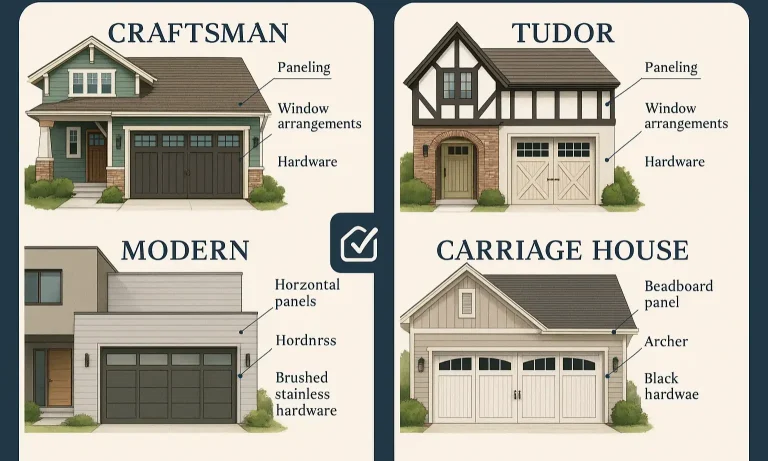
- Window Lites: Add natural light and character with different window configurations and glass types (clear, frosted, seeded).
- Hardware: Decorative hinges and handles in finishes like wrought iron or brushed nickel can act as jewelry for your garage.
- Paneling: Choose from classic raised panels, recessed panels, or a modern flush design for a clean, minimalist look.
- Door Configuration: While a 50/50 split is common, you can also opt for a 1/3-2/3 split, creating a smaller, dedicated pedestrian door.
Styles & Customization Visual Gallery
The true beauty of side-hinged doors lies in their versatility. They can be customized to complement any architectural style, from a historic Tudor to an ultra-modern build. The right garage door choices can dramatically enhance your home’s curb appeal.
Consider these elements:
The Automation Question: Can You Go Automatic?
Myth vs. Fact
Myth: You can’t automate side-hinged garage doors.
Fact: Modern swing-arm kits are designed specifically for this purpose, offering smooth, reliable, and remote-controlled operation.
Yes, you absolutely can! While you can’t use a standard overhead opener, specialized garage door automation systems are readily available. These typically involve two “swing-arm” operators mounted to the top of the door frame that connect to each door panel. They can be controlled with the same remotes, keypads, and smart-home apps as a conventional opener.
Mastery: Critical Pre-Purchase Considerations
You’ve explored the materials and styles. Now it’s time to address the real-world questions that determine if a side-hinged door is a practical fit for your home.
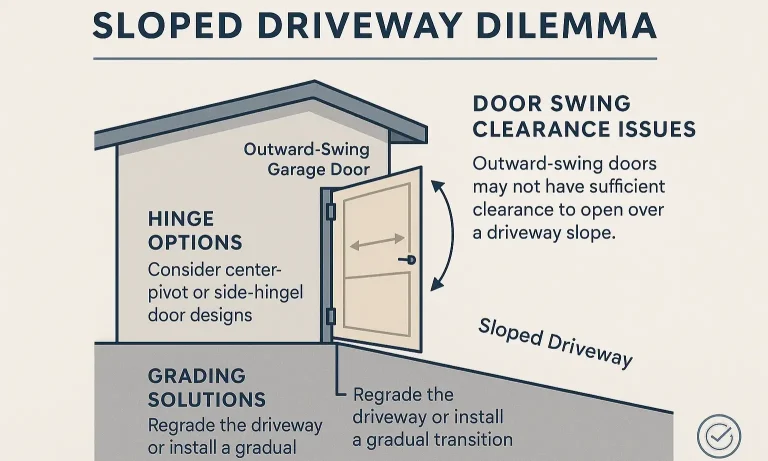
The Sloped Driveway Dilemma: What You MUST Know Before You Buy
This is the single biggest question that stumps potential buyers, and it’s one that many resources avoid. If your driveway slopes up and away from your garage, a standard outward-swinging door will not work. The bottom of the doors will hit the ground as they open.
However, this doesn’t have to be a deal-breaker. Honesty and proper planning are key.
Here are the potential solutions a professional will discuss with you:
- Inward-Swinging Doors: Some manufacturers offer doors that swing into the garage. This completely solves the driveway issue but requires you to have enough clear space inside your garage.
- Driveway Grading: For a slight slope, it may be possible to re-grade a small section of the driveway in front of the doors to create a level landing pad.
- Specialized Hinges: Rising hinges can lift the doors slightly as they open, providing a few extra inches of clearance. This only works for very gentle slopes.
The most important step is to have a professional measure and assess your driveway before you commit.
Security & Maintenance: Protecting Your Investment
Modern side-hinged doors are built with security in mind. They typically feature a robust center locking system with a deadbolt, and some models include top and bottom bolts on the inactive door for fortress-like garage door protection.
Maintenance is generally straightforward. Regular cleaning, lubricating the hinges, and checking the weather seals will keep your doors operating smoothly. Avoiding common mistakes to avoid with garage door maintenance services by scheduling a professional tune-up can prevent small issues from becoming big problems.
Action: Your Path Forward
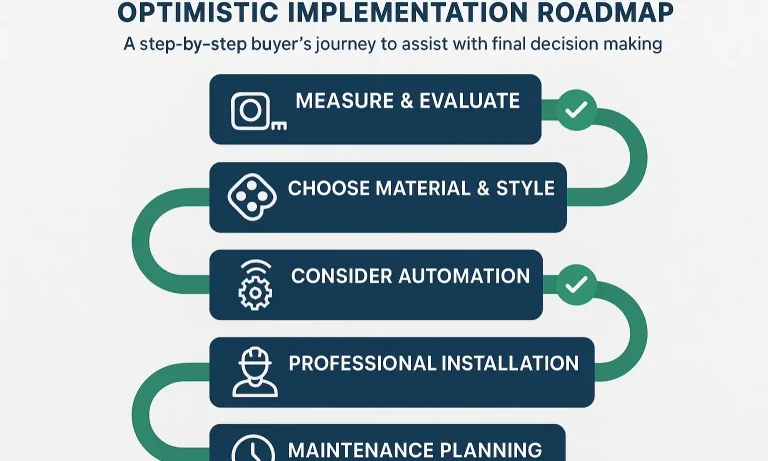
Choosing a side-hinged garage door is about more than just closing an opening; it’s about reimagining how you use a significant part of your home. It’s a choice that prioritizes lifestyle, convenience, and aesthetic elegance. By understanding the materials, styles, and critical considerations like driveway slope, you can make an informed decision with confidence.
Downloadable Checklist and Decision Roadmap
Feeling ready to take the next step? This roadmap simplifies the process, ensuring you’ve covered all your bases from initial dream to final installation. When you’re ready to find a professional, look for a certified team that can answer your questions about garage door installation near me.
Frequently Asked Questions (FAQ)
Are side-hinged garage doors expensive?
They generally have a higher initial cost than basic sectional doors, largely due to their construction and hardware. However, their price is comparable to high-end carriage house style overhead doors. The final cost depends heavily on the material (wood being the most expensive), insulation, and customization options.
Are side-hinged garage doors secure?
Yes. Modern versions are designed with security as a priority. Look for models with multi-point locking systems, including a central deadbolt and shoot-bolts at the top and bottom of the fixed door.
Are they a good choice for all climates?
They are an excellent choice for most climates, especially when properly insulated and sealed. The only major weather consideration is wind. In very windy areas, strong gusts can make the doors difficult to manage, so installing door stays (which hold the doors open) is highly recommended.
How much space do they need to open?
You need enough clear, level space in your driveway for the doors to swing open completely. If a door is 4 feet wide, you need at least 4 feet of unobstructed space in front of it. Always measure your available swing space before purchasing.
You May Also Like
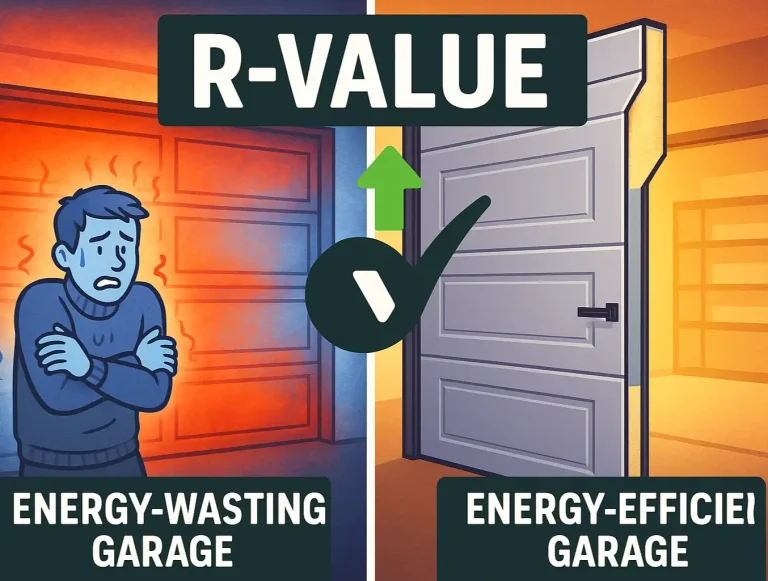
Which Insulated Garage Door Type Offers the Best Thermal Performance
Ever get that feeling that your home is working overtime just to stay comfortable? You’ve checked the windows and sealed the front door, but there's one massive weak spot many homeowners overlook: the garage door.…
Published Date: May 13, 2026
Explore Different Types of Garage Doors
Choosing the right garage door is about making your home more secure and looking better. Finding the one that meets your needs and your home’s style can be overwhelming with so many options. Whether you’re looking…
Published Date: Sep 25, 2024
Understanding Wind Load and Impact Resistance
When a hurricane is on the horizon, we instinctively secure our windows and doors. But many homeowners overlook the single largest, and most vulnerable, opening in their home: the garage door. It’s not just a big…
Published Date: May 12, 2026