





The Complete Guide to Garage Door Cable Replacement And Repair
Published: Jul 10, 2026
Your garage door is likely the largest moving part of your home, and it relies on a complex system of springs and cables to operate safely. While the springs do the heavy lifting, the cables act as the critical safety line that actually moves the door. When these cables fail, your door becomes an immovable—and potentially dangerous—wall.
Whether you are dealing with a sudden break or just noticing some wear and tear, understanding the basics of garage door cable replacement is essential for any homeowner.
Understanding Your Garage Door Cable System
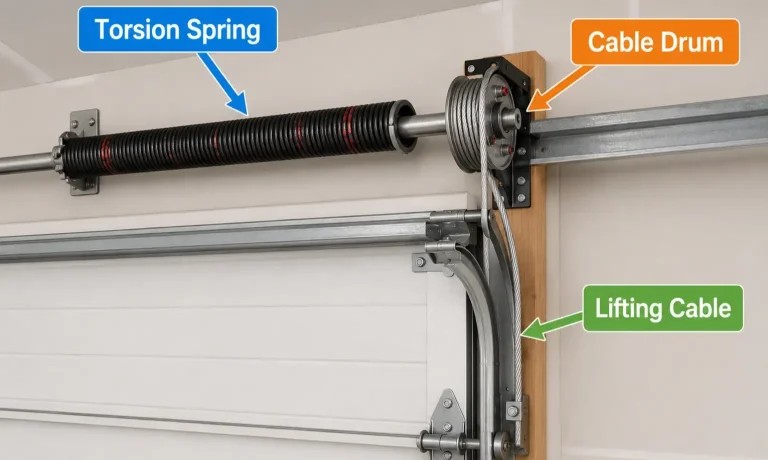
Every time you press your remote, the garage door cable goes to work. Made of tightly braided galvanized steel wire, these cables are attached to the bottom corners of your door and run up to drums located near the springs.
As the spring unwinds or stretches to provide lifting power, the cable wraps around the drum to pull the door up. If the tension isn’t balanced perfectly, slack can develop in the line, which is a leading cause of a cable slipping off the drum.
4 Signs You Need a Garage Door Cable Repair
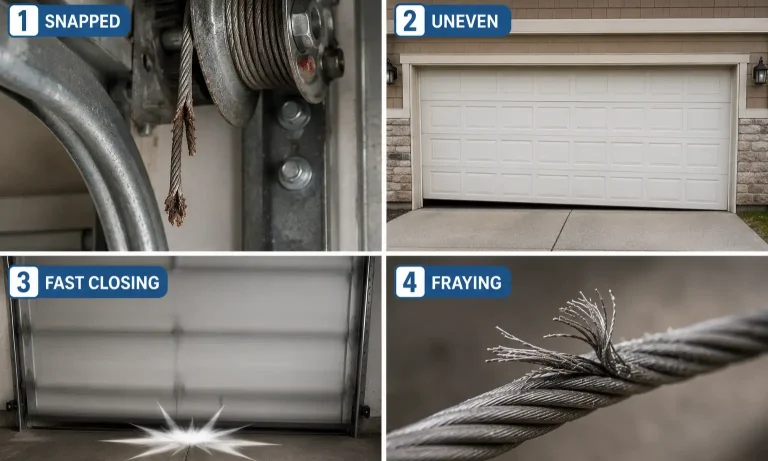
Catching cable issues early can save you from a major headache. Here are the top four warning signs to look out for:
1. Your Garage Door Cable Snapped
This is the most obvious and urgent sign. If you hear a loud bang from the garage and your door refuses to open, it is highly likely that your garage door cable snapped. When this happens, the heavy door will be dead weight, and operating the opener will only damage the motor. Complete replacement is the only solution.
2. The Garage Door is Uneven or Sagging
If your door looks crooked as it moves, or if it hits the ground on one side before the other, you have a tension issue. One cable may have stretched over time or slipped. Catching this early is crucial; reviewing our guide on safely adjusting your garage door cables can help you identify the imbalance. If the issue is minor slack, understanding our guide on tightening loose cables might give you an idea of what corrections are needed before a break occurs.
3. The Door Closes Too Quickly
A garage door should lower smoothly and under control. If it feels like it is dropping too fast or slamming into the concrete floor, your cables and springs are no longer supporting the weight properly. This requires an immediate garage door cable repair assessment.
4. Fraying or Visible Wear and Tear
You should visually inspect your cables every few months. Look for rust, kinks, or broken steel strands. Once a cable begins to fray, its structural integrity is compromised, and it is only a matter of time before it snaps under the immense tension. Taking proactive steps to protect your cables from fraying and wear will extend their lifespan significantly.
How to Fix a Garage Door Cable: A General Overview
Many handy homeowners search for “how to fix garage door cable” hoping for a quick weekend project. However, it is vital to understand exactly what the process entails before deciding to tackle it.
The Tools Required for the Job
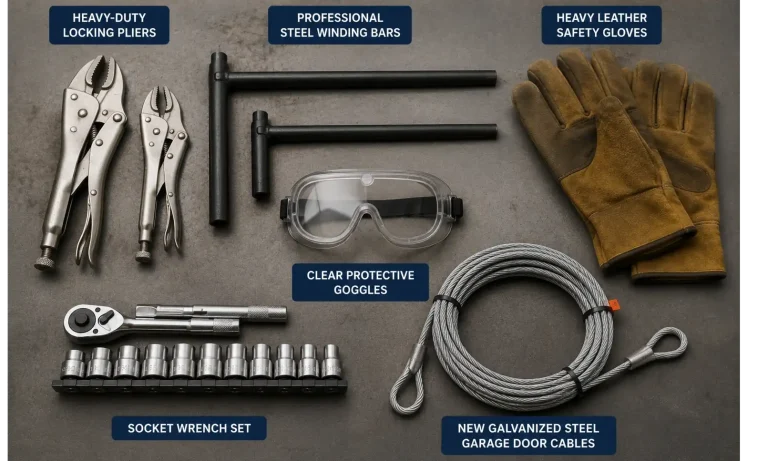
Proper replacement requires specific tools, including winding bars (for torsion springs), locking pliers, a socket set, ladders, and heavy-duty safety gear. Using makeshift tools, like screwdrivers instead of proper winding bars, is incredibly dangerous.
Step-by-Step Overview of the Process
The basic steps involve locking the door in place, safely unwinding the immense tension from the springs, removing the old cable from the drum and bottom bracket, threading the new cable, and finally rewinding the springs to exactly the right tension. For a detailed breakdown of what this technical process looks like, you can read our breakdown on how professionals safely approach replacing the cables.
The Hidden Dangers of DIY Garage Door Cable Replacement
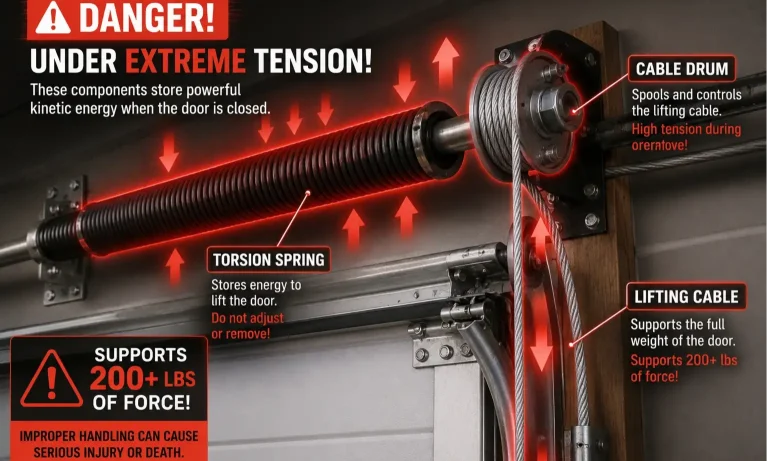
While we believe in educating homeowners on how to fix a garage door cable, we always advise against making this a DIY project. Garage door springs and cables are under enough tension to lift several hundred pounds. If a spring is released improperly, or if a cable snaps while you are near it, the flying metal can cause catastrophic injury or severe property damage. It is simply not worth the risk.
Why Trust UAD Garage Doors with Your Cable Repairs?
When your garage door is compromised, you need fast, reliable, and safe service. At UAD Garage Doors, our expert technicians carry the right tools and premium replacement parts to get your door back on track quickly. Don’t risk your safety—when you need assistance, rely on our professional garage door repair services to handle the heavy lifting for you.
Frequently Asked Questions (FAQ)
Can I still open my garage door if the garage door cable snapped?
No, you should never attempt to open or use a garage door with a snapped cable. The cables support the massive weight of the door. Operating it with a broken cable places extreme stress on the tracks, rollers, and the remaining intact cable, which can cause the door to fall completely off its tracks or crash to the ground.
How much does a professional garage door cable replacement cost?
The cost can vary depending on the size and weight of your door, the type of spring system you have (torsion vs. extension), and labor rates. However, having a professional handle your garage door cable replacement is a worthwhile investment to ensure the job is done safely and correctly, preventing costly damage to the rest of the door system. Contact UAD Garage Doors for an accurate, transparent quote.
Q: How do I know if I need a garage door cable repair or a full replacement?
In almost all cases, a damaged cable must be fully replaced rather than repaired. Because these cables operate under immense tension, a frayed, stretched, or crimped cable has lost its structural integrity. Patching or splicing a compromised cable is incredibly dangerous and highly likely to fail.
Why did my garage door cable snap in the first place?
Cables usually snap due to basic wear and tear over time. Constant friction, exposure to moisture (which causes rust), and a lack of lubrication can all weaken the braided steel. Additionally, if the garage door tracks are misaligned or a pulley bearing goes bad, it can cause the cable to rub improperly and eventually break.
Is it safe to search “how to fix garage door cable” and do it myself?
While there are many online tutorials available, we highly discourage DIY repairs for this specific issue. Garage door cables work in tandem with high-tension springs that hold enough force to lift a 200+ pound door. If the tension is released incorrectly during a DIY repair, the snapping metal can cause catastrophic injury. It is always safest to call a professional technician.
You May Also Like
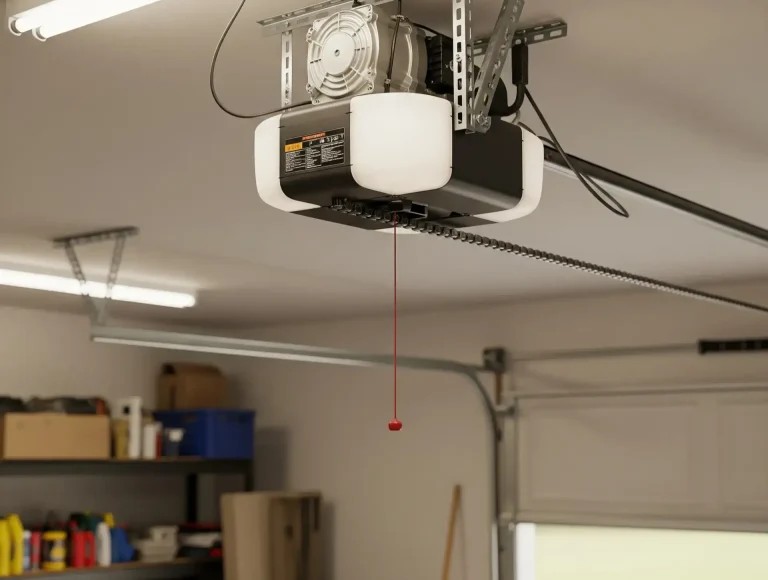
How to Reset a Garage Door Opener After Pulling the Red Cord
When your garage door opener stops working, pulling the red emergency cord is often the fastest way to take manual control. Maybe the power went out, the opener jammed, or you just needed to get your car out.…
Published Date: Aug 15, 2025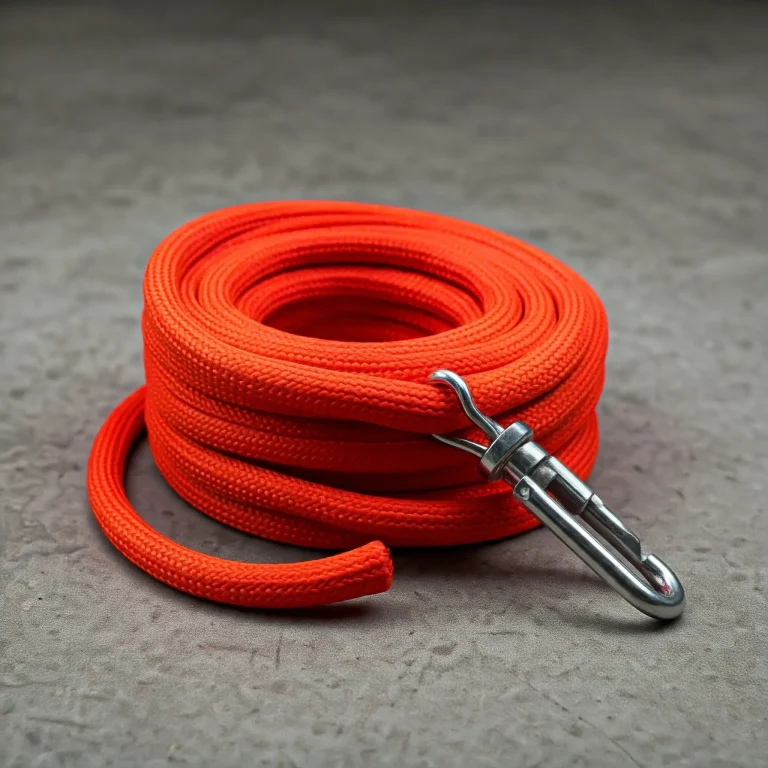
Emergency Release Cord: What It Is and How to Use It
When your garage door suddenly stops working, especially during a power outage or mechanical failure, knowing how to operate the emergency release cord garage door can be crucial. This vital safety feature, found in…
Published Date: Nov 20, 2024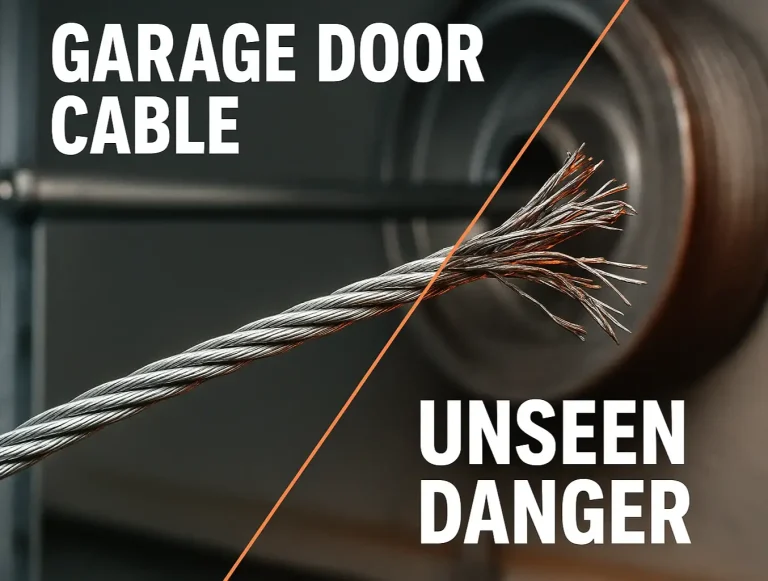
Identifying and Preventing Garage Door Cable Fraying
Listen closely the next time your garage door opens. Beneath the hum of the motor, do you hear a faint scraping, a subtle groan, or a slight vibration that wasn't there before? It’s easy to dismiss these small…
Published Date: Jan 19, 2026