





How to Make Your Garage Door Quiet: Top Solutions and Openers
Published: Jul 9, 2026
That familiar rumble and clatter. If you have a garage attached to your home, you know the sound all too well. It’s the jarring noise that announces every departure and arrival, waking up light sleepers, interrupting a quiet evening, or disrupting a work-from-home meeting.
This isn’t about some futuristic, far-off technology. It’s about making a smart choice, especially when it comes to the heart of the system: the garage door opener. For homeowners seeking tranquility, certain Chamberlain models are engineered specifically to turn that daily racket into peaceful, reliable operation. Let’s explore how to reclaim the quiet in your home.
The Science of a Silent Garage: What Really Causes the Racket?
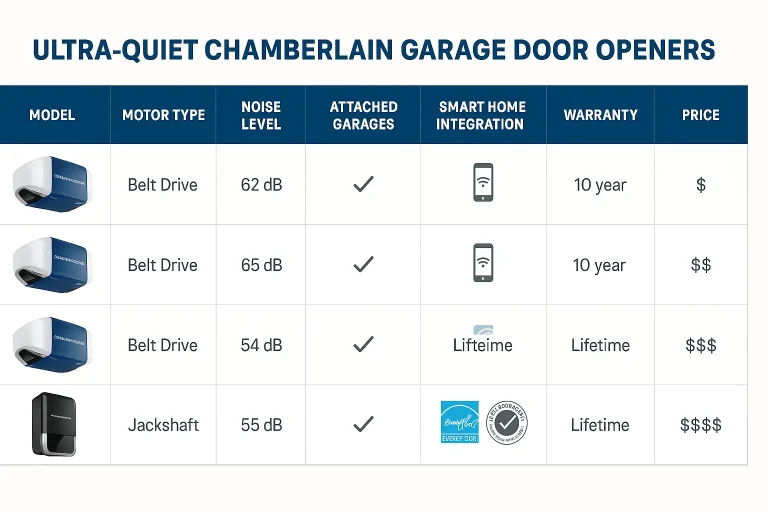
Before we dive into specific models, it helps to understand why your garage is so noisy. It’s rarely just one thing. Think of it as an orchestra where several components are playing out of tune. The main culprits are almost always the opener and the door’s hardware.
- The Opener Drive Type: This is the number one source of noise. Old-school chain-drive openers, while reliable, use a metal chain that creates significant vibration and a clanking sound.
- The Motor: The type of motor matters immensely. AC (alternating current) motors start and stop abruptly, causing the door to jolt. DC (direct current) motors, on the other hand, offer a “soft start and stop,” gradually accelerating and decelerating for much smoother, quieter movement.
- Rollers and Springs: Worn-out metal rollers grinding against metal tracks create a high-pitched squeal. Unlubricated springs and hinges add to the cacophony with groans and creaks.
- Door Material & Insulation: A thin, uninsulated metal door can act like a drum, amplifying every vibration. Quality garage door insulation not only helps with temperature control but also dampens sound significantly.
Understanding these factors is the first step toward finding a truly quiet garage door opener. It’s not just about the motor; it’s about a system designed for silence.
The Chamberlain Advantage: Belt Drive vs. Jackshaft for Ultimate Quiet
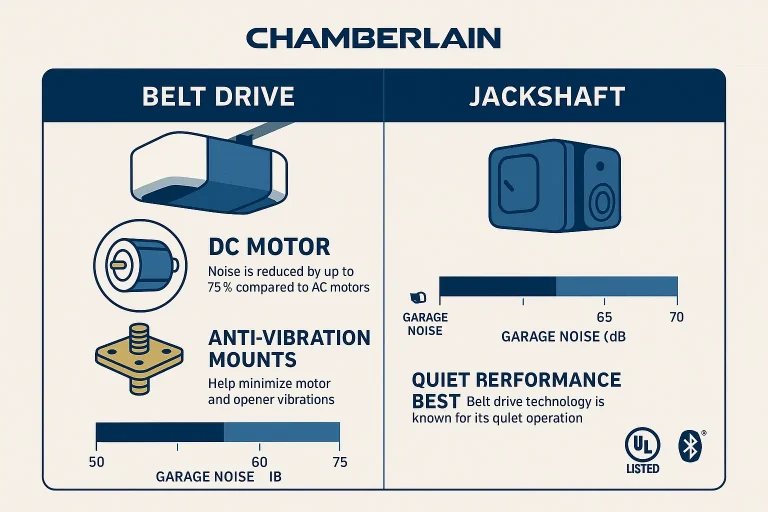
When it comes to quiet garage doors, Chamberlain focuses on two key technologies that leave old chain drives in the dust: Belt Drive and Jackshaft openers.
Belt Drive Openers: The Quiet Champion
Think of the difference between a bicycle chain and the serpentine belt in your car’s engine. The bike chain is noisy and clunky, while the belt is smooth and quiet. That’s the principle behind a belt drive opener.
Instead of a metal chain, these openers use a steel-reinforced rubber belt to move the door. This design drastically reduces vibration and noise. Paired with a DC motor, a Chamberlain belt drive opener is the go-to solution for attached garages where a bedroom or living space is located nearby. They are the most popular choice for homeowners prioritizing noise reduction.
Jackshaft Openers: The Space-Saving Whisper
A jackshaft, or side garage door opener, is a different beast altogether. Instead of mounting on the ceiling in the center of the garage, this compact unit mounts on the wall next to the garage door. It works by turning the torsion bar directly.
This design offers two major benefits:
- Incredibly Quiet: Because there is no long rail with a moving trolley, the primary sources of vibration and noise are eliminated. The operation is exceptionally smooth.
- Frees Up Ceiling Space: Perfect for garages with high or cathedral ceilings, or for homeowners who want to use the overhead space for storage.
Choosing Your Champion: A Buyer's Guide to Chamberlain's Quietest Models
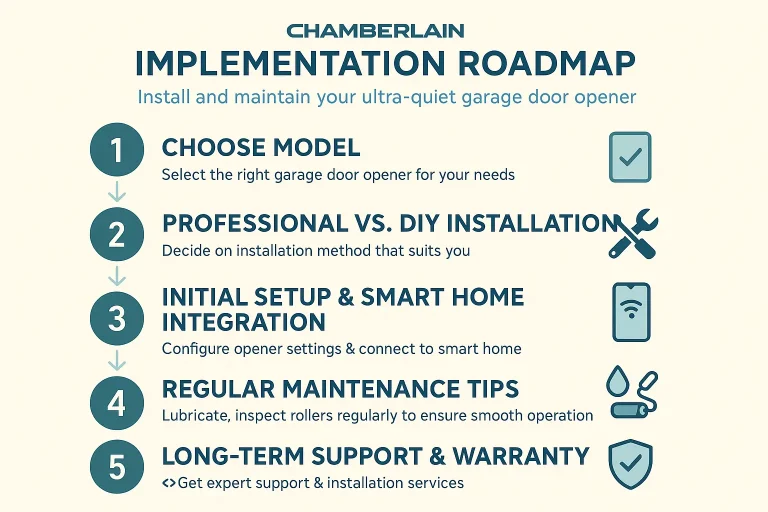
While Chamberlain offers a wide range, a few models consistently stand out for their ultra-quiet performance. Here’s a look at top contenders ideal for attached garages.
Chamberlain B4613T Belt Drive with myQ
- Best For: The homeowner who wants the perfect blend of quiet, smart technology, and security.
- Why It’s Quiet: This model combines the two most important features for silence: a whisper-quiet belt drive and a DC motor with soft start/stop technology. The motor gradually ramps up and down, eliminating the jarring start/stop motion of older openers.
- Key Features: Integrated myQ technology for smartphone control, battery backup for power outages, and a built-in camera for live streaming and 2-way audio.
Chamberlain RJO20 Wall Mount (Jackshaft)
- Best For: Garages with unique ceiling heights or anyone seeking the absolute quietest operation possible.
- Why It’s Quiet: The wall-mount design eliminates the overhead chain or belt mechanism entirely, which is a major source of noise and vibration. It’s a fundamentally quieter system.
- Key Features: Frees up overhead space for storage, includes an automatic garage door lock for enhanced security, and features myQ smartphone control.
It’s a System, Not Just a Motor
An “aha moment” for many homeowners is realizing that the quietest opener in the world can still be noisy if the rest of the door system isn’t in good shape. For a truly silent experience, consider a garage door roller replacement. Upgrading from standard steel rollers to nylon rollers can make a night-and-day difference, reducing that awful grinding sound as the door moves along the tracks.
Your Path to Peace and Quiet: Installation and Maintenance for Your Chamberlain Opener
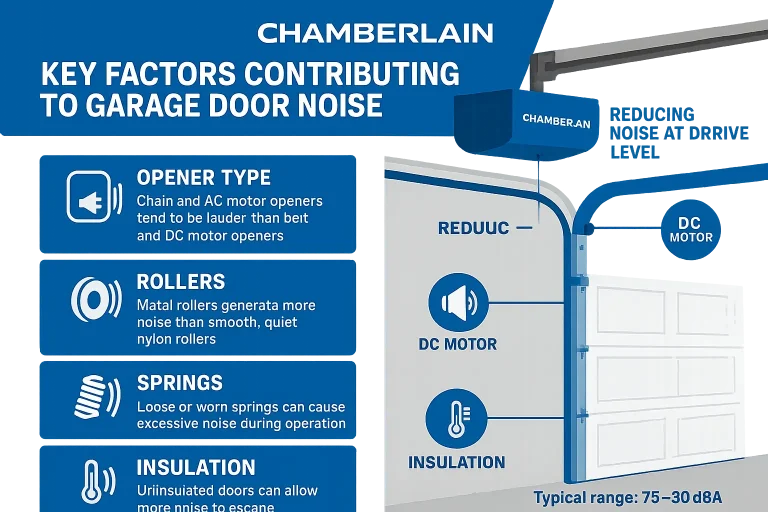
You’ve picked the perfect quiet model. Now what? Proper installation is critical to ensuring it runs as silently as designed.
DIY vs. Professional Installation
While many Chamberlain openers are designed with DIY in mind, a professional garage door & opener installation is often the best choice for ensuring optimal performance and safety. A professional technician will:
- Ensure the opener is perfectly balanced and aligned with your door.
- Securely mount the unit to minimize any residual vibration.
- Calibrate the travel limits and safety sensors correctly.
- Inspect the entire door system (springs, cables, rollers) and recommend any necessary tune-ups.
Simple Maintenance for Lasting Silence
Once installed, keeping your system quiet is straightforward. A regular garage door maintenance routine, performed once or twice a year, is all it takes. This typically involves lubricating all moving parts like hinges, rollers, and springs (but never the tracks!) and checking that all nuts and bolts are tight.
Frequently Asked Questions About Quiet Garage Door Openers
What is the quietest type of garage door opener?
Belt drive and jackshaft (wall-mount) openers are significantly quieter than chain drive models. The combination of a belt drive and a DC motor is the most popular choice for noise-sensitive homeowners.
What is the difference between a DC and AC motor in a garage door opener?
AC motors are the older standard, known for their abrupt, noisy starts and stops. DC motors are the modern standard for quiet openers. They offer a “soft start and stop” feature that smoothly accelerates and decelerates the door, drastically reducing noise and wear.
How are garage door opener noise levels measured?
Noise is measured in decibels (dB). A typical chain drive opener can operate at 65-75 dB, similar to a vacuum cleaner. A quiet belt drive opener can operate as low as 45-55 dB, which is closer to the sound of a quiet conversation.
Will a new quiet opener solve all my garage door noise problems?
It will solve the biggest part of the problem, but it’s not a magic bullet. If your door has worn-out metal rollers, unbalanced springs, or loose hardware, you will still have noise. For best results, have a professional inspect the entire system when you upgrade your opener.
Your First Step Toward a Quieter Home
Replacing a noisy, disruptive garage door opener is one of the most effective quality-of-life improvements you can make for your home, especially if you have an attached garage. By understanding the technology behind quiet operation—like belt drives, DC motors, and wall-mount designs—you can confidently select a Chamberlain model that fits your needs.
You don’t have to schedule your life around the roar of your garage door any longer. The path to a more peaceful home is clearer, and quieter, than ever before.
You May Also Like
Your Complete Guide to Chamberlain Garage Door Opener Models
Trying to figure out the world of Chamberlain garage door openers can feel a bit like decoding a secret language. You see model numbers like B4613T, hear terms like "HPc," and wonder if you need a "Secure View™" or a…
Published Date: Jun 30, 2026
Differentiating LiftMaster, Genie, and Chamberlain Opener Procedures
You’ve just moved into a new home. You have the keys to the front door, but what about the garage? Who else has a remote? The old homeowner? The realtor? It’s a nagging security question most people forget to ask. Or…
Published Date: Jun 17, 2026
Resetting Chamberlain Garage Door Opener Travel Limits
Is your garage door acting possessed? It starts to close, then suddenly reverses for no reason. Or maybe it stops six inches from the floor, leaving a frustrating gap. You might think you need a full "reset," a term…
Published Date: May 20, 2026