





Seasonal Considerations for Garage Door Keypad Battery Performance
Published: May 22, 2026
It’s one of the most frustrating homeowner mysteries. One day, your garage door keypad works perfectly. The next—after a sudden cold snap or during the peak of a summer heatwave—it’s completely unresponsive. You press the buttons, maybe see a faint blink, but the garage door stays shut.
You’re not alone in this experience, and the culprit is almost always the small battery inside. Extreme temperatures wage a silent war on its ability to deliver power, and understanding this simple science is the key to a permanent fix.
Understanding the Science: Why Your Keypad Battery Hates Extreme Weather
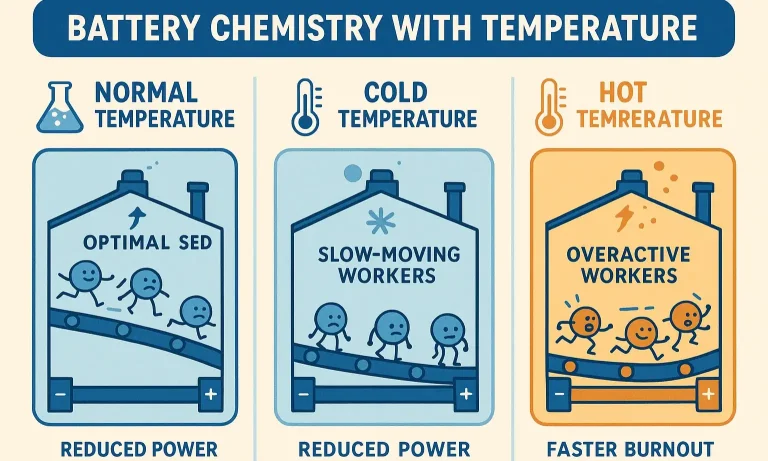
Think of a battery as a tiny chemical factory. Inside, chemical reactions create a flow of electrons, which is the electricity that powers your keypad. But just like any factory, its production line is sensitive to the environment. For batteries, temperature is everything.
Every battery has a “Goldilocks Zone”—an optimal temperature range where it operates most efficiently. When the temperature moves too far outside this zone, that chemical factory starts to struggle.
What Happens in the Bitter Cold
When the temperature plummets, the chemical reactions inside your battery slow down dramatically. The ions—the factory workers of the battery world—become sluggish and move slower. This reduces the battery’s voltage and its ability to deliver enough power to operate the keypad’s transmitter. The battery isn’t dead; it’s just too cold to do its job. This is the same reason you might find your garage door remote not working in cold weather, as the same principles apply.
What Happens in Searing Heat
Extreme heat, like the kind found in Texas or Arizona summers, presents the opposite problem. High temperatures accelerate the chemical reactions. The factory workers go into overdrive, causing the battery to drain much faster than normal. Worse, prolonged exposure to intense heat can cause irreversible damage, leading to leakage or permanent capacity loss. Your keypad might work one day and be completely dead the next, seemingly without warning.
The Battery Showdown: Alkaline vs. Lithium for Your Climate
When your keypad fails, the common impulse is to grab another standard 9V battery—usually an alkaline one—and call it a day. But this often just resets the clock until the next cold snap. The type of battery you choose is the single most important factor for reliable, year-round performance.
Let’s compare the two main contenders: Alkaline and Lithium.
Standard Alkaline 9V Batteries
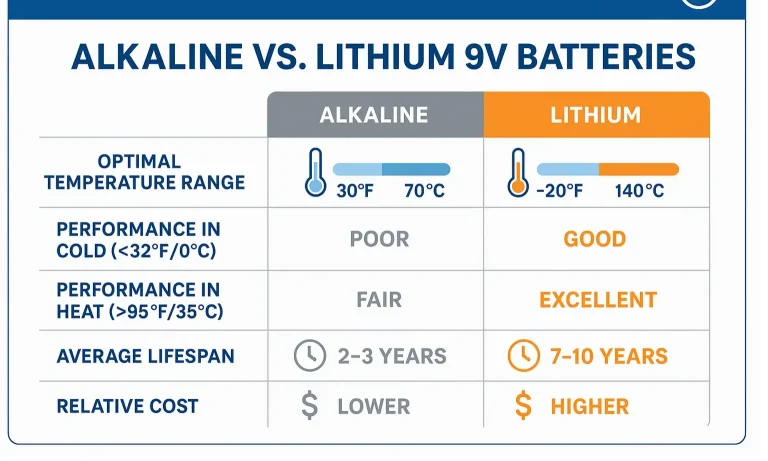
Standard alkaline batteries are the most common and budget-friendly option, but they are highly sensitive to environmental changes. They perform best in a moderate temperature range between 32°F and 85°F (0°C to 29°C).
When the temperature drops into freezing territory, their performance becomes poor because their internal voltage drops significantly. In high heat, they fare slightly better but will drain quickly once temperatures climb above 95°F. Because of these climate sensitivities, an alkaline battery typically lasts only 1 to 2 years, and even less if you live in an area with extreme seasonal weather.
9V Lithium Batteries
Lithium batteries carry a higher upfront cost, but they offer vastly superior durability and efficiency. They feature an exceptional optimal temperature range, operating reliably from -40°F all the way up to 140°F (-40°C to 60°C).
In extreme cold, lithium batteries excel by maintaining a completely stable power output, and they are highly resistant to heat drain during sweltering summer months. This environmental resilience allows a lithium battery to maintain peak performance for an average lifespan of 5+ years, making them the most reliable choice for a garage door keypad.
The “Aha” Moment: Why Lithium is a Smart Upgrade
Looking at the chart, the choice becomes clear for anyone living in a region with harsh seasons. While lithium batteries cost more upfront, they are a cost-effective upgrade for your keypad, not just an expensive replacement. Their incredibly wide operating temperature range means they perform reliably whether it’s -20°F in Illinois or 110°F in Arizona.
By switching to lithium, you’re not just fixing the problem for now—you’re preventing it from happening again next season, and likely for the next several years. If you find your garage door keypad not working, a simple battery chemistry upgrade is often the most durable solution.
A Proactive Plan: Your Year-Round Guide to Keypad Battery Health
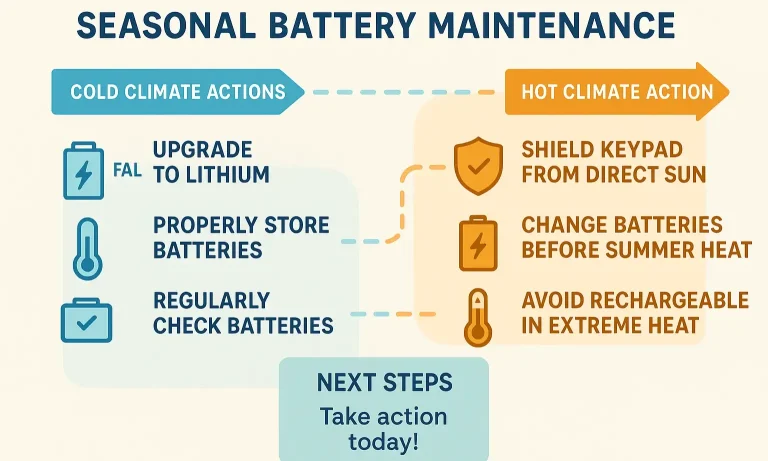
Don’t wait for failure to strike. A little seasonal maintenance can save you from being locked out in the cold or heat.
For Cold Climates: Your Fall Prep Checklist
Before the first frost, make it a habit to replace your keypad’s battery
- Upgrade to Lithium: If you’re still using an alkaline battery, fall is the perfect time to switch to a 9V lithium battery. This single step will likely solve your winter keypad problems for years to come.
- Check the Contacts: When you have the battery compartment open, check the metal contacts for any signs of corrosion. Clean them with a cotton swab and a bit of rubbing alcohol if they look dirty.
- Test It: After replacing the battery, test the keypad to ensure everything is working correctly.
For Hot Climates: Your Summer Prep Checklist
The summer heat is more of a silent killer, slowly draining the battery’s life.
- Mark Your Calendar: Set a reminder to test your keypad battery at the beginning of summer and again mid-season. The backlight dimming or a slow response are early warning signs.
- Choose Lithium for Longevity: Just as in cold climates, lithium batteries are more resistant to the accelerated drain caused by high heat, making them the superior choice.
- Provide Shade if Possible: If your keypad is in direct, blistering sun all day, its electronics and battery are under constant stress. While not always feasible, any amount of shade can help prolong its life.
Frequently Asked Questions About Keypad Batteries and Weather
What are the warning signs of a weather-affected battery?
The most common signs are a keypad that works intermittently, a blinking light that is dim or inconsistent, or the need to press buttons multiple times for a response. In the cold, it may work fine in the afternoon sun but fail again overnight.
How often should I change my keypad battery?
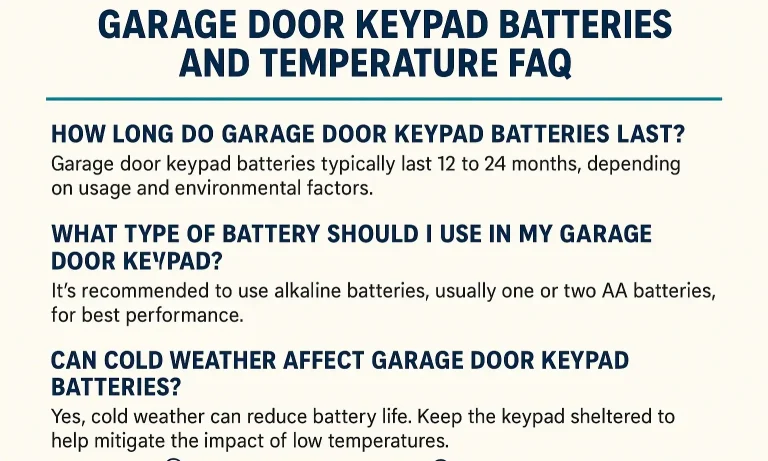
For an alkaline battery in an extreme climate, plan on changing it annually as a preventative measure. With a high-quality lithium battery, you can expect to get 5 years or more of reliable service, but it’s still wise to test it before each harsh season.
Can I use a rechargeable 9V battery?
We generally advise against it. Rechargeable batteries often have a lower voltage (8.4V instead of a true 9V) and can have higher self-discharge rates, especially in cold weather. This can lead to performance issues and leave you with an unreliable keypad.
My keypad isn’t working even after changing the battery. What’s next?
If a new, high-quality lithium battery doesn’t solve the problem, you may be dealing with a different issue. It could be moisture inside the unit, corroded contacts, or a sign that the keypad needs reprogramming or replacement. If you’re stuck, a guide to garage door keypad programming can be a helpful next step before calling a professional.
Your Next Step to a More Reliable Garage
The next time your garage door keypad acts up when the weather turns, don’t assume the worst. Take a moment to consider the tiny powerhouse inside it. By understanding how temperature affects its performance and making a simple, strategic upgrade to a lithium battery, you can cross one more frustrating problem off your homeowner to-do list for good.
If you’ve tried these steps and are still having trouble, the issue may go beyond the battery. At Up & Down Garage Doors, our expert technicians are available 24/7 to diagnose and solve any garage door problem, ensuring you always have safe and reliable access to your home.
You May Also Like
How to Change Battery in Garage Door Opener Keypad
If your keypad isn’t responding, the backlight doesn’t flash, or it only works when you use the remote, you’re probably asking yourself why your garage door keypad is not working . Most of the time, the fix is simple…
Published Date: Jun 20, 2025
Troubleshooting Garage Door Keypad Not Working
It’s a frustratingly common scenario: your garage door keypad has been faithfully serving you for years, but the battery finally gives out. You swap it for a fresh one, feeling accomplished, only to find… nothing.…
Published Date: May 21, 2026
How to Program a Garage Door Keypad: Step-by-Step Guide
Programming a garage keypad makes everyday access easier and keeps your property more secure. Many homeowners want to know how to program a garage door keypad because it helps manage entries, update codes, and…
Published Date: Dec 4, 2025