





Why Your Garage Door Remote Range Decreases in Cold Weather
Published: Apr 24, 2026
It’s one of the most frustrating moments of winter: you pull up to your home, shivering, and press the garage door remote. Nothing happens. You press it again, holding it closer to the windshield. Still nothing. You’re not imagining it, and your opener isn’t necessarily broken. The culprit is often the cold weather itself, and the reason has everything to do with a little bit of science.
You’re not alone in experiencing this. It’s a common problem that stems from how extreme temperatures affect everything from tiny batteries to heavy-duty lubricants. Understanding why this happens is the first step to solving it—and preventing it from leaving you out in the cold again.
The Simple Science: Why Winter Weakens Your Remote's Signal
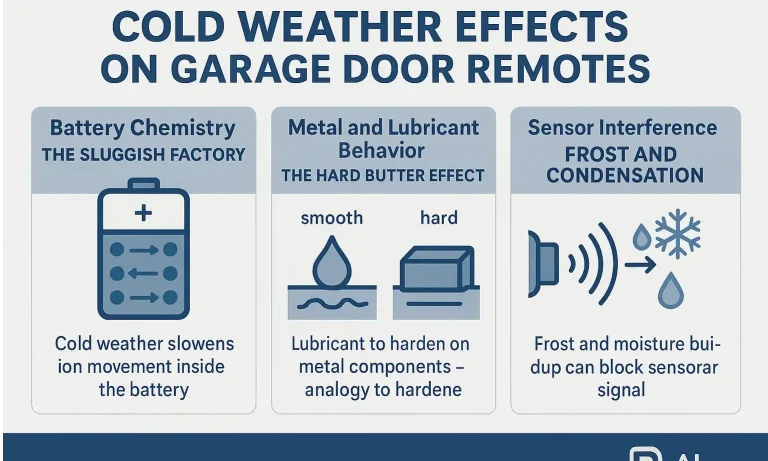
When your garage door opener suddenly gets stubborn in the cold, it’s usually one of three invisible forces at play. Think of them as the primary suspects in your winter garage mystery.
Culprit #1: The Sluggish Battery Factory
The most common reason for a weak remote signal in winter is the battery inside it. Think of a standard alkaline battery as a tiny chemical factory. At normal temperatures, the workers (electrons) in this factory are busy and efficient, producing a steady stream of power.
But when temperatures drop, these workers get sluggish. The chemical reactions that generate electricity slow down dramatically. This causes the battery’s voltage to drop, and with less power, the remote can only send out a weaker signal. That’s why your remote might work when you’re right next to the door but fails from the street. The signal simply isn’t strong enough to make the journey. This is a primary cause when your garage door opener range is suddenly reduced.
Culprit #2: The “Hard Butter” Problem in Your Door
Your remote might be working perfectly, but the door itself is struggling. The grease and lubricants on your garage door’s tracks, rollers, and springs are a lot like butter. When warm, they’re smooth and allow parts to glide effortlessly. When the temperature plummets, that grease hardens and becomes thick and sticky.
This added friction means your opener’s motor has to work much harder to lift the door. Modern garage openers have a safety mechanism that stops the door if it encounters too much resistance (to prevent it from closing on an object or person). If the motor strains against the hardened grease, it can trigger this safety feature, making it seem like the remote’s signal was never received.
Culprit #3: Condensation and Electronic Interference
Cold air can’t hold as much moisture as warm air. When warm, humid air from your home or car’s engine hits the freezing cold metal and electronics of your garage door system, condensation forms. This can create a thin layer of frost or moisture on the safety sensor lenses or even on the opener’s internal circuit board.
Blocked sensors will prevent the door from closing, while moisture on the circuit board can cause short circuits or interfere with the reception of the remote’s signal.
The Ultimate Troubleshooting Guide: Pinpointing the Problem
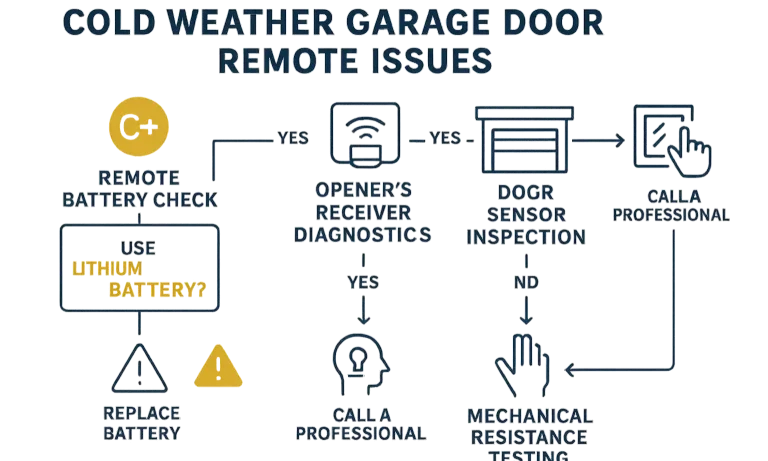
Before you assume the worst, a few simple diagnostic steps can help you figure out what’s really going on. Follow this process to identify the issue quickly.
Step 1: Start with the Remote
The remote is the easiest component to check, so always start there.
- Check the LED Light: Does a small light on your remote flash when you press the button? If not, the battery is likely completely dead.
- Warm It Up: Take the remote inside your home for 10-15 minutes to let the battery warm up. If it works after warming up, you’ve confirmed the cold is the issue.
- Pro-Tip: Change the Battery (the Smart Way): Replace the standard alkaline battery with a lithium one. Lithium batteries are the undisputed champion of cold weather performance, as their chemistry is far less affected by low temperatures. This one simple switch can permanently solve your winter remote problems.
Step 2: Inspect the Opener and Sensors
If the remote seems fine, move on to the opener unit and its safety sensors.
- Look for Error Codes: Check the main opener unit in your garage. Many models have an LED light that will blink in a specific pattern to signal a problem. Consult your owner’s manual to diagnose the code.
- Wipe Down the Safety Sensors: The two small “eyes” near the bottom of your garage door tracks can get frosted over. Gently wipe the lenses with a soft, dry cloth. For a deeper dive, learn how to check and test your garage door sensors to ensure they are aligned and functioning correctly.
- Check the Antenna: Look at the small antenna wire hanging from the opener motor. Make sure it’s not damaged, covered in frost, or touching any metal objects.
- The Disconnect Test: Pull the red emergency release cord on your opener to disconnect it from the door. Now, try to lift the door by hand. It should lift smoothly and weigh between 10-15 pounds. If it feels extremely heavy or sticks in places, the problem is mechanical resistance, likely from thickened grease or contracting metal parts.
- Inspect the Seal: Check to see if the garage door bottom seal is frozen to the ground. A bit of warm water can usually free it.
Step 3: Check the Door Itself
To test for mechanical issues, you’ll need to assess the door’s movement manually.
If these steps don’t resolve the issue, you may be facing more general garage door opener troubleshooting that goes beyond just the cold.
How to Winter-Proof Your Garage Door: Proactive Maintenance
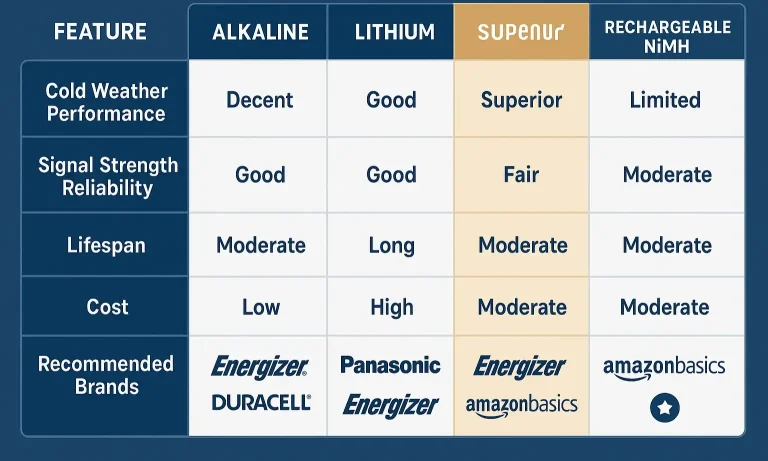
The best way to fix a winter garage door problem is to prevent it from happening in the first place. A little annual maintenance can make all the difference.
The Lithium Battery Upgrade
This is the single most effective change you can make for your remote. While alkaline batteries falter below freezing, lithium batteries maintain strong performance even in sub-zero temperatures.
Choose the Right Lubricant
Before winter hits, clean the old, grimy grease off the tracks and apply a high-quality, silicone-based lubricant. Unlike standard grease, silicone-based sprays are designed to resist thickening in low temperatures. This ensures smooth operation all season long. Curious about the details? Learn about proper lubrication for garage door springs and rollers.
Warning: Do NOT use WD-40 as a long-term lubricant. It’s a solvent that can attract dust and eventually gum up the moving parts.
Keep the Path Clear
A little preparation goes a long way. Periodically wipe down your safety sensors and ensure the area beneath the door is clear of snow and ice, which can freeze the weather seal to your driveway. Taking these steps is key to how to protect your garage door from freezing temperatures this winter.
Frequently Asked Questions (FAQ)
Can cold weather permanently damage my garage door opener?
It’s unlikely. While cold can cause temporary issues with batteries and lubricants, the components are designed to withstand temperature fluctuations. The main risk comes from the increased strain on the motor, which can shorten its lifespan over time if the door is consistently hard to move.
Are certain garage door opener brands, like Chamberlain, more prone to cold weather problems?
Not necessarily. All brands are subject to the laws of physics—cold weakens batteries and thickens grease regardless of the logo on the opener. However, if you’re having issues specific to your model, like programming a new remote, consulting a guide for your Chamberlain garage door opener remote can help isolate the problem.
Why does my remote work up close but not from the street?
This is the classic symptom of a weak battery. As the cold drains the battery’s power, the signal strength drops, significantly reducing its effective range. A fresh lithium battery will almost always solve this.
What should I do if I suspect a broken spring?
Do not attempt to operate the door. If you hear a loud bang from your garage or see a visible gap in one of the large springs above your door, this is a serious and dangerous issue. The springs are under extreme tension and should only be handled by a trained professional. Learn how to tell if a garage door spring is broken and call for service immediately.
Beyond the Click: Taking the Next Step
Winter can expose the weak points in any garage door system, but a little knowledge goes a long way. By understanding how cold affects your remote’s battery, your door’s lubricant, and your system’s sensors, you can troubleshoot with confidence and take simple steps to prevent future issues.
Proactive care is always the best strategy. For a comprehensive guide to keeping your door in top shape year-round, check out our ultimate garage door maintenance checklist. If you’ve tried these steps and your door is still giving you trouble, it might be time to call in a professional. Sometimes, an expert eye can spot a problem that simple troubleshooting can’t.
You May Also Like
How to Extend the Garage Door Opener Range: Tips to Boost the Remote Signal
Remote controls are designed to make life easier, especially when it comes to opening your garage door from a distance. If your remote only works when you’re right in front of the door, it might be time for a few…
Published Date: Sep 2, 2025
Identifying Damaged Garage Door Opener Chain Components
You’ve done everything right. You noticed your garage door opener chain was sagging, you looked up a guide, and you tightened it. For a few days, everything was perfect—the door ran smoothly and quietly. But now,…
Published Date: Apr 22, 2026
Troubleshooting Dip Switch Garage Door Opener Range
Does your garage door have a mind of its own? One day the remote works from the end of the street, and the next you have to be inches from the door, mashing the button in frustration. Or worse, the door opens and…
Published Date: Apr 21, 2026