





Low Headroom Garage Door Track Installation
Published: May 4, 2026
You’ve probably stood there, staring at the ceiling of your garage, thinking, “There’s just no way a regular garage door will fit.” Maybe it’s a basement garage, a vintage home with low-slung beams, or a carport converted into a garage. That limited overhead space feels like a dealbreaker.
Here’s the good news: It’s almost never a dealbreaker.
The problem isn’t your ceiling; it’s the assumption that all garage doors need a huge amount of overhead space to operate. For many homeowners, the solution lies in a clever, space-saving modification: the low headroom track. This guide is your starting point for understanding this unique challenge, helping you diagnose your situation, explore the solutions, and decide on the best path forward.
The 5-Minute Headroom Assessment
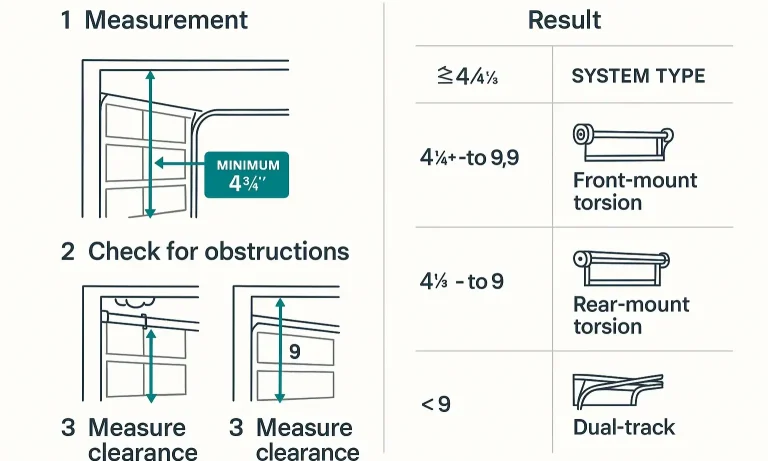
Before exploring solutions, you need to know exactly what you’re working with. “Headroom” (sometimes called “clearance”) is the space between the top of the garage door opening and the lowest obstruction on the ceiling—which could be the ceiling itself, a beam, a pipe, or a light fixture.
Standard garage door tracks typically require 12 to 15 inches of headroom to accommodate the curve of the track and the torsion spring system. If you have less than that, you’re in low headroom territory.
Here’s how to get an accurate measurement in a few simple steps:
- Measure Up: With the garage door closed, use a tape measure to find the distance from the top edge of the door opening to the ceiling.
- Find the Lowest Point: Scan the area directly above and behind where the door will rest when open. Identify the lowest point—be it a structural beam, plumbing, or electrical conduit.
- Record the Real Number: Measure from the top of the door opening to that lowest obstruction. This is your true, available headroom.
Knowing this number is the first “aha moment.” It turns a vague problem (“my ceiling is low”) into a specific challenge (“I have 7 inches of headroom to work with”). If you want a more detailed walkthrough, our guide on how to measure a garage door can provide additional context.
Understanding the "Dual-Track" Solution
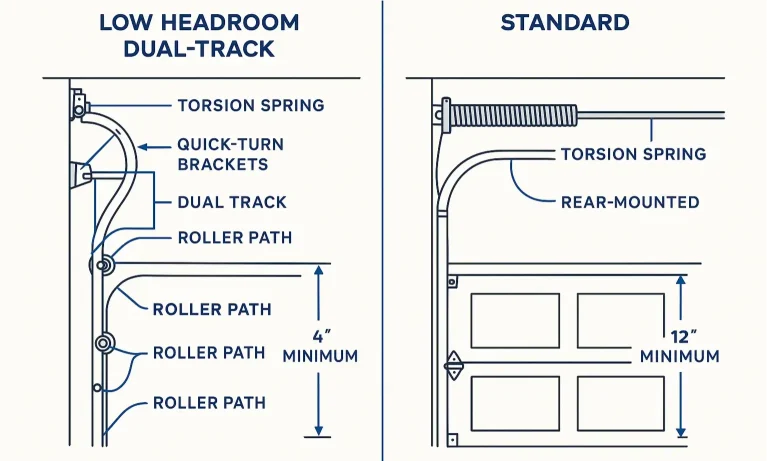
So, how do you make a multi-panel garage door turn a tight corner without enough space for a gentle curve? The answer is an ingenious piece of engineering called a dual-track or low headroom system.
Instead of one wide, curving track, a dual-track system uses two parallel tracks.
- The upper track guides the top set of rollers on the garage door.
- The lower track guides the other rollers.
As the door opens, the top section immediately begins to turn horizontally, running along the upper track just below the ceiling. The other sections follow suit on the lower track. This “split” allows the door to retract with a much tighter turning radius, dramatically reducing the amount of headroom required. Some systems can operate with as little as 4 ¾ inches of clearance.
The key components that make this work are specialized garage door track brackets and fixtures designed to handle the unique path of the rollers.
What About the Springs?
The other major component that eats up headroom is the torsion spring system, which is usually mounted to the wall directly above the door. In low headroom situations, there are two primary solutions:
- Front-Mount Torsion: This setup is similar to a standard installation but uses special endplates and drums to fit into tighter spaces. It’s a great option if you have around 9 to 12 inches of headroom.
- Rear-Mount Torsion: For garages with extreme limitations (under 9 inches), the entire torsion system is moved to the back end of the horizontal tracks. This completely clears the space above the door opening, making it the ultimate space-saving solution.
Understanding the difference between a torsion vs extension spring garage door system is crucial, as low headroom kits are almost exclusively designed for the superior performance and safety of torsion springs.
The Big Decision: Should You DIY or Call a Pro?
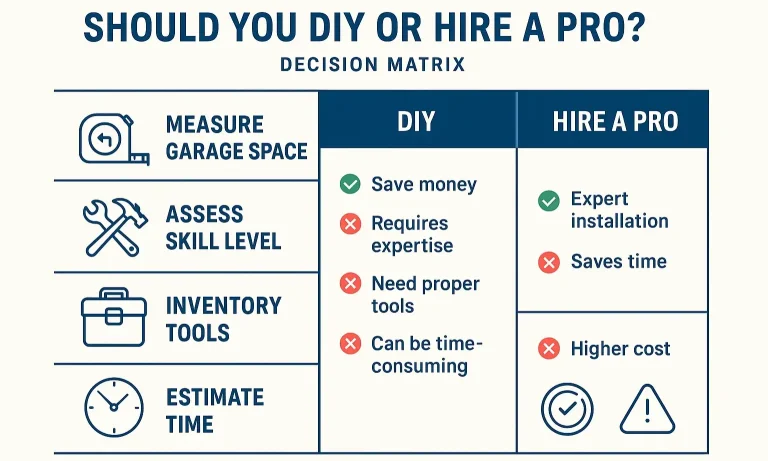
You’ve measured your space and you understand the mechanics. Now comes the most important question: Is this a project you can tackle yourself?
Unlike a standard garage door track installation, a low headroom conversion adds significant complexity. The alignment must be perfect, and working with torsion springs is extremely dangerous without the right tools and training. This isn’t a typical weekend project; it’s a job that demands precision and a healthy respect for safety.
To help you decide, consider the following factors:
- For the Confident DIYer: If you have extensive mechanical experience, own a set of winding bars, and feel comfortable managing high-tension components, a DIY garage door installation might be feasible. You’ll need to purchase a specific low headroom conversion kit.
- For Everyone Else: If you read the words “high-tension springs” and felt a bit of unease, that’s a good sign you should call a professional. A pro can assess your space, source the correct hardware, and complete the installation safely and efficiently. They can also ensure you have a compatible low headroom garage door opener and see that your garage door openers installed correctly to work with the new track system.
FAQ: Your Low Headroom Questions Answered
What is officially considered “low headroom” for a garage door?
Generally, any garage with less than 12 inches of clearance above the door opening is considered a low headroom situation. Standard systems need 12-15 inches.
What is the absolute minimum headroom I need for a garage door?
With a specialized dual-track system and a rear-mount torsion spring setup, it’s possible to install a garage door with as little as 4 ¾ inches of headroom.
Can I convert my current garage door to a low headroom system?
Yes, in most cases. As long as your door panels are in good condition, you can typically purchase a low headroom conversion kit that includes the necessary tracks, brackets, and fixtures to modify your existing setup.
Does a low headroom track cost more?
Yes, you can expect to pay more for a low headroom system. The specialized hardware—including the dual tracks, custom brackets, and potentially a rear-mount spring system—is more complex and costs more than standard components.
Will I need a special garage door opener?
Most modern belt-drive or chain-drive openers will work, but the key is the installation. The opener and rail may need to be mounted more carefully to accommodate the door’s lower profile as it retracts. It’s always best to check the opener’s specifications.
Your Next Step: From Learning to Action
Dealing with limited ceiling space doesn’t mean you have to give up on a functional, automatic garage door. By understanding your specific measurements and the mechanics of a dual-track system, you’re now equipped to make an informed decision. These modifications are a perfect example of space saving garage doors in action.
Whether you’re gearing up for a challenging DIY project or ready to find a trusted professional, the path to a fully functional garage door is clear.
If you decide the pro route is right for you, don’t hesitate to reach out. At Up & Down Garage Doors, our team specializes in custom solutions for unique spaces. We’re here to provide a professional assessment and ensure your garage door installation is done safely, correctly, and gives you a reliable door for years to come.
You May Also Like
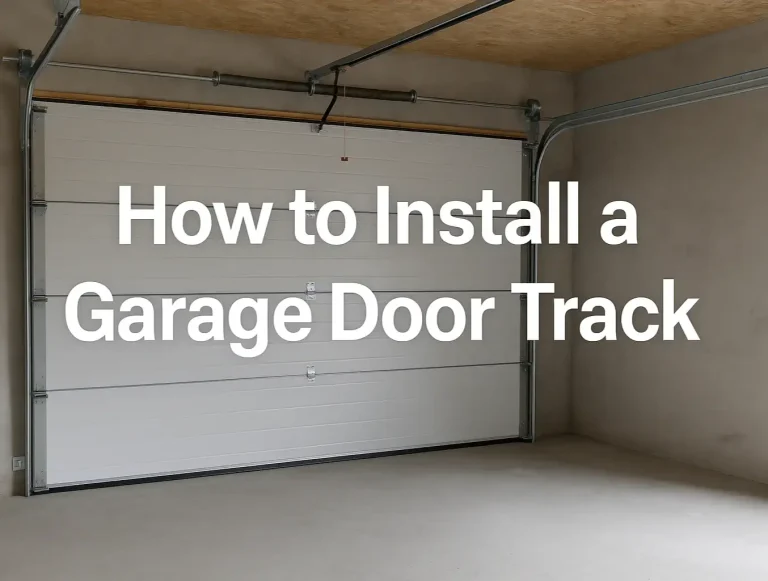
How to Install a Garage Door Track: Step-by-Step Setup Guide
Your garage door’s performance starts with a solid track installation. If the track isn’t aligned or secured properly, everything else — from the rollers to the opener — can suffer. Whether you’re working on a…
Published Date: Sep 29, 2025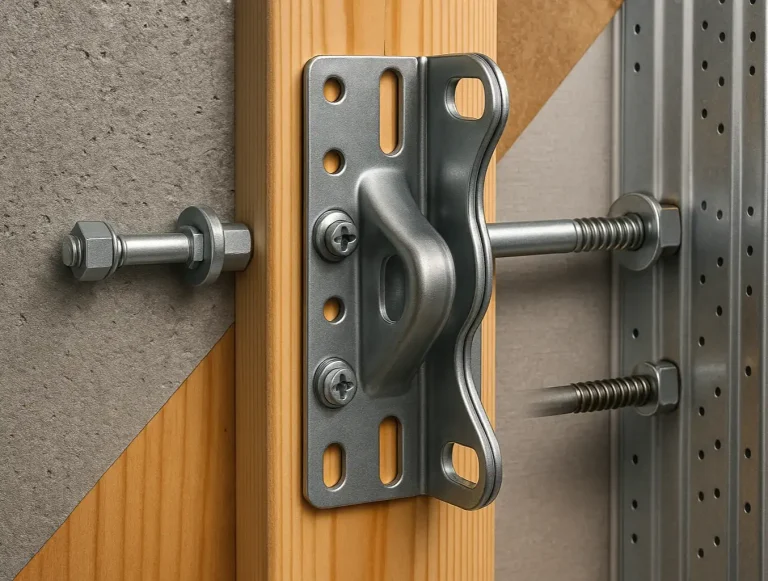
Mounting Garage Door Tracks to Different Wall Materials
You’ve just unboxed a brand-new garage door. The panels are pristine, the hardware gleams, and you’re envisioning a smooth, quiet operation. You grab the vertical tracks, hold them up to the wall, and suddenly, the…
Published Date: May 1, 2026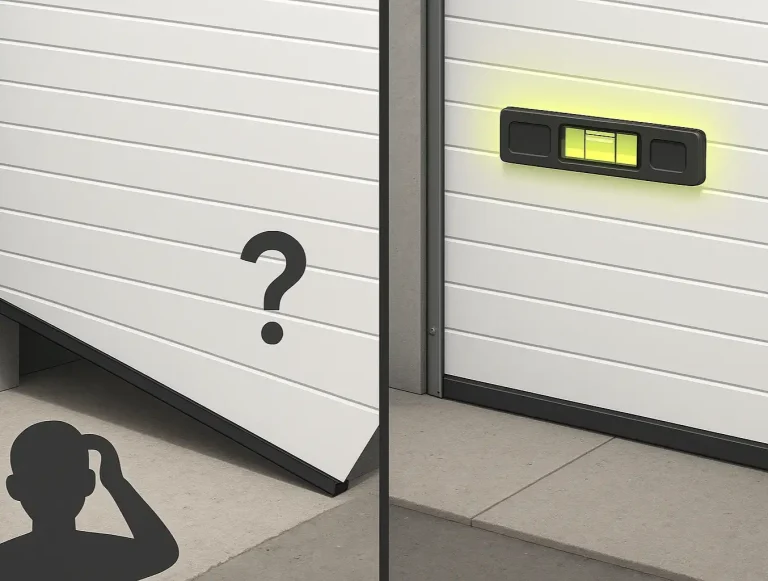
How to Square and Level Garage Door Tracks on Uneven Garage Floors
That wedge-shaped gap under your garage door isn't just an eyesore—it's a puzzle. You’ve probably tried everything, nudging the tracks left and right, hoping to close it. But the more you adjust, the worse the door…
Published Date: Apr 30, 2026