Integrating Smart Garage Doors with Home HVAC Systems
Published: Mar 24, 2026
You pull into the driveway, hit the button, and glide into your garage. You start unloading groceries, the kids run inside, and the dog dashes out. An hour later, you realize the garage door has been wide open the whole time, and you can hear your furnace running on overdrive to combat the cold air flooding your home.
It’s a frustratingly common scenario. An open garage door, especially on an attached garage, is like leaving a massive window open. It creates a significant drain on your home's heating and cooling system, forcing it to work harder and longer, driving up your energy bills.
But what if your smart home could be a little smarter? What if your garage door could tell your HVAC system to take a break? This isn't science fiction; it's a practical, energy-saving automation you can set up today.
Foundation: The Missing Link in Your Smart Home
Building: The Essential Toolkit for Smart Integration
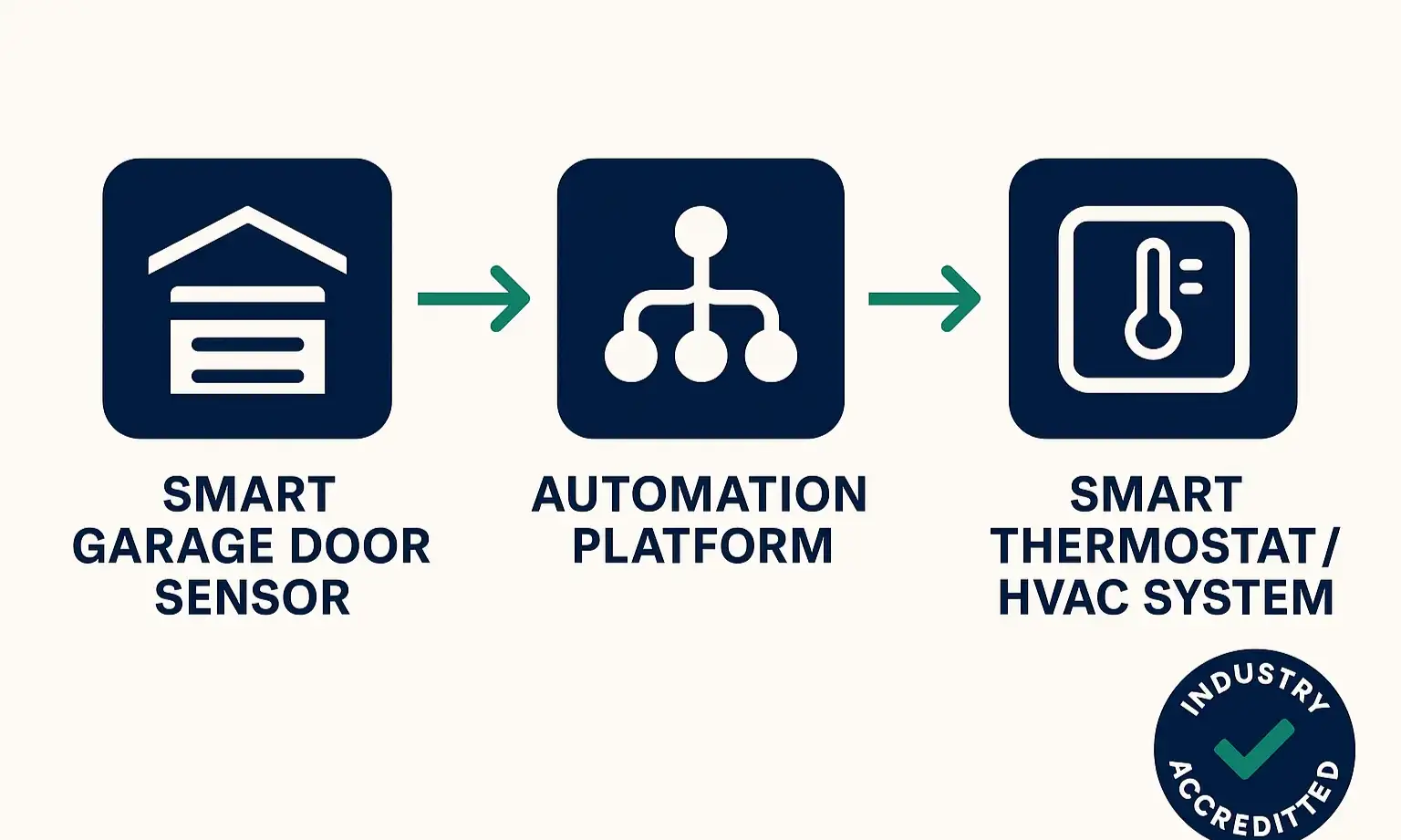
- A Smart Garage Door Opener or Sensor: This is the trigger. You either need a modern opener with built-in Wi-Fi (like many from Chamberlain, LiftMaster, and Genie) or a smart add-on controller that can make your existing opener smart. The crucial part is that it can report the door's status (open or closed) to the internet. A successful smart garage door opener installation is the first step. The system relies on accurate readings from your garage door sensors to know when to act.
- A Wi-Fi Connected Smart Thermostat: This is the device that takes action. Popular models from brands like Nest, Ecobee, and Honeywell are all compatible with automation platforms. As long as your thermostat can be controlled from an app, you're likely good to go.
- An Automation Platform: This is the bridge. You have several options, ranging from incredibly simple to deeply customizable:
- IFTTT (If This, Then That): The perfect starting point. It uses simple "Applets" to connect services with no coding required.
- SmartThings: A powerful hub from Samsung that offers more complex and conditional rules.
- Home Assistant: For the tech-savvy DIY enthusiast, this open-source platform offers nearly limitless control and customization but has a steeper learning curve.
Mastery: Step-by-Step Integration Guides
The Beginner's Method: Using IFTTT ("If This, Then That")
- Create your "If This" (The Trigger): Connect your smart garage door service (e.g., myQ). Select the trigger "Door is opened." Many services let you add a condition, like "and remains open for more than 5 minutes."
- Create your "Then That" (The Action): Connect your smart thermostat service (e.g., Ecobee). Select the action "Turn system off" or "Set to Away mode."
- Save and Activate: Give your new "Applet" a name, and you're done!
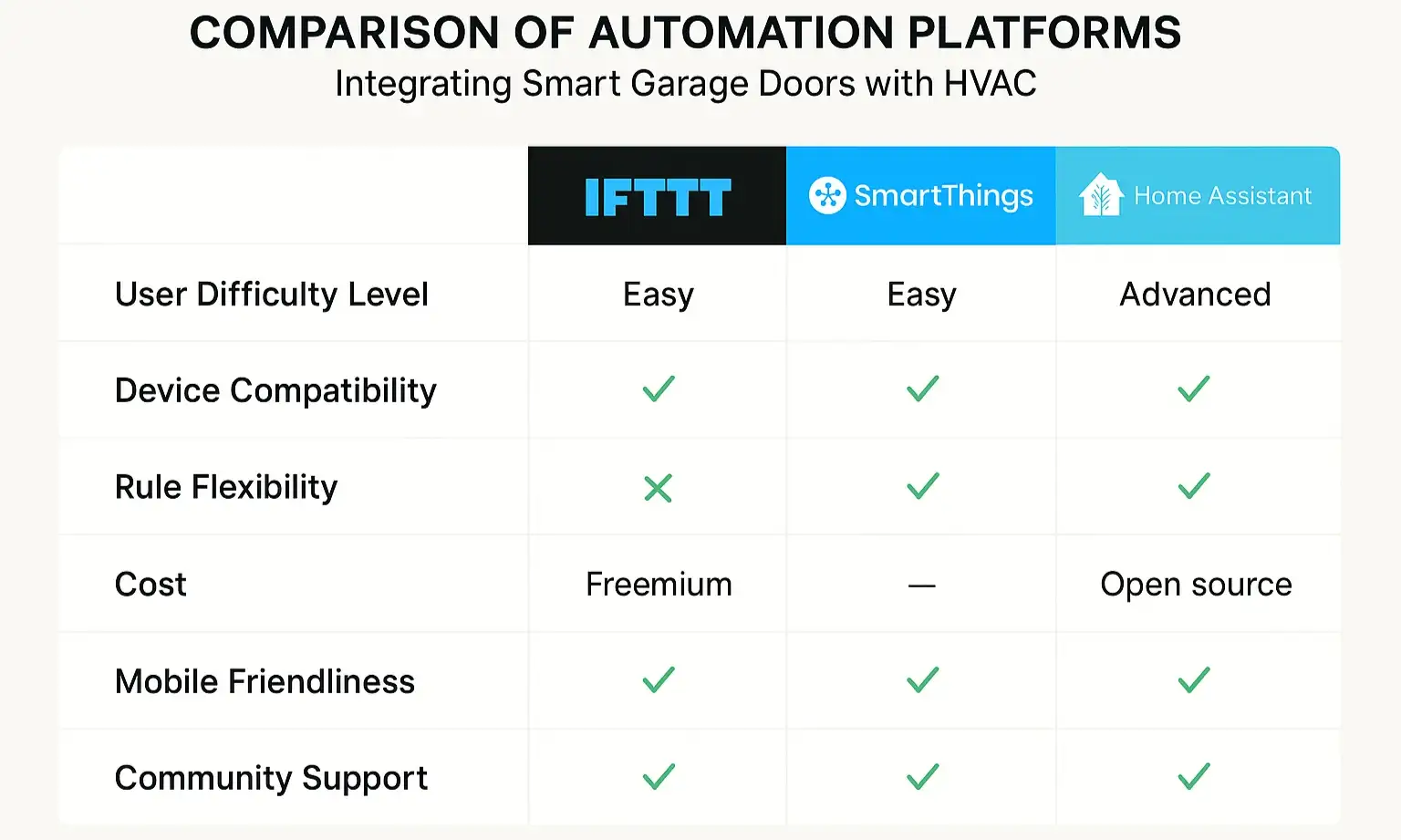
The Power User's Method: Advanced Rules with SmartThings or Home Assistant
- IF the garage door is open for more than 3 minutes,
- AND the outside temperature is below 40°F (for heating) or above 75°F (for cooling),
- THEN turn the HVAC system off.
- IF the garage door is closed,
- THEN resume the previous HVAC schedule.
Action: Beyond a Simple Shut-Off
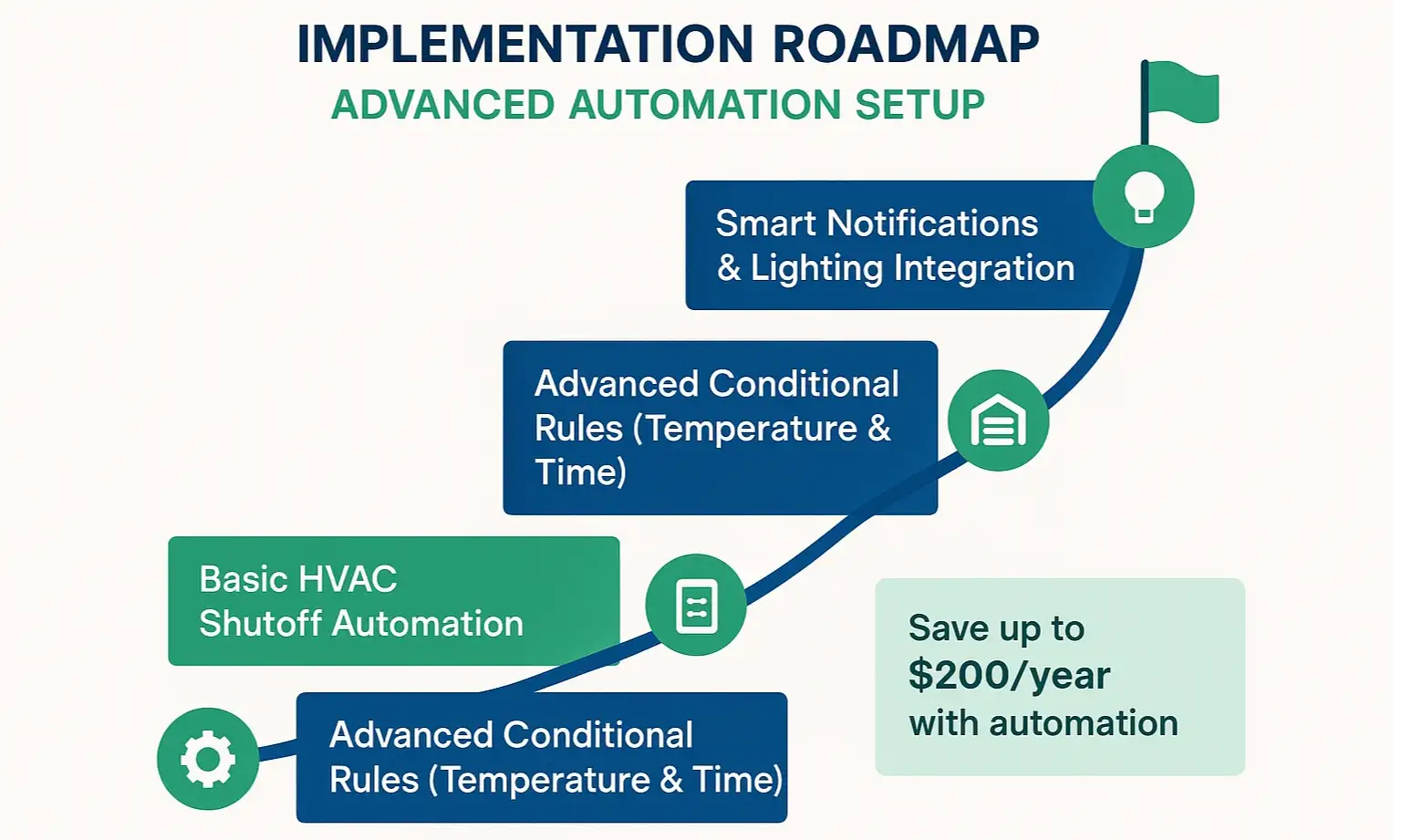
- Smart Notifications: IF the garage door is open for more than 30 minutes, send a notification to your phone.
- Safety Lighting: IF the garage door opens after dark, THEN turn on the garage and entryway lights.
- Welcome Home Scene: IF the garage door opens between 5 PM and 7 PM on a weekday, THEN set the thermostat to "Home," turn on the living room lights, and play a welcome playlist.
Need more information?
Get a free quote
Frequently Asked Questions (FAQ)
Is a smart garage worth it just for this feature?
What if I don't have a smart garage door opener?
Will this damage my HVAC system by turning it on and off too much?
Your Next Step to a Smarter, More Efficient Home
You may also like