





Maintenance Considerations for Vertical Lift Garage Door Systems
Published: Jan 26, 2026
You invested in a vertical lift garage door for a reason. Maybe it was to make room for a car lift, create lofted storage, or simply for that clean, modern aesthetic that maximizes every inch of your garage. Whatever the reason, you’ve upgraded from a standard system to something more specialized.
Here’s the thing about specialized equipment: it requires specialized care. The very mechanics that give you all that glorious vertical space also create unique stress points and maintenance needs. Ignoring them is like owning a performance car and never changing the oil. Eventually, that smooth, quiet operation will be replaced by squeaks, jerks, and costly problems.
This guide is your owner’s manual for protecting that investment. We’ll walk through everything from the basic anatomy of your system to a simple maintenance schedule that will keep it running flawlessly for years to come.
Foundation: The Anatomy of a Vertical Lift System (Simply Explained)
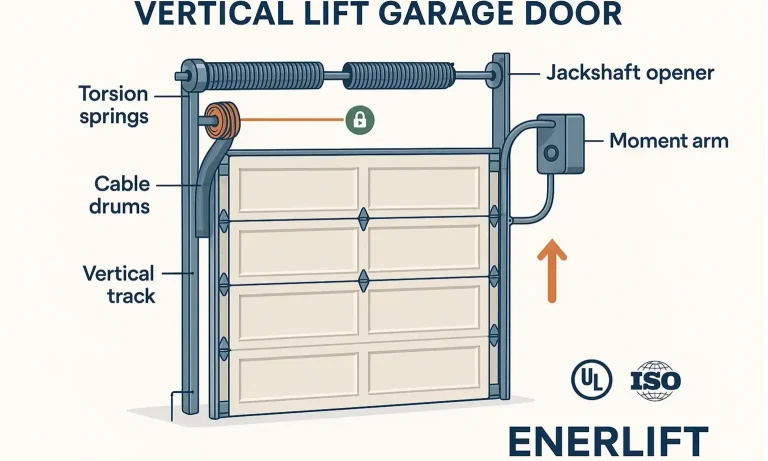
So, what actually makes your garage door go straight up instead of curving along the ceiling? It comes down to a few key components working together in a fundamentally different way than a standard setup. Understanding them is the first step to proper care.
- Vertical Tracks: Unlike the curved tracks on a standard door, these are perfectly straight, guiding the door directly up the wall. This requires them to be perfectly plumb and securely fastened to handle the door’s full weight throughout its travel.
- Torsion Springs: While all garage doors have springs, the ones on a vertical lift system are under immense and consistent tension. They are the powerhouse, counterbalancing the door’s weight so the opener can lift it. Proper garage door spring safety is non-negotiable with these systems.
- High-Lift Cable Drums: These specialized spools are larger and designed to wind up more cable, allowing the door to travel the full height of the opening before the cables begin to wrap. They are critical for ensuring the door lifts evenly.
- Jackshaft Opener: Many vertical lift systems use a side-mounted jackshaft opener. Instead of pulling the door from the ceiling, it turns the torsion bar directly, providing a smoother, more powerful lift.
The key takeaway is that the physics are different. A standard door gets lighter for the opener as it moves onto the horizontal tracks. A vertical lift door’s weight is a constant factor for the springs and opener, which is why diligent maintenance is so crucial.
Building: Your Step-by-Step Maintenance Routine
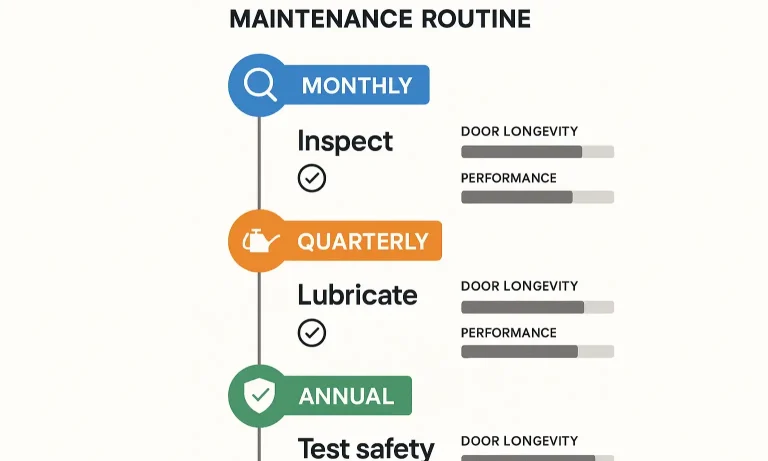
Think of this as a simple health and wellness plan for your garage door. A few minutes of preventative care each month can save you from major headaches and expensive repairs down the road.
Monthly Visual Checks (The 5-Minute Inspection)
- Look & Listen: Operate the door and just observe. Does it move smoothly? Do you hear any new grinding, scraping, or popping sounds? New noises are the earliest warning sign of a problem.
- Track Inspection: Eyeball the vertical tracks. Are they free of dirt, debris, or cobwebs? A small obstruction can throw the rollers off course and cause damage over time. Wipe them down with a clean cloth.
- Safety Sensor Test: With the door open, place a small object (like a roll of paper towels) on the floor in the door’s path. When you press the button to close it, the door should immediately reverse upon sensing the object. If it doesn’t, the sensors need adjusting or professional service.
Quarterly Tune-Up (A Little Deeper Dive)
Lubrication is Key: This is one of the most important steps. A properly lubricated door runs quieter and reduces wear and tear on all moving parts. If you’re unsure how to lubricate garage door components, the process is simple:
- DO Lubricate: Use a high-quality, silicone- or lithium-based garage door lubricant on the rollers, hinges, and bearings.
- DO NOT Lubricate: Never, ever use grease or a heavy oil like WD-40 on the tracks themselves. This will attract dirt and gum up the rollers, making the problem worse.
- Close the garage door.
- Disconnect the automatic opener (usually by pulling the red cord).
- Manually lift the door. It should feel relatively easy to lift and should stay open around halfway up.
- If the door feels extremely heavy or slams shut, the springs are worn and no longer balancing the door’s weight. This is a job for a professional.
Check for Loose Hardware: The constant vibration of the door can loosen nuts and bolts over time. Take a wrench and gently check the brackets and fasteners to ensure everything is snug. Don’t overtighten, just make sure nothing is rattling loose.
Annual Health Assessment (Know When to Get Help)
The Door Balance Test: This checks if your springs are still doing their job correctly.
Mastery: Troubleshooting Common Problems
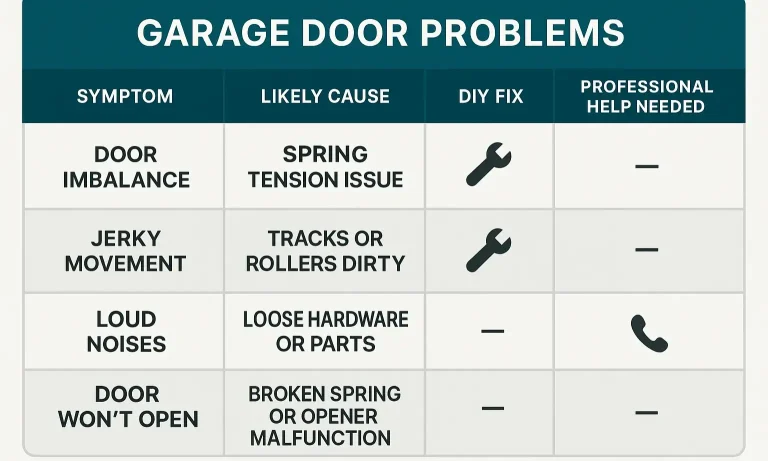
Even with perfect maintenance, issues can arise. Here’s how to diagnose some of the most common symptoms and decide if it’s a simple fix or time to call for backup.
Why is my door moving slowly or jerking?
- Likely Cause: This is often a sign of friction. The rollers may be dry, or there could be dirt and grime built up in the tracks. In more serious cases, a roller might be failing or the tracks could be slightly misaligned.
- DIY Solution: Start by thoroughly cleaning the tracks and applying lubricant to the rollers and hinges. If the problem continues, it’s time for a professional inspection.
My garage door is loud. What’s causing the noise?
- Likely Cause: Grinding or squeaking noises usually point to worn-out rollers or a need for lubrication. A loud “bang,” however, is the classic sound of a torsion spring breaking.
- DIY Solution: Lubricate all moving parts first. If you’ve done that and the noise persists, inspect the rollers for visible wear. If you hear a loud bang, stop using the door immediately and call a technician. A broken spring makes the door incredibly heavy and dangerous to operate.
- Likely Cause: This is a direct symptom of failing or improperly tensioned torsion springs. The springs have lost their strength and are no longer counterbalancing the full weight of the door, forcing you and the opener to lift dead weight.
- Professional Solution: This is one of the most dangerous issues and is absolutely not a DIY repair. The immense tension in the springs can cause serious injury. If your door fails the balance test, a professional needs to adjust or replace the springs. Trying to figure out how to adjust garage door cables or springs yourself is a major safety risk.
Why doesn’t my door seem balanced? It’s heavy to lift manually.
Action: Your Maintenance Toolkit & When to Call for Help
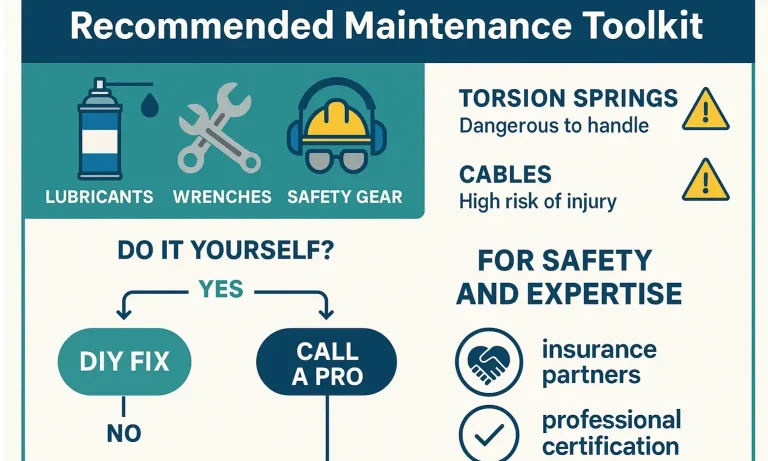
Empowering yourself to handle basic upkeep is smart. Knowing your limits is even smarter.
Your DIY Toolkit
- Socket/Wrench Set: For tightening loose nuts and bolts.
- Quality Lubricant: A silicone- or lithium-based spray made for garage doors.
- Clean Rags: For wiping down tracks and components.
- Sturdy Ladder: For safely reaching the upper parts of your system.
The “Call a Pro” Checklist
Some issues are simply too dangerous for a DIY approach. If you encounter any of the following, your next step should be to contact a certified technician.
- Broken Spring: That “loud bang” is your clear signal to stop and call for help.
- Frayed or Broken Cables: These are under high tension and can snap without warning.
- Failed Balance Test: Adjusting spring tension is a precise and dangerous job.
- Damaged or Bent Tracks: If a track is bent, it needs professional alignment or replacement to prevent the door from coming off track.
When in doubt, it’s always best to get a professional opinion on how to fix garage door issues safely and effectively.
Frequently Asked Questions (FAQ)
What is the difference between a vertical lift and a high-lift garage door?
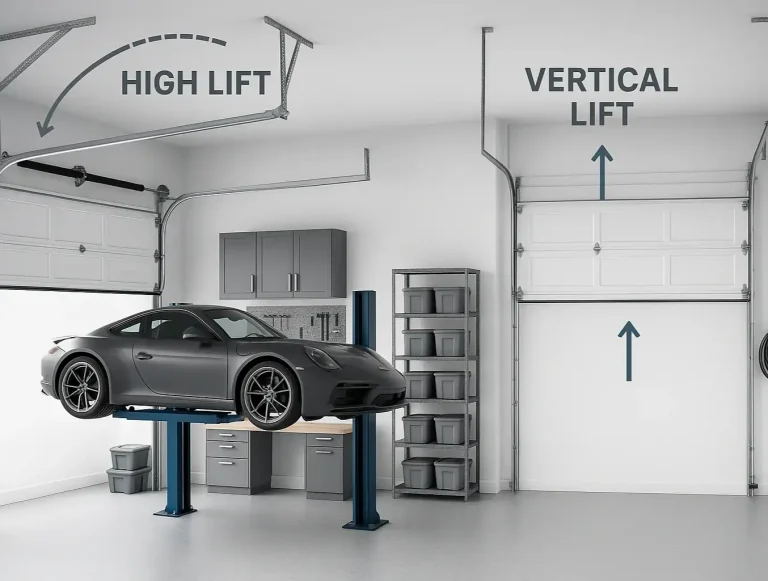
They’re similar but distinct. A true full vertical lift garage door travels straight up the entire way. A high-lift door goes vertically for a certain distance and then curves back onto a short horizontal track, sitting closer to the ceiling than a standard door but not flush against the front wall.
Can I install a vertical lift system myself?
While kits are available, this is considered an advanced installation. The precise alignment and spring calculations are critical for safe operation. A professional garage door track installation ensures all components are balanced and secured correctly from the start.
What kind of lubricant should I use?
Always use a lubricant specifically designed for garage doors, which is typically a silicone or white lithium grease spray. Avoid using standard WD-40, as it’s a solvent that can attract dust and eventually gum up the parts you’re trying to protect.
How often should I have my vertical lift door professionally serviced?
We recommend a professional service appointment at least once a year. A technician can perform a detailed inspection, check spring tension, and spot developing issues that might not be obvious. This is the best way to ensure your overall garage door maintenance is comprehensive.
Protect Your Investment with Proactive Care
Your vertical lift garage door is more than just an entry point—it’s a significant feature of your home that provides unique functionality. By investing just a small amount of time in regular, mindful maintenance, you ensure it remains a reliable, quiet, and safe asset for years. Keep it clean, keep it lubricated, and know when to call for a professional eye. That’s the simple secret to long-term performance.
You May Also Like
Vertical Lift vs. High Lift Garage Doors: Which Overhead Solution is Best
Imagine your garage wasn't just a place to park your car. What if it had the vertical space for a two-post car lift, a loft for your workshop, or floor-to-ceiling storage that finally gets everything off the ground?…
Published Date: Jan 20, 2026
Converting a Standard Track Garage Door to a Vertical Lift System
Ever look up at the ceiling of your garage and see wasted space? That sprawling network of horizontal tracks from your standard garage door eats up a massive amount of overhead real estate—space that could be used…
Published Date: Jan 15, 2026
Maximizing Overhead Space: A Guide to Vertical Lift Garage Doors
It’s a familiar dream for any homeowner with a passion project. You picture it perfectly: your classic car raised on a two-post lift, giving you ample room to work underneath. Or maybe it’s a workshop with…
Published Date: Jan 13, 2026