




Double-Wide Door Openers: What 16-Foot Doors Need
Published: Nov 2, 2026
Operating a 16-foot double-wide garage door introduces physical stress and mechanical demands that single-bay doors never experience. Homeowners often believe buying a high-horsepower motor is the sole requirement for smooth operation. However, automated lifting relies on mechanical balance rather than brute force. Properly calibrated torsion springs bear 95% of the door’s total dead weight, requiring the motor to deliver only 8 to 10 pounds of initial manual force to start movement. If your springs are worn or misaligned, even a top-tier motor will fail prematurely.
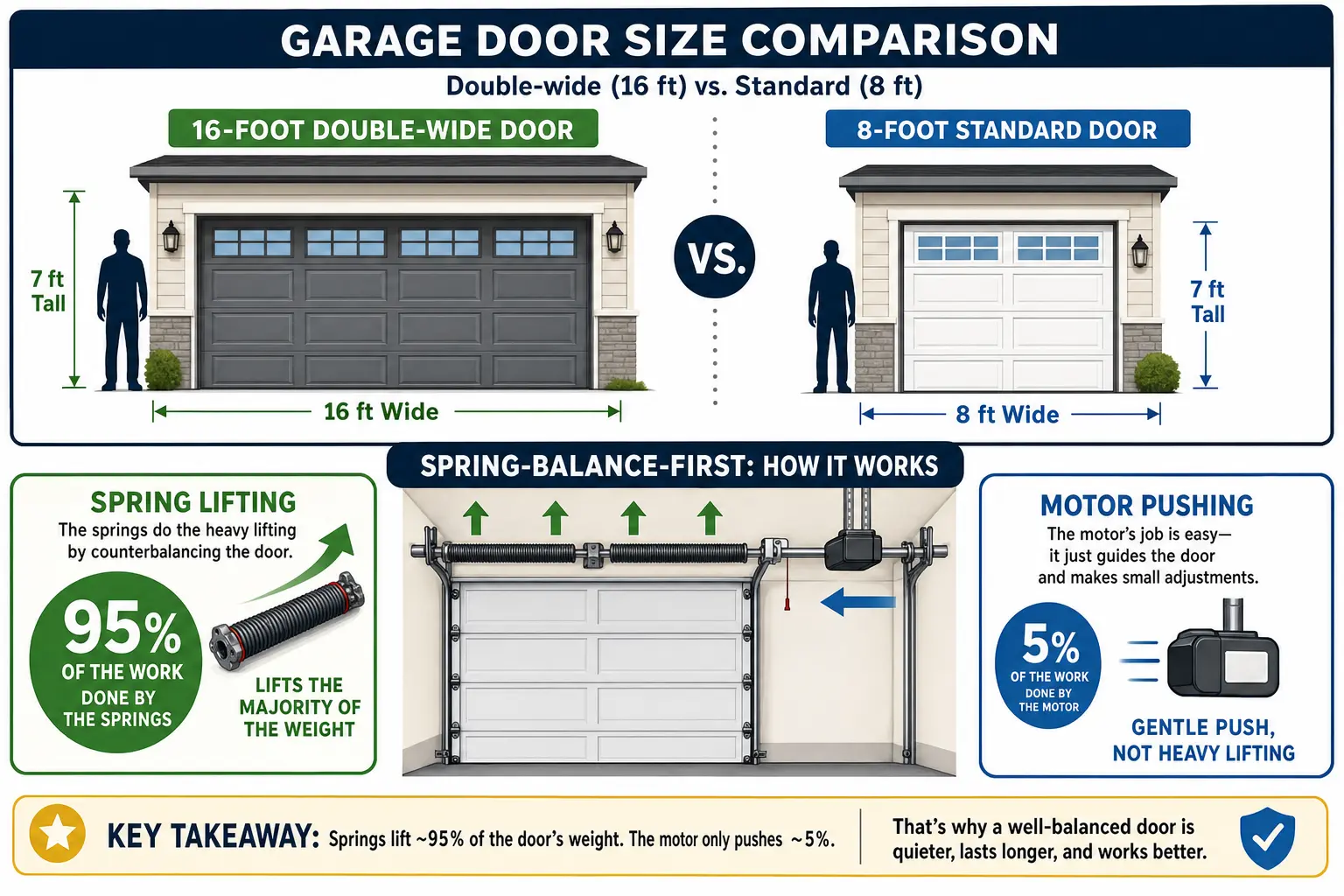
When evaluating options for double doors, structural mass, motor torque physics, overhead space, and rail rigidity must all align. Whether you are replacing an aged unit or scheduling a new garage door installation near me, selecting the right system prevents track binding and motor burnout. If you experience unexpected operational failures, consulting specialists in garage door spring replacement ensures your door remains properly balanced before installing a new opener.
Interactive Sizing Matrix: Matching 16-Foot Door Specs to Motor Power
Selecting the correct motor rating requires evaluating door construction materials and total weight. Standard retail marketing often mixes traditional AC Horsepower (HP) with modern DC Newton-force (N) metrics, causing confusion. DC motors utilize soft-start/soft-stop technology, reducing mechanical shock on wide 16-foot assemblies. As a baseline conversion: 800N DC equals approximately 3/4 HP AC, while 1200N DC provides up to 2.0 HPc (Horsepower Equivalent).
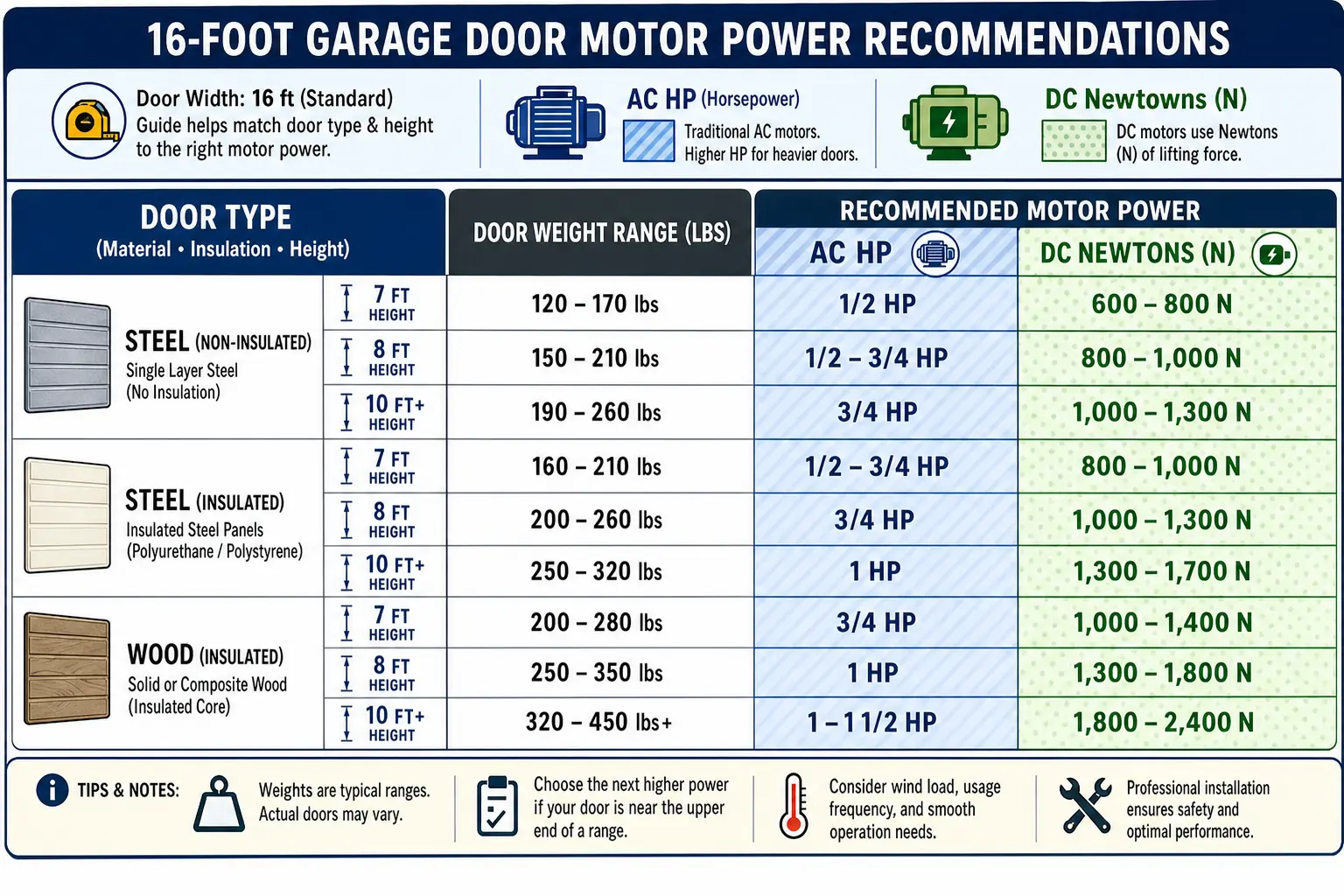
- 16×7 Single-Layer Uninsulated Steel (130–160 lbs): Minimum requirement of 1/2 HP AC or 600N DC.
- 16×7 Double/Triple-Layer Insulated Steel (200–350 lbs): Upgrading to thermal protection adds structural weight, requiring at least 3/4 HP AC or 800–1000N DC. Upgrading your setup with garage door insulation boosts energy efficiency but requires re-evaluating motor pull force.
- 16×7 or 16×8 Solid Wood & Carriage Overlays (350–550+ lbs): Heavy, handcrafted custom garage doors require 1.0 to 2.0 HPc or commercial-grade wall-mount drives rated for up to 1,100 lbs.
Drive System Breakdown for 16-Foot Spans
Matching drive style to your structural layout ensures quiet, reliable daily operation across a wide opening.
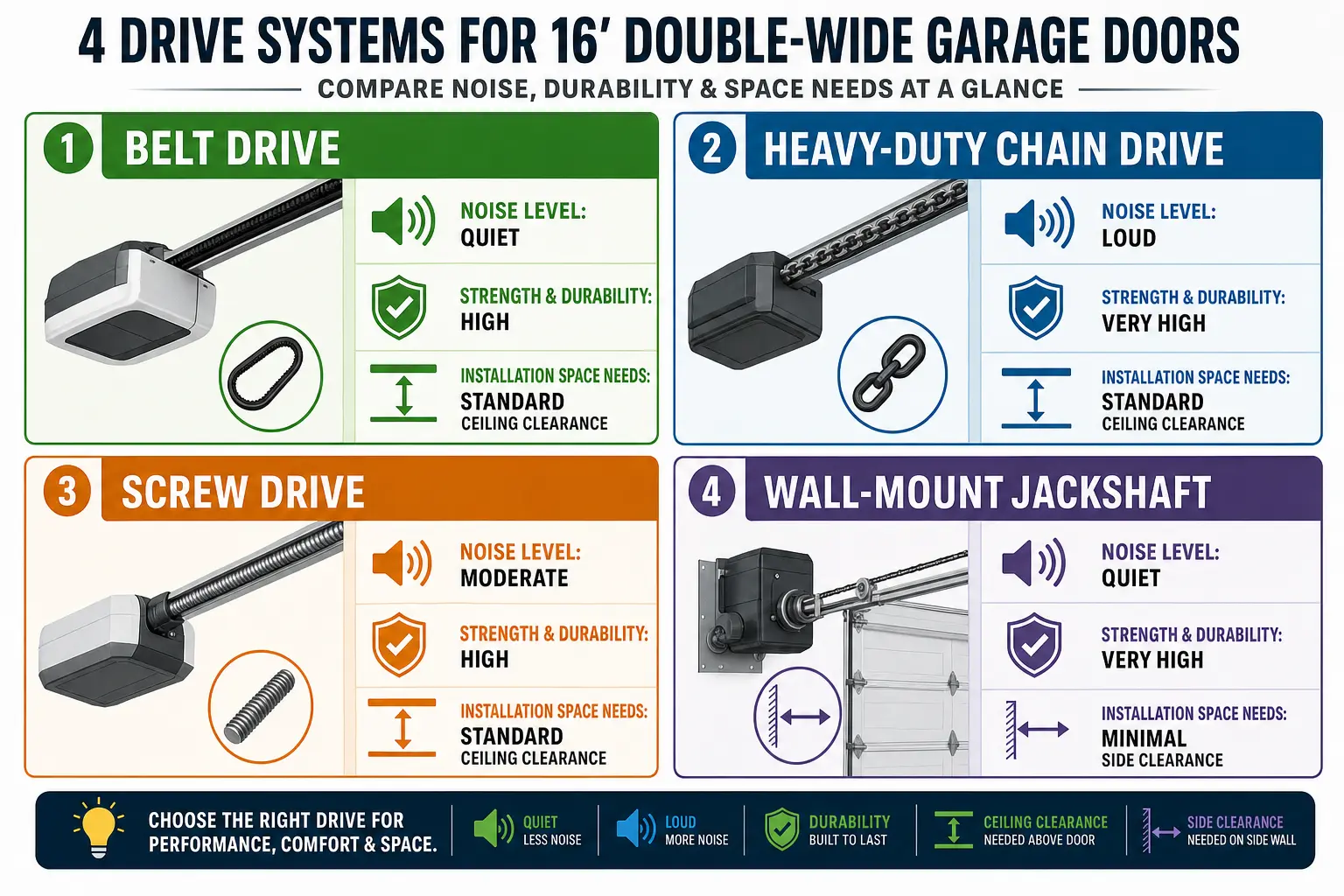
- Steel-Reinforced Belt Drive: Ideal for living spaces positioned directly above the garage. Models like the LiftMaster 87504-267 offer ultra-quiet performance and smooth operation for mid-weight doors without belt stretching.
- Heavy-Duty Chain Drive: Provides maximum tensile strength for heavy uninsulated or wood doors, though with higher operational noise.
- Direct-Drive Screw Drive: Units like the Genie MachForce 4062 utilize direct threaded rod lifting, opening doors at speeds up to 12 inches per second with minimal moving parts.
- Wall-Mount Jackshaft Drive: Mounts directly beside the door on the front wall. Systems such as the LiftMaster 98022 clear ceiling space completely, though they require a continuous torsion bar, 3 inches of side clearance, and 8 inches of vertical overhead room.
Choosing the right drive mechanism simplifies your modern automatic garage door installation and prolongs system longevity.
Structural Hardware & Extension Kit Essentials
A common pitfall with 16-foot doors is using retail multi-piece snap-together rails. Under the extreme rotational torque generated by a double-wide door, segmented rails flex and bow, causing track binding and accelerated motor gear wear. Demanding a solid, professional continuous T-rail eliminates rail deflection.
Height extensions and wind-load modifications also affect hardware selection:
- Height Extensions: Standard out-of-the-box openers only accommodate 7-foot tall doors. 16×8 or 16×10 installations require mandatory rail extension kits to prevent top-section jamming.
- Wind-Load Struts: High-wind regions require horizontal steel reinforcement struts. These add 20 to 50 extra pounds of lifting weight. If panels warp under load, immediate garage door panel replacement is vital to restore structural rigidity.
For urgent operational breakdowns, securing 24/7 emergency garage door repair keeps your garage secure and functioning.
Recommended Openers & Pre-Purchase Checklist
Before selecting a unit, execute this 10-second manual balance check: disconnect the operator trolley and lift the door manually halfway. If it stays in place, your springs are balanced. If it slams shut or shoots upward, adjust spring tension before motor installation.
Leading recommendations for double-wide openings include:
- Best Overall Belt Drive: Chamberlain Secure View / LiftMaster 87504-267 (DC Belt, Battery Backup).
- Best Space-Saving Jackshaft: LiftMaster 98022 (Rated up to 1,100 lbs).
- Best Heavy-Duty Screw Drive: Genie MachForce 4062 (2 HPc Direct Drive).
For heavy-duty properties or commercial applications, evaluating options for commercial garage door replacement offers higher duty cycles and reinforced structural durability.
Frequently Asked Questions
Can a 1/2 HP opener lift a 16-foot garage door?
A 1/2 HP opener can operate a light, uninsulated 16-foot steel door provided the torsion springs are perfectly balanced. However, for insulated steel or heavy wood doors, a 3/4 HP AC or 800N to 1200N DC motor is strongly recommended to prevent premature motor wear and thermal overload.
How do I know if my 16-foot door needs a rail extension kit?
Standard garage door opener boxes contain rails sized specifically for 7-foot high doors. If your 16-foot double door is 8 feet or 10 feet tall, you must purchase a matching manufacturer rail extension kit to allow the trolley full travel without binding.
Why is my garage door motor running but door not opening?
If you hear the garage door motor running but door not opening, the emergency release cord may be disengaged, the drive belt or chain gear stripped, or a torsion spring snapped. Inspect the mechanical connection and spring assembly before attempting to operate the opener further.
You May Also Like