




Do Garage Door Opener Vibration Isolator Kits Work for Overhead Rooms?
Published: Nov 16, 2026
When a bedroom, nursery, or office sits directly above a garage, early morning commutes can feel like an earthquake. If you are experiencing a low-frequency rumble every time your garage door opens, you are likely deciding between a simple $20 to $60 vibration isolator kit or a complete $800+ opener replacement.
Before spending hundreds on new equipment, it is essential to understand whether rubber isolation mounts can solve your specific noise issue.
The Physics of Over-Garage Noise: Airborne vs. Structure-Borne Transmission
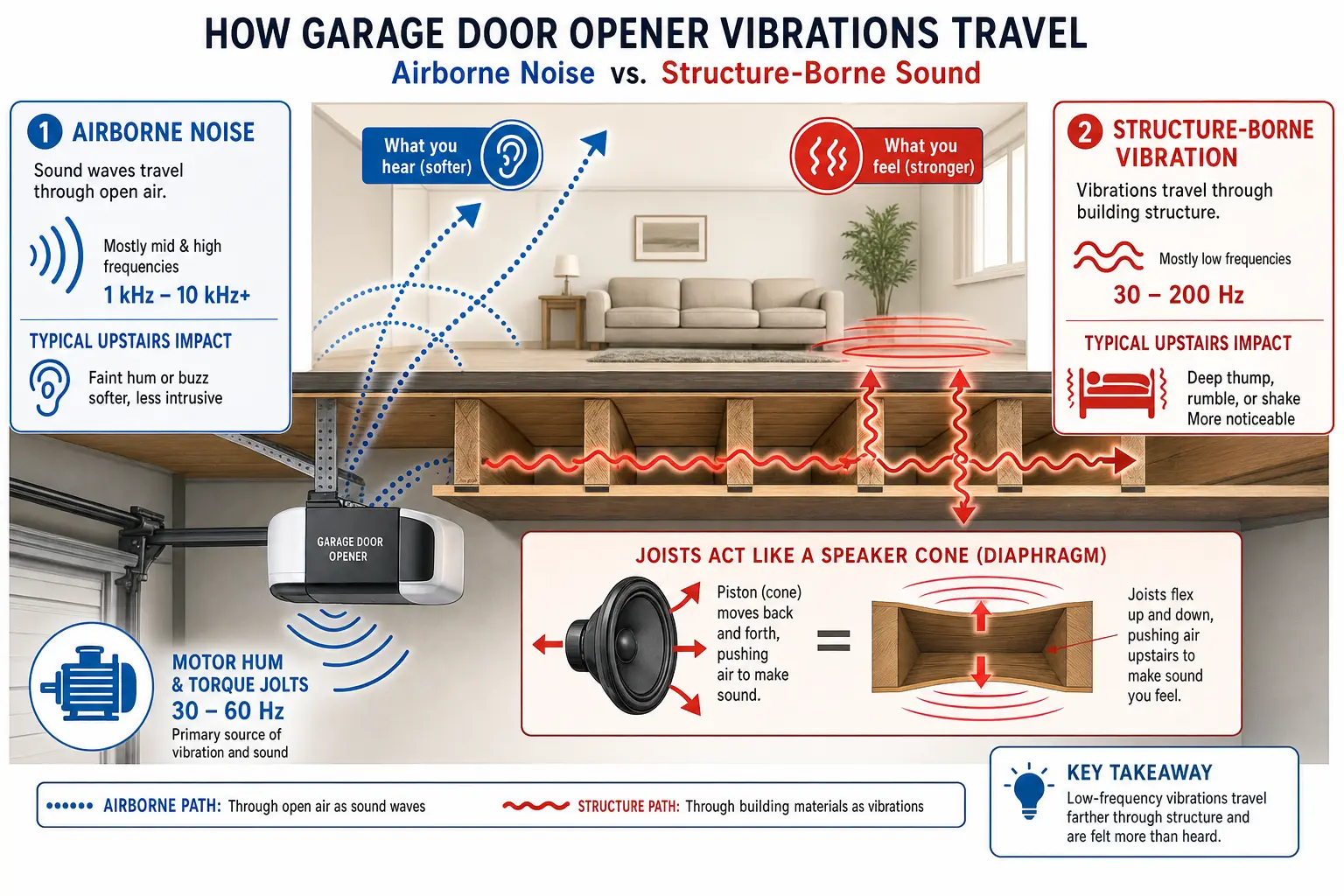
Up to 80% of perceived garage door noise in overhead living spaces is structure-borne vibration rather than airborne sound. When your opener motor fires up, it generates a 30–60 Hz low-frequency mechanical hum. Traditional installations bolt the motor housing directly to wooden ceiling joists using steel angle iron.
These engineered floor joists act like massive acoustic diaphragms. The mechanical vibration bypasses drywall and insulation entirely, traveling straight through structural timber into the subfloor above. Standard rubber vibration isolator kits are engineered to break this contact, dampening structural energy spikes before they reach your living space.
Self-Diagnostic Protocol: Will an Isolator Kit Work For You?
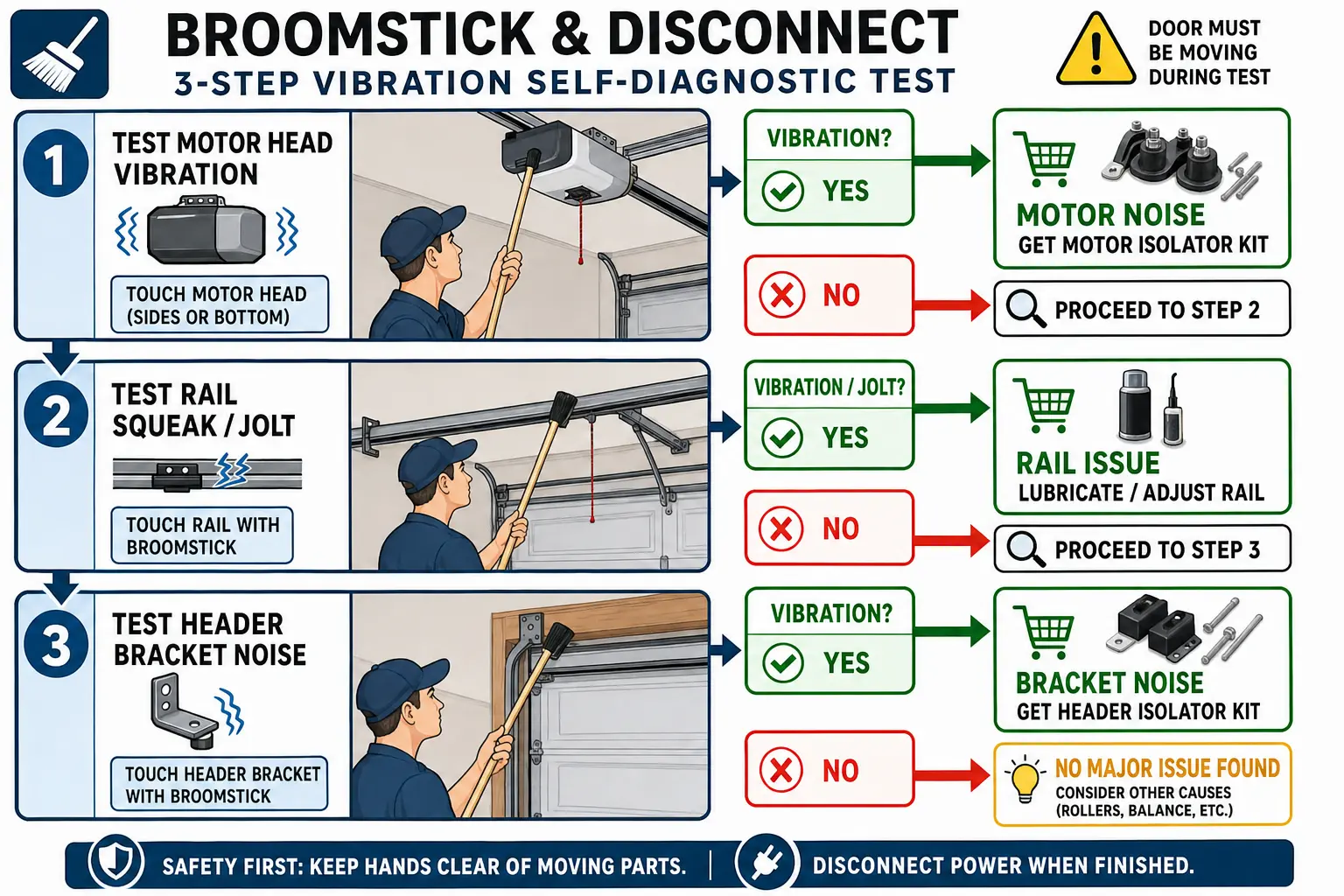
Not all garage noise responds to rubber isolators. Isolator kits target motor-induced vibration, not track binding or dry rollers. Perform this 60-second diagnostic before purchasing:
- The Disconnect Test: Disengage the emergency release cord and manually open and close the door. If you still hear grinding or rattling overhead, your primary issue stems from track alignment or noisy garage door rollers. Swapping to nylon vs steel garage door rollers will yield better results here.
- The Broomstick Vibration Check: While the door operates automatically, press a wooden broomstick firmly against the opener bracket and rest your hands on the handle. If you feel intense, rhythmically pulsing vibrations, your motor is transferring energy directly into your home’s framing.
If the broomstick check confirms high motor vibration, an isolator kit will deliver a noticeable noise reduction.
The "Flaw" in Most Installations: The 3-Point Isolation Rule
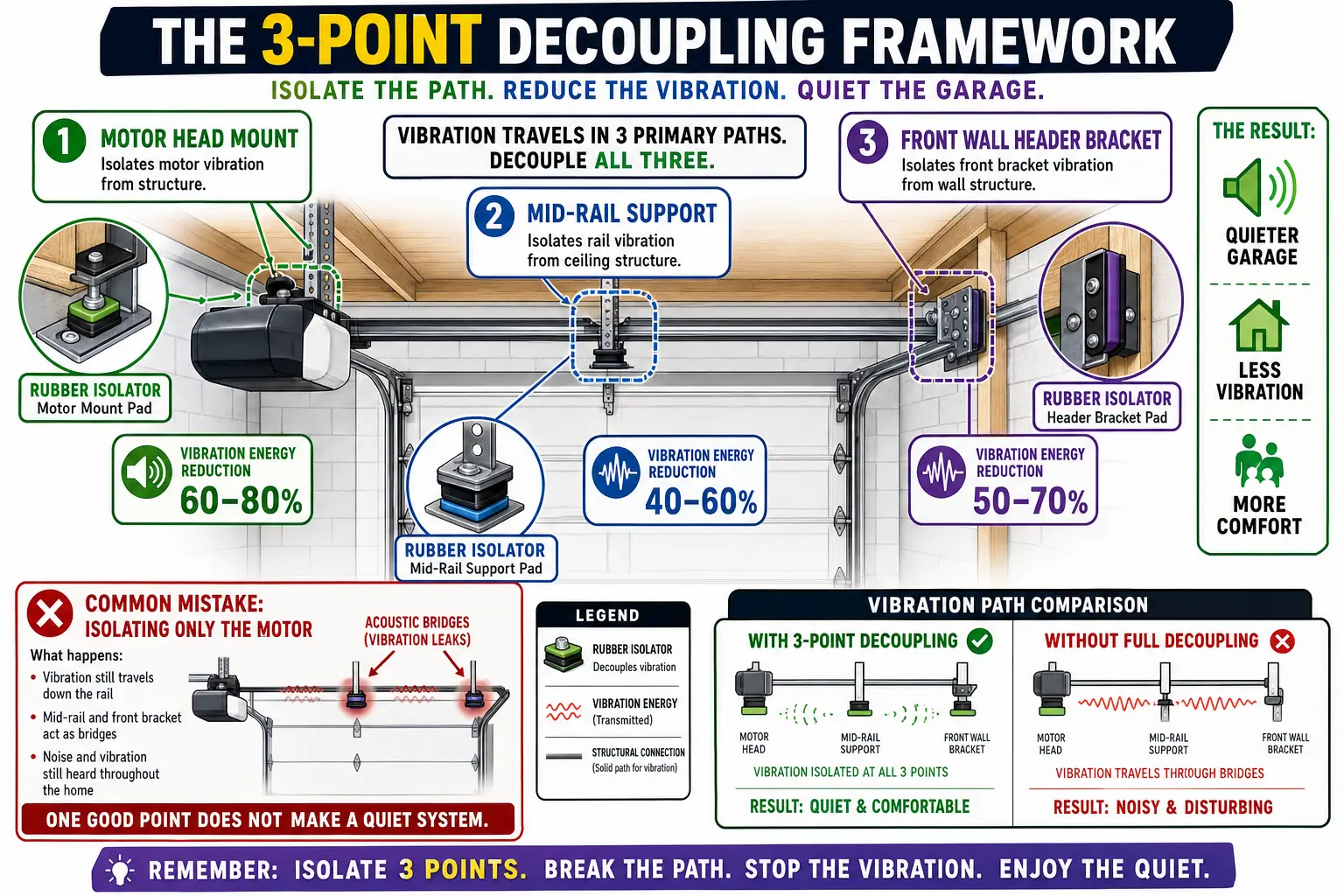
The primary reason homeowners report disappointing results from DIY isolator kits is incomplete installation. Standard kits focus exclusively on isolating the motor head. However, isolating only the motor leaves up to 60% of acoustic transfer active.
Vibration travels along three distinct pathways:
- Point 1: Motor Head Powerhead Mounts (Standard rubber studs)
- Point 2: Mid-Rail Ceiling Straps (Vibration traveling up center support channels)
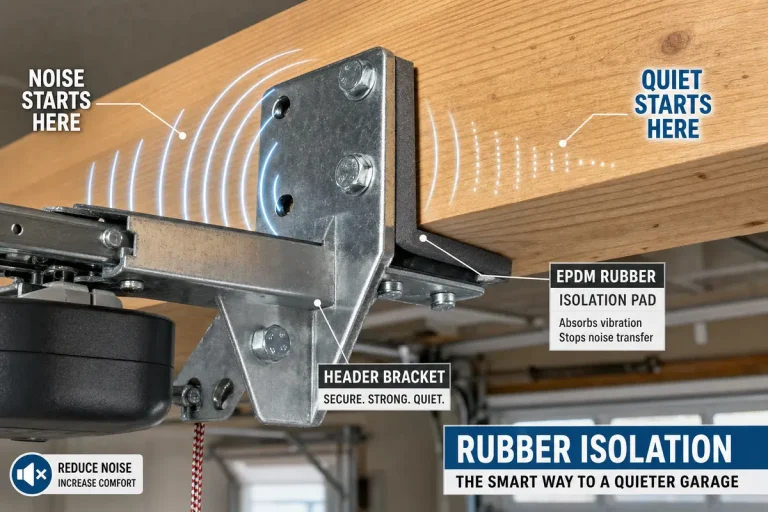
- Point 3: Front Wall Header Bracket (Torque transfer to the front structural wall)
To achieve a 9 to 15 dB drop in low-frequency rumble, you must isolate all three contact points using elastomeric grommets rated between 50–60 Shore A durometer.
Evaluating Your Options: Cost vs. Acoustic Performance
If your current setup uses a high-torque AC motor, rubber isolators provide immediate relief by softening structural spikes. However, understanding alternative upgrades helps set accurate expectations:
- Standard Isolator Kit ($15 – $40): Reduces structural hum by 9–15 dB. Best for working AC or belt-drive openers with localized motor hum.
- Architectural Acoustic Clips ($60 – $120): Heavy-duty neoprene mounts (e.g., RSIC-GDS) designed for maximum shear torque capacity and acoustic decoupling.
- Wall-Mounted Jackshaft Conversion ($500 – $1,200): Moving to a side garage door opener eliminates ceiling contact entirely by mounting to the front wall torsion assembly.
For most homeowners, starting with a 3-point isolation install offers the best balance of cost and quiet performance. If your motor exhibits severe gear grinding, review our guide on garage door noise vibration troubleshooting or consider upgrading to a quiet garage door opener.
Frequently Asked Questions
Do garage door opener vibration isolators really work?
Yes. Properly installed elastomeric vibration isolators achieve a 9 to 15 dB reduction in low-frequency structure-borne vibration, which effectively cuts perceived motor rumble upstairs in half.
Are rubber isolators safe for heavy garage door openers?
High-quality isolator kits feature metal-interlocked safety studs or fail-safe mechanical bolt designs. These prevent the opener from falling even if the rubber elastomer degrades over extended use.
Why didn’t an isolator kit stop my garage door noise upstairs?
Single-point motor isolation leaves acoustic bridges open through mid-rail supports and front header brackets. Additionally, isolator kits do not fix noisy steel rollers, unaligned tracks, or unshielded AC motor hum.
You May Also Like