




Low-Temperature Lubricants for Unheated New England Garages
Published: Nov 9, 2026
When winter temperatures across New England drop between -10°F and -20°F, standard off-the-shelf lubricants undergo catastrophic failure inside unheated garages. Choosing the right chemical formulation protects moving hardware, prevents burnt opener motors, and ensures reliable morning operation during polar vortex events.
Executive Selection Summary
Understanding what parts of the garage door should you lubricate and matching hardware to exact sub-zero temperature ratings prevents costly emergency service calls on freezing mornings.
The Science of Sub-Zero Lubrication: Why Standard Lubes Fail in New England Unheated Garages
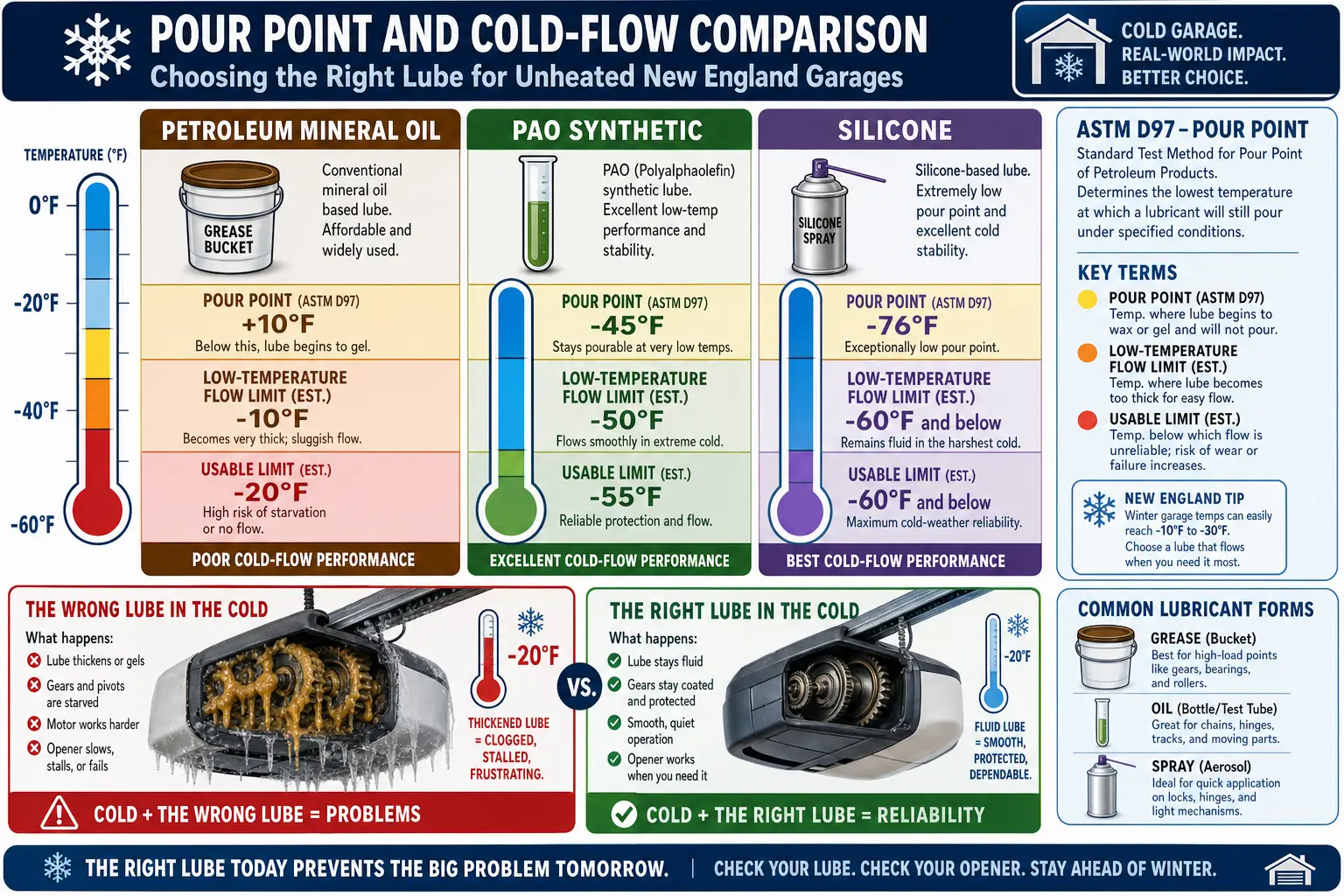
In unheated coastal or inland New England garages, petroleum-based multi-purpose sprays fail due to thermodynamic phase changes. Standard mineral-based greases thicken into a dense, waxy sludge that creates massive resistance against opener drive systems.
Under standard ASTM D97 Pour Point testing:
- Petroleum Mineral Base Oils: Reach their pour point between 0°F and 10°F (-17°C to -12°C), freezing into solid wax during typical northern cold snaps.
- Synthetic Polyalphaolefin (PAO) Oils: Maintain liquid fluidity down to -50°F to -65°F (-45°C to -54°C).
- Pure Silicone Polymers: Retain low-viscosity flow down to -40°F to -50°F (-40°C to -45°C).
Cold torque resistance under ASTM D1478 testing reveals a similar contrast. At -40°F, standard NLGI #2 grease produces over 10,000 g-cm of cold torque resistance, frequently triggering the auto-reverse or overload sensors on Genie and LiftMaster openers. Conversely, low-temperature NLGI #1 or #0 synthetic formulas generate under 1,000 g-cm of resistance, enabling instant motor starts without amp spikes.
Chemical Evaluation Framework: PAO Synthetic vs. Silicone vs. White Lithium
Selecting the ideal lubricant requires evaluating chemical base oils against load capacity and surface chemistry:
Synthetic Polyalphaolefin (PAO) Greases
Engineered from synthesized hydrocarbon molecules, PAO lubricants contain zero wax paraffin. They maintain consistent viscosity under extreme thermal swings, making them the superior choice for high-stress metal contact like torsion springs and drive gears.
Pure Silicone Spray Polymers
Silicone forms a durable hydrophobic film on non-metallic surfaces. While mineral oil solvents cause 15% to 35% volumetric swelling and degradation on EPDM rubber weatherstripping, pure silicone causes 0% degradation and stops bottom seals from freezing to icy concrete down to -40°F.
The White Lithium Myth
Standard off-the-shelf white lithium greases rely on inexpensive petroleum mineral bases that freeze solid at 0°F. Only specialized synthetic white lithium formulations blended with PAO synthetic oils remain effective in New England winters.
Component-Specific Selection Guide
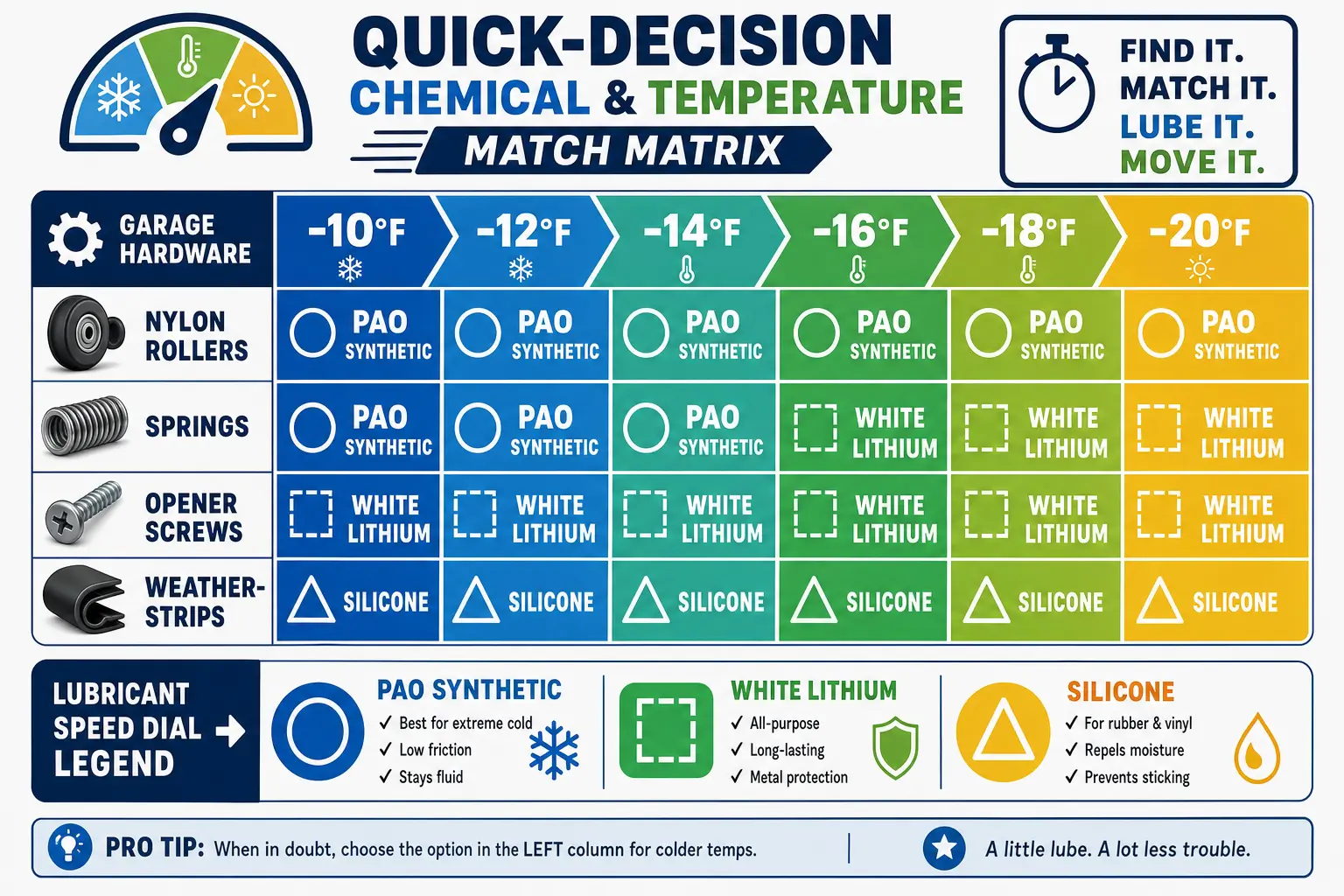
Applying the correct chemical formulation across individual sub-assemblies guarantees optimal mechanical performance and maintains manufacturer warranty compliance:
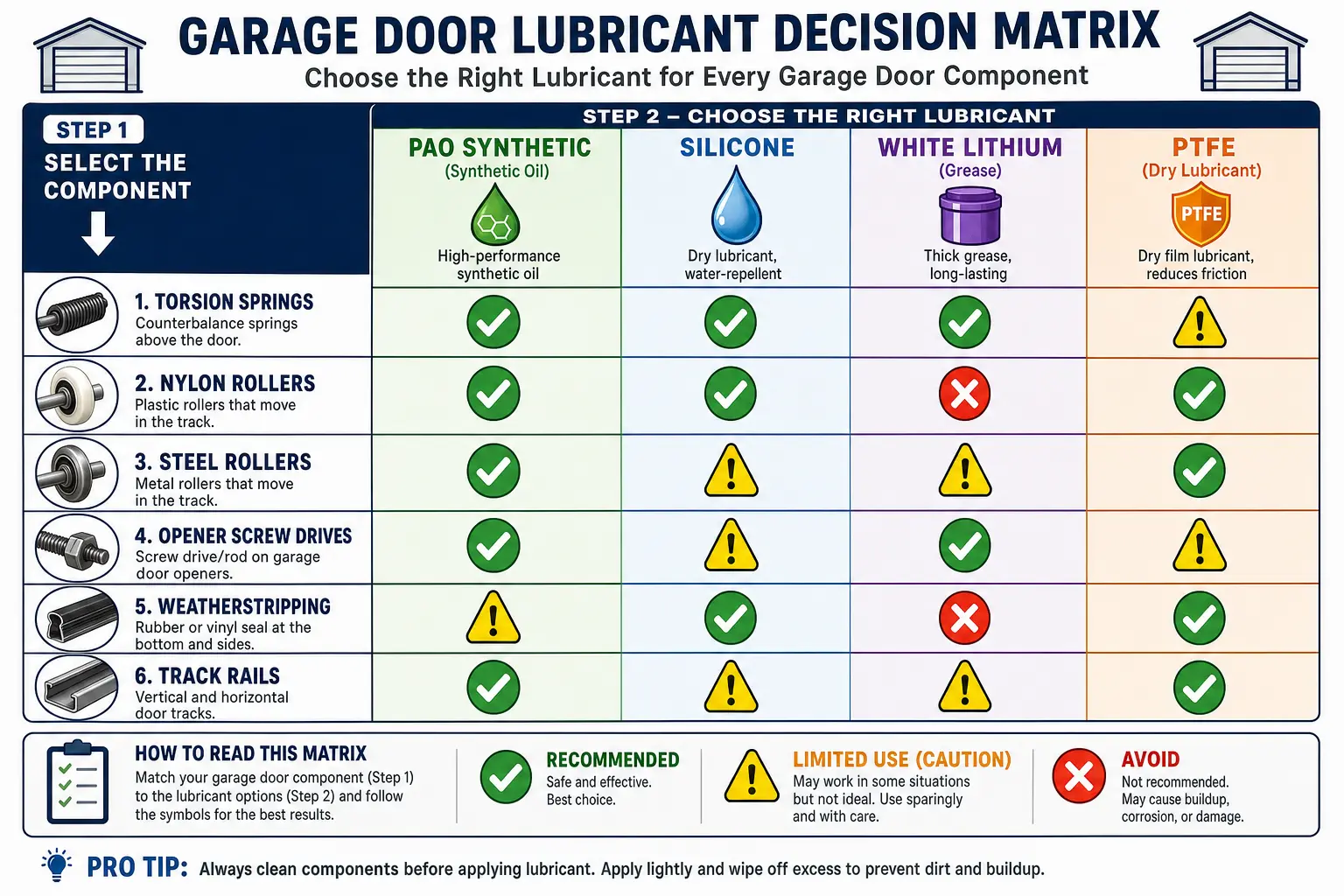
- Torsion & Extension Springs: Coat steel coils with non-tacky penetrating synthetic PAO spray to prevent rust, bind friction, and catastrophic coil binding.
- Rollers & Bearings: Evaluating nylon vs steel garage door rollers dictates chemical choice. Steel roller bearings require synthetic PAO grease. Nylon rollers require silicone spray applied exclusively to the stem—petroleum distillates degrade nylon wheels. A periodic garage door wheel inspection ensures bearings turn freely prior to winter lubrication.
- Tracks & Brackets: Never apply grease to track channels. Grease accumulates grit and creates an abrasive paste. Proper garage door track installation relies on clean, ungreased stainless steel or galvanized tracks, wiped down with a solvent and light silicone film in coastal salt-air areas.
- Opener Drives: Genie screw drives specifically require low-temperature synthetic lubricants such as Lubriplate Aero to comply with OEM warranty terms.
- Weatherstripping: Apply dielectric silicone along perimeter rubber seals to preserve flexibility and prevent physical tears from ice adhesion.
Knowing how to replace garage door rollers before cold weather hits avoids operating worn hardware under high winter thermal stress.
Frequently Asked Questions
Will using standard white lithium grease void my garage door warranty?
Standard petroleum-based white lithium greases can void warranties on nylon rollers and opener drive mechanisms if applied against manufacturer guidelines. Brands like Clopay, LiftMaster, and Genie specify non-petroleum silicone or synthetic PAO lubricants to maintain component integrity.
How often should you lubricate your garage door in cold climates?
In New England environments, perform a comprehensive lubrication service twice per year: once in late autumn before temperatures fall below freezing, and once in early spring to clear accumulated salt mist and thaw moisture from hardware.
What is the difference between NLGI #1 and NLGI #2 greases in sub-zero weather?
NLGI #2 is standard medium-density grease that hardens below freezing, increasing torque load on openers. NLGI #1 is a lower-density grease formulated to flow smoothly down to -40°F, significantly reducing strain on electric openers during sub-zero cold starts.
Protecting Your Garage Door System This Winter
Selecting sub-zero engineered synthetic lubricants designed for New England winter extremes ensures quiet, dependable door operation throughout the freezing months. If your door shows signs of heavy drag, binding hardware, or opener strain, consulting an experienced garage door professional provides reliable protection and long-term operating performance.
You May Also Like