




Types of Garage Door Motors and Drive Systems: The Selection Guide
Published: Nov 4, 2026
Selecting the ideal garage door opener involves evaluating the mechanical drive system, motor electronics, acoustic impact, and lifting force required for your specific door weight. Making the right choice prevents premature mechanical wear, reduces household noise, and ensures reliable operation across all seasons.
Evaluating Drive Systems and Noise Profiles
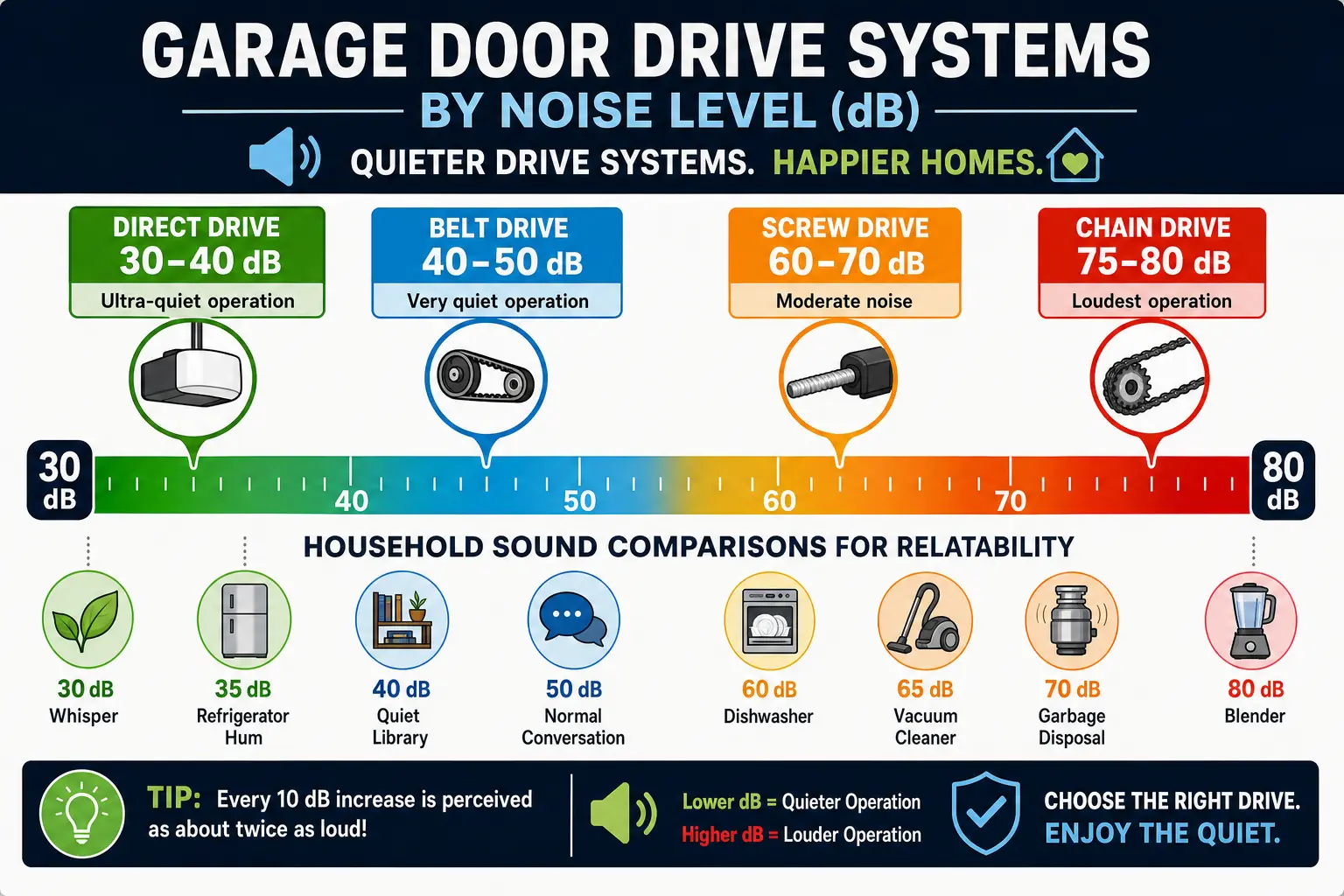
Selecting a drive mechanism is often a trade-off between acoustic comfort, maintenance needs, and upfront cost. Operating volume is measured in decibels (dB), where even small numerical jumps represent major differences in perceived sound.
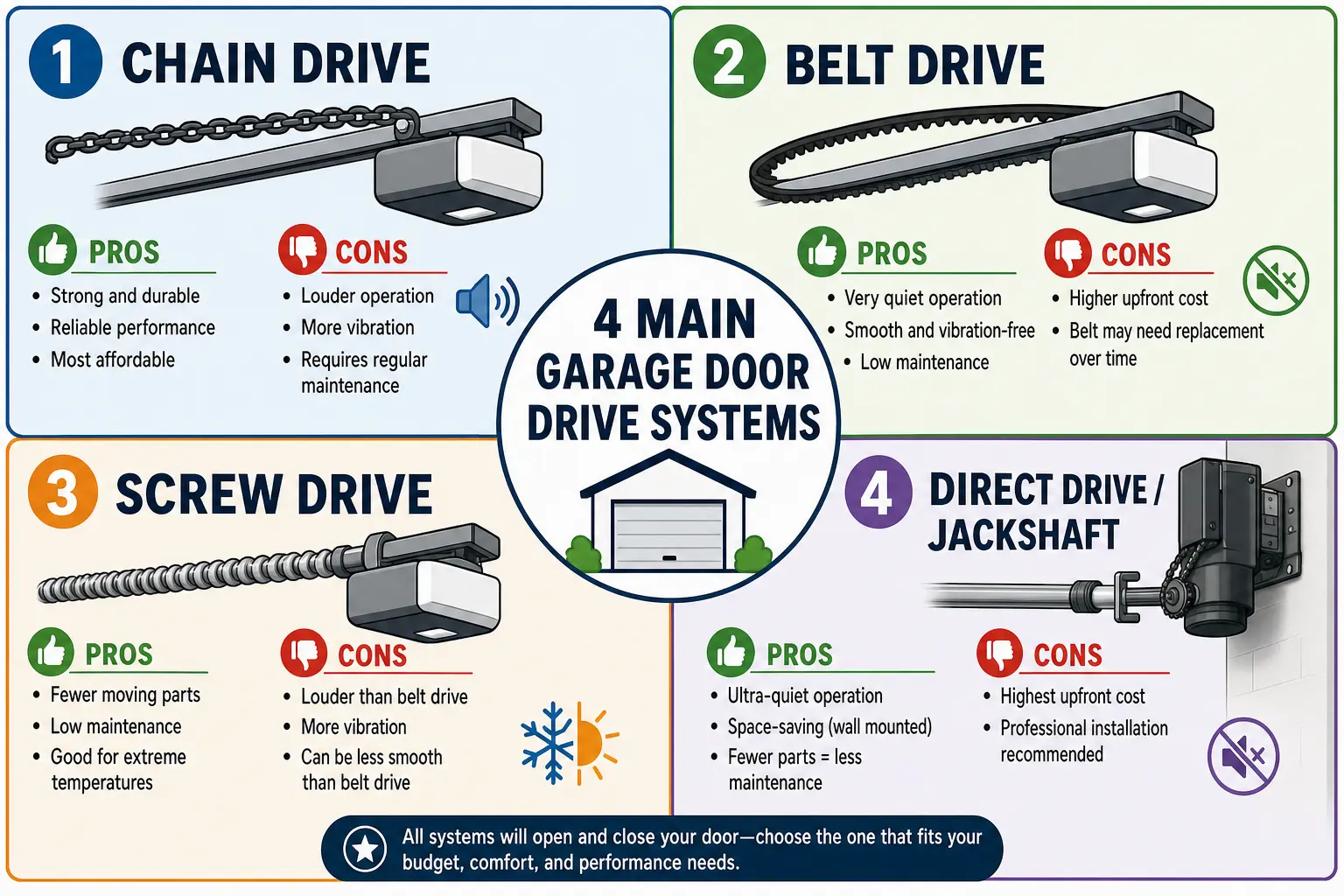
- Chain Drive (75 – 80 dB): Equivalent to a dishwasher or garbage disposal. Structural vibrations travel easily through ceiling joists in attached garages.
- Screw Drive (60 – 70 dB): Similar to a vacuum cleaner or normal conversation.
- Belt Drive (40 – 50 dB): Operates at the level of a quiet library or refrigerator hum.
- Direct Drive / Jackshaft (30 – 40 dB): Whisper-quiet performance that eliminates overhead track vibration.
Evaluating these sound profiles helps narrow down your search when reviewing a general how to choose the right garage door opener strategy.
The Four Primary Drive Systems Breakdown
Every mechanism operates on distinct mechanical principles that affect long-term maintenance and climate suitability.
Chain Drive
Chain drives utilize a assembly of heavy-duty metal chains to pull the trolley along a steel rail. While economical and capable of lifting heavy loads, metal-on-metal contact creates significant noise. They require semi-annual lithium grease applications and periodic tension adjustments. Over 15 years, expected maintenance costs run $50–$100.
Belt Drive
Belt drives replace metal chains with steel- or fiberglass-reinforced polyurethane belts. They deliver smooth, virtually silent operation without stretching or requiring lubrication, making them the leading option for a quiet garage door opener in attached garages near bedrooms.
Screw Drive
Screw drives use a threaded steel rod to move the trolley. Containing fewer moving parts than chain units, they offer lifting speeds around 7–8 inches per second. However, extreme cold weather can harden the low-temp grease, increasing strain on the motor.
Direct Drive / Wall-Mount Jackshaft
Wall-mount jackshaft systems attach directly to the wall beside the door and connect to the torsion bar. By eliminating central overhead tracks, they free up ceiling space for overhead storage, high-lift tracks, or cathedral layouts. Reviewing the best wall mount garage door opener options will show that these systems require torsion springs rather than extension springs.
Motor Engineering Dissection: AC vs. DC Motors
The motor driving your system plays a major role in operating noise, speed control, and longevity.
Alternating Current (AC) Motors
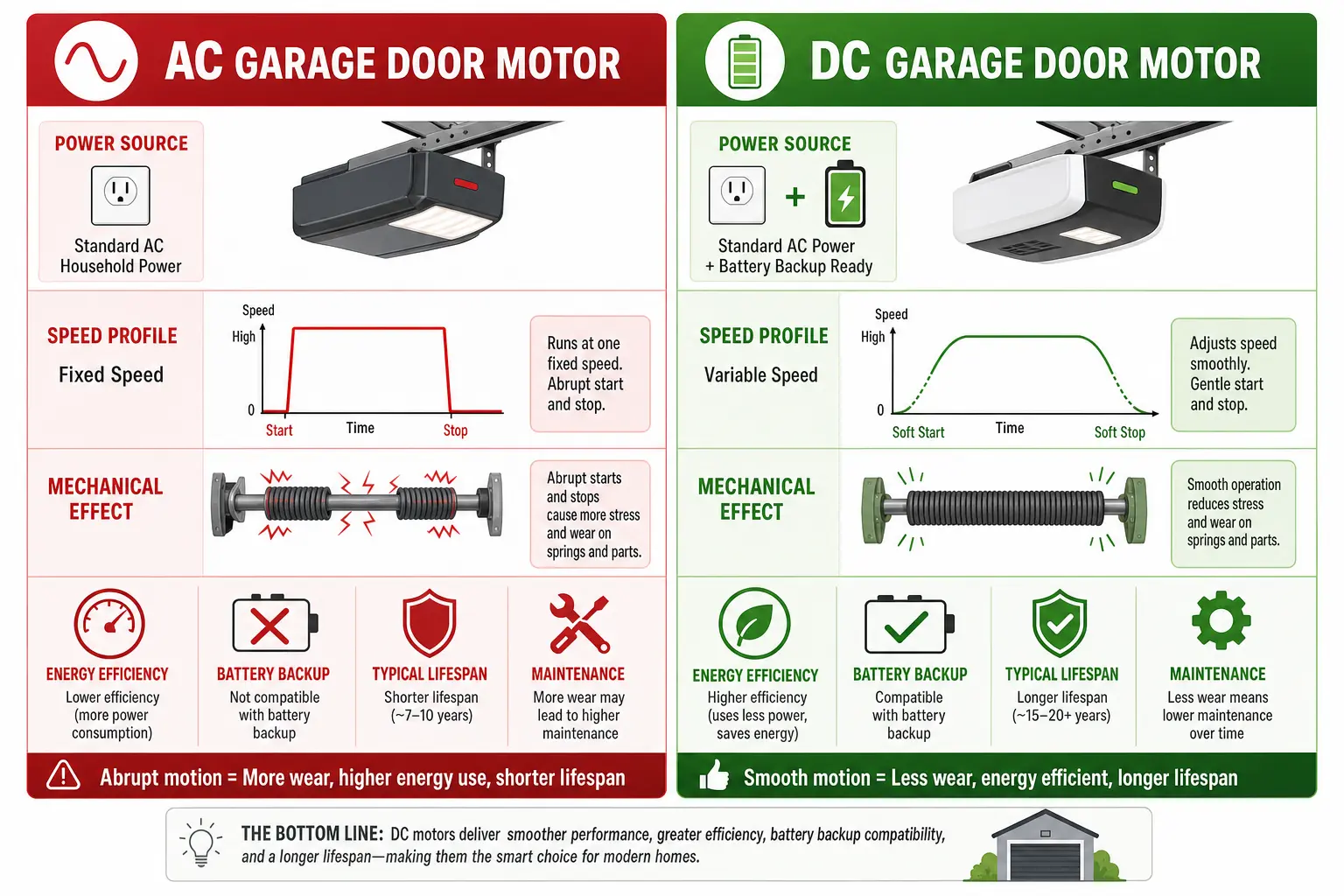
AC motors run at a single fixed speed, delivering immediate full torque upon activation. This abrupt start and stop places mechanical shock on door springs, cables, and rollers. Standard AC units typically last 10–15 years and lack native battery integration.
Direct Current (DC) Motors
Modern DC motors offer variable speed control, enabling soft start and smooth stop cycles. This feature reduces stress on springs and hardware by up to 30%, extending system lifespan to 15–20 years. DC motors use up to 75% less standby power and integrate seamlessly with integrated power reserves. Meeting regulatory mandates like California’s SB-969 requires a reliable battery backup garage door opener to preserve functionality during power outages. For a complete look at electrical efficiency, explore our breakdown on ac vs dc garage door opener performance.
Decoding Horsepower Ratings: HP vs. HPS
Traditional AC motors use mechanical Horsepower (HP), whereas DC motors measure output in Newtons (N) of torque. Manufacturers often convert these torque figures using terms like “Horsepower Similar” (HPS) or “Horsepower Comparable” (HPC).
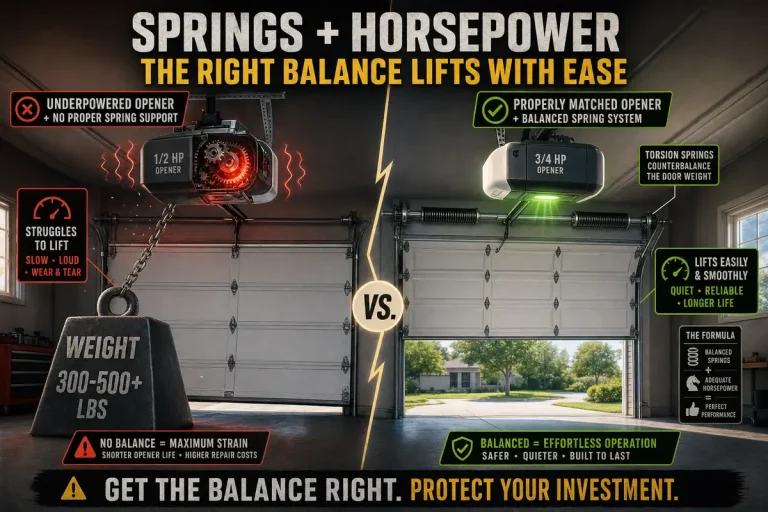
- 1/2 HP or 500 N: Ideal for single-car uninsulated steel doors (100–150 lbs).
- 3/4 HP or 750 N: Suitable for double-car insulated steel doors (150–250 lbs).
- 1 to 1-1/4 HP or 1000–1200 N: Designed for heavy solid wood or custom carriage house doors (300–500+ lbs).
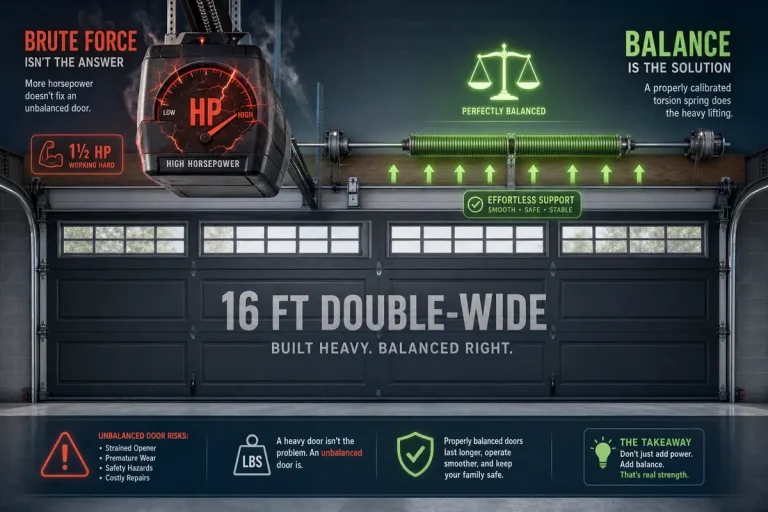
Selecting the appropriate motor power ensures reliable lifting without overworking internal gears. Discover what size garage door opener do i need to match your exact door design. Keep in mind that springs do the heavy lifting; if you hear the motor strain or find your garage door not opening but motor running, scheduled maintenance or a professional garage door spring tension adjustment near me may be necessary before proceeding with a smart garage door opener installation.
Frequently Asked Questions
Can I upgrade a chain drive opener to a belt drive using the same rail?
No. Belt drive openers require specific rail dimensions and drive sprocket configurations designed for reinforced polyurethane belts. Upgrading to a belt drive involves installing a full kit, including a compatible rail assembly and powerhead.
Is a wall-mount jackshaft opener compatible with extension springs?
No. Jackshaft openers mount directly to the front wall and rotate a solid horizontal torsion shaft. They are not compatible with extension spring systems that run along the side tracks and lack a central rotating tube.
Why are screw drive openers becoming less common?
Screw drive openers rely on a long threaded steel rod that requires ongoing lubrication. Extreme temperature shifts cause the grease to thicken or dry out, leading to increased wear and noise. Whisper-quiet belt drives and efficient DC direct drive units have largely replaced them.
You May Also Like