





Carriage-House Overlay Delamination: Causes, Diagnostic Protocol & Repair Options
Published: Nov 9, 2026
Carriage-house garage doors are high-ticket architectural features ($2,500–$7,500+) valued for their high curb appeal. They achieve their classic aesthetic through decorative cellular PVC, composite, or wood trim overlays glued onto insulated steel backing panels. However, when these trim overlays begin to peel, bubble, lift at section edges, or completely detach, homeowners face a frustrating challenge: Carriage-House Overlay Delamination.
Delamination peaks between years 3 and 7 post-installation, coinciding with the expiration of standard 1-to-5-year factory overlay trim warranties. Homeowners evaluating their options often struggle to determine whether a $50 DIY re-bonding effort will hold up, if a $350–$900 single-section replacement is required, or if investing in a full door replacement is the most cost-effective long-term path.
The Root Causes: Why Carriage Door Overlays Delaminate
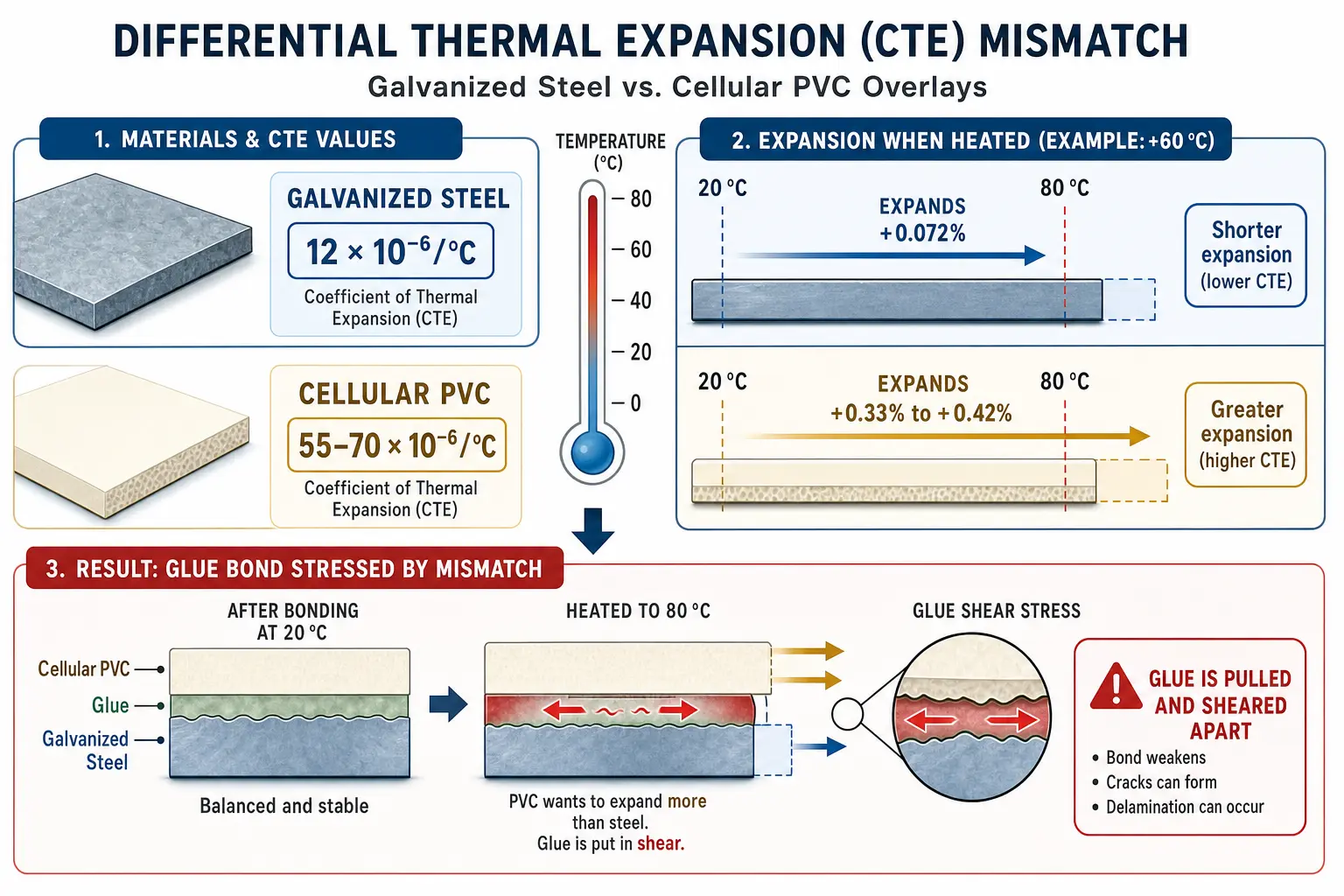
Overlay separation is rarely a simple case of “bad glue.” It is driven by material physics, thermal dynamics, and environmental exposure.
- Coefficient of Thermal Expansion (CTE) Mismatch: Steel substrates expand at a rate of approximately 12.0 × 10⁻⁶ /°C, whereas cellular PVC overlays expand at 55.0 to 70.0 × 10⁻⁶ /°C. In direct sunlight, PVC expands 4 to 5 times faster than the underlying steel, generating over 350 PSI of shear stress across the adhesive bond line.
- Solar Heat Gain & The LRV Trap: In direct sun, dark-painted garage door surfaces frequently reach temperatures exceeding 160°F. Major manufacturers mandate that overlays maintain a Light Reflectance Value (LRV) of 50% or higher. Painting overlays dark brown or black increases surface heat absorption and raises delamination risk by 310%, often voiding factory warranties.
- Moisture Trapping & Hydrolysis: Rainwater and morning dew running down the door face seep behind top horizontal trim edges. When water pools without proper drainage, continuous moisture breaks down rigid adhesives through hydrolysis. Freeze-thaw cycles further pry the trim away from the backing panel.
- Mechanical Flex Fatigue: Daily operation causes section panels to articulate through track radiuses, introducing recurring flex strain along bonded seams.
Diagnostic Decision Tree: Repair, Replace Section, or Replace Door?
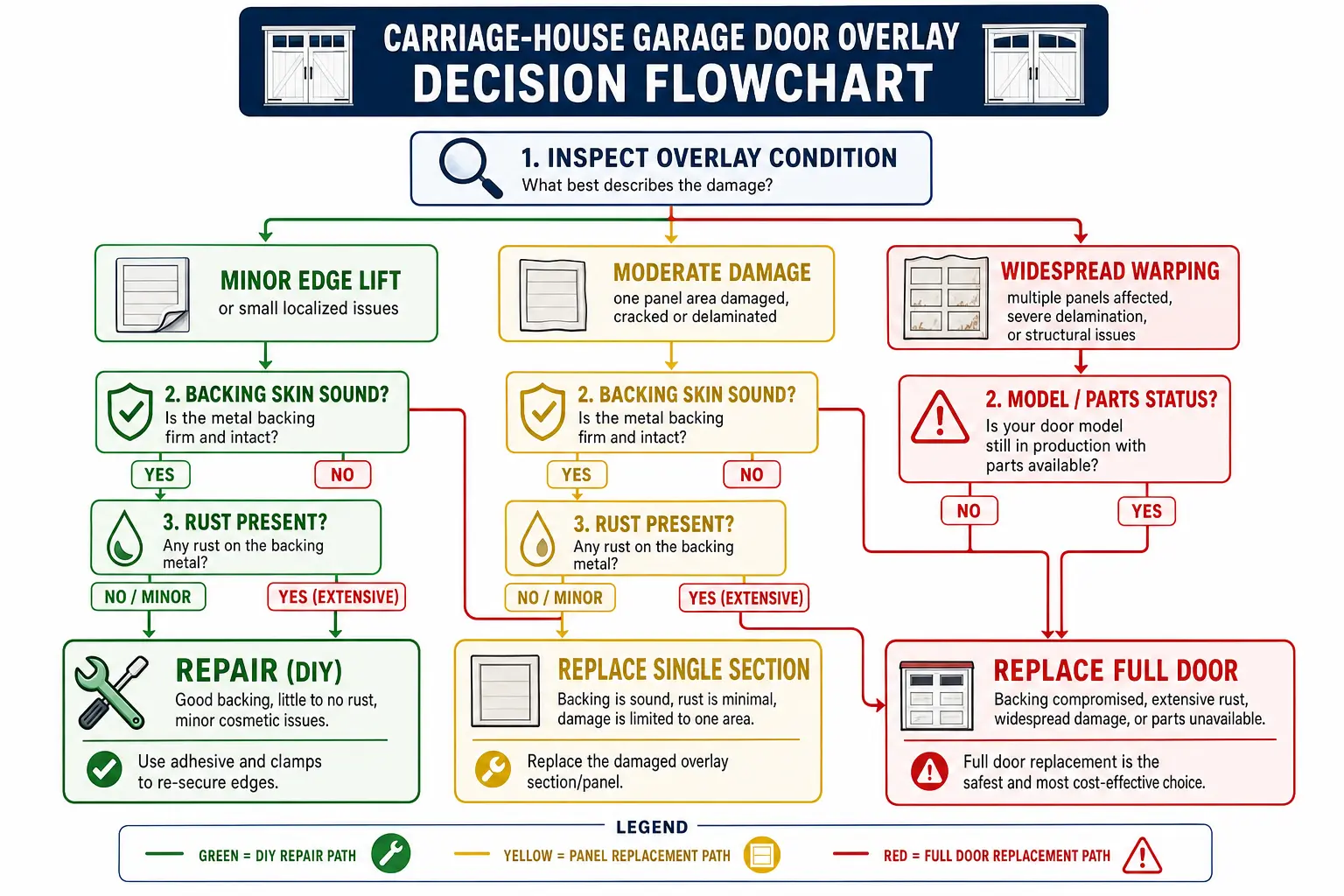
To make an informed decision, assess the physical condition of the steel backing skin and overlay trim using this framework:
Scenario A: Minor Edge Separation (< 12 Inches)
If the separation is localized, the trim isn’t warped, and the steel skin underneath is clean and rust-free, a DIY or professional re-bonding repair ($45–$120) is effective.
Scenario B: Widespread Warping or Wood Rot on Active Door Models
When multiple trim pieces are warped, or if wood overlays suffer internal rot, individual section replacement ($350–$900 per panel) is the recommended path. Replacing a section restores structural stability without forcing a full system replacement. If structural strain has affected mechanical components or caused bent garage door panels, replacing the affected section resolves both structural and cosmetic concerns.
Scenario C: Multi-Panel Delamination or Discontinued Door Models
If delamination spans multiple sections, structural steel skin has rusted, or the door model is discontinued, single-section matching becomes impossible. Full door replacement ($2,400–$6,500) offers the best long-term return. Transitioning to embossed stamped-steel carriage doors eliminates glue lines and delamination risks entirely. When evaluating options, reviewing the pros and cons of garage door materials and considering modern insulated garage doors ensures selected upgrades provide durability and thermal efficiency.
Adhesive Comparison Matrix: What Works vs. What Fails
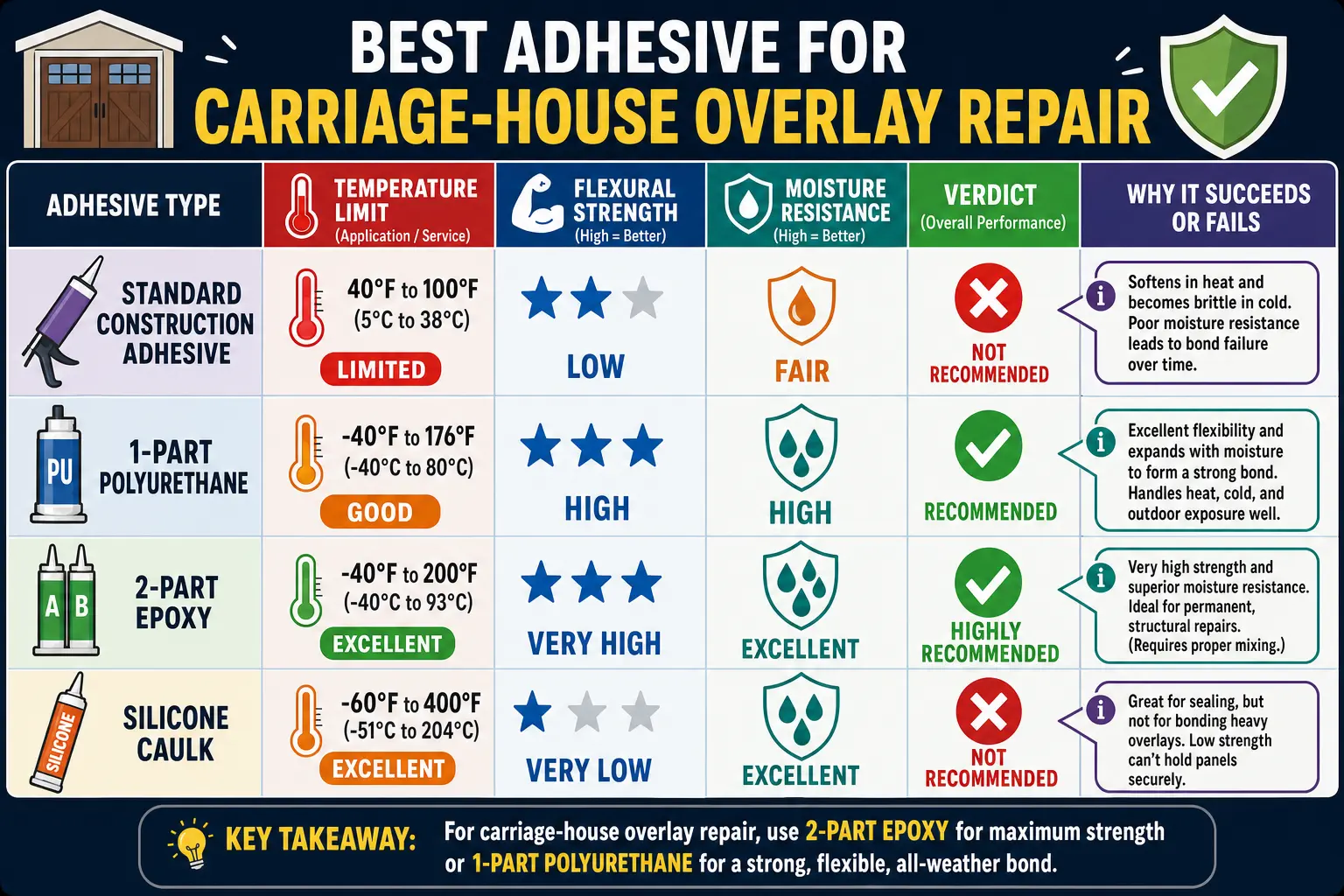
Choosing the correct chemical adhesive is critical. Standard hardware store adhesives fail rapidly under solar thermal load.
- Standard Construction Adhesives (Liquid Nails): Soften at 120°F. Verdict: FAIL. Direct summer sunlight will break the bond within months.
- Silicone Caulks: Excellent heat resistance (300°F) but zero structural shear strength. Verdict: FAIL.
- 1-Part Polyurethane (PL Premium MAX): Heat tolerant up to 160°F with strong moisture resistance. Verdict: GOOD. Suitable for minor DIY wood-to-metal touch-ups.
- 2-Part Structural Epoxy / Auto Panel Bond (3M 08115): Rated up to 230°F with extreme shear strength engineered for metal-to-composite bonding. Verdict: BEST. Professional-grade standard for long-term repairs.
The Pro-Grade Re-Bonding Protocol
- Prep: Sand steel and back of trim with 80-grit sandpaper to create anchor points. Clean thoroughly with 99% isopropyl alcohol.
- Drainage Bead Technique: Never apply a continuous horizontal glue line at the bottom of trim—this traps condensation. Apply adhesive in vertical beads, leaving 1/4-inch gaps at the bottom edge to allow water to drain.
- Clamping: Secure with deep-reach bar clamps or 2×4 driveway bracing for 24 hours at temperatures above 60°F.
Long-Term Maintenance and Cost Evaluation
| Option | Initial Cost | Longevity | Risk Level |
|---|---|---|---|
| DIY Chemical Re-Bonding | $45 – $120 | 1–3 Years | Moderate (Depends on adhesive/prep) |
| Single Section Replacement | $350 – $900 | 5–10 Years | Low |
| Full Door Upgrade (Stamped Steel) | $2,400 – $6,500 | Lifetime | Zero Delamination Risk |
To preserve existing overlay trim, apply vinyl-safe paint with an LRV rating above 50%, and inspect perimeter silicone seals annually. If your door exhibits secondary damage such as dented metal panels, practical solutions for garage door dent repair can restore appearance while addressing trim integrity. For homeowners exploring full system replacements, reviewing insulated roll up garage doors or understanding how to choose a garage door ensures maximum performance, style, and energy efficiency.
Frequently Asked Questions
Can I paint my carriage-house PVC trim dark brown or black?
Standard dark paints absorb excessive heat, driving surface temperatures past 160°F and breaking adhesive bonds. You must use heat-reflective, vinyl-safe paint formulations specially mixed to maintain an Light Reflectance Value (LRV) above 50% to prevent thermal expansion failure.
Will factory warranties cover overlay delamination repair costs?
Most manufacturers offer 1 to 5 years of coverage specifically on overlay adhesion, even if the structural steel skin carries a lifetime warranty. Warranties may be voided if the door was painted a dark color (LRV < 50%) or if unapproved adhesives were applied.
Why shouldn’t I use standard Liquid Nails to fix loose garage door trim?
Standard construction adhesives lose structural integrity around 120°F. Sun-exposed garage doors routinely exceed this threshold in summer, causing standard glue to soften, creep, and fail under shear stress.
You May Also Like
Safe Fuel Storage Protocols: Managing Fire Hazards in the Residential Garage
Published Date: Sep 18, 2026
Durability and Performance: How Steel Gauge Impacts Your Garage Door’s Lifespan
Published Date: Sep 9, 2026
The Dark Reality of Black Carriage Style Garage Doors: Material And Durability Guide
Published Date: Sep 4, 2026