





Durability and Performance: How Steel Gauge Impacts Your Garage Door’s Lifespan
Published: Sep 9, 2026
If you are shopping for a new garage door, you have likely noticed that prices vary widely, even for doors that look identical on the surface. The secret lies just beneath the paint: the steel gauge. Choosing the wrong steel thickness can lead to premature warping, unsightly dents from stray basketballs, and costly mechanical failures. For homeowners seeking a durable up and down garage door, understanding how steel thickness protects your home is the first step toward making a smart, long-term investment.
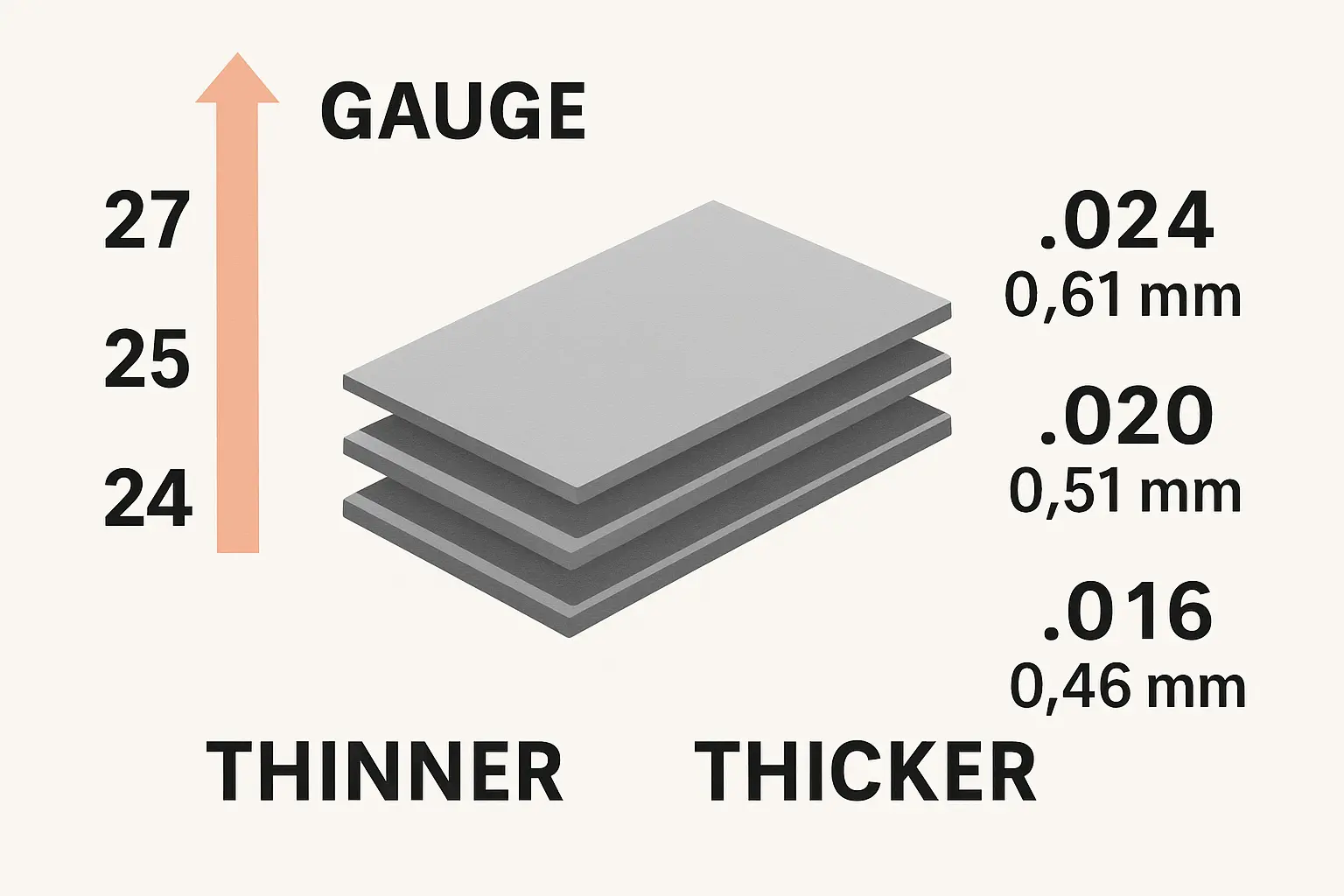
The Inverted Scale: Decoding Decimal Thickness
To decode garage door durability, you must master the inverted scale of steel measurements. In the metallurgical world, smaller gauge numbers signify thicker, stronger steel. According to ASTM A924 and DASMA Technical Data Sheet 154, a standard builder-grade 27-gauge panel measures just 0.016 to 0.018 inches thick (0.41 to 0.46 mm). Conversely, a heavy-duty 24-gauge panel measures 0.023 to 0.028 inches (0.58 to 0.71 mm). This represents an approximate 40% increase in steel thickness, offering vastly superior structural integrity and protection against daily wear.
The "Gauge Controversy" and Composite Physics
Many national brands protect their margins by remaining vague about raw decimal metrics. Under DASMA guidelines, manufacturers can legally market doors using “nominal” thickness tolerances, which sometimes group thinner steel sheets or paint layers together to mimic a heavier rating. Always ask a reputable garage door company for the unembossed, bare steel substrate thickness to avoid builder-grade shortcuts.
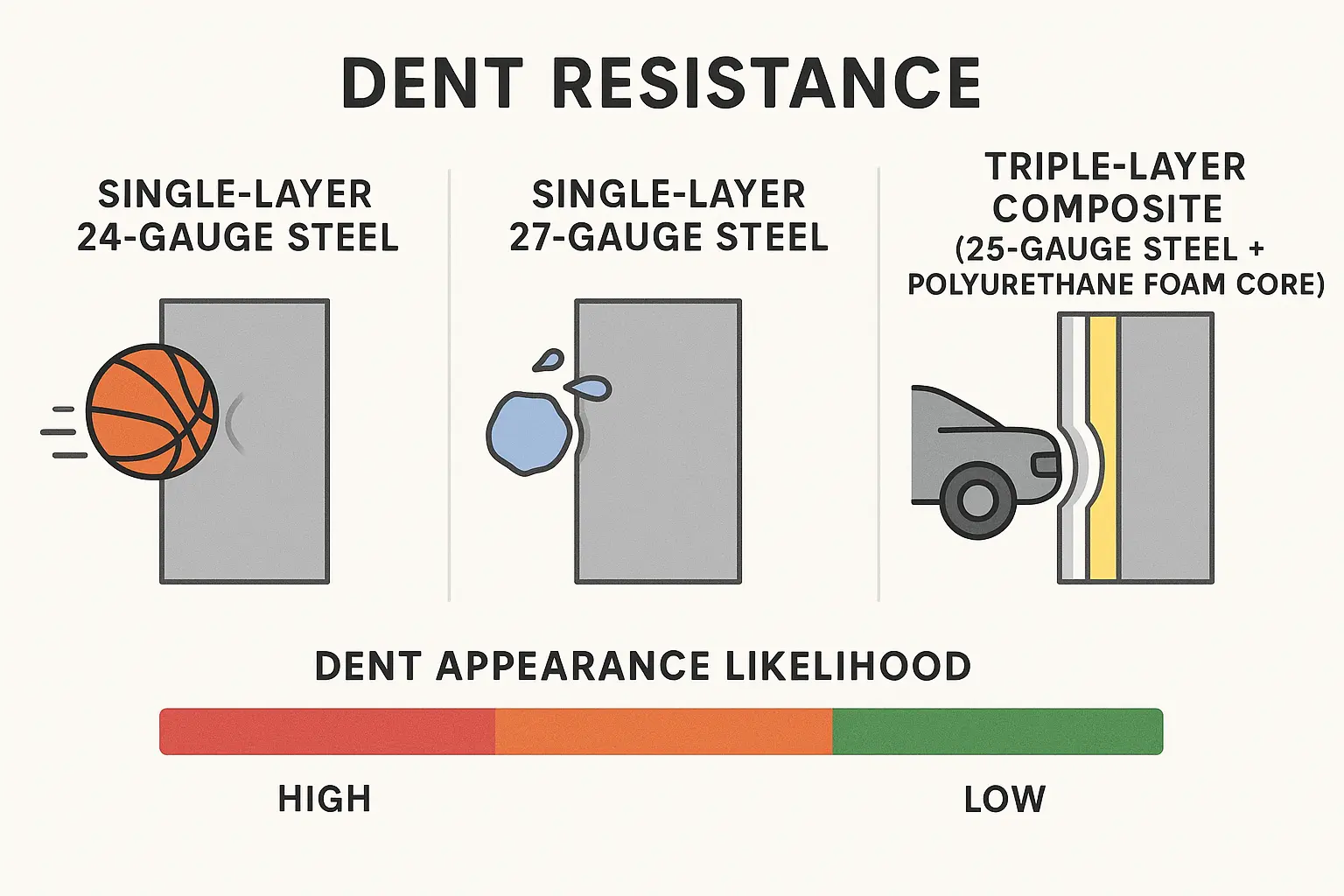
While single-layer 24-gauge steel provides excellent baseline strength, modern engineering has introduced triple-layer composite doors. A triple-layer door combines a 25-gauge steel skin with a chemically bonded, high-density polyurethane insulation core. This composite sandwich acts as an impact-absorbing buffer, making a triple-layer 25-gauge door significantly more dent-resistant than a single-layer 24-gauge steel panel under real-world stress.
The Mechanical Weight Tax: Springs and Openers
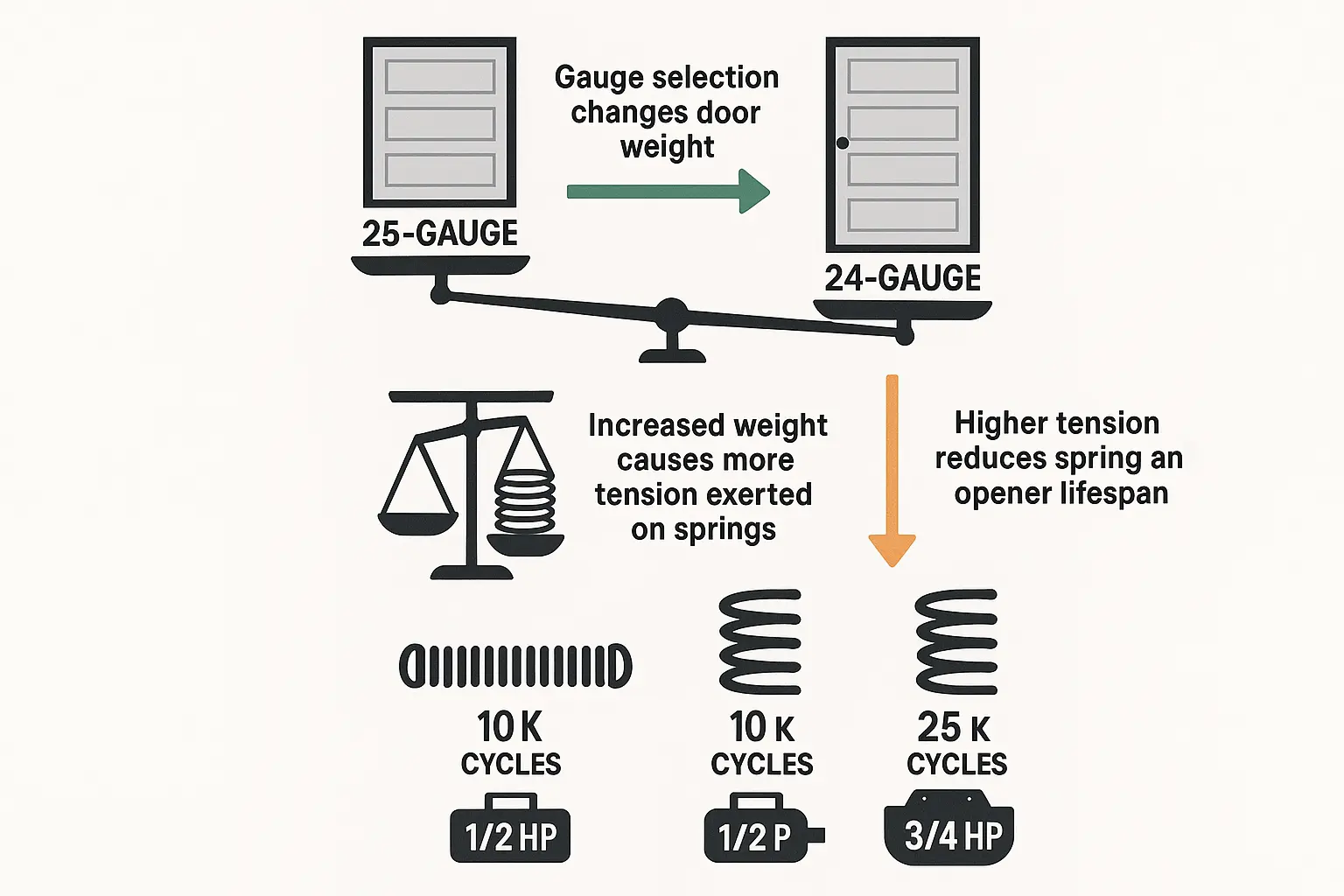
Upgrading to heavy-duty steel changes the mechanical requirements of your entire garage system. A standard 16×7 double-car garage door made of single-layer 27-gauge steel weighs only 80 to 100 lbs. When you upgrade to a premium, triple-layer 24-gauge door, that weight surges to 180 to 220+ lbs.
This added mass places immense strain on your opening hardware. A standard builder-grade torsion spring is engineered for roughly 10,000 cycles (about 5 to 7 years). If you hang a 220-lb door on standard springs, they will fatigue and snap in as little as 3 to 4 years. For heavier gauge doors, upgrading to yellow or red high-cycle torsion springs rated for 25,000 to 50,000 cycles is essential. Similarly, you must match this weight with a heavy-duty 3/4 HP or 1 HP DC drive opener featuring steel-reinforced belts rather than a basic 1/2 HP motor. For expert setup, trust certified technicians who specialize in garage door installation cypress tx.
Environmental Survival: Rodents, Salt-Air, and Wind
Your choice of steel gauge directly dictates how your door handles environmental stress. In coastal regions or humid climates, thin 27-gauge panels with standard G40 zinc coatings routinely rust through in 8 to 12 years. Upgrading to 24-gauge steel with G90 hot-dip galvanizing protects your investment for 20 to 30 years, requiring only a simple biannual freshwater rinse. If you need emergency help with structural rust or failing tracks, scheduling professional 24 hour garage door repair houston can save your entire system from collapsing.
Thicker steel also assists in structural pest control. Standard lightweight doors often warp at the bottom corners, allowing rodents to chew through rubber weather seals. A heavy 24-gauge steel door provides the solid downforce required to compress an EPDM rubber seal reinforced with stainless steel mesh, completely locking out pests.
Frequently Asked Questions
Is a 24-gauge steel garage door really worth the extra cost?
Yes, for most homeowners, the upgrade is highly justified. While it costs more upfront, a 24-gauge door offers 40% thicker steel than a standard 27-gauge door. This thickness provides superior resistance to dents from hail, sports equipment, and daily yard work, extending the physical lifespan of the panels to 20 to 30 years and saving you from costly premature replacements.
Can mice actually chew through garage door seals?
Yes, mice and other rodents can easily chew through standard rubber bottom seals in seconds. To prevent this, pair a heavy-gauge steel door—which provides consistent, warp-resistant downward pressure—with a high-quality EPDM rubber seal embedded with stainless steel mesh. This dual defense system physically blocks pests from entering your home.
How do I choose between a single-layer and a triple-layer door?
A single-layer door is lightweight and budget-friendly but offers minimal insulation and lower dent resistance. A triple-layer composite door sandwiching polyurethane insulation between steel layers provides exceptional thermal efficiency and structural rigidity. If you are choosing a thinner steel outer skin, a triple-layer design is highly recommended to protect against physical impact.
You May Also Like

Safe Fuel Storage Protocols: Managing Fire Hazards in the Residential Garage
Published Date: Sep 18, 2026
The Dark Reality of Black Carriage Style Garage Doors: Material And Durability Guide
Published Date: Sep 4, 2026
Garage Door Panel Reinforcement and Repair Guide
We’ve all seen it in movies: a determined character gains entry to a home with a single, well-placed kick to the garage door. While it might seem like Hollywood drama, there's a kernel of truth to it. Your garage…
Published Date: Aug 25, 2026