





Safe Fuel Storage Protocols: Managing Fire Hazards in the Residential Garage
Published: Sep 18, 2026
Many homeowners treat the residential garage as an all-purpose utility space. However, storing liquid and gas fuels like gasoline, propane, and kerosene introduces industrial-grade chemical risks to a residential environment. Understanding the precise science of vapor ignition and establishing rigorous storage protocols is the difference between a safe workspace and a catastrophic house fire.
As a family-owned team with over 15 years of hands-on garage expertise, we believe that proper education and structural awareness are your best defense against garage hazards.
The Chemistry of Risk: Gasoline, Propane, and Kerosene
To mitigate fire risks, you must first understand how different fuels behave. It is rarely the liquid itself that ignites; rather, it is the invisible vapors interacting with oxygen and a heat source.
Gasoline
Gasoline is highly volatile, with a flashpoint of -45°F. This means it releases ignitable vapors at virtually any ambient temperature. Because gasoline vapors are heavier than air, they sink to the floor, pooling in low areas, corners, and along garage door tracks where electrical sparks from openers or appliances can trigger an explosion.
Propane
Propane is stored under high pressure in liquid form but vaporizes instantly when released. Like gasoline, propane gas is heavier than air and will collect in low points. NFPA 58 (National Fire Fuel Gas Code) strictly prohibits storing standard 20-pound propane cylinders inside residential dwellings or attached garages because any valve leak can rapidly create an explosive fuel-to-air ratio in a confined space.
Kerosene
Kerosene has a higher flashpoint (between 100°F and 162°F), making it safer to handle at room temperature than gasoline. However, it still poses significant risks if stored in non-approved containers or near heat-generating appliances, as localized temperatures in a closed garage can easily reach its vaporization threshold.
Standardizing Safety: Containers and Ventilation
Uncontrolled temperature swings and inadequate ventilation are the primary catalysts for fuel storage accidents.
To prevent volatile vapors from expanding rapidly inside their containers, homeowners must implement the best way to cool a garage during peak summer months, such as installing reflective insulation or mechanical ventilation systems.
Equally important is managing airflow. While homeowners frequently focus on air sealing garage door frames to maximize thermal efficiency and lower energy bills, a completely airtight garage can trap toxic, volatile chemical fumes. If you store any amount of fuel, ensure your garage has a balance of passive high-and-low ventilation points to allow heavy vapors to escape.
Furthermore, moisture control plays a crucial role in container integrity. Steel containers can rust over time when exposed to excessive humidity. Implementing reliable garage door condensation solutions helps stabilize the indoor microclimate, preventing rust-induced leaks in metal fuel cans.
Approved Fuel Container Standards
Never store fuels in glass, milk jugs, or unapproved plastic containers. Always use color-coded, OSHA-approved safety cans:
- Red: Gasoline
- Blue: Kerosene
- Yellow: Diesel
- Green: Fuel Oils
These containers feature spring-closing lids and flame arrestors that prevent external sparks from traveling back into the fuel vessel.
Power Equipment and Refueling Safety
Lawn mowers, chainsaws, and portable generators present double hazards: they store fuel in onboard tanks, and their hot engines serve as immediate ignition sources.
During an unexpected power outage garage door systems lose their primary power source, prompting many homeowners to retrieve portable generators. It is critical to remember that you must never run a generator inside a garage, even with the main door wide open. Carbon monoxide poisoning and fuel ignition risks are exceptionally high during these scenarios.
Additionally, modern garages often host diverse power technologies. If you charge electric yard tools or vehicles near stored liquid fuels, you must exercise extreme caution. Be sure to study lithium batteries in garage safety standards to ensure that potential electrical thermal runaways do not occur adjacent to highly flammable gasoline or kerosene containers.
Passive Mitigation: Fire-Rated Barriers
No matter how carefully you store your fuels, accidents can happen. When active prevention fails, passive containment becomes your primary defense line.
If a chemical fire breaks out in your garage, containing the fire to that space is vital to saving your home and protecting your family. Installing a heavy-duty, professionally sealed fire rated garage door on the entry point between your garage and living space provides a crucial fire barrier, slowing the spread of flames and smoke to give everyone time to escape safely.
Frequently Asked Questions
Can I store a standard 20-pound propane cylinder inside my attached garage?
No. Standard 20-pound propane cylinders should never be stored in an attached garage or anywhere inside a home. If the relief valve vents due to pressure buildup or a leak occurs, the heavy gas will pool on the floor, creating an immediate explosion hazard. Always store propane cylinders outdoors, upright, and out of direct sunlight.
How much gasoline can I safely store in a residential garage?
The National Fire Protection Association (NFPA) recommends storing no more than 25 gallons of flammable liquids in a residential occupancy, but local municipal codes are often much stricter, frequently limiting storage to 1 to 5 gallons. Always check your local fire department guidelines and store fuel only in approved safety cans.
How do I know if my old fuel has gone bad, and how do I get rid of it?
Gasoline typically begins to degrade after 3 to 6 months, losing its volatility and forming a gummy residue. You can identify bad fuel by a sour smell or a darkened, muddy appearance. Never pour old fuel down a household drain, storm sewer, or onto the ground. Take it to a local hazardous waste disposal facility or designated recycling center.
You May Also Like
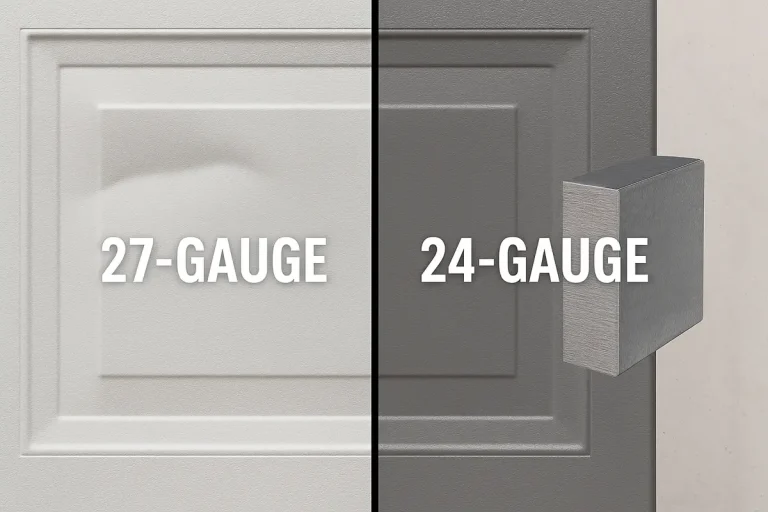
Durability and Performance: How Steel Gauge Impacts Your Garage Door’s Lifespan
Published Date: Sep 9, 2026
The Dark Reality of Black Carriage Style Garage Doors: Material And Durability Guide
Published Date: Sep 4, 2026
Garage Door Panel Reinforcement and Repair Guide
We’ve all seen it in movies: a determined character gains entry to a home with a single, well-placed kick to the garage door. While it might seem like Hollywood drama, there's a kernel of truth to it. Your garage…
Published Date: Aug 25, 2026