





Safe Lithium Battery Charging Practices for Garages
Published: Aug 18, 2026
Garages have become the primary charging hub for everything from electric vehicles and power tools to e-bikes and lawn equipment. While lithium-ion batteries offer incredible energy density and convenience, charging them in a garage environment requires specific safety precautions to protect your home from thermal risks and electrical fires.
Essential Setup for Safe Garage Charging
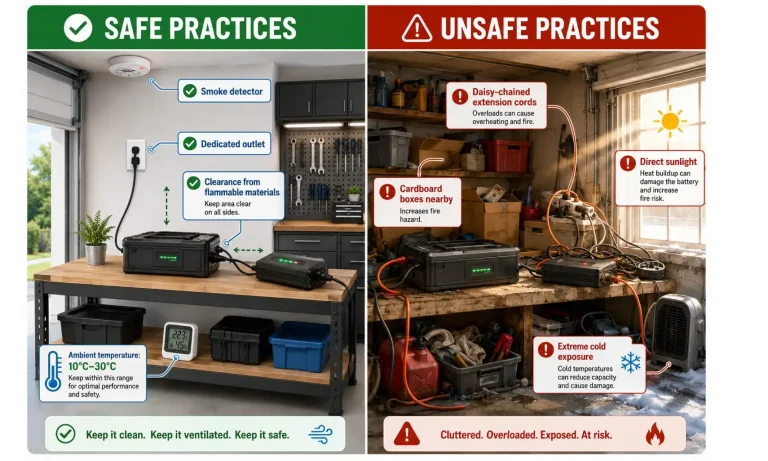
Creating a dedicated, safe charging station in your garage is your first line of defense against battery failure. Proper environment control, rated electrical infrastructure, and disciplined spatial planning significantly reduce thermal hazards, whether you are powering large equipment or learning how to change a battery in a garage door opener.
Temperature & Environment Controls
Lithium-ion batteries perform best when charged within an ambient temperature range of 50°F to 86°F (10°C to 30°C). Extreme garage temperatures pose severe risks:
- Cold Charging Hazards: Charging below 32°F (0°C) causes permanent lithium plating on the anode, creating microscopic dendrites that can puncture internal separators and cause internal short circuits.
- Heat Acceleration: High ambient temperatures reduce heat dissipation during the charge cycle, bringing cells closer to their thermal threshold. Keep charging equipment away from direct sunlight, space heaters, and water heaters.
- Maintain at least 3 feet (1 meter) of clearance around charging batteries, keeping them away from flammable materials such as cardboard boxes, gasoline containers, paper, or wooden workbenches.
- Charge on non-combustible surfaces like concrete floors, metal shelving, or dedicated fire-resistant charging pads.
- Avoid stacking batteries or placing items on top of chargers while in operation, as heat retention accelerates thermal degradation.
Chargers & Electrical Infrastructure
Inadequate garage wiring is a major contributor to electrical fires during high-draw battery charging sessions:
Risk Prevention & Emergency Readiness
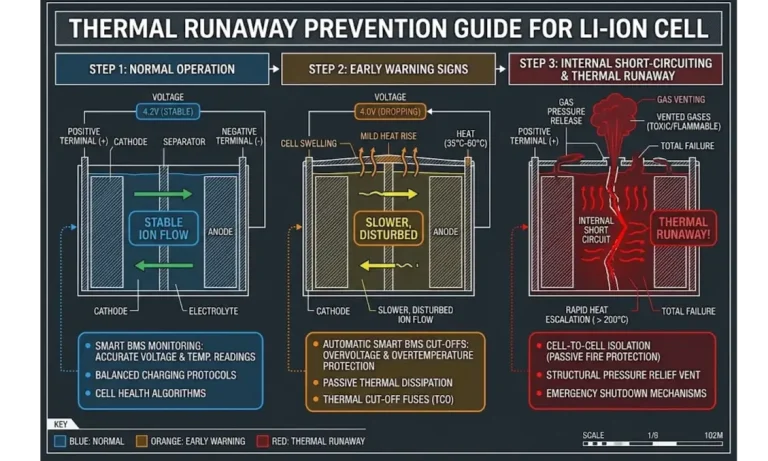
Even with a proper physical setup, proactive monitoring and early detection mechanisms are critical for preventing isolated battery defects from escalating into full garage fires—especially when managing continuously connected devices, such as checking if your garage door opener has a battery backup.
Recognizing Thermal Runaway Signals
Thermal runaway occurs when an internal fault generates heat faster than it can dissipate, triggering an uncontrolled chain reaction. Watch for these early warning signs:
- Physical Swelling or Deformity: Bulging cases or cracked housings indicate internal pressure buildup.
- Excessive Heat or Odor: Extreme warmth to the touch or sweet/chemical smells indicate off-gassing electrolyte solution.
- Audible Hissing or Popping: Internal pressure release valves venting high-temperature gases.
- Mount a Class ABC or specialized Class D/Lith-EX fire extinguisher near your garage exit doorway so it remains accessible during an emergency.
- Standard extinguishers are effective for surrounding structural fires (cardboard, drywall, wood), while specialized cooling agents or copious amounts of water are required to lower cell temperatures and halt active runaway—an important consideration when safeguarding spaces designed for garage doors in extreme climate insulation environments.
If you observe any of these symptoms, immediately disconnect power at the breaker panel if safe to do so, move clear of the area, and avoid inhaling toxic fumes.
Fire Mitigation & Extinguisher Requirements
Lithium battery fires burn at extremely high temperatures and generate their own oxygen as internal compounds break down:
Frequently Asked Questions (FAQ)
Is it safe to leave a lithium battery charging overnight in a garage?
No. Charging lithium batteries unmonitored overnight increases the risk of undetected thermal runaway. Always disconnect chargers once full or charge only when you are nearby and awake.
Can lithium batteries be safely charged below freezing temperatures in a garage?
No. Charging lithium-ion batteries at 0C (32F) or below causes permanent lithium plating on the anode, which severely degrades battery capacity and creates a high risk of short circuits and thermal runaway.
What type of fire extinguisher works best for a garage lithium battery fire?
A standard Class ABC or Class D extinguisher can help control surrounding flames, but Class F/Lith-EX or large volumes of water are required to cool the lithium cells and fully suppress a thermal runaway event.
You May Also Like
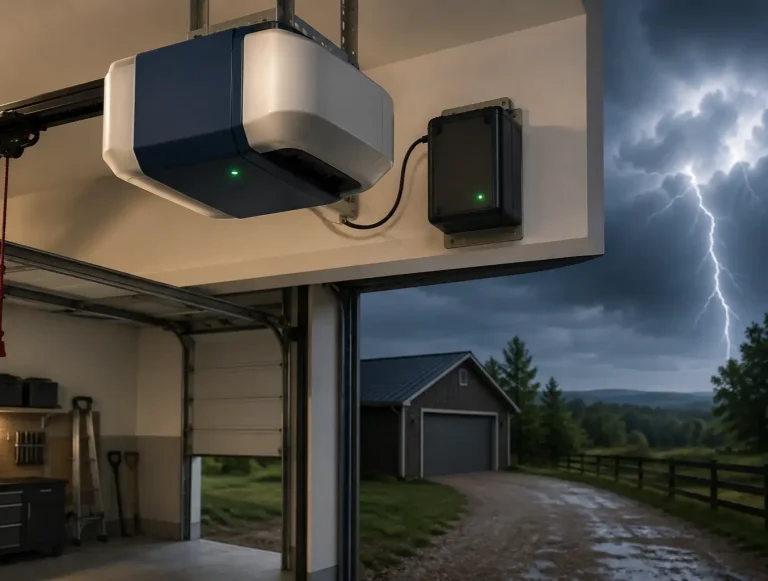
Chamberlain Battery Backup: Your Guide to a Quiet, Reliable Garage Door
You're not alone in your frustration. Many homeowners are surprised to find their main-powered garage door opener suddenly stops working, all because of a small backup battery. This guide is here to decode the…
Published Date: Jul 15, 2026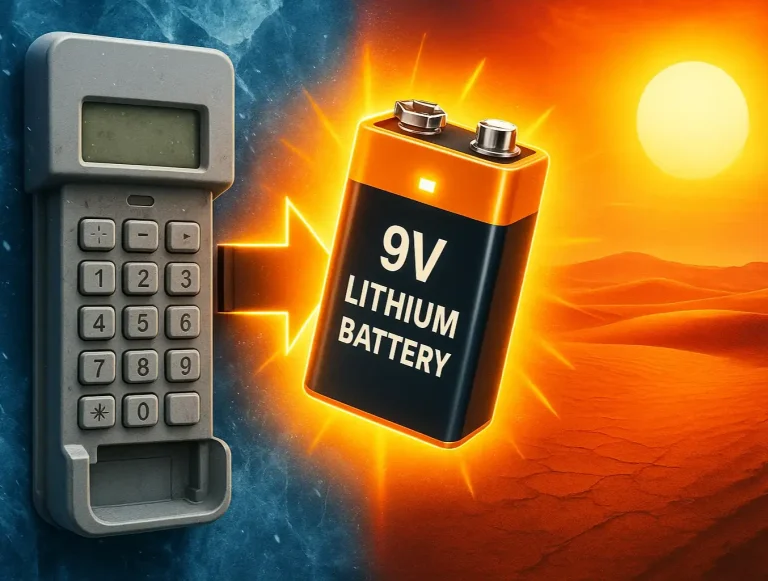
Seasonal Considerations for Garage Door Keypad Battery Performance
It’s one of the most frustrating homeowner mysteries. One day, your garage door keypad works perfectly. The next—after a sudden cold snap or during the peak of a summer heatwave—it’s completely unresponsive. You…
Published Date: May 22, 2026
How to Change a Battery in a Garage Door Opener Remote: Quick DIY Guide
If your garage door remote isn’t responding, it doesn’t always mean the whole system is broken. Most of the time, it just needs a new battery. For homeowners, business owners, or anyone who uses a garage regularly,…
Published Date: Aug 25, 2025