





The Dark Reality of Black Carriage Style Garage Doors: Material And Durability Guide
Published: Sep 4, 2026
The striking contrast of modern black carriage style garage doors has made them a dominant trend in high-end exterior design. However, introducing a matte-black surface to your home’s exterior comes with severe thermodynamic and structural challenges.
Before you commit to this bold aesthetic, you need to understand how different materials handle extreme heat, UV exposure, and the structural risks unique to dark finishes.
The Physics of the Black Finish
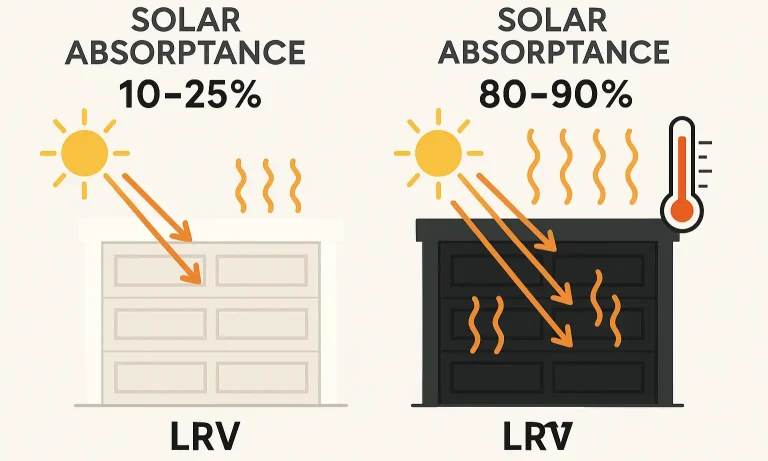
According to the Department of Energy, dark matte-black surfaces absorb 80% to 90%+ of radiant solar energy, compared to just 10% to 25% for white finishes. On a typical 90°F summer afternoon, a south- or west-facing black garage door can experience surface temperatures ranging from 150°F to 170°F.
This extreme solar absorption creates massive temperature differentials between the outer and inner skins of your door, radiating heat directly into your home and threatening the structural integrity of the panels. Reviewing creative garage door colors requires weighing these thermal realities against your home’s geographic orientation.
Material Showdown
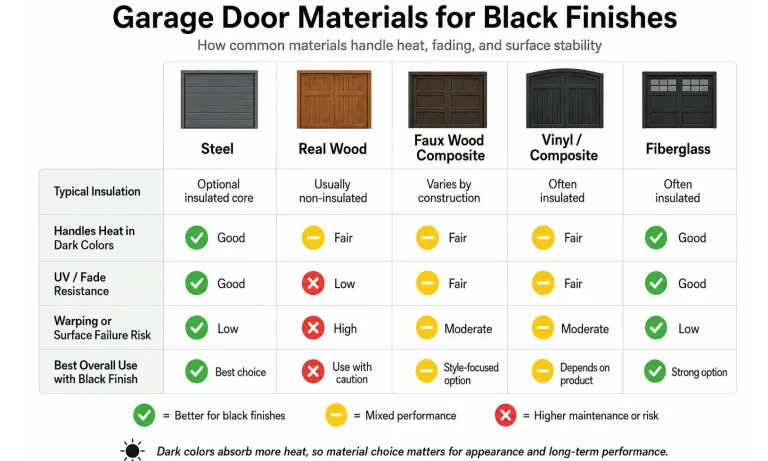
Steel (The Bowing Risk & The Polyurethane Paradox)
Steel is a premier choice due to standard steel garage door benefits, like durability and low maintenance, but black finishes introduce “thermal bowing.” When the outer steel skin reaches 170°F and the inner skin remains cool, the outer metal expands. This bends the panels, causing the door to bind or jam in its tracks.
Ironically, doors with high garage door insulation r value suffer the worst bowing. The dense polyurethane foam acts as a thermal break, preventing heat from escaping inward and magnifying the temperature delta between the skins.
To prevent track binding, you must install horizontal U-bar struts. However, adding 15–30 lbs of steel struts alters the system’s physics. You must have a professional perform a garage door spring tension adjustment near me to prevent premature motor burnout or catastrophic door drops. Proper garage door track installation is also vital to handle these dynamic thermal loads.
Real Wood (The High-Maintenance Trap)
While real wood offers unmatched organic beauty, the intense heat absorbed by black paint dries out natural wood oils rapidly. This leads to cracking, warping, and sap bleeding.
Furthermore, real carriage doors rely on layered overlays. High heat weakens adhesives, resulting in delamination—where the decorative trim peels off the base frame. Consequently, major manufacturers void their warranties if natural wood doors are painted black. Read more about these risks in our breakdown of wooden garage doors pros.
Molded Composite (The Engineered Winner)
Engineered composite garage doors offer the ideal alternative. Utilizing fiber-reinforced polymer overlays over an insulated steel core, they mimic natural wood grain without its structural vulnerabilities. Because composites exhibit excellent dimensional stability, they resist warping and delamination even under intense heat cycles.
Fiberglass (The Fading Danger)
Fiberglass handles thermal expansion better than steel, but it is highly vulnerable to UV degradation. Without a marine-grade UV-protective topcoat, a black fiberglass door will quickly chalk and fade to a dull gray. Consistent black carriage garage door maintenance is required to protect the finish.
The Homeowner’s Legal Shield: Navigating the LRV < 38 Warranty Trap
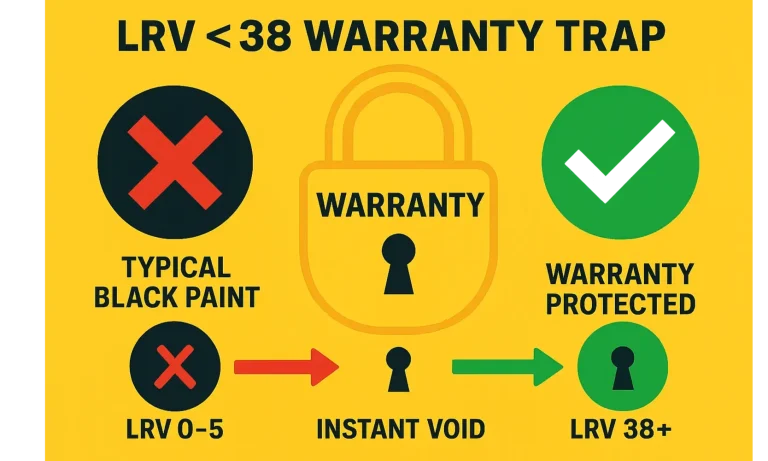
Many homeowners do not realize that standard retail black paints have a Light Reflective Value (LRV) between 0 and 5. Most manufacturer warranties explicitly void coverage if you apply paint with an LRV below 38.
To safely bypass this trap:
• Go Factory-Certified: Opt for factory-applied finishes like Clopay’s Color Blast® system, which uses solar-reflective coatings to preserve factory warranties.
• Use IR-Reflective Pigments: If you must paint, learn how to paint a garage door using specialized solar-reflective coatings (like Sherwin-Williams VinylSafe®) that reflect infrared heat, keeping surface temperatures within safe warranty limits.
Frequently Asked Questions
Why does my black garage door stick in the afternoon?
The afternoon sun causes thermal bowing. The outer metal skin expands, curving the panels and forcing them to bind against the tracks. Horizontal struts and professional track adjustments can resolve this.
Can I insulate a dark garage door?
Yes, but highly insulated doors retain more heat on the outer skin, increasing the risk of thermal bowing. Ensure your garage door insulation is paired with a factory-engineered, heat-reflective finish.
Want to bring this look to your home safely?
Up & Down Garage Doors offers premium composite and factory-finished steel solutions engineered to handle the heat. Contact our experienced team today for a professional consultation and transparent pricing.
You May Also Like
Maintain Black Carriage Garage Doors: Heat And UV Protection Guide
Black carriage-style garage doors represent one of the most stunning trends in modern residential architecture, now accounting for up to 60% of modern residential garage door sales. They offer an instant…
Published Date: Aug 21, 2026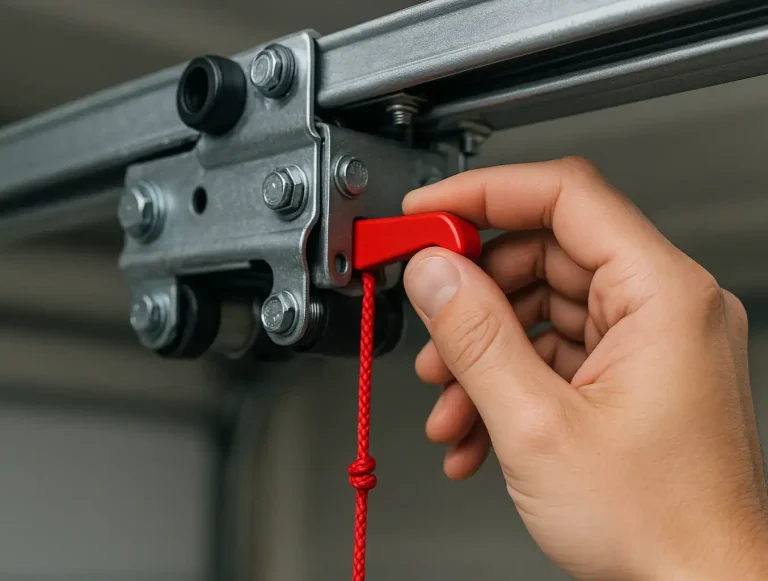
Understanding the Garage Door Opener Trolley and Carriage
You press the button on your garage door remote, and the familiar sound begins—the low hum of the opener motor whirring to life. You expect the gentle rumble of the door ascending, but instead, you get... nothing.…
Published Date: Jun 23, 2026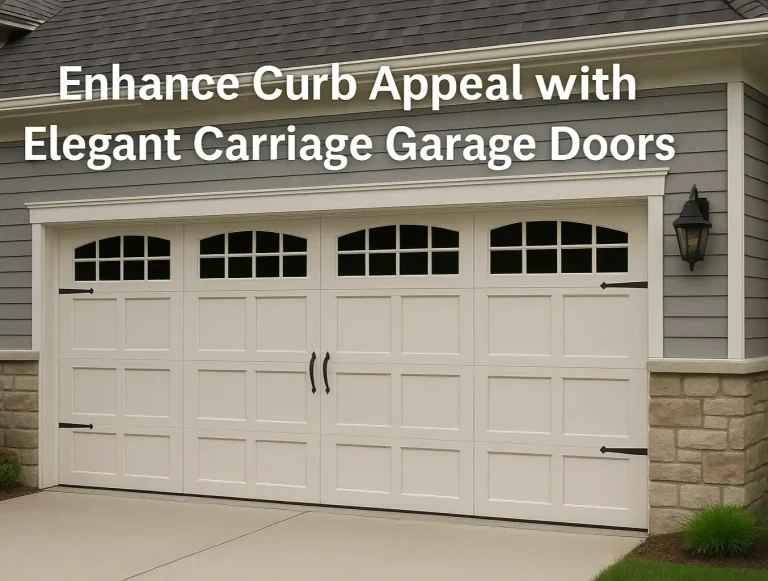
Enhance Curb Appeal with Elegant Carriage Garage Doors
First impressions start at the curb, and the garage door sets the tone. If your home feels a little flat from the street, carriage garage doors can add the warmth and character you’re after. Written by Up & Down…
Published Date: Oct 1, 2025