





Garage Door Noise And Vibration Troubleshooting: The Expert Diagnostic Guide
Published: Jul 16, 2026
When your garage door begins to squeak, rattle, or emit a harsh metallic grinding sound, it is doing more than just disrupting your home’s peace. It is communicating. A noisy garage door is often the primary warning sign of systemic friction, component wear, or impending mechanical failure.
For most homeowners, the challenge lies in decoding these sounds. Is that rattling noise a simple loose bolt you can tighten in five minutes, or is it a warning that your heavy torsion spring is about to snap catastrophically, trapping your car inside? This guide is designed to help you safely translate those sounds, identify the root causes, and determine when to employ a simple DIY fix versus when to call in professional reinforcement.
Deciphering the Sounds: The Sound-to-Solution Matrix
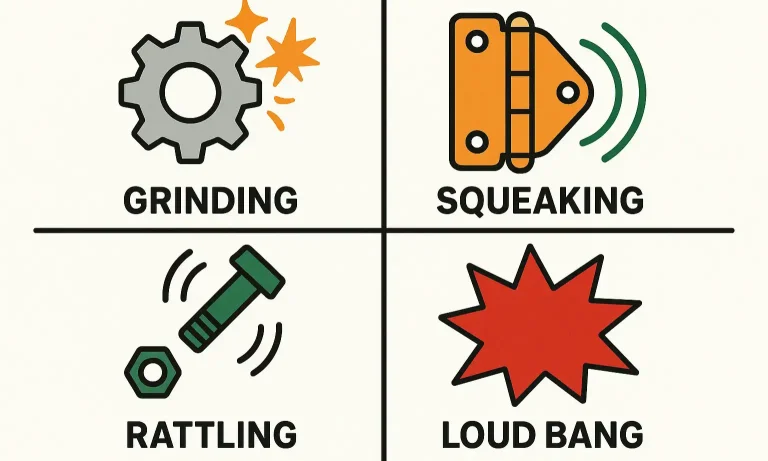
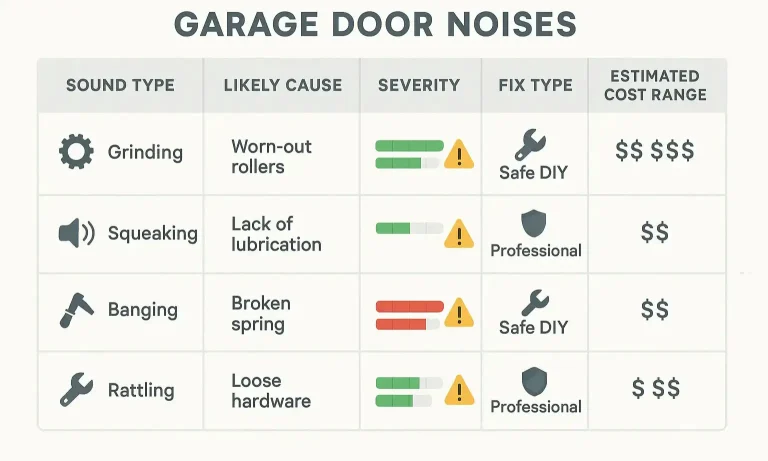
Understanding why is my garage door so noisy requires isolating the acoustic profile of the issue. To help you diagnose your system quickly, we have consolidated the most common garage door sounds into a streamlined evaluation matrix.
If you hear a distinct metal-on-metal friction sound, your garage door makes grinding noise cues that point toward dry components or structural misalignment.
Why is My Garage Door Opener Grinding?
If the grinding sound is coming directly from your overhead opener unit rather than the door itself, the failure point is highly brand-dependent:
Chamberlain, LiftMaster, & Craftsman Openers
If your motor hums and makes a loud grinding noise but the chain or belt does not move, the culprit is almost certainly a stripped main drive gear and sprocket assembly. These manufacturers use a gear made of soft, white nylon. It is intentionally designed as a sacrificial wear point to prevent the motor from burning out if the door meets excessive resistance.
If your opener is struggling, check our liftmaster garage door opener troubleshooting resource to isolate internal motor issues from physical door binding.
Genie Openers
On Genie screw-drive models, a grinding or rapid clicking noise usually points to a stripped trolley carriage. The teeth on the carriage slide smooth over the steel screw rod when worn down, failing to grip and lift the door under load. If you are experiencing lift issues, you may need to learn how to adjust genie garage door opener force adjustment settings to balance physical wear.
The Lubricant Trap: WD-40 is Not a Lubricant
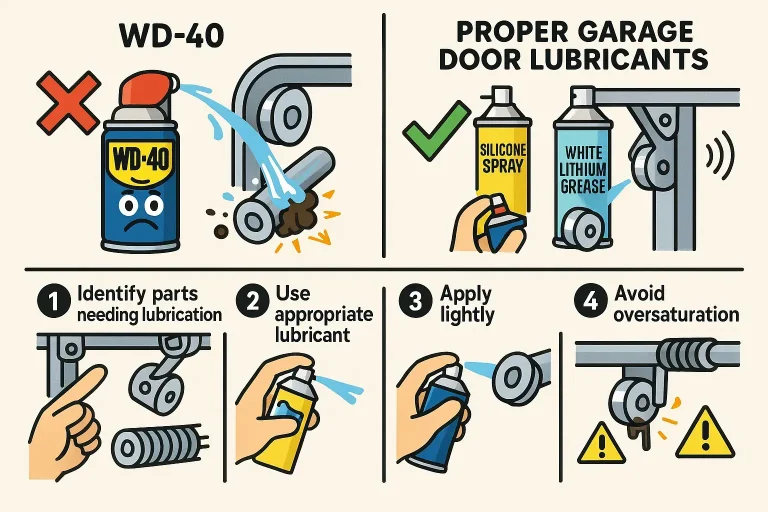
Up to 70% of homeowners instinctively reach for a can of standard WD-40 when their garage door starts squeaking. This is a critical mistake. WD-40 is a solvent designed for water displacement, not a heavy-duty lubricant. Applying it to your rollers, hinges, or springs will wash away any residual grease, leading to rapid metal-on-metal scraping and accelerated wear.
To restore quiet operation, follow these steps:
- Clear away dirt and old grease from the tracks using a clean rag.
- Apply a dedicated silicone spray or white lithium grease. Learn how to lubricate garage door tracks and bearings safely.
- Perform targeted garage door spring maintenance by spraying a light coat of lubricant over the coils to eliminate spring binding sounds.
- If your steel rollers are worn, completing a garage door roller replacement with sealed nylon bearings can reduce operating noise by up to 75% (roughly 10 decibels). When upgrading, selecting the best garage door rollers will maximize the lifespan and smooth operation of your system.
Structural Rattling and the "Danger Zone"
Persistent rattling is often caused by loose physical hardware. You can safely tighten hinge bolts, track lag screws, and ceiling hanger brackets with a standard socket set. If a track itself is physically warped or out of alignment, attempting to force it back into place can worsen the binding. Instead, review our guide on how to handle a bent garage door track to avoid damaging your system.
The No-DIY Danger Zone
While tightening track brackets is safe, never attempt to adjust or loosen the bottom brackets, cables, or torsion springs yourself. These parts are under extreme mechanical tension. If they slip, they can cause catastrophic injury. Before touching any spring assembly, make sure you know how to tell if your garage door spring is broken to avoid serious safety hazards.
Frequently Asked Questions
Why does my garage door squeak only when it is cold outside?
Metal contracts in cold temperatures, which increases friction between moving parts. Lubrication also thickens and becomes less effective in freezing weather. Regular application of cold-resistant silicone-based lubricants will resolve this.
Will replacing my opener make my garage door completely quiet?
While upgrading to a belt-drive or wall-mounted opener can drastically reduce motor noise, it will not quiet a door with worn rollers or loose hinges. For the ultimate quiet home setup, consider pairing a premium quiet garage door opener with new sealed nylon rollers.
How often should my garage door undergo a safety and noise inspection?
We recommend completing a comprehensive professional garage door tune-up and maintenance check at least once a year. This prevents minor friction issues from escalating into expensive, sudden mechanical failures.
Restore Peace of Mind with Up & Down Garage Doors
If your garage door is vibrating heavily or making noises that cause concern, you do not have to guess at the solution. Founded by four brothers with over 15 years of hands-on industry experience, Up & Down Garage Doors provides honest, dependable, and transparent repair services across CT, TX, NY, IL, and AZ. We offer 24/7 emergency service and upfront, fair pricing so your home remains secure and quiet. Contact Up & Down Garage Doors today to schedule your diagnostic inspection.
You May Also Like
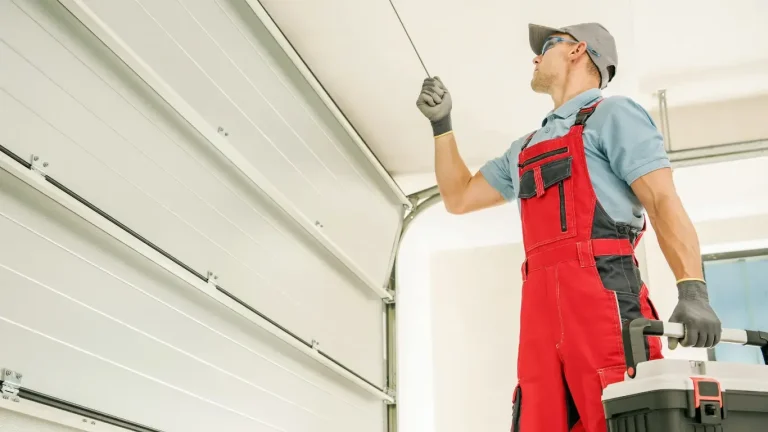
Garage Door Noise Reduction: Tips and Tricks
Does your neighborhood hear every time you open or close your garage door? A noisy garage door is annoying, but it can also be a sign of underlying problems that can become bigger issues. This post will look at the…
Published Date: Oct 12, 2024
What Is the Quietest Garage Door Opener: Top Low-Noise Models Ranked
Tired of your garage door making more noise than your car? Fortunately, not all openers are that noisy. If you’re wondering what is the quietest garage door opener, Up & Down Garage Doors has you covered with top…
Published Date: Sep 4, 2025
Your Stamford Homeowner’s Guide to Garage Door Noises & Safety
It’s one of the most jarring sounds a homeowner can hear. A sudden, sharp BANG from the garage that sounds like a gunshot. Your mind races. What was that? Is everything okay? If this has happened to you, you’re not…
Published Date: Feb 19, 2026