




The Monthly Auto-Reverse Test: How to Check Your Garage Door Opener’s Safety
Published: Oct 15, 2026
A garage door is the heaviest moving object in most homes. While modern automatic openers offer everyday convenience, a malfunctioning safety reverse system presents a severe safety hazard to children, pets, and vehicles. Performing a monthly auto-reverse test ensures your system complies with federal safety standards and protects your household.
The Science of Garage Door Entrapment Protection (UL 325 & CPSC)
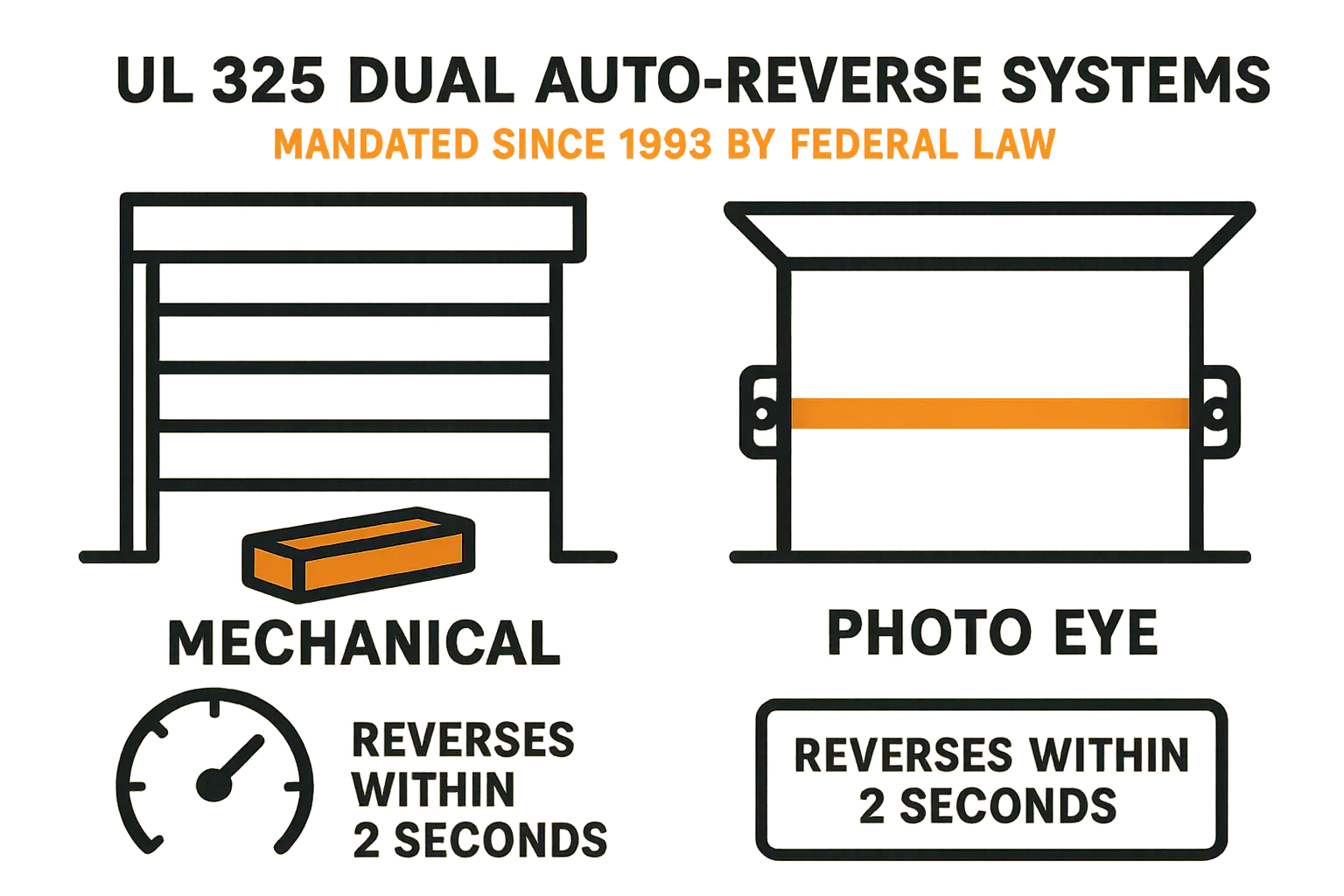
Prior to 1993, automatic garage doors caused approximately 20,000 emergency room visits annually. In response, federal law (16 CFR Part 1211 / UL 325) enacted on January 1, 1993, mandated that all residential garage door openers in the U.S. feature dual-phase entrapment protection: a mechanical force resistance system and secondary non-contact optical photo-eyes. This regulation reduced entrapment fatalities in compliant systems by over 80%.
Under DASMA Technical Data Sheet #156 guidelines, an opener must detect physical contact with an object and reverse direction within 2 seconds. If your unit was manufactured prior to 1993 or lacks photo-eye sensors, it cannot meet modern standards and requires immediate replacement. Understanding how does a garage door spring work alongside opener mechanisms helps maintain total door safety.
Step-by-Step Testing Protocol: The 2-Phase Safety Audit
Completing a monthly safety audit takes less than five minutes and requires no specialized tools beyond a standard piece of wood and a phone timer.
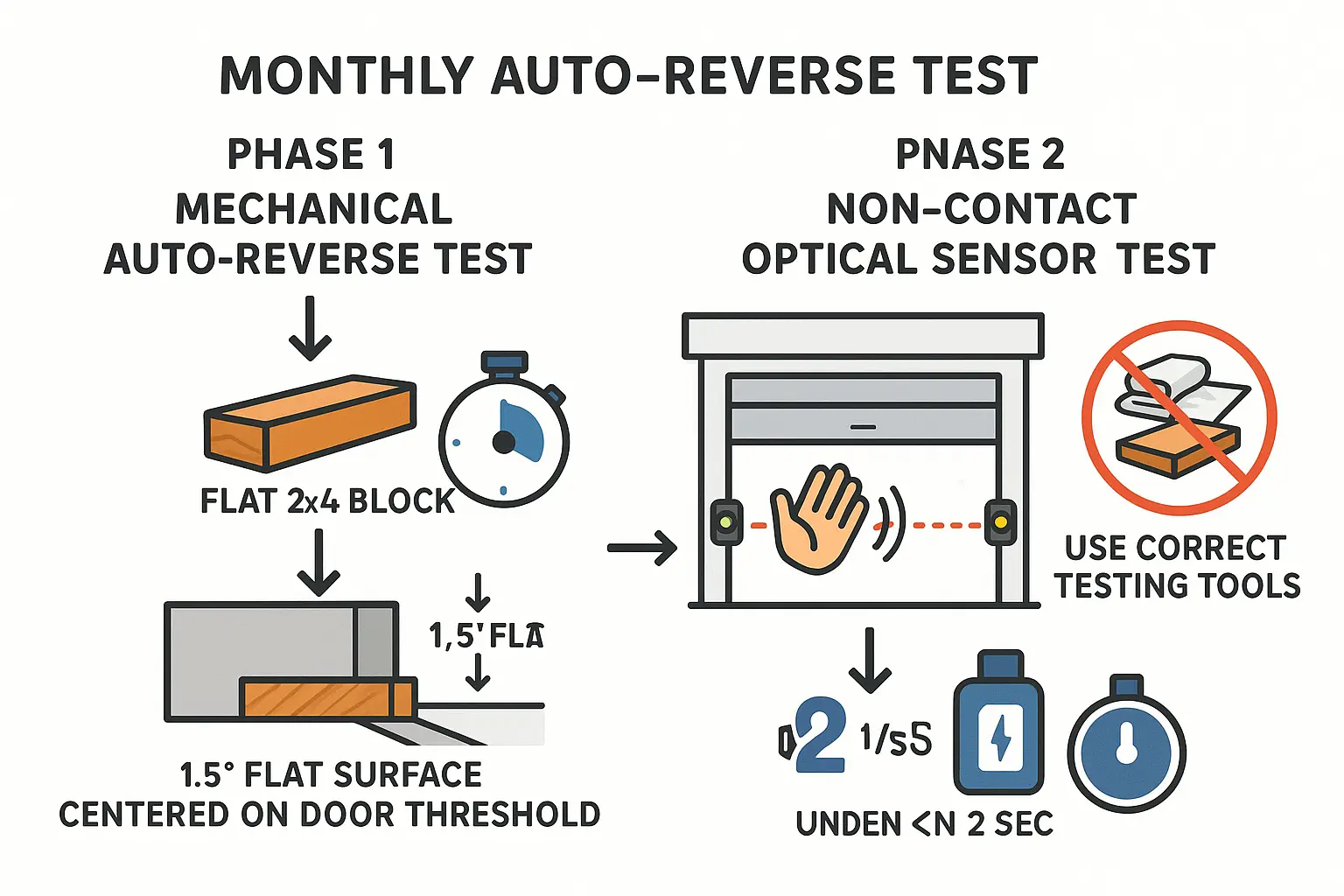
Phase 1: The Mechanical 2×4 Contact Test
- Lay a solid 2×4 board flat on the floor directly under the center of the garage door path (1.5-inch flat height).
- Activate the garage door using your wall button or remote.
- Observe the door upon striking the board. Under UL 325 guidelines, the door must make contact and reverse to a fully open position within 2 seconds.
Warning: Never use paper towels, cardboard, or your hands for testing. Soft items compress, delivering false positives and putting you at risk.
Phase 2: The Optical Non-Contact Test
- Start closing the garage door.
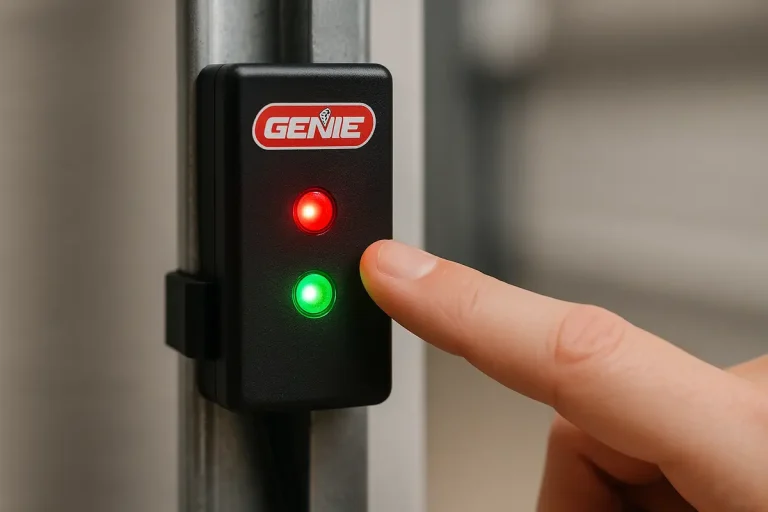
- Wave an object (such as a broom handle) through the infrared light beam emitted by the photo-eye sensors, located 4 to 6 inches above the floor.
- The door should instantly stop and reverse without making contact. If the sensors are out of line, learning how to align garage door sensors will restore proper operation.
The Diagnostic Matrix: What to Do When Your Opener Fails
When a door fails either test, immediate evaluation is necessary to determine whether simple adjustments or professional repair are required.
| Test Result / Symptom | Potential Cause | Recommended Action |
|---|---|---|
| Pushes through 2×4 without reversing | Travel limit miscalibrated or stripped drive gear | Adjust down-travel limit dial; inspect gear assembly |
| Stops on 2×4 but fails to reverse | Force limit setting set too high | Decrease down-force setting incrementally and retest |
| Reverses before reaching 2×4 | Cold weather grease drag or binding tracks | Lubricate tracks and review seasonal garage maintenance tips |
| Photo-eye indicator light flickers/flashing | Misalignment or dirty lenses | Clean lenses and verify bracket alignment |
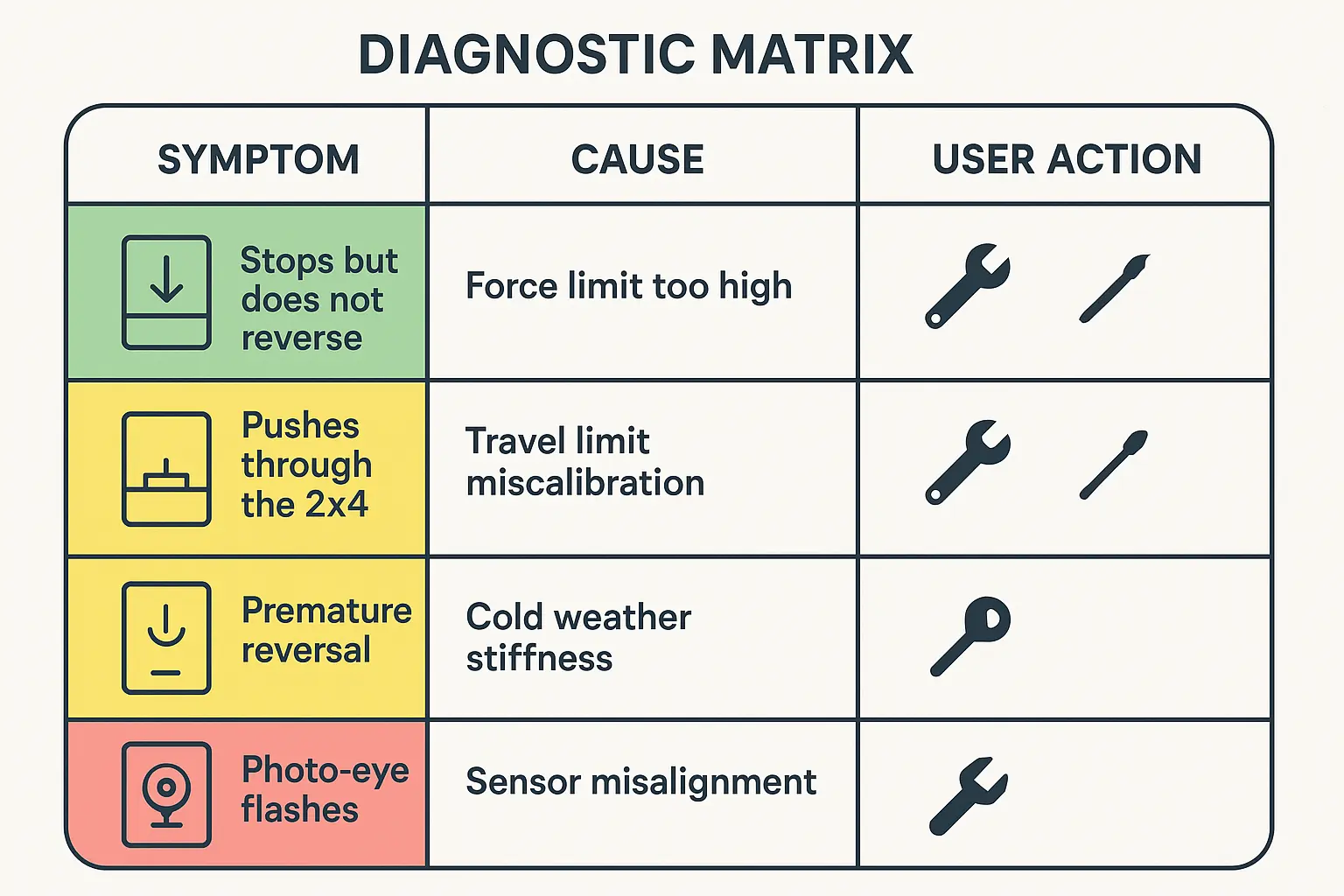
Never attempt to increase down-force to mask underlying door balance issues or broken springs. For complex mechanical failures, consult an expert to safely repair garage door opener components or evaluate garage door spring replacement.
Cold Weather Force Drift & System Evaluation
Temperature swings significantly affect garage door performance. When temperatures drop from 70°F to 20°F, track friction and lubricant viscosity can increase system resistance by up to 30%. This drag often causes openers to false-reverse or exert excessive downward force.
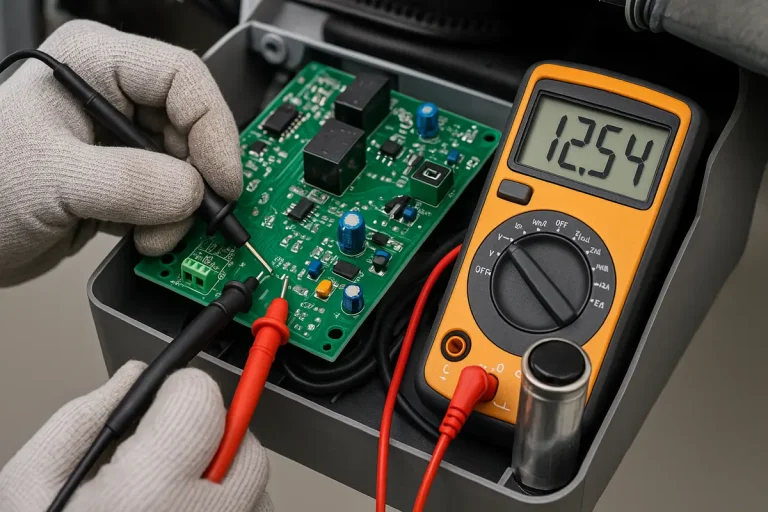
If minor force dial calibrations fail to resolve auto-reverse issues, the motor or logic board may be compromised. Units over 15 years old that consistently fail safety tests should be evaluated for full garage door motor replacement to ensure reliable entrapment protection.
Frequently Asked Questions
Can I test my garage door auto-reverse feature using paper towels or cardboard?
No. Paper towels and cardboard crush easily upon impact, absorbing kinetic force and leading to false-pass results. Always use a rigid 1.5-inch high wood block (a flat 2×4) as specified by CPSC and UL 325 standards.
What should I do if my garage door presses down hard on the 2×4 without reversing?
Immediately stop operating the door automatically. This indicates either a miscalibrated limit setting, excessive force setting, or faulty internal logic board. Reduce force settings slightly or call a technician to inspect the travel assembly.
How fast should a garage door reverse when hitting an obstruction?
According to UL 325 standards, an opener must reverse the door completely to the full open position within 2 seconds of striking an object.
You May Also Like