




Comprehensive Garage Door Security Audits and Upgrades
Published: Oct 16, 2026
According to FBI crime statistics, 10% to 15% of all home burglaries occur through the garage, making it the single largest unmonitored entry point into connected homes. Further data from the Bureau of Justice Statistics reveals that 60.5% of residential burglaries involve forcible entry, disproving the common belief that break-ins are purely opportunistic unlocked-door events. Homeowners evaluating their home security often overlook the mechanical and electronic weaknesses of their overhead doors, relying on superficial advice that fails to address modern threats. Understanding structural gaps and knowing how to systematically address them is essential for long-term peace of mind.
Evaluating Your Vulnerabilities with a Security Audit Scorecard
A systematic inspection helps identify subtle failure points before they become entry vectors for intruders. Evaluating your overhead system requires inspecting top weather seals, track rigidity, release cord accessibility, side service door reinforcement, and opener encryption standards.
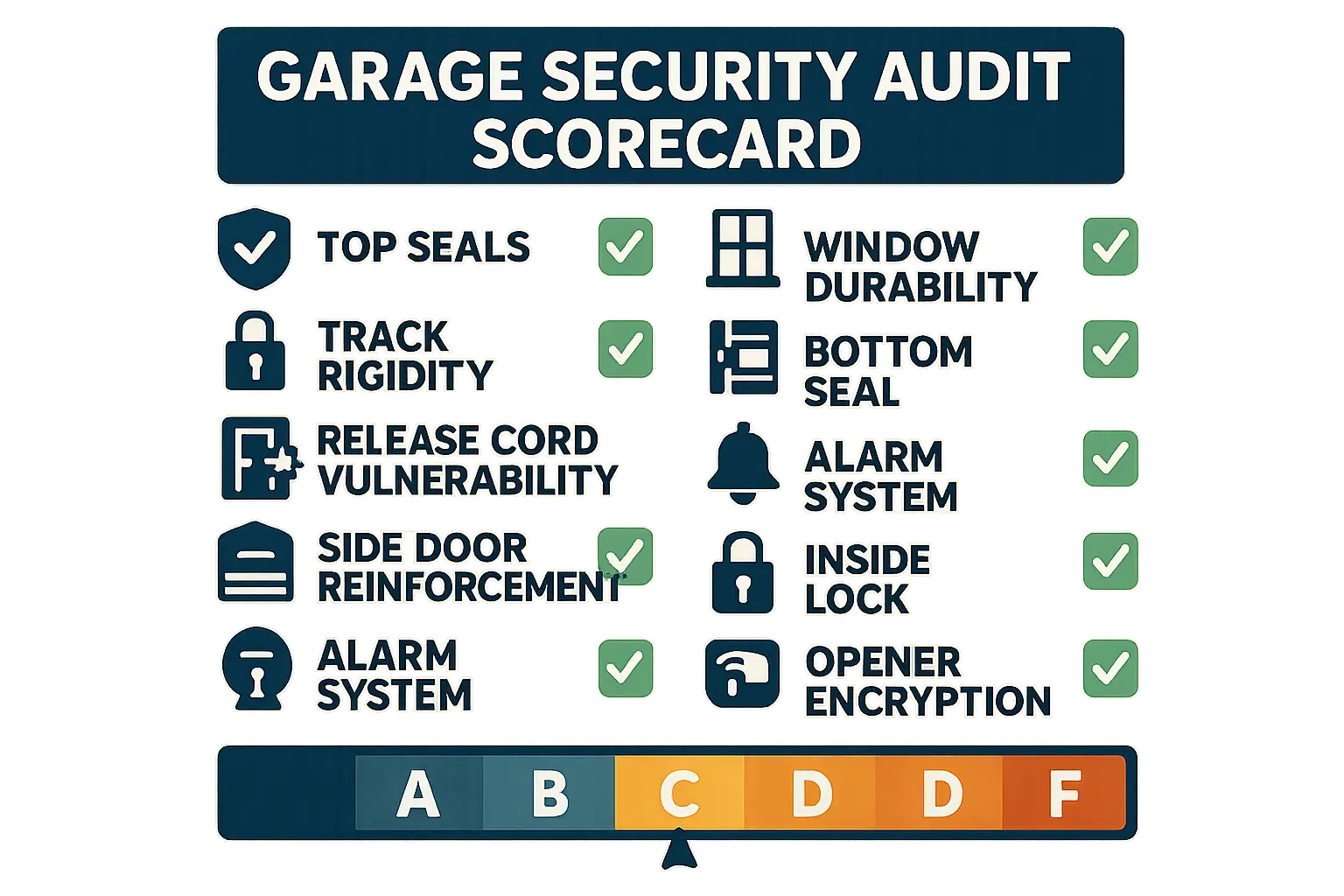
A diagnostic self-assessment allows you to calculate a security rating for your garage door setup. If your system relies on legacy DIP-switch remotes, unreinforced side frames, or exposed emergency pull levers, your home remains vulnerable. Reviewing core garage door security risks provides the necessary context to determine whether simple hardware adjustments or engineered security upgrades are required.
Physical Vulnerabilities Across Different Garage Door Types
Security risks vary depending on your door’s mechanics and configuration:
- Sectional Overhead Doors: Face the well-documented 6-second coat hanger vulnerability, where intruders insert a wire through the top seal gap to tug the emergency release lever.
- Roller Doors: Vulnerable to bottom-rail lifting and curtain prying if track expansion gaps are wide or floor anchors are weak.
- Garage Side Service Doors: Frequently feature lightweight hollow cores and standard strike plates that collapse under direct force.
When structural integrity compromises operational smoothness, unaddressed garage door mechanical failures create physical gaps along track channels and header seals that invite unauthorized entry.
Strategic Upgrades: DIY Hacks vs. Engineered Hardware
Homeowners evaluating hardware upgrades must weigh the trade-offs between low-cost DIY modifications and engineered professional solutions.
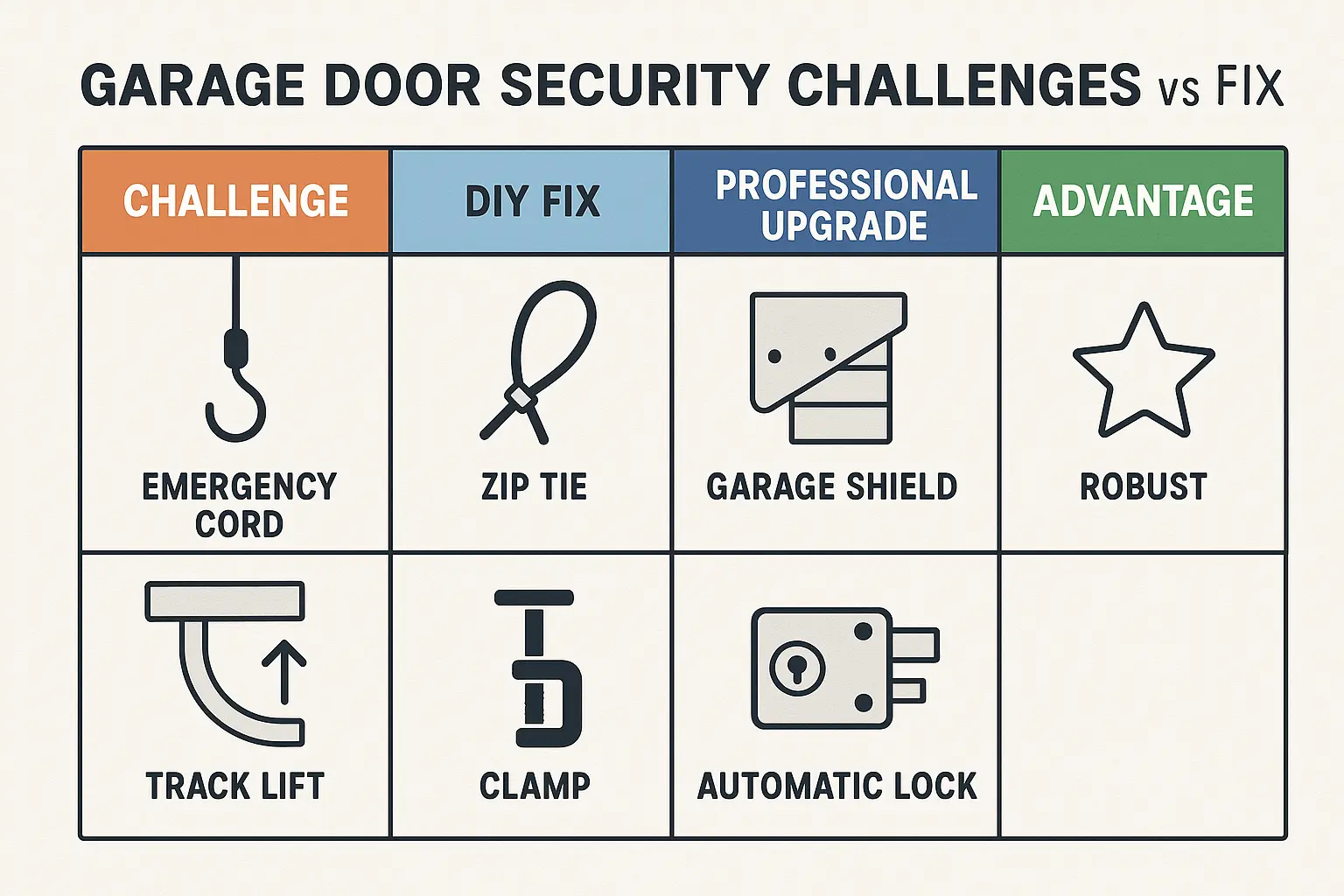
While zip-tying an emergency release cord prevents external coat-hanger prying, it creates safety hazards during power outages or fires. Installing a heavy-gauge steel Garage Shield blocks wire access while preserving internal manual operation.
Similarly, manual slide locks provide physical strength but risk burning out your opener motor if engaged accidentally. Modern automatic track deadlocks, such as the LiftMaster 841LM, automatically drive a physical steel bolt through the track whenever the door closes and retract it before the motor activates. Pairing physical deadlocks with advanced garage door automation creates an automated, tamper-proof barrier.
Electronic Hardening and Smart Access Controls
Physical strength is insufficient if radio control signals can be intercepted. Over 40% of residential openers installed prior to 1993 or non-rolling code units are vulnerable to code-grabbers, signal replay devices, and DIP-switch cracking. Upgrading to Security+ 2.0 multi-frequency rolling code technology ensures encryption algorithms change with every push of a button, neutralizing signal capture attempts.
Smart access controls like myQ offer real-time opening alerts and scheduling features. Maintaining operational integrity requires working safety features; attempting to bypass safety sensors on garage door systems compromises both life safety and smart diagnostic control. Understanding how garage door safety sensors work ensures your system stays safe and responsive.
Life-Safety Codes and Protecting Your Equipment
Hardening garage door security must never override emergency egress. Under International Residential Code (IRC) Section R311, home exits must allow immediate, unhindered escape during emergencies. Disabling or permanently locking release cords creates fatal trap risks in fires.
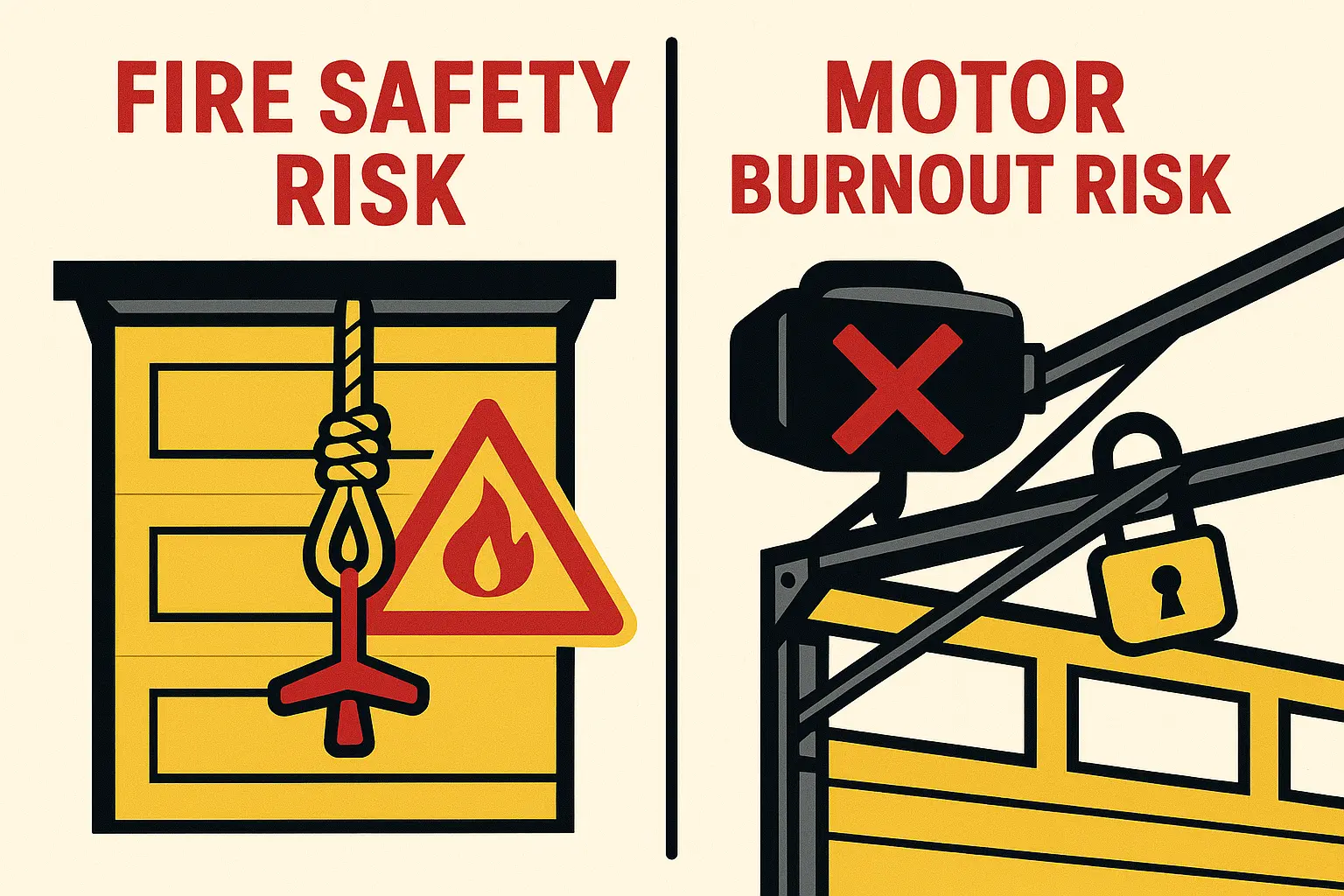
In addition, running an automated opener while manual side locks are engaged strips drive gears and strains mechanical parts. Keeping your door balanced with routine garage door spring maintenance prevents severe motor strain when automatic deadlocks engage.
Professional Security Audits: What to Expect
While a self-assessment identifies noticeable flaws, a professional security evaluation covers comprehensive mechanical and electronic integrity. Certified technicians evaluate torsion spring balance, track gauge alignment, wall anchor durability, radio frequency signal health, and panel impact strength. If hardware requires alignment or replacement, technicians can swiftly repair garage door opener mechanics and install interlocked automatic deadlocks for long-term security.
Frequently Asked Questions
Will installing manual slide locks void my garage door opener warranty?
If a manual slide lock remains engaged when the automatic opener motor is activated, the excessive mechanical resistance can strip internal drive gears and void manufacturer warranties. Utilizing interlocked automatic track deadlocks prevents motor damage by syncing lock state with motor operation.
How do I secure my garage door during a prolonged power outage?
Disconnect the door from the opener trolley using the internal emergency release cord, manually lower the door, and engage internal side slide locks. Remember to disengage manual locks before restoring automated opener power.
What is the most effective upgrade to stop coat-hanger break-ins?
Installing a physical steel Garage Shield above the top roller is the most effective solution. It physically blocks coat-hanger access to the emergency release cord while maintaining full compliance with IRC building codes for emergency internal egress.
You May Also Like