





Diagnosing Common Mechanical Garage Door Failures: A Safety-First Guide
Published: Jul 23, 2026
When a garage door fails, it turns your home’s largest moving wall into an immediate safety hazard and security risk. Whether your car is trapped inside at 2:00 AM or the door is stuck open, understanding what broke and how to safely respond is critical to preventing costly property damage and severe physical injury.
This guide provides a rapid troubleshooting framework to help you diagnose mechanical garage door failures, identify which repairs require professional equipment, and safely secure your home in an emergency.
Immediate Safety List
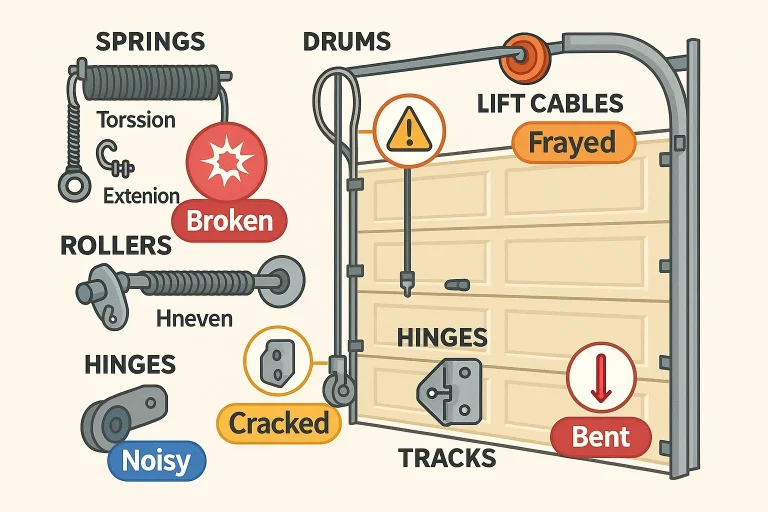
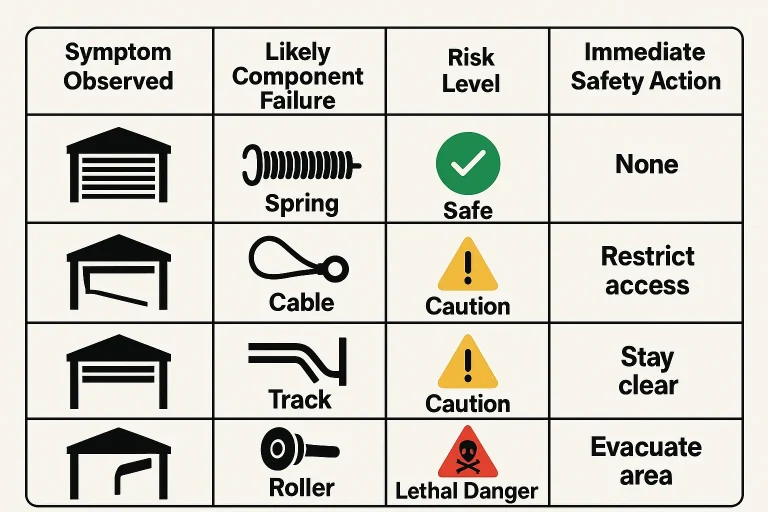
- Broken Torsion or Extension Spring
- What You See or Hear: Loud gunshot sound, door lifts 2″ then stops
- Risk Level: Lethal Danger
- Immediate Action: Do NOT pull the red emergency release cord. Keep the area clear.
- Snapped or Slipped Lift Cable
- What You See or Hear: Door hangs lopsidedly, metal cable loose
- Risk Level: High Risk
- Immediate Action: Do NOT attempt to operate. Support the door with C-clamps.
- Misaligned Track or Worn Rollers
- What You See or Hear: Grinding noise, door binds halfway
- Risk Level: Moderate Risk
- Immediate Action: Stop the opener immediately. Inspect tracks for physical obstructions.
- 4. Safety Sensor Obstruction or Failure
- What You See or Hear: Opener lights flash, door reverses instantly
- Risk Level: Low Risk
- Immediate Action: Clean sensor lenses and check alignment lights.
The "Guillotine Trap" & "Red Bolt Rule"
Garage doors represent immense physical forces. A standard double-car residential door weighs between 150 and 400 pounds. This weight is entirely counterbalanced by steel springs holding 200 to 300 foot-pounds of torque under load—equivalent to the rotational force of a sports car engine.
According to peer-reviewed clinical data published by the National Institutes of Health (NIH), garage door failures cause roughly 35,000 injuries annually. Attempting DIY spring adjustments often results in open-globe ocular trauma (severe eye injuries) and lacerations from snapped cables under tension.
To keep your family safe during a mechanical failure, memorize these two vital safety laws:
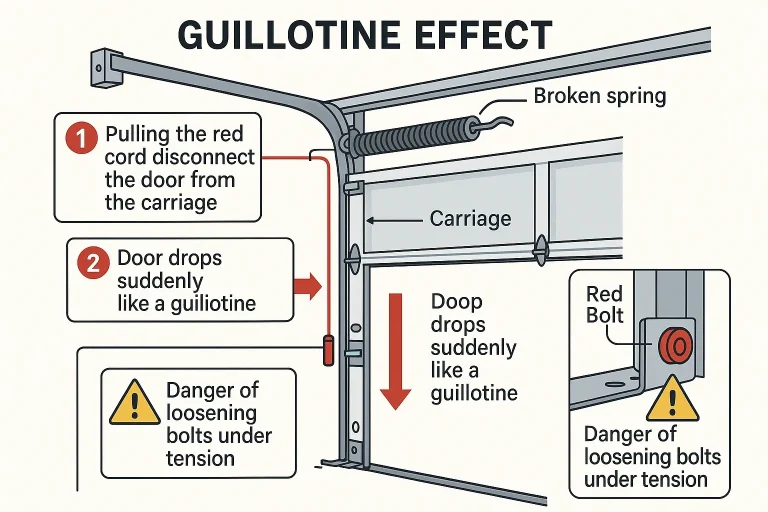
The Guillotine Trap
If a spring or lift cable is broken, the door loses its counterbalance. If the door is stuck partially open, never pull the red emergency release cord. Pulling this cord disconnects the door from the electric opener’s carriage. Without the spring’s tension to hold it, the heavy door will crash down instantly like a guillotine, destroying anything in its path.
The Red Bolt Rule
Any fastener painted red or located on the bottom roller bracket is under extreme tension from the lift cable. Loosening these bolts with standard household tools can cause the bracket to shear off under hundreds of pounds of force, causing catastrophic hand or facial injuries.
Deep-Dive Anatomical Diagnostic Guides by Component
1. Counterbalance Springs
- The Symptoms: A loud bang from the garage, a motor that hums but cannot lift the door, or a door that feels incredibly heavy when manually lifted.
- The Diagnosis: Visually inspect the metal shaft above your closed garage door. If you see a physical 2-inch gap in the coiled steel, you have a broken spring. Read our guide on how to tell if your garage door spring is broken to confirm.
- Immediate Protocol: If your car is trapped inside, review the guidelines on how to open garage door with broken spring safely. Do not attempt to adjust the spring tension yourself; instead, schedule professional garage door spring tension adjustment near me.
2. Lift Cables & Drums
- The Symptoms: The door rises unevenly, hangs lopsidedly in the opening, or a steel cable is loose and frayed.
- The Diagnosis: Check the aluminum drums at the top corners of the door. If a garage door cable came off the drum tracks, the door will lose its balance.
- Immediate Protocol: Operating a door with compromised cables will bend the tracks and damage the panels. Secure the door and arrange for a professional garage door cable replacement.
- The Symptoms: Squeaking, popping, or grinding sounds during operation, or a door that physically binds and halts midway.
- The Diagnosis: Inspect the tracks for a bent garage door track or loose mounting brackets. Check if the wheels have popped out of the rails.
- Immediate Protocol: For minor track adjustments, you can loosen the wall-mounting brackets slightly to realign, but never touch the bottom bracket. If the door has popped out entirely, learn how to put garage door back on track. If the rollers are worn down to their bearings, schedule a garage door roller replacement to prevent rail damage.
3. Tracks & Rollers
DIY vs. Professional Cost & Risk Analysis
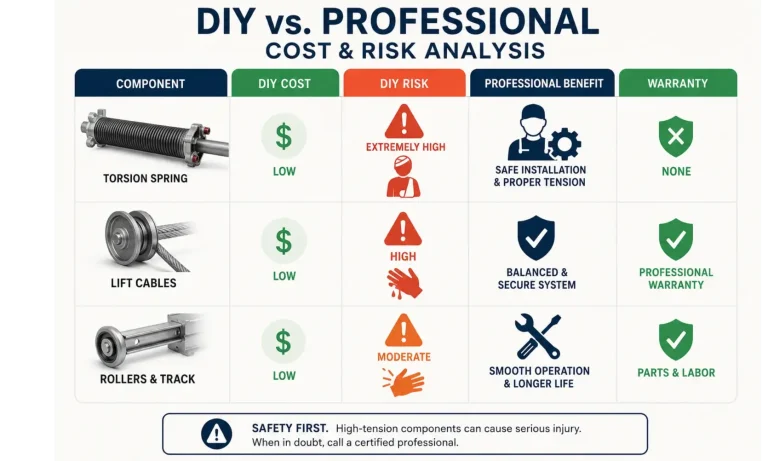
Evaluating whether to repair a garage door yourself or hire a professional requires balancing material costs against physical safety risks and long-term warranties.
While DIY parts are inexpensive, the risk of improper calibration can lead to premature motor burnout or catastrophic system failure. If you are facing an urgent mechanical breakdown, utilizing a certified technician for emergency garage door repair ensures the work is completed safely and backed by a structural warranty.
- Torsion Spring
- DIY Risk Factor: Extremely High (Limb loss, ocular trauma)
- Warranty: None
- Lift Cables
- DIY Risk Factor: High (Lacerations, door collapse)
- Warranty: Professional Warranty
- Rollers & Track
- DIY Risk Factor: Moderate (Pinch points, muscle strain)
- Warranty: Parts & Labor
Frequently Asked Questions
Why won’t my garage close when nothing is in the way?
This is almost always a safety eye issue rather than a mechanical track failure. Check the small photo-eye sensors located 6 inches off the ground on both sides of the door. Clean the lenses of dust and cobwebs, and make sure their LED indicator lights are glowing steadily. If they are blinking, refer to our garage door sensors troubleshooting guide.
How do I safely close a garage door with a broken spring manually?
You should only attempt this if the door is already down or very close to the ground. Secure a pair of heavy-duty vise-grips (locking pliers) to the vertical track directly above one of the rollers to act as a physical block. This prevents the door from dropping unexpectedly while you work on manually securing the locks.
How do I re-engage the garage door after pulling the red cord?
Pull the red manual release cord down and back (toward the garage door motor) to lock the lever in the “re-engage” position. Then, manually lift the garage door up until you hear a loud click, signaling that the door’s carriage has snapped back into the opener’s chain or belt traveler. Alternately, press your remote button, and the traveler will automatically lock back into the carriage when they meet.
You May Also Like
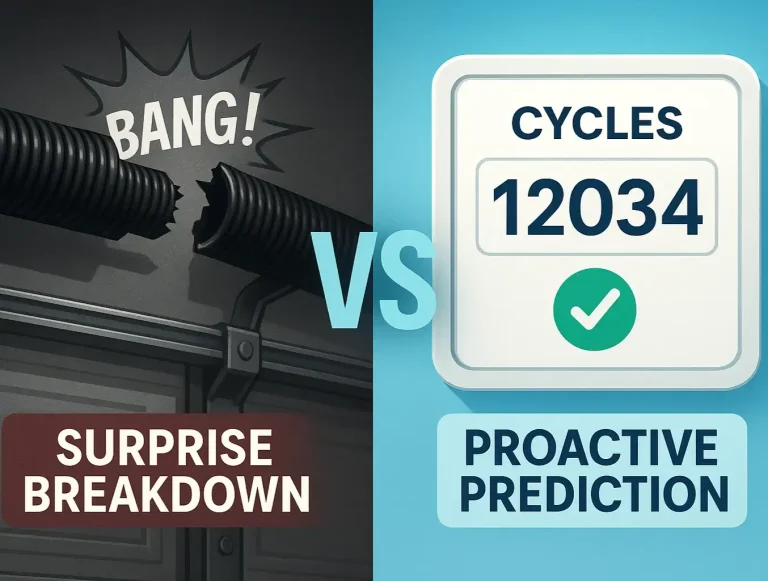
The Smarter Way to Predict and Prevent Garage Door Repairs
It’s one of the most jarring sounds a homeowner can experience: a sudden, explosive BANG from the garage that sounds like a gunshot. You rush to see what happened, only to find your garage door won't open and a…
Published Date: Mar 25, 2026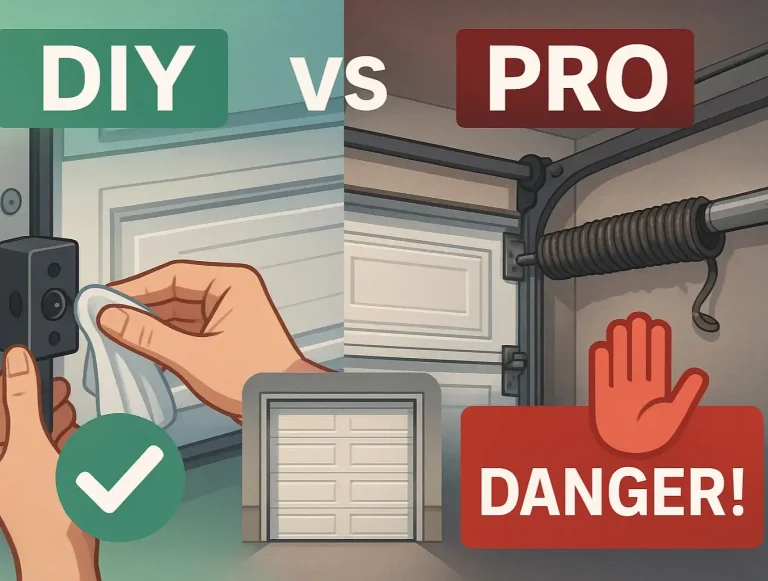
The Essential Guide to Safe and Effective Garage Door Repairs
It’s a sound every homeowner dreads. You press the button on your garage door opener, and instead of the familiar, smooth hum, you hear a loud bang, a grinding crunch, or worse—absolute silence. A stuck garage door…
Published Date: Mar 4, 2026
How to Avoid Costly Garage Door Repairs: A Complete Guide
Every day, your garage door works hard to protect your tools, vehicles, and belongings. It opens and closes each time you need to access your garage. However, even the best garage door may need repair over time.…
Published Date: Feb 27, 2025