





Safety Protocols When Your Garage Door Traps You
Published: Jun 2, 2026
It’s a frustrating moment we all dread. You press the button on your garage door remote, hear a noise… but nothing happens. Or worse, you hear a loud bang, and now the door is completely unresponsive. Whether you’re trapped inside and late for an appointment or stuck outside in the rain, a malfunctioning garage door can quickly turn a normal day into a stressful ordeal.
Your immediate instinct might be to force it open or start fiddling with that red cord hanging from the motor. But stop. Before you do anything, taking 60 seconds to assess the situation can be the difference between a simple fix and a trip to the emergency room.
"GARAGE DOOR STUCK? Your Next Step Is Critical."
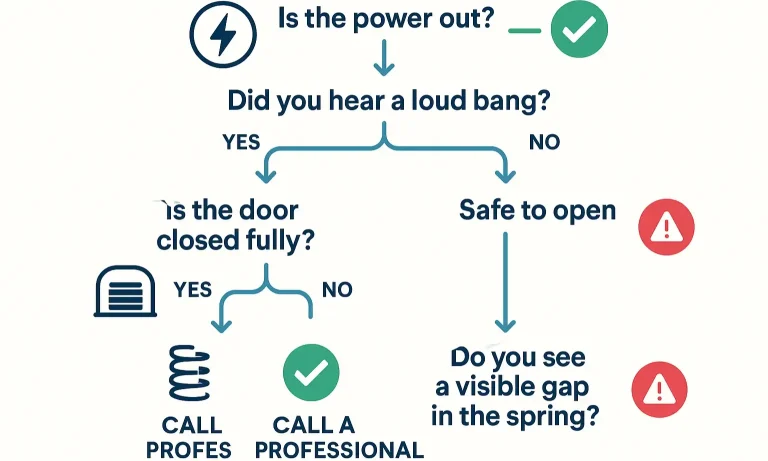
In a moment of panic, clarity is your best friend. Your first move isn’t to pull or push anything; it’s to ask one simple diagnostic question that will guide all your next steps:
Did the power go out, OR did you hear a loud bang or grinding noise?
The answer to this question immediately sorts your problem into one of two paths: the relatively safe “power outage” scenario or the potentially dangerous “mechanical failure” scenario. Understanding which path you’re on is the most important safety protocol of all.
The DANGER ZONE: "Why a Garage Door Can Be the Heaviest Thing in Your Home."
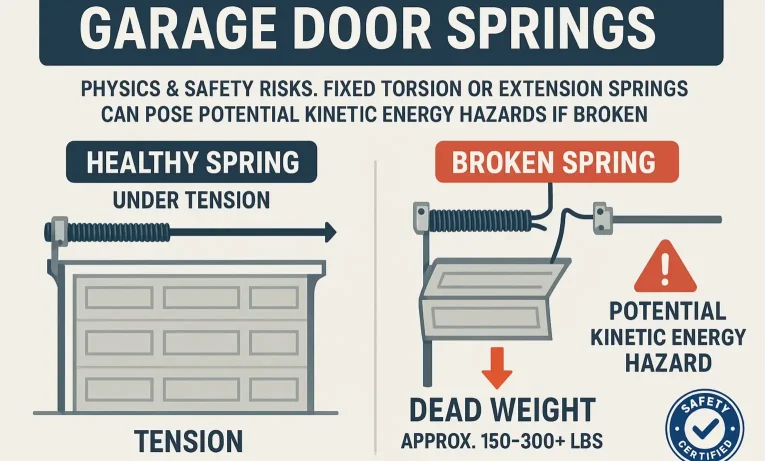
Before we talk about solutions, let’s have a quick coffee-talk chat about how your garage door works. It’s not the small motor in the opener that does the heavy lifting. The real muscle is the spring system (either long springs on the sides or a large one coiled on a bar above the door).
These springs are under immense tension, and their job is to perfectly counterbalance the weight of the door. This is what allows you to lift a 200-pound door with just one hand when it’s working correctly.
But when a spring breaks, that balance is gone. The opener is no longer lifting a balanced object; it’s trying—and failing—to lift the full, crushing dead weight of the door.
An “Aha” Moment on Weight: Without a working spring, your garage door suddenly weighs as much as a large adult. Trying to lift it is like trying to bench press 150-300+ pounds. If it falls, it can cause serious injury, significant property damage, or worse. This is why correctly diagnosing the problem is so critical. Any problems with the door mechanism itself are best left to an Up & Down Garage Door repair professional.
The Broken Spring Litmus Test: Your Most Important Safety Check
If you suspect a mechanical failure, use this simple test before touching anything:
- Did you hear a loud “BANG”? Many homeowners describe the sound of a spring breaking as being like a gunshot in their garage.
- Does the motor run, but the door won’t move? If the chain or belt on the opener moves but the door stays put, the connection is likely severed because the spring isn’t doing its job.
- Can you see a gap in the spring? Look at the spring(s). A torsion spring (above the door) will have a visible 2-3 inch gap where it snapped. Extension springs (on the sides) will appear broken or out of place.
If you answered “yes” to any of these, STOP. Do not pull the emergency release cord. Do not try to lift the door. Your situation has moved from an inconvenience to a serious safety hazard requiring emergency garage door repair McKinney TX.
Scenario 1: The Power Is Out - A Step-by-Step Guide.
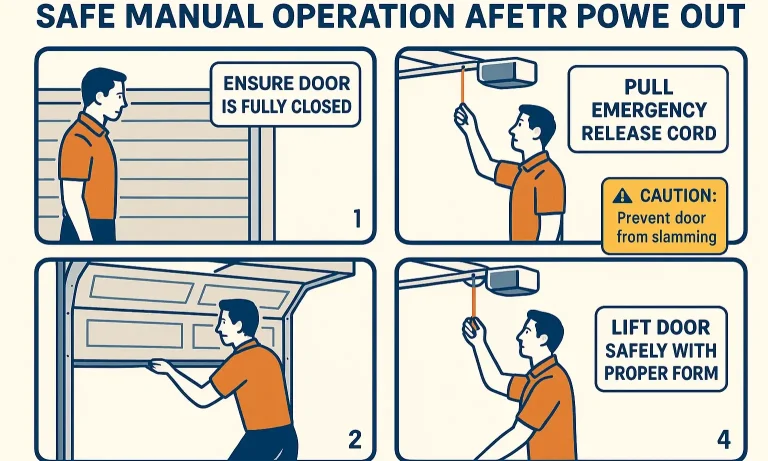
If you’ve confirmed the issue is just a power outage (no loud noises, no visible damage), you are in the safest scenario to operate your door manually. Here’s how to do it correctly.
Step 1: Ensure the Door is Fully CLOSED.
This is the single most important rule. Disengaging the opener when the door is open can cause it to slam shut with its full weight.
Step 2: Pull the Emergency Release Cord.
This is the red cord with a handle hanging from the opener’s trolley. A firm, straight pull down will disconnect the trolley from the opener’s chain or belt, putting the door into manual mode. You should hear a click.
Step 3: Lift the Door Manually.
Bend at your knees, not your back, and lift the door using the handle or a sturdy bottom edge. If the springs are working properly, it should feel relatively light (around 10-15 pounds) and stay open on its own. If it feels extremely heavy, you may have misdiagnosed the problem. Lower it slowly and call a professional for a garage door replacement West Haven or repair.
Step 4: Re-Engaging the Opener After Power Returns.
Once power is restored, pull the emergency cord down and toward the garage door. This will reset the release mechanism. Then, press the remote button. The opener’s trolley will travel along the track and automatically reconnect to the door with a loud click.
Advanced Scenarios & Troubleshooting
Scenario 2: Getting In From the Outside (Locked Out)
If you’re locked out of your house with no other entry, forcing the garage door is not the answer. This often requires professional emergency garage door repair Hartford county services to avoid damage. Some doors are equipped with a keyed emergency release lock on the outside. Using a key, you can disengage the opener from the outside and lift the door manually.
Scenario 3: The Door is Stuck Open
WARNING: CRITICAL SAFETY ALERT
If your garage door is stuck in a partially or fully open position, NEVER, EVER pull the emergency release cord. The only thing holding the door up is the opener’s chain or belt. Pulling that cord will release the full weight of the door, causing it to crash down instantly. This is the most dangerous situation for a homeowner, and it always requires a professional.
Action (When to Call a Professional)
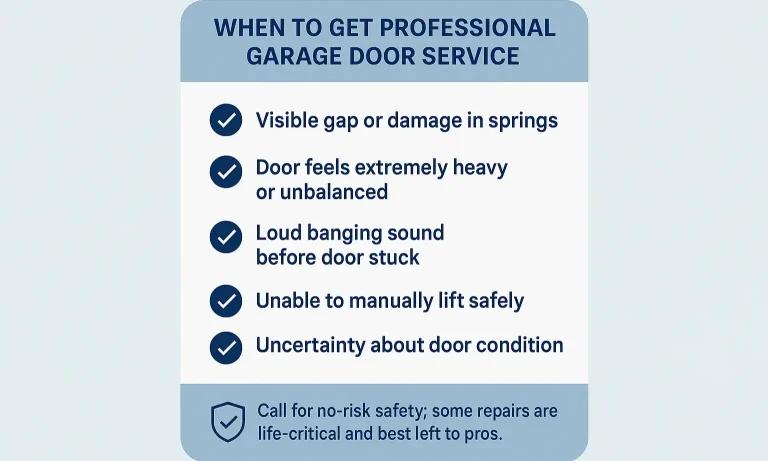
Being a savvy homeowner also means knowing your limits. A garage door system is simple in concept but contains powerful components that demand respect. It’s time to stop and call for help if you encounter any of the following:
- You suspect a broken spring. (You see a gap or heard a loud bang).
- The door feels extremely heavy after pulling the release cord.
- The door is stuck in the open position.
- You see frayed or broken cables. These are also under high tension and can snap like a whip.
- The door is off its tracks or panels are damaged. Trying to move a crooked door can cause it to collapse. Significant panel issues might require a specialist in garage door dent repair Houston.
- You are unsure or uncomfortable at any point. Your safety is always more important than a DIY fix.
In these situations, a 24/7 garage door repair service downe can safely resolve the issue without risk to you or your property.
Frequently Asked Questions (FAQ)
What does the red cord on my garage door do?
The red emergency release cord disengages your garage door from the automatic opener, allowing you to operate it manually. It’s a critical safety feature for situations like a power outage.
How do I know if my garage door spring is broken?
The most common signs are a loud “bang” from the garage, a visible gap in the spring itself, or the opener motor running but the door failing to move. If you notice these, you’ll need professional garage door repair.
Why is my garage door so heavy after pulling the release?
If the door feels extremely heavy to lift manually, it’s a clear sign that the spring system is broken or failing. The springs are what make the door feel light; without them, you are lifting the full 150-300+ pounds of dead weight. Do not attempt to lift it further.
How do I reset the garage door after pulling the emergency release?
First, ensure the door is closed. Pull the red cord down and towards the motor to re-engage the release lever. Then, run the automatic opener, and it will automatically reconnect to the trolley on the door. For more complex issues, it’s wise to contact an emergency garage door repair technician.
Can I replace a broken garage door spring myself?
Absolutely not. Garage door springs are under extreme tension and store an incredible amount of mechanical energy. Attempting to remove or install them without the proper tools and training can result in sudden, violent breakage, leading to severe injury or even death. This is one job that should always be left to a trained professional. When it comes to something as crucial as this, you want an experienced team that provides reliable Up & Down Garage Doors.
You May Also Like
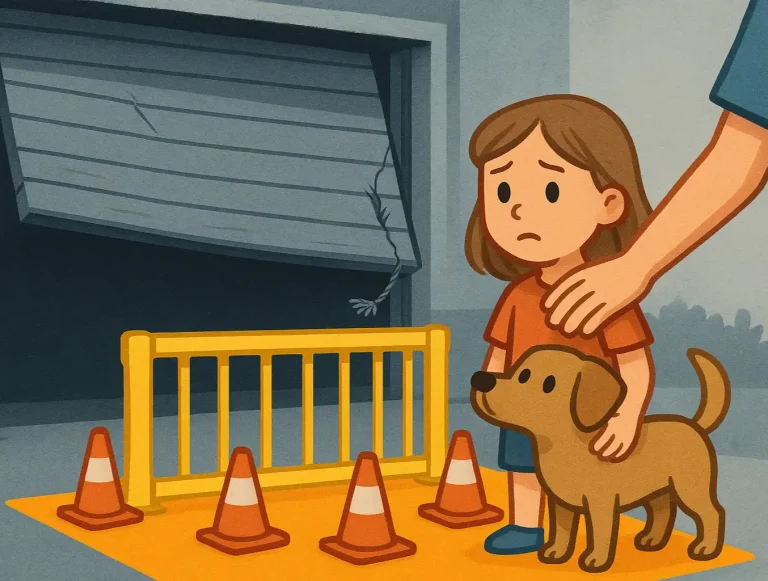
Child and Pet Safety Protocols During a Garage Door Malfunction
That sudden, sickening BANG from the garage stops everyone in their tracks. It’s a sound you can’t ignore. Whether the door is now hanging crooked, stuck halfway, or won’t move at all, your first thought isn’t about…
Published Date: Jun 1, 2026
What To Do After Hitting Your Garage Door: A 5-Minute Safety Checklist
The crunch of metal is a sound no homeowner wants to hear. Whether it was a moment of distraction backing out of the garage or a sudden, jarring failure of the system, a damaged garage door can turn a normal day into…
Published Date: May 28, 2026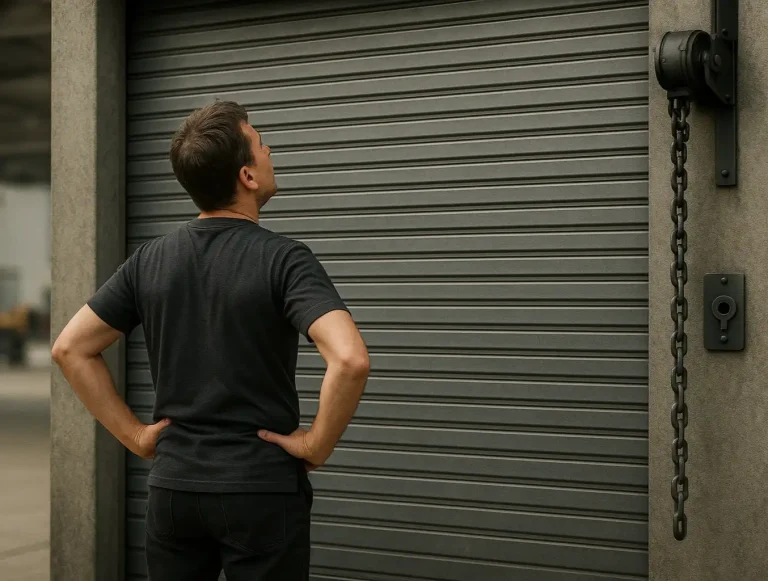
Emergency Exterior Access for Commercial or Rolling Steel Garage Doors
The power is out. Your delivery truck is loaded and needs to leave, but the massive rolling steel door to your warehouse is sealed shut. Or maybe the motor made a grinding noise and now refuses to budge. Panic starts…
Published Date: May 27, 2026