





Comparing Rechargeable vs Disposable Batteries for Garage Door Keypads
Published: May 25, 2026
It’s a familiar story. A blizzard is howling, you’ve just pulled into the driveway, and you punch in your code to open the garage. Nothing. You try again. Still nothing. The tiny LED light on the keypad, which usually greets you with a friendly blink, is dark and lifeless. Your battery has died at the worst possible moment.
When this happens, the knee-jerk reaction is to run to the nearest store and grab the same disposable batteries that were in there before. But what if that’s not the best choice?
Choosing a battery for your garage door keypad seems simple, but the unique demands of this device—infrequent use, exposure to harsh weather, and the need for long-term reliability—make it a surprisingly complex decision. Let’s break down the options so you can make an informed choice that keeps you out of the cold.
Meet the Contenders: Your Three Best Battery Choices
You’re no longer limited to the classic copper-top. Today, there are three primary contenders for powering your keypad, each with a distinct personality.
The Old Standby: Alkaline Batteries
These are the standard, single-use batteries you find everywhere. They’re the default choice for most electronics, known for their low upfront cost and wide availability.
The Long-Life Champion: Lithium Disposable Batteries
Not to be confused with rechargeable lithium-ion, these are single-use batteries that offer a significant performance upgrade over alkaline. They are engineered for high performance and longevity, especially under tough conditions.
The Eco-Friendly Workhorse: LSD NiMH Rechargeable Batteries
Modern rechargeable batteries have come a long way. The key is to look for Low Self-Discharge (LSD) Nickel-Metal Hydride (NiMH) batteries. Unlike their older counterparts, they can hold around 80% of their charge for over a year, making them a viable option for low-drain devices like a garage keypad for the first time.
Head-to-Head: Which Battery Wins for Your Garage?
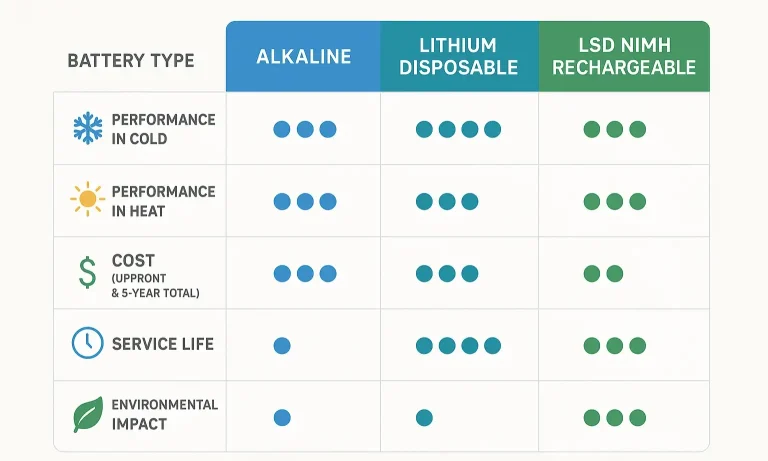
Comparing these options isn’t just about cost; it’s about performance where it matters most—on the side of your house, facing the elements.
Here’s how they stack up across the factors that are critical for a garage door keypad:
Performance in Cold (<32°F / 0°C):
- Winner: Lithium. Their chemistry is incredibly stable in the cold, delivering consistent power even in freezing temperatures.
- Runner-Up: LSD NiMH. They perform better than alkaline but will see a noticeable drop in capacity.
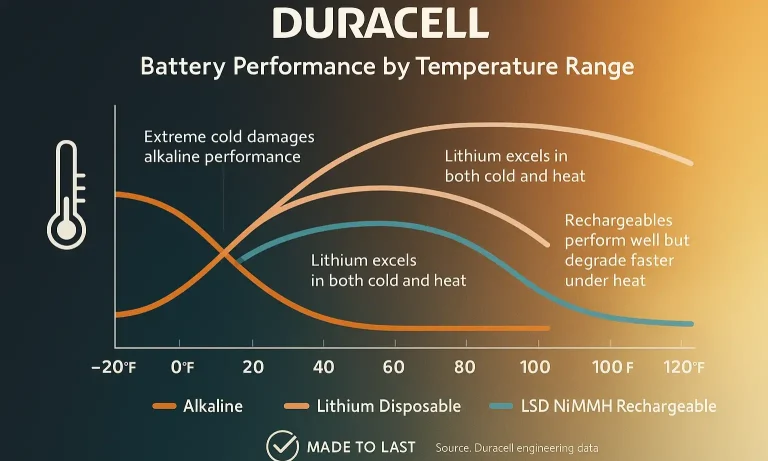
- Loser: Alkaline. The chemical reaction inside an alkaline battery slows dramatically in the cold, causing a massive voltage drop and rendering them useless when you need them most.
Performance in Heat (>90°F / 32°C):
- Winner: Lithium. They handle high heat exceptionally well, with a very low risk of leaking.
- Runner-Up: Alkaline. They perform fine in heat but have a much higher tendency to leak corrosive acid over time, which can destroy your keypad’s electronics.
- Loser: LSD NiMH. High temperatures accelerate their self-discharge rate, meaning you’ll have to recharge them more often.
- Winner: Lithium. With a shelf life of 10-15 years and superior performance, a single set of lithium batteries can often last for several years in a keypad.
- Runner-Up: Alkaline. Typically lasts 12-18 months, but this can be drastically shorter in cold climates.
- Loser: LSD NiMH. While they can be reused, they will likely require recharging every 6-12 months depending on usage and temperature.
Service Life (How long until it stops working):
Environmental Impact:
Winner: LSD NiMH. Reusing batteries hundreds of times significantly reduces waste.
Losers: Alkaline & Lithium. Both are single-use products that contribute to landfill waste.
Unlocking the Secrets: Answering Your Biggest Battery Questions
To truly make the right choice, we need to bust a few common myths and shine a light on the technical details that most people overlook.
Myth #1: The 1.2V vs. 1.5V Issue – Does It Really Matter?
You may have noticed that disposable batteries (Alkaline and Lithium) are rated at 1.5 volts, while NiMH rechargeables are 1.2 volts. This is a major point of confusion and leads many to believe rechargeables are too “weak.”
The secret isn’t the starting voltage; it’s how that voltage behaves over time.
- Alkaline batteries start at 1.5V but experience a steady, gradual voltage drop as they’re used. Your keypad will work for a while, then get sluggish, and eventually stop working as the voltage falls below its operational threshold.
- LSD NiMH batteries deliver a flat, consistent 1.2V for almost their entire cycle, then drop off a cliff. This means your keypad works perfectly one day and is completely dead the next.
This “sudden death” isn’t a flaw; it’s just a different behavior. But it’s why many people are caught by surprise when their rechargeable-powered device stops without warning.
Myth #2: “Don’t Rechargeables Lose Their Charge Just Sitting There?”
This was absolutely true of older rechargeable batteries, which could lose 15-20% of their charge in the first 24 hours. This made them useless for low-drain devices like keypads or TV remotes.
Modern Low Self-Discharge (LSD) NiMH technology changed the game. These batteries are specifically designed to retain their power over long periods. Top brands can hold up to 80% of their charge after a full year, making the self-discharge issue a thing of the past.
The Overlooked Factor: Why Temperature Is the Real Game-Changer
For a device that lives outside 24/7, temperature is everything. The chemical reactions that produce electricity inside a battery are highly sensitive to heat and cold. As we saw in the comparison, this is where the differences between battery types become most apparent. A battery that works flawlessly indoors can fail completely during the first cold snap of winter.
When evaluating your options, consider your local climate first. If you live in an area with harsh winters or scorching summers, prioritizing a battery built for an extreme temperature keypad environment is the single most important decision you can make.
The Final Verdict: How to Choose the Right Battery for You
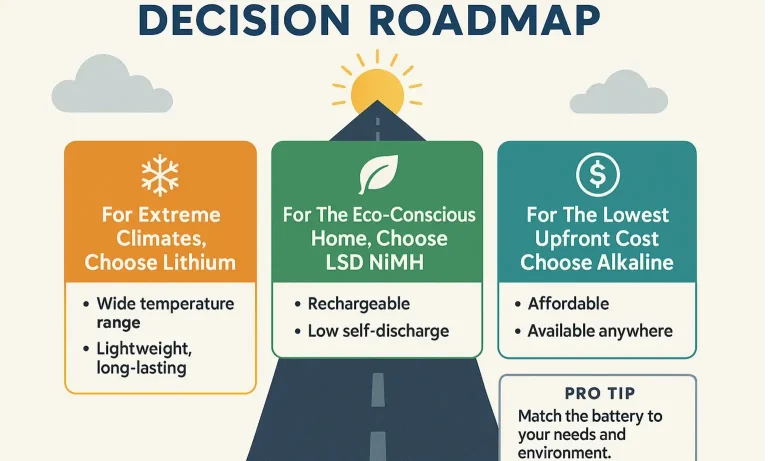
There is no single “best” battery—only the best battery for your specific needs. Use this simple guide to make your decision.
- Choose Lithium Disposable if: You live in a climate with extreme heat or cold and prioritize maximum reliability and longevity above all else. You want a “set it and forget it” solution that will last for years.
- Choose LSD NiMH Rechargeable if: You are environmentally conscious, already use rechargeable batteries for other devices, and live in a mild climate. You don’t mind recharging them once or twice a year to achieve the best long-term value.
- Choose Alkaline if: Your top priority is the lowest possible upfront cost, and you live in a temperate climate without extreme temperature swings. Be prepared to replace them more frequently, especially during winter.
Frequently Asked Questions About Garage Keypad Batteries
How often do I need to change my garage door keypad battery?
This depends heavily on the battery type, climate, and usage. As a general rule: Lithium can last 3-5 years, Alkaline 1-2 years, and LSD NiMH will likely need recharging every 6-12 months. If you’re unsure of the process, you can learn how to change the battery in a garage door opener keypad with our simple guide.
Do I need to reprogram my keypad after a battery change?
In most cases, no. Modern keypads store your code in non-volatile memory, meaning it’s retained even when the power is lost. However, if you find your garage door keypad not working after replacing the batteries, a simple reset and reprogram might be necessary.
Is the keypad battery the same as the one in my garage door opener unit?
Not usually. The keypad on the wall uses standard batteries like 9V or AAs. The main garage door opener unit plugged into your ceiling may have a dedicated backup battery to operate the door during a power outage. It’s helpful to understand if garage door openers have batteries for emergencies.
What are some other tips for maintaining my keypad’s battery life?
To get the most out of your batteries, consider cleaning the battery contacts with a pencil eraser or rubbing alcohol once a year to ensure a good connection. Also, writing the installation date on disposable batteries with a marker helps you track their lifespan. For more ideas, check out these garage door keypad battery tips.
You May Also Like
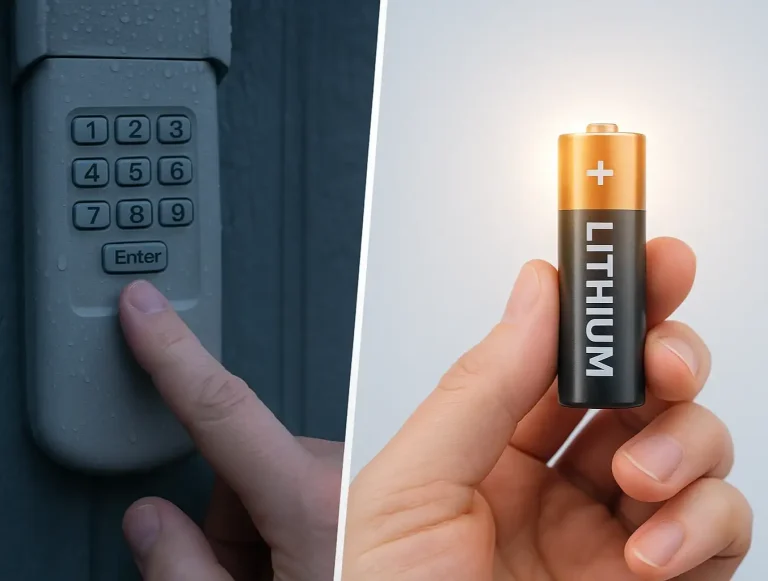
Extending the Lifespan of Your Garage Door Keypad Batteries
You know the feeling. It’s pouring rain, your arms are full of groceries, and you punch in your code on the garage door keypad. Nothing. You try again, pressing the buttons a little harder. Still nothing. The tiny…
Published Date: May 22, 2026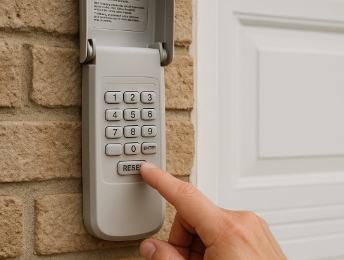
How to Change Battery in Garage Door Opener Keypad
If your keypad isn’t responding, the backlight doesn’t flash, or it only works when you use the remote, you’re probably asking yourself why your garage door keypad is not working . Most of the time, the fix is simple…
Published Date: Jun 20, 2025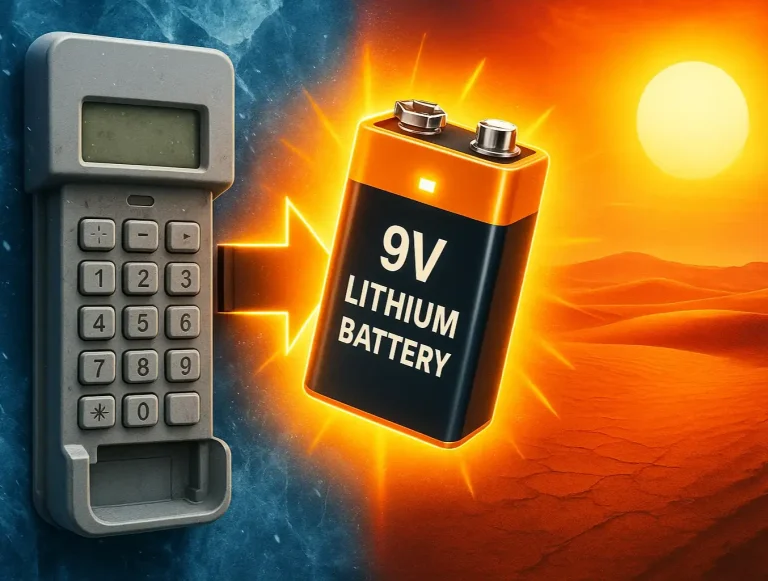
Seasonal Considerations for Garage Door Keypad Battery Performance
It’s one of the most frustrating homeowner mysteries. One day, your garage door keypad works perfectly. The next—after a sudden cold snap or during the peak of a summer heatwave—it’s completely unresponsive. You…
Published Date: May 22, 2026