





Weatherproofing Your Outdoor Garage Door Keypad
Published: Jun 24, 2026
It’s one of those moments that can ruin a morning. You’re rushing out the door, coffee in hand, tapping your code into the garage door keypad… and nothing happens. You try again. Still nothing. The rain starts to fall, and you realize you’re locked out.
Most of us assume the keypad just gave up from old age. But here’s an industry secret: the vast majority of keypad failures aren’t due to age, but to a silent battle with the elements. Rain, humidity, summer sun, and winter ice are constantly working to wear it down. The good news? You can win this battle.
This guide is your preventative playbook. We’ll show you how to protect your keypad from the moment it’s installed, ensuring it works reliably for years, no matter what the weather throws at it.
The Foundation: Understanding Weather-Resistant vs. Weatherproof
Before we dive into solutions, let’s clear up a common point of confusion. The terms “weather-resistant” and “weatherproof” sound similar, but in the world of electronics, they mean very different things.
- Weather-Resistant: This means the keypad can handle a light splash or a bit of drizzle. Its casing is designed to repel some water, but it’s not sealed. Think of it like a light windbreaker.
- Weatherproof: This means the keypad is built with seals and gaskets to prevent water, dust, and debris from getting inside. It’s designed for direct exposure to the elements. This is your all-season raincoat.
Your keypad is exposed to four main environmental enemies:
- Water Ingress: Rain, snow, and sprinklers can seep through tiny cracks in the casing or behind an improperly mounted unit, directly corroding the circuit board.
- Condensation: High humidity and rapid temperature changes can cause moisture to form inside the keypad, leading to slow, invisible damage.
- UV Degradation: Relentless sun exposure can make plastic brittle, causing it to crack and creating entry points for moisture.
- Extreme Cold: Frigid temperatures don’t just drain batteries; they can also make plastic components contract and crack.
Understanding these threats is the first step to building a powerful defense.
The Proactive Weatherproofing Masterclass
True longevity comes from proactive protection. By making the right choices during selection and installation, you can fortify your keypad against failure from day one.
Part A: Choosing Your Armor
Not all keypads and covers are created equal. Your local climate should be the number one factor guiding your choice. A hard plastic cover that’s perfect for a snowy Michigan winter might become brittle in the Arizona sun.
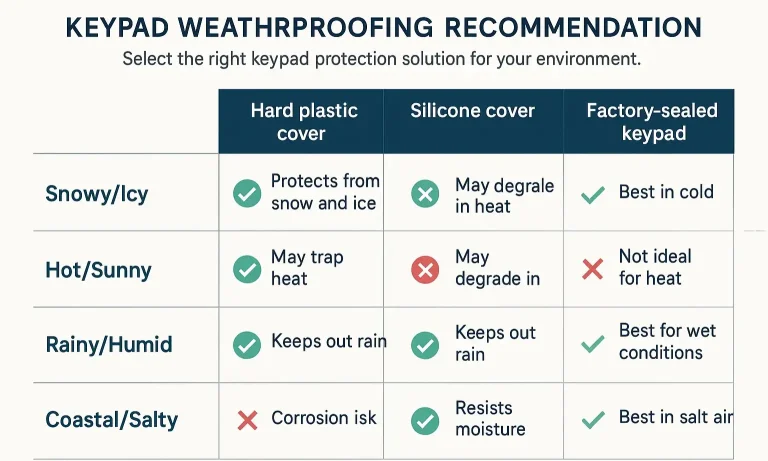
Use this climate guide to select the best defense:
- For Snowy & Icy Climates: Opt for a hard-shell plastic cover. It provides physical protection against snow buildup, ice, and hail. Look for a hinged design that won’t freeze shut.
- For Hot & Sunny Climates: Choose a UV-resistant silicone cover. Silicone is less prone to cracking from sun exposure and heat. A lighter color will also help reflect sunlight.
- For Rainy & Humid Climates: A silicone cover with an overlapping design is your best bet. It creates a snug seal that prevents rain from dripping down and seeping into the casing.
- For Coastal & Salty Air Climates: Salt is incredibly corrosive. A tight-fitting silicone cover is essential to block salt-laden air. Regular cleaning is also critical in these areas.
Part B: The Fortress Installation
How you install your keypad is even more important than the cover you choose. Most moisture damage happens when water gets behind the unit and attacks it from the back. The solution is what professionals call the “sealant sandwich.” It’s a simple technique that creates a waterproof gasket between the keypad and your wall.
If you’re planning a new garage door keypad installation, mastering this step is crucial.
How to Create the Sealant Sandwich:
- Choose Your Sealant: Use a high-quality, 100% exterior silicone caulk. It remains flexible in all temperatures and is completely waterproof.
- Apply the First Layer: Apply a thin, continuous bead of sealant to the back perimeter of the keypad housing before you place it on the wall.
- Mount the Keypad: Press the keypad firmly against the wall and secure it with screws as directed. The sealant will compress slightly to fill any gaps.
- Apply the Second Layer: Apply another clean bead of sealant around the top and sides of the mounted keypad where it meets the wall. Crucially, leave the bottom edge open. This allows any condensation that might form behind the unit to drain out instead of getting trapped.
- Switch to Lithium: For climates with cold winters, lithium batteries are a game-changer. They maintain their voltage in freezing temperatures far better than alkaline batteries, providing consistent power all season long.
- Schedule a Fall Swap: Make it a habit to replace your keypad batteries every autumn, regardless of their current charge. This ensures you have fresh power heading into the coldest months.
Part C: Battery Intelligence
Ever notice your TV remote or car fob gets sluggish in the winter? The same thing happens to your garage door keypad, but the effect is much more dramatic. The chemical reaction inside standard alkaline batteries slows down significantly in the cold, causing their voltage to drop. Your keypad might interpret this as a dead battery, even if it was new in the fall.
To combat this, you need to be strategic about your garage door keypad battery choices:
Mastery: The Troubleshooter's Playbook
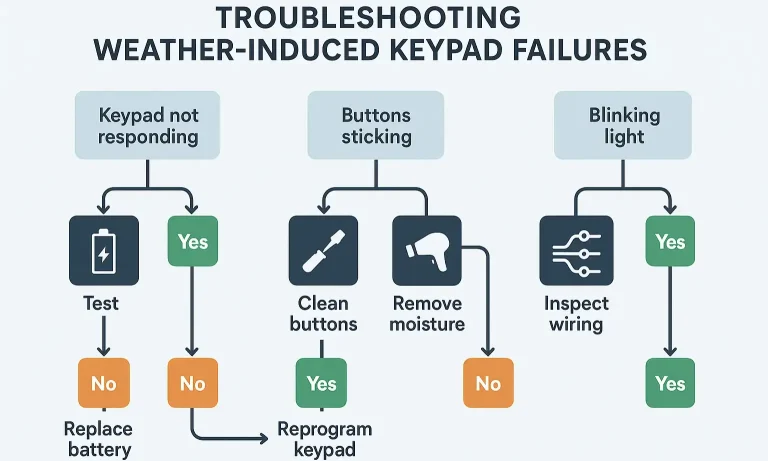
Even with the best preparation, nature can sometimes win a round. If you find your garage door keypad not working, don’t panic. This decision tree can help you diagnose the issue quickly before calling for help.
Step 1: Start with the Obvious (Batteries)
Before anything else, replace the batteries with a fresh, brand-name set. Sometimes, a seemingly dead keypad is just a power issue. If your garage door keypad not working after changing battery, move to the next step.
Step 2: Clean the Contacts
Open the battery compartment and inspect the metal contacts. If you see any white or greenish residue (corrosion), gently clean it off with a cotton swab dipped in rubbing alcohol or a pencil eraser.
Step 3: The “Hair Dryer” Trick
If you suspect moisture got inside after a heavy rainstorm, you can try a gentle fix. Remove the batteries, then use a hair dryer on a low, warm setting for a few minutes to carefully dry out the internal components. Let it cool completely before reinstalling the batteries.
Step 4: Reprogram the Unit
Sometimes a power surge or static electricity can scramble the keypad’s memory. A quick reset can often solve the problem. If you need help, our guide can walk you through how to reprogram garage door keypad models from major brands.
Step 5: Inspect for Damage
Look closely at the keypad casing for any cracks. Even a hairline fracture can be enough to let moisture in and compromise the electronics.
Your 4-Season Maintenance Checklist
A few minutes of prevention each season can save you from a major headache later.
- Spring: Wipe down the keypad and cover to remove winter grime. Inspect the silicone sealant for any cracks or peeling and reapply if necessary.
- Summer: Check the plastic casing for any signs of brittleness or cracking from UV exposure. Ensure the cover is still fitting snugly.
- Fall: Replace the batteries with a new set of lithium batteries to prepare for the cold.
- Winter: After a snow or ice storm, gently brush away any accumulation from the keypad to prevent melting ice from seeping into the buttons.
Frequently Asked Questions
Are garage door keypads waterproof out of the box?
Most keypads sold today are weather-resistant, not fully weatherproof. They can handle some exposure, but they are not designed to be submerged or to withstand driving rain without additional protection like a cover and proper sealant.
How long should my outdoor keypad last?
With proper proactive weatherproofing, a quality keypad should last 10 years or more. Without it, exposure to harsh elements can cause it to fail in as little as 1-2 years.
Are garage door keypads safe?
Yes, modern keypads use rolling code technology, which changes the access code every time you use it. This makes them very secure. To learn more, you can read about whether are garage door keypads safe and the technology behind them.
Can I install a keypad on any surface, like vinyl siding or brick?
You can, but the surface affects how you seal it. On uneven surfaces like brick or lap siding, using a quality exterior silicone sealant is absolutely essential to fill in the gaps and create a waterproof barrier.
Don't Let the Weather Win
Your garage door keypad is a small device that provides huge convenience—until it doesn’t. By shifting your mindset from reaction to prevention, you can ensure it remains a reliable tool for years to come. A quality cover, a smart installation, and the right batteries are the trifecta of a keypad that’s ready for any season.
And just as it’s important to protect your keypad, it’s also vital to ensure the rest of your garage is sealed from the elements. Learning how to seal a garage door can improve insulation and further protect your home.
You May Also Like
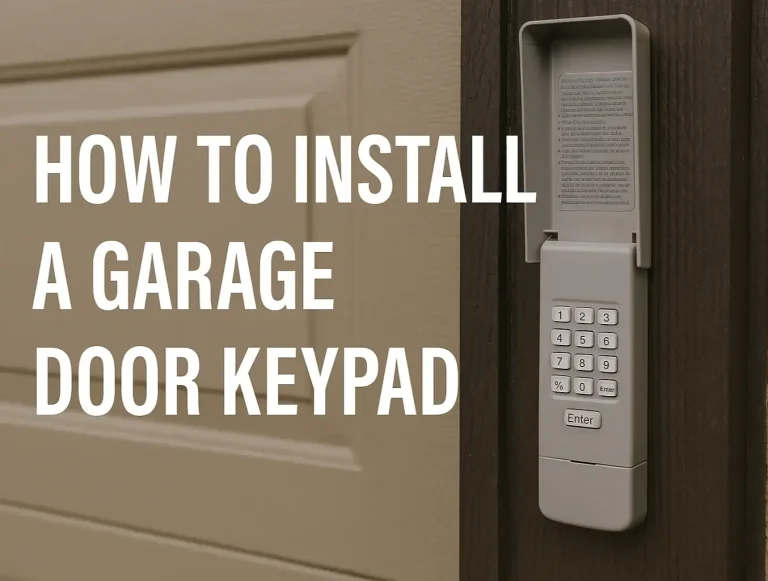
How to Install a Garage Door Keypad: Quick DIY Setup
Remotes keep vanishing between car seats and couch cushions. If that sounds familiar, it’s time to go remote-free. A wireless keypad with a simple 4-digit PIN lets everyone in without hunting for clickers or handing…
Published Date: Oct 22, 2025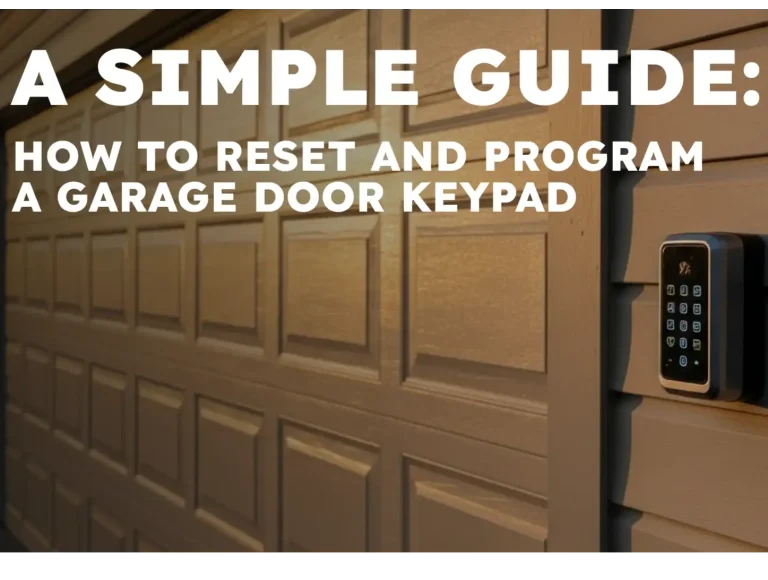
A Simple Guide: How to Reset and Program a Garage Door Keypad
You just got the keys to a new place and the keypad code didn’t come with the house, so you’re googling “how to reset my garage door keypad.” The process is simple, but it starts in an unexpected place: the “Learn”…
Published Date: Nov 10, 2025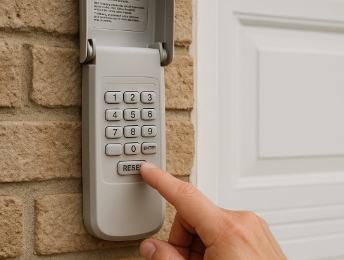
How to Change Battery in Garage Door Opener Keypad
If your keypad isn’t responding, the backlight doesn’t flash, or it only works when you use the remote, you’re probably asking yourself why your garage door keypad is not working . Most of the time, the fix is simple…
Published Date: Jun 20, 2025