





The Cypress Homeowner’s Guide to Garage Door Repair
Published: Feb 12, 2026
It’s a sound every homeowner in Cypress, TX knows and dreads. That sudden, jarring BANG! from the garage. Or maybe it’s a persistent, grinding squeal that announces your arrival and departure to the entire neighborhood. Perhaps your garage door has simply decided to stop listening altogether, leaving you stuck in the driveway.
When your garage door acts up, it’s more than an inconvenience; it’s a disruption to your daily life and a potential safety concern. You’re suddenly faced with a host of questions: What’s wrong with it? Can I fix it myself? How much is this going to cost?
You’re not alone in asking these questions. Most homeowners only think about their garage door when something goes wrong. This guide is your friendly first step—your “coffee chat” with an expert—to demystify your garage door system, help you diagnose common issues, and empower you to make confident decisions.
Foundation: The 5-Minute Guide to Your Garage Door System
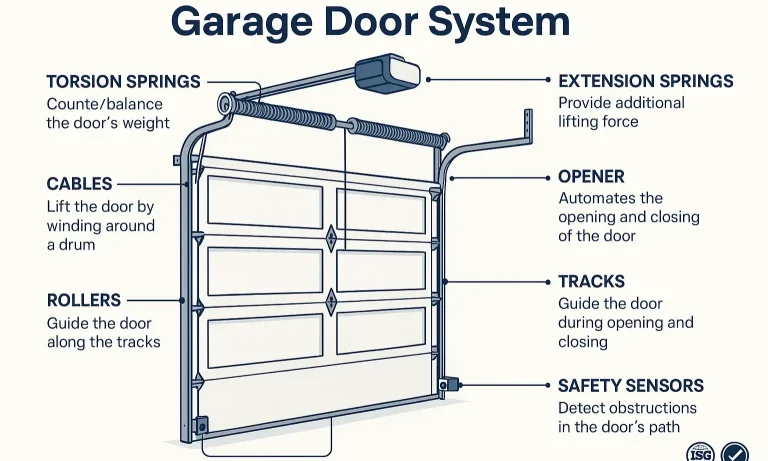
Before you can understand the problem, it helps to know the players. Your garage door is a surprisingly sophisticated system of interconnected parts working in harmony. Let’s break down the main components.
- The Springs (The Muscle): These are the true heavy lifters. Whether you have large torsion springs on a bar above the door or long extension springs running alongside the tracks, their job is to counterbalance the door’s immense weight, allowing the opener to lift it easily. They are under extreme tension and are the most dangerous part of the system.
- The Opener (The Brain): This is the motorized unit that controls the door’s movement. It receives the signal from your remote and initiates the opening and closing sequence. If your door has a mind of its own, the issue often starts here.
- The Cables & Drums (The Ligaments): The cables work with the springs to lift and lower the door evenly. They wind around drums at the ends of the torsion spring bar. A frayed or snapped cable can cause the door to become crooked or fall.
- The Tracks & Rollers (The Skeleton): The metal tracks guide the door’s rollers as it moves up and down. If the tracks are bent or the rollers are worn out, you’ll hear it in the form of grinding, squeaking, and jerky movements.
- The Panels (The Face): These are the individual sections of your door. While mostly aesthetic, a dented or damaged panel can affect the door’s alignment and insulation. A professional can often perform a garage door panel repair without replacing the entire door.
- The Safety Sensors (The Eyes): These two small boxes near the bottom of the track on either side of your door project an invisible beam. If anything breaks this beam while the door is closing, the door will automatically reverse. This is a critical safety feature.
Building: Common Problems & What to Do
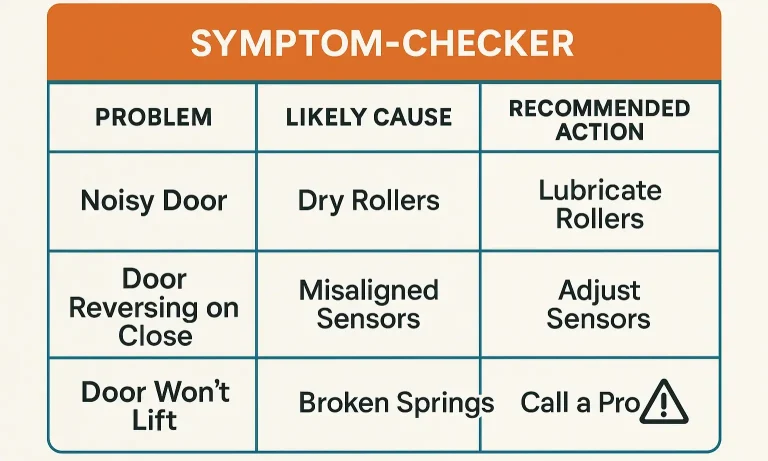
Garage Door Troubleshooting: DIY Fix or Call a Professional?
Now that you understand the key parts of your garage door system, let’s connect them to the problems you might be experiencing. Use this quick symptom guide to help identify likely causes and determine whether it’s safe to handle yourself or time to call an expert.
Loud Grinding or Squeaking
This is often caused by worn rollers or a lack of lubrication. You can safely apply a silicone-based garage door lubricant (avoid WD-40) to rollers, hinges, and springs. If rollers appear cracked or heavily worn, contact a professional for replacement.
Door Reverses Before Closing
Misaligned or blocked safety sensors are usually the issue. Check for obstructions, clean the lenses, and ensure both sensor lights are solid (not blinking). Minor adjustments are safe to attempt.
Remote Works, but Wall Panel Doesn’t (or Vice Versa)
This may indicate dead batteries, loose wiring, or a faulty control unit. Replace remote batteries and inspect visible wiring. If the issue persists, schedule professional service.
Loud Bang and Door Won’t Open
This typically signals a broken spring. Do not attempt to lift the door. Springs are under extreme tension and can cause serious injury. Call a professional immediately.
Door Is Crooked or Off-Track
A snapped cable or bent track can make the door unstable and dangerous. Avoid operating it and contact a technician right away.
Opener Motor Runs but Door Doesn’t Move
This may involve a stripped gear or disconnected trolley. You can check the emergency release cord, but internal opener repairs require professional expertise.
Mastery: The Cypress Climate & Your Garage Door
Living in Cypress means dealing with specific environmental challenges: intense humidity and the ever-present threat of hurricane season. Proactive maintenance is key.
- Fighting Humidity: The high humidity in our area can accelerate rust on springs, hinges, and tracks. A regular lubrication schedule (every 3-4 months) is your best defense. It keeps parts moving smoothly and creates a protective barrier against moisture.
- Hurricane Preparedness: Before a storm, your garage door is often the largest and most vulnerable opening in your home. Ensure your door is hurricane-rated or consider having it reinforced. Perform a balance test: disconnect the opener and lift the door manually. It should stay open halfway up. If it falls shut or flies open, the springs need professional adjustment to handle high winds.
Action: When to Call Us
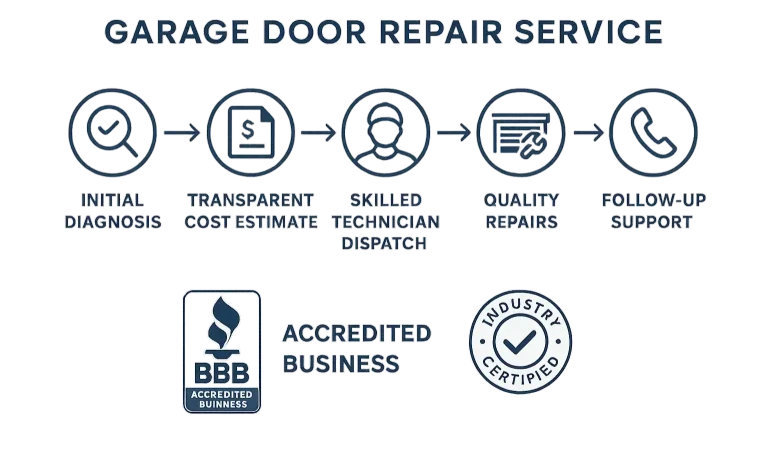
You’ve done your troubleshooting, and you’ve determined the problem is beyond a simple DIY fix. This is where trust and expertise matter. Choosing the right company for garage door repair in Cypress, TX ensures the job is done safely and correctly the first time.
A professional service call should be a transparent and stress-free process:
- Diagnosis: A certified technician will perform a full inspection of your system to confirm the issue and identify any underlying problems.
- Clear Explanation: They will explain the problem to you in plain English, show you the damaged parts, and outline the recommended repair options.
- Upfront Pricing: You should receive a clear, itemized quote before any work begins. There should be no hidden fees.
- Expert Repair: The technician will use high-quality parts and proper tools to perform the repair safely and efficiently.
- Safety Check & Testing: After the repair, they will test the door’s balance, safety reversal system, and overall performance to ensure everything is working perfectly.
Frequently Asked Questions
How do I know if I need a new garage door spring?
The most dramatic sign is a loud “bang.” You will also see a visible gap (about 2 inches) in the spring coil. If the spring is broken, your door will be extremely heavy and the opener will likely be unable to lift it.
Can I replace just one damaged panel on my garage door?
Yes, in many cases you can. The feasibility depends on the age, model, and condition of your door. A technician can help source a matching panel and ensure it’s installed correctly to maintain the door’s structural integrity.
Are smart garage door openers worth it?
For many homeowners, yes. The ability to open, close, and monitor your garage door from your phone offers incredible convenience and security. If you’re considering an upgrade, you can learn about the best smart garage door opener options to see which features fit your lifestyle.
How often should I have my garage door serviced?
We recommend a professional tune-up and safety inspection annually. This preventative maintenance helps catch small issues before they become major, expensive problems—especially important with our local climate.
My whole garage door needs to be replaced. What’s the next step?
If a repair isn’t cost-effective, a full replacement is the best option. The first step is to schedule a consultation for a new garage door installation. A professional can walk you through materials, styles, and insulation options to find the perfect fit for your home and budget.
You May Also Like
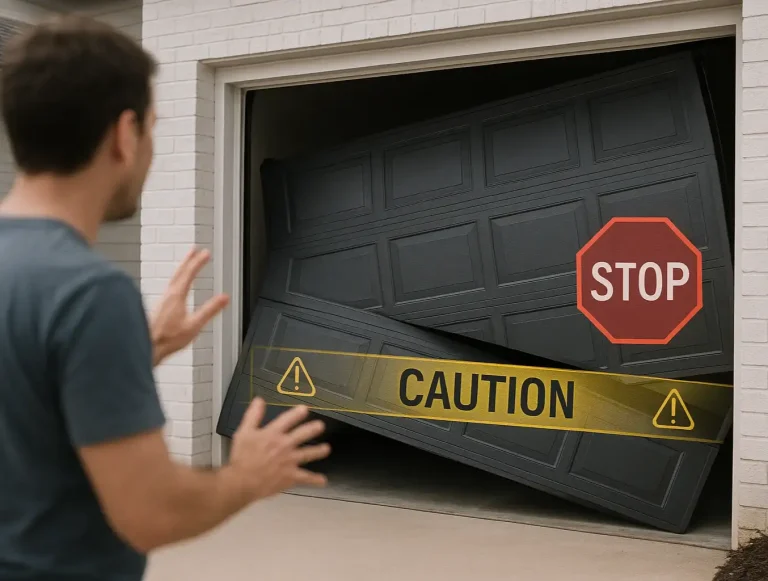
What to Do When Your Garage Door Falls Unexpectedly
It’s a sound you’ll never forget: a sudden, jarring crash from the garage that makes your heart leap into your throat. You rush to look and see the worst—your garage door, a solid, dependable part of your home just…
Published Date: Jan 16, 2026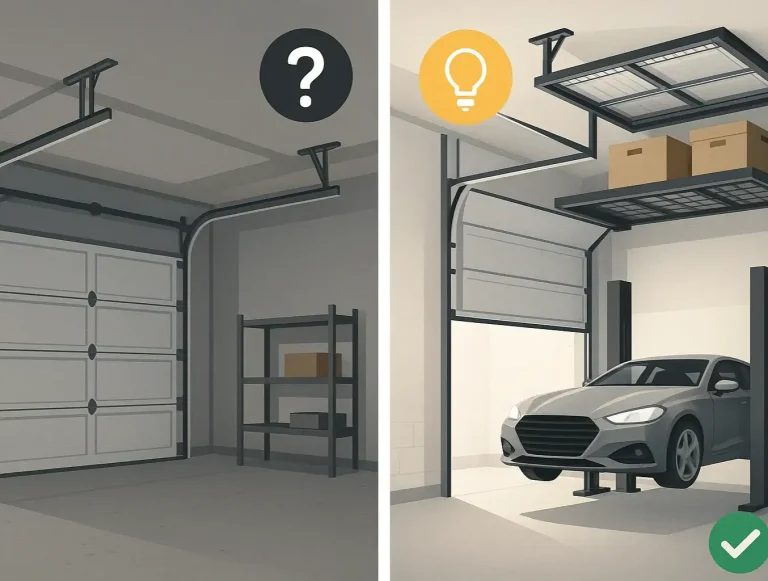
Converting a Standard Track Garage Door to a Vertical Lift System
Ever look up at the ceiling of your garage and see wasted space? That sprawling network of horizontal tracks from your standard garage door eats up a massive amount of overhead real estate—space that could be used…
Published Date: Jan 15, 2026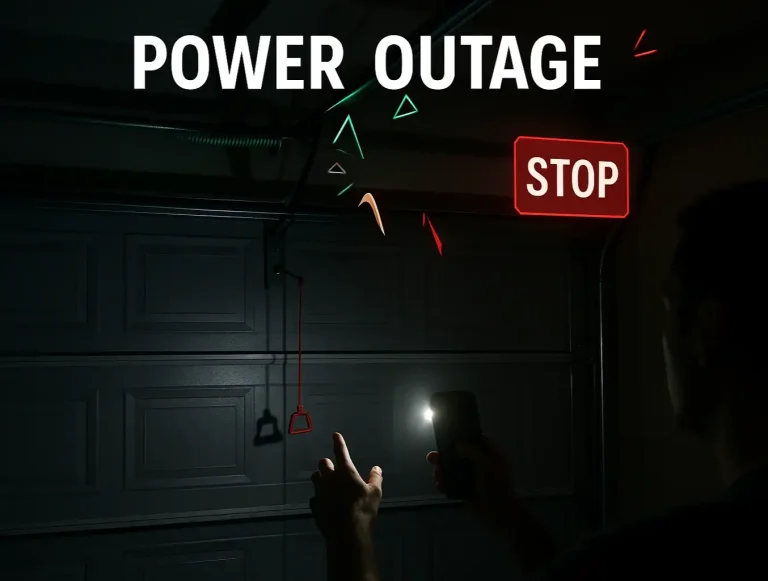
The Ultimate Safety Guide to Manually Opening Your Garage Door
The power goes out. You hear the faint hum of electronics shutting down, and then silence. You need to get your car out of the garage, but the button on the wall is useless. That red cord hanging from the opener…
Published Date: Jan 14, 2026