





The Greenwich Homeowner’s Guide to Garage Door Repair
Published: Feb 5, 2026
It often starts with a sound you can’t ignore—a loud bang, a grinding screech, or the unsettling silence when you expect the familiar hum of the opener. A broken garage door is more than an inconvenience; it’s a disruption to your routine and a sudden, stressful question mark hanging over your home’s security.
If you’re like most Greenwich homeowners, your first thought is, “What do I do now?” followed quickly by, “What is this going to cost me?” You’re in the right place. This guide is designed to walk you from that initial moment of panic to a confident, informed decision. We’ll demystify the repair process, shed light on local costs, and empower you to choose the right professional for the job.
Your Garage Door is Broken. Here's What to Do First.
Before you pick up the phone, taking a few key steps can ensure your safety and help diagnose the problem. A garage door system is under extreme tension, and mishandling it can be dangerous.
The Homeowner’s Safety Checklist:
- DON’T Touch Broken Springs or Cables: These components hold the door’s weight (often hundreds of pounds). A sudden release of tension can cause serious injury. This is a job strictly for professionals.
- DO Check the Power: Is the opener plugged in? Did a circuit breaker trip? Sometimes the simplest explanation is the right one.
- DON’T Try to Force the Door: If the door is stuck, trying to manually open or close it can cause more damage. The problem could be with the tracks, springs, or rollers, and forcing it will only worsen the situation.
- DO Disconnect the Opener: If you need to operate the door manually and it’s safe to do so (i.e., the spring isn’t broken), pull the red emergency release cord. This disengages the opener, but be aware: if the spring is broken, the door could slam shut.
- DO Secure Your Home: If the door is stuck open, it’s a security risk. Block the entrance from the inside if possible and don’t leave it unattended. A trustworthy garage door company in Greenwich should offer 24/7 emergency services to secure your home quickly.
Is It the Spring, the Opener, or Something Else? A Visual Guide
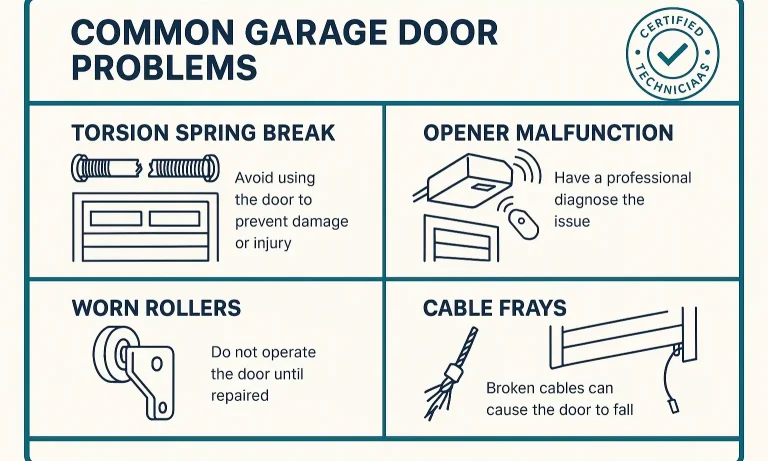
Understanding what went wrong is the first step to understanding the solution. While a professional diagnosis is essential, recognizing the common culprits can help you communicate the issue clearly.
Common Culprits & Their Symptoms:
- Broken Springs: The most common repair. You might have heard a loud “bang” from the garage. The door will feel incredibly heavy, and the opener will likely struggle or fail to lift it. If you suspect a broken garage spring repair is what you need, it’s critical to call a professional immediately due to the high tension involved.
- Malfunctioning Opener: The motor runs, but the door doesn’t move. You might hear clicking or humming noises. The remote or wall switch might be unresponsive. Sometimes, the issue is as simple as misaligned safety sensors, but it could also be a stripped gear or a faulty circuit board. An unresponsive motor can be frustrating, especially if you see the garage door opener off tracks and disconnected from the door.
- Frayed or Snapped Cables: The cables work with the springs to lift the door. If one snaps, the door will likely look crooked or lopsided as it tries to move. This creates a dangerous, unstable situation.
- Damaged Rollers or Bent Tracks: A grinding, scraping, or squeaking noise often points to worn-out rollers or a bent track. The door might move unevenly or get stuck partway.
How to Hire a Pro in Greenwich: 7 Critical Questions to Ask
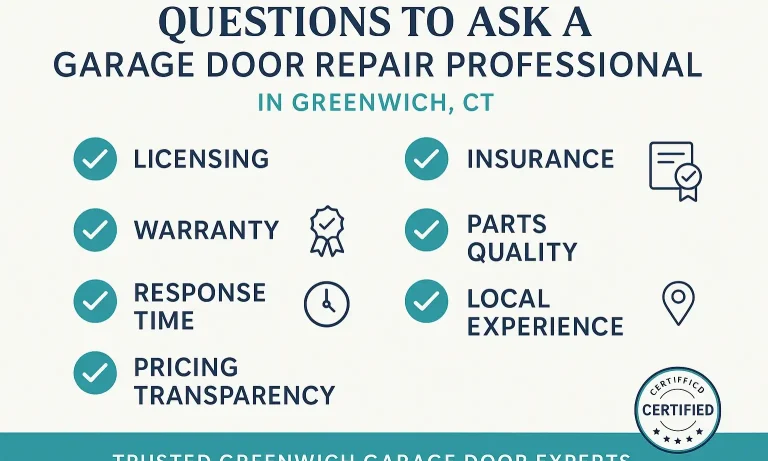
Choosing the right technician is just as important as the repair itself. Not all providers are created equal. Arm yourself with these questions to ensure you’re hiring a trustworthy and qualified professional.
- “Are you licensed and insured in Connecticut?” This is non-negotiable. Insurance protects you and your property in case of an accident.
- “What does your warranty cover?” Ask about the warranty on both parts and labor. A reputable company will stand behind their work.
- “Can you provide a detailed, itemized quote?”Avoid vague, flat-rate quotes. You should know exactly what you’re paying for—parts, labor, service fees, etc.
- “What kind of parts will you be using?” Ask about the quality and lifecycle of the springs or rollers they plan to install.
- “Is your company based locally in the Greenwich area?” Choosing a local company often means faster response times and a better understanding of community needs. A truly local garage door company builds its reputation on word-of-mouth.
- “Do you have employee technicians or do you use subcontractors?” Companies with full-time, trained employees often provide more consistent and reliable service.
Your Path to a Safe and Reliable Garage Door
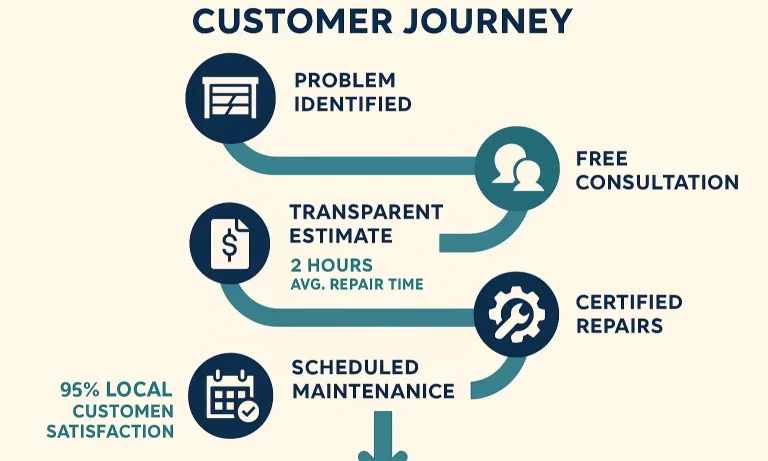
Navigating a garage door repair doesn’t have to be a stressful ordeal. By understanding the basics, being aware of the costs, and asking the right questions, you can move forward with confidence. At Up & Down Garage Doors, we believe an educated customer is our best customer. We built our family business on a foundation of trust, transparency, and top-tier service.
From your first call to our 24/7 support line to the final safety check from our licensed technician, our goal is to solve your problem efficiently and honestly. We provide clear, upfront pricing and use high-quality parts to ensure your repair lasts.
If you’re ready for a stress-free solution, we’re here to help. You can learn more about our garage door repair services in Greenwich, CT, or call us anytime for immediate assistance.
Frequently Asked Questions
Can I repair my own garage door spring?
We strongly advise against it. Garage door springs are under immense tension and can cause severe injury or even death if handled improperly. This is one of the most dangerous DIY home repairs. Always hire a trained professional.
Should I repair or replace my garage door?
If the issue is a single component like a broken spring or opener on an otherwise healthy door, a repair is usually the most cost-effective solution. However, if the door has multiple failing parts, significant panel damage, or is over 15-20 years old, replacement might be a better long-term investment in safety, energy efficiency, and curb appeal.
How long does a typical garage door repair take?
Most common repairs, such as replacing springs, cables, or an opener, can be completed by a skilled technician in one to two hours.
How often should I get my garage door serviced?
We recommend a professional tune-up and safety inspection once a year. This preventative maintenance can catch small issues before they become major, expensive problems and can significantly extend the life of your door and opener.
Why does my garage door reverse before hitting the floor?
This is most often caused by the safety sensors near the bottom of the door tracks being misaligned or obstructed. Check to ensure nothing is blocking their path and that the small lights on both sensors are solid (not blinking). If that doesn’t solve it, the opener’s force settings may need adjustment by a pro.
You May Also Like
Repair vs. Replace: When a Damaged Garage Door Can Be Fixed
After a fast-moving hailstorm dents an aluminum sectional door, the weather seal may still look tight, the opener may run, and the rollers may stay in the tracks. The first question most homeowners ask is, “Can a…
Published Date: Nov 3, 2025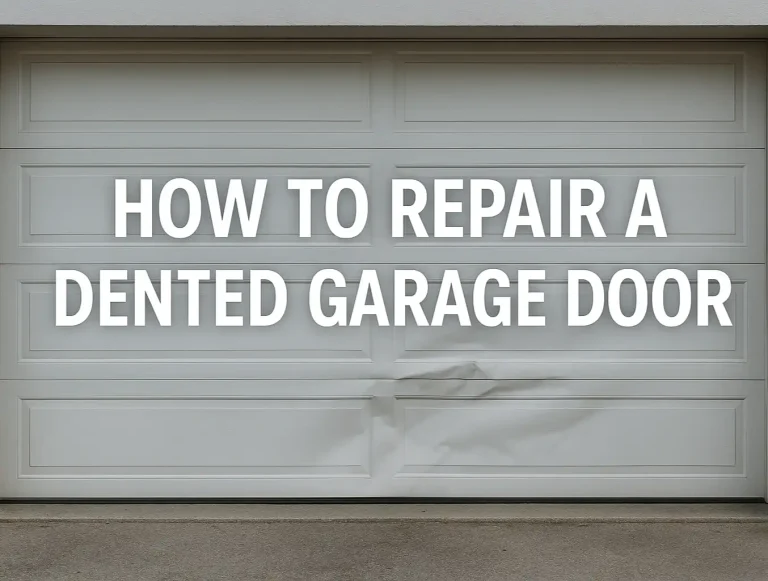
How to Repair a Dented Garage Door: Tips from Professionals
The kids are playing outside, and a ball glances off the panel. Later, the SUV’s bumper taps the door on the way in. Now there’s a crease you can spot from the street — and it might be more than cosmetic. If you’re…
Published Date: Oct 20, 2025
How to Fix a Garage Door Panel: Repair Damaged Sections
A damaged garage door panel isn’t just cosmetic — it can affect how your entire door system operates. From small dents to cracks or warping, panel issues happen for many reasons. If you’re wondering how to fix a…
Published Date: Sep 29, 2025