





Torsion Shaft Bent or Sagging: Signs, Risks, and Repair Solutions
Published: Sep 29, 2026
When you look above your closed garage door and notice the horizontal metal bar running through the center of your springs is bowing, sagging, or wobbling, your garage door system is sending an urgent warning. The torsion shaft is the literal backbone of your door’s counterbalance system. Understanding whether a sagging shaft requires a quick adjustment, a full replacement, or an upgrade to solid steel is critical to keeping your home safe and your door operating smoothly.
The Red Alert: Safety Warning & Physics of Torsion
The torsion shaft is under continuous, extreme mechanical stress. In a typical residential setup, the coiled springs wrapped around the shaft store between 200 to 400+ pounds of rotational force. If the shaft structural integrity fails, that energy is released instantly and violently.
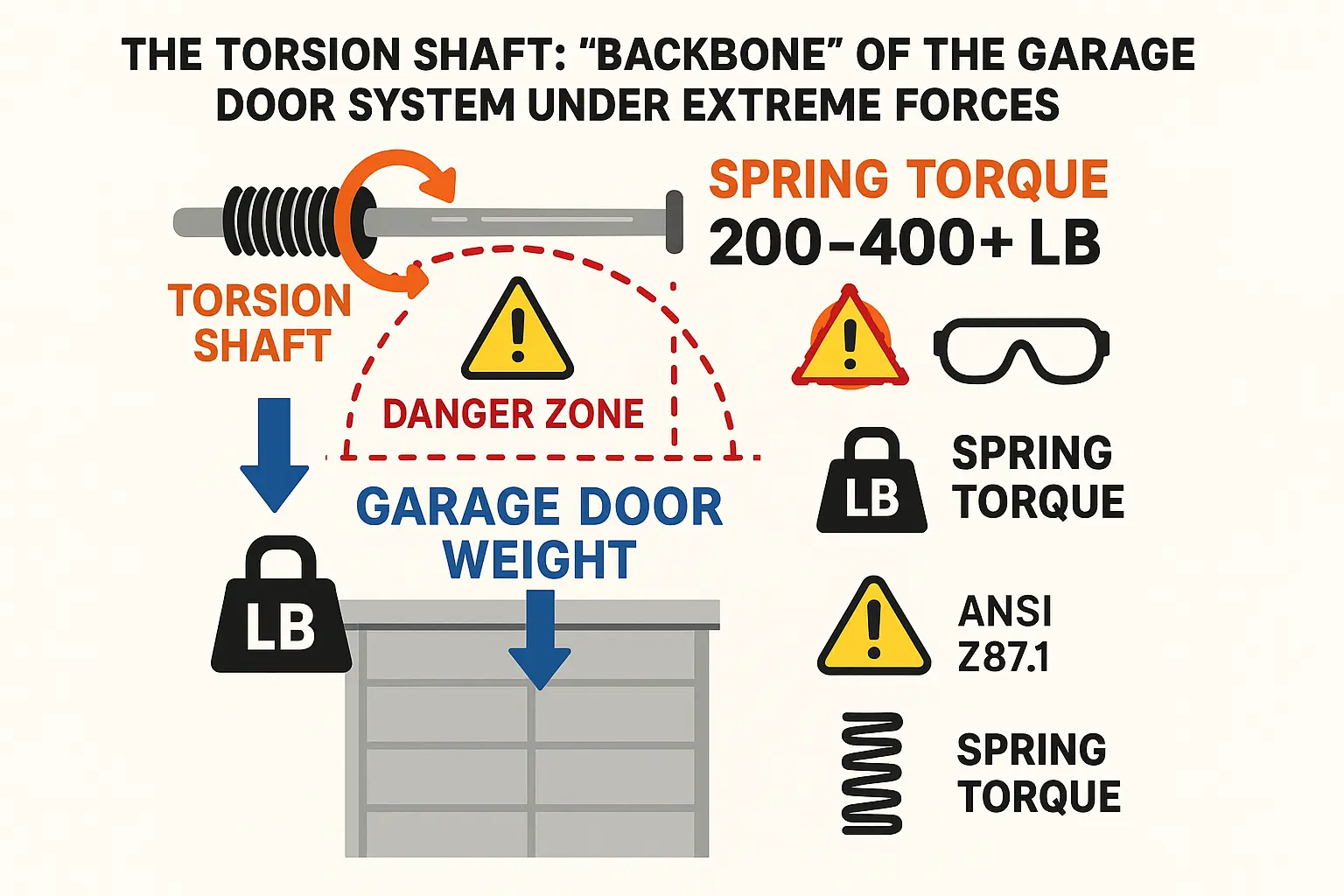
Attempting to handle this system without professional training poses severe risk of lacerations, broken bones, or worse. To understand how these forces interact to lift your door, it helps to learn how does a garage door spring work.
Furthermore, doing this work yourself carries financial risk. In states with strict contractor licensing laws, major home insurance companies have historically denied homeowner liability claims for property damage or personal injuries resulting from unlicensed, DIY structural garage door repairs.
Anatomy of a Sagging Torsion Shaft: 4 Root Causes
To find the right fix, you must first understand why the shaft began to bend. To understand how this component fits into the wider system, review the primary parts of a garage door.
- Header Lag-Screw Failure: The center bearing plate is anchored to a wooden header pad above your door. If the lag screws begin pulling out of rotting or soft wood, the center support drops, causing the shaft to sag.
- Overtightened Set Screws: When installing springs, technicians secure the winding cones to the shaft using hardened set screws. If these screws are overtightened on standard hollow tubing, they “dimple” or crimp the metal, structurally weakening the tube.
- Jackshaft Opener Torque: Mounting a high-torque side garage door opener directly to one end of a lightweight, unsupported hollow tube can twist and warp the shaft over time.
- Internal Rust and Condensation: In uninsulated garages subjected to freezing winters and humid summers, moisture accumulates inside hollow shafts, rusting them from the inside out until they buckle.
Diagnostic Checklist: Is My Torsion Shaft Actually Bent? (The 3-Step Test)
You do not need to touch the high-tension components to run a basic diagnostic check. Follow these three safe, floor-level observation steps.
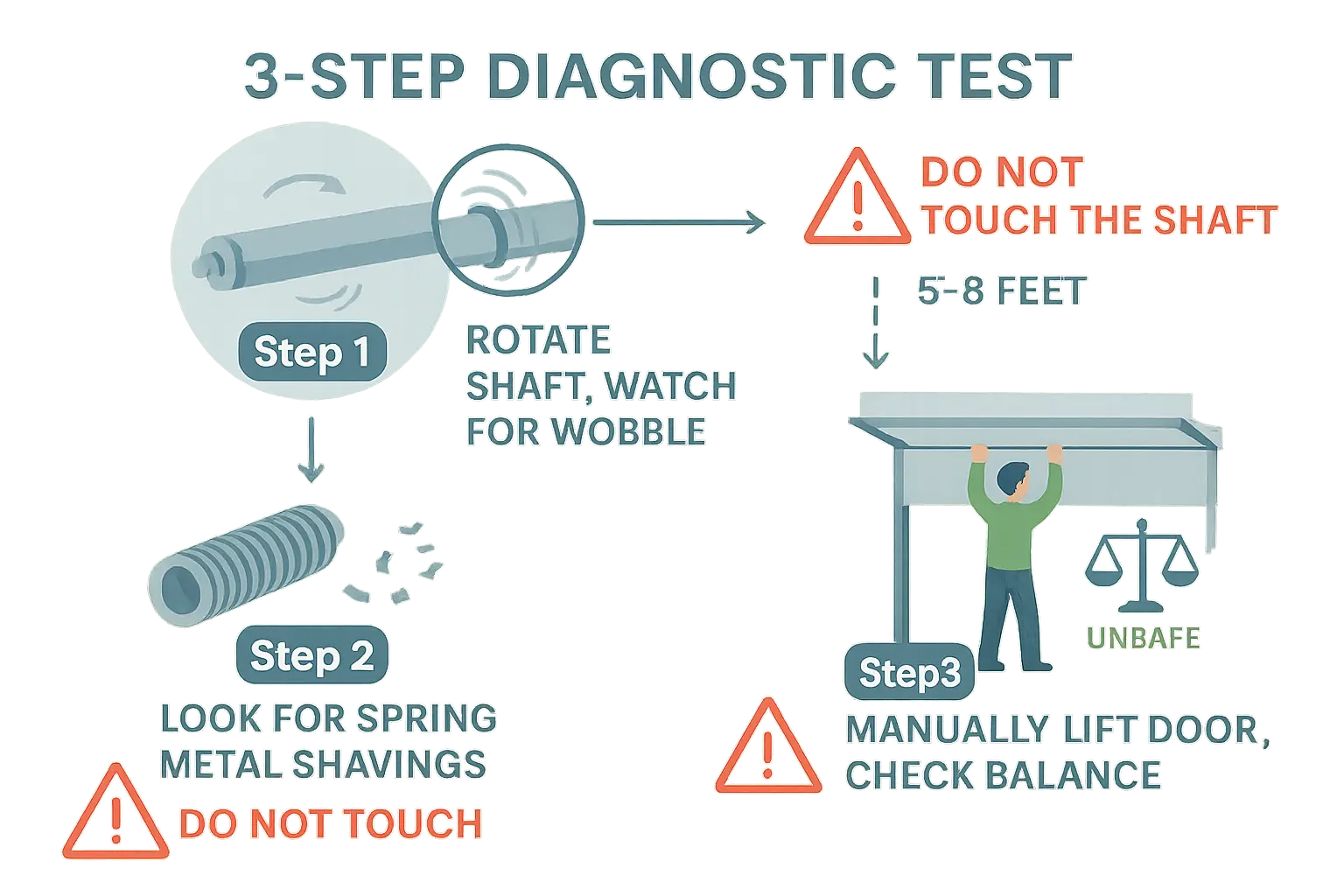
- Step 1: The Eccentric Wobble Visual Check: Stand a safe distance back and operate your door. Watch the torsion shaft as it rotates. If you notice a visible “wobble” or elliptical rotation rather than a perfect, concentric spin, the shaft is bent.
- Step 2: The Spring Chafing Test: Inspect the area directly beneath the torsion springs. If you see metallic shavings or fine black powder, your springs are grinding against a warped shaft. This friction can reduce the lifespan of high-cycle springs by 50% to 75%, eventually causing broken garage door spring symptoms.
- Step 3: The Manual Balance Test: Pull the red emergency release cord to disconnect your opener. Lift the door halfway by hand. If it is difficult to lift or falls quickly, you may have an unbalanced garage door. A warped shaft binds in its bearings, mimicking the feel of a broken spring and putting your door at risk of slipping off its tracks. If this happens, you will need to learn how to put garage door back on track.
The Engineering Showdown: Hollow Tubing vs. Solid Keyed Steel Shafts
If your shaft is structurally compromised, you must decide between replacing it with a standard hollow tube or upgrading to a solid keyed steel shaft.
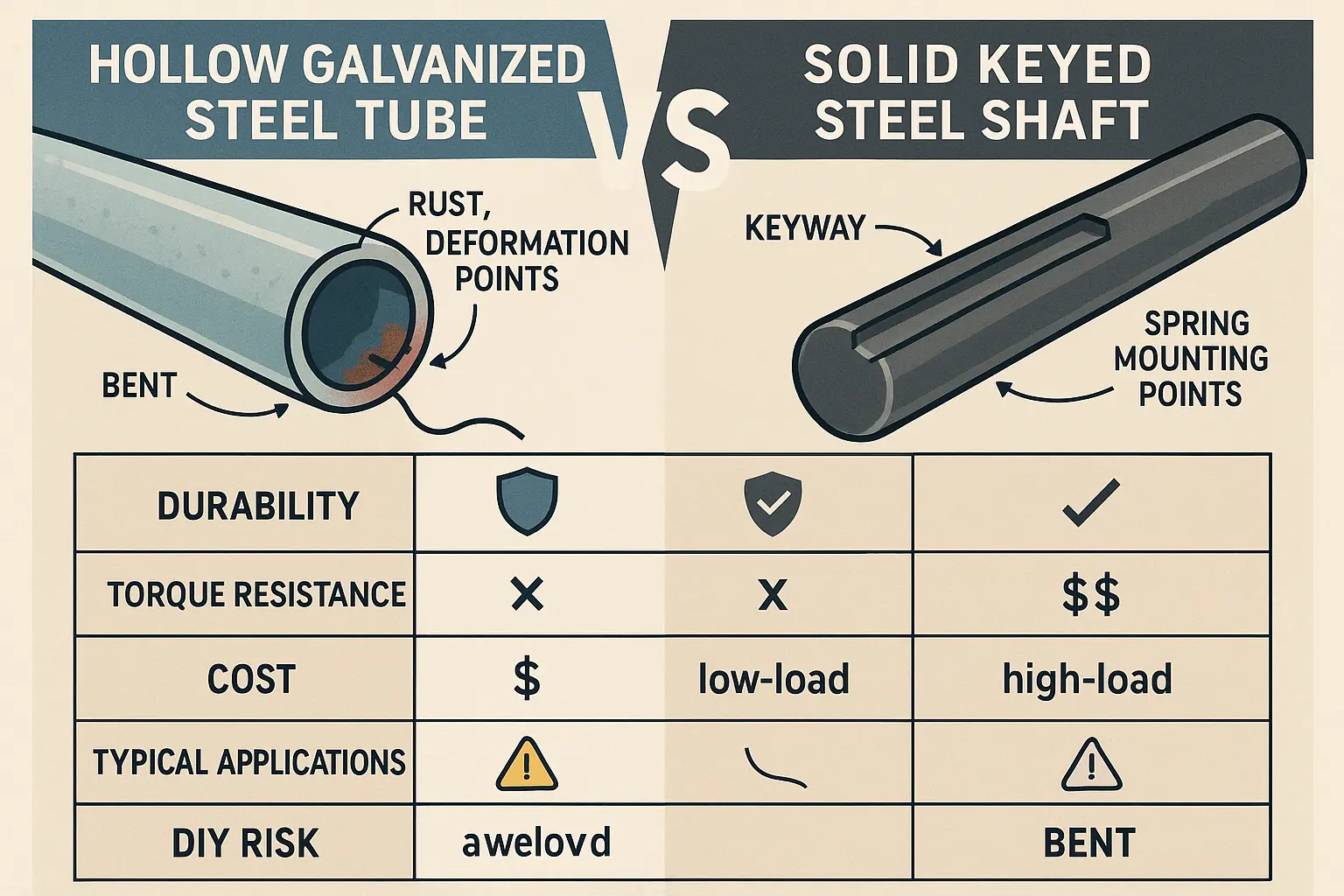
| Feature | Hollow Galvanized Tubing (Standard) | Solid Keyed Cold-Rolled Steel |
|---|---|---|
| Material Strength | Standard structural yield strength | Maximum yield and ultimate tensile strength |
| Deflection Resistance | Prone to sagging under heavy dual-springs | Virtually impervious to bending or sagging |
| Set Screw Tolerance | Prone to structural “dimpling” | Highly resistant to indentation |
| Opener Compatibility | Best for standard overhead trolley openers | Essential for side-mount/jackshaft openers |
| Vulnerable Parts | Easily crushed at bearing connection points | Integrates seamlessly with heavy duty garage door drum repair needs |
Upgrading to a solid keyed shaft is highly recommended for custom wood carriage doors, insulated double-car doors, or any system utilizing a jackshaft opener. Doing so ensures your system remains stable during future how to adjust garage door springs procedures.
Repair Matrix: Straighten vs. Replace vs. Upgrade
Many homeowners ask if they can simply take a hammer or pipe straightener to a bent shaft. The answer is absolutely not.
From a metallurgical standpoint, once steel bends, it undergoes “work hardening.” Bending it back makes the metal structurally brittle at the point of deflection. Under the continuous torque of a torsion spring, a straightened shaft is highly prone to catastrophic snapping.
For safety, a bent shaft must be replaced. A DIY replacement costs between $50 to $120 for parts and specialized tools, but carries extreme physical risk. Professional replacement generally ranges from $180 to $250. When you weigh the minor savings against the physical danger and the risk of voiding your home insurance, professional garage door spring maintenance and shaft replacement is the smartest, safest path forward.
Frequently Asked Questions
Can I temporarily use my garage door with a bent torsion shaft?
No. Operating a door with a bent shaft causes the lift cables to wind unevenly on the drums. This can cause the door to bind in the tracks, slip off its cables, or fall unexpectedly, damaging your property or causing severe injury.
Why did my side-mounted opener bend the torsion tube?
Side-mounted openers apply direct rotational torque to one end of the shaft rather than pulling from the middle. If your system uses a standard hollow tube without an extra support bearing installed directly adjacent to the opener, the localized torque will slowly twist and bend the tube.
Does homeowner’s insurance cover repairs for a DIY garage door accident?
If a DIY repair goes wrong and causes property damage or personal injury, many insurance carriers will deny the claim if the work was performed by an unlicensed individual in a state or municipality that requires licensed contractors for structural garage door work. Always hire a licensed professional to protect your home and liability coverage.
You May Also Like
The Bottom Bracket Cable Guide: Why the Bike Industry’s Smallest Screw Causes the Biggest Failures
Published Date: Sep 28, 2026
Garage Door Cable Frayed at the Bottom Bracket: Why It Happens
Published Date: Sep 23, 2026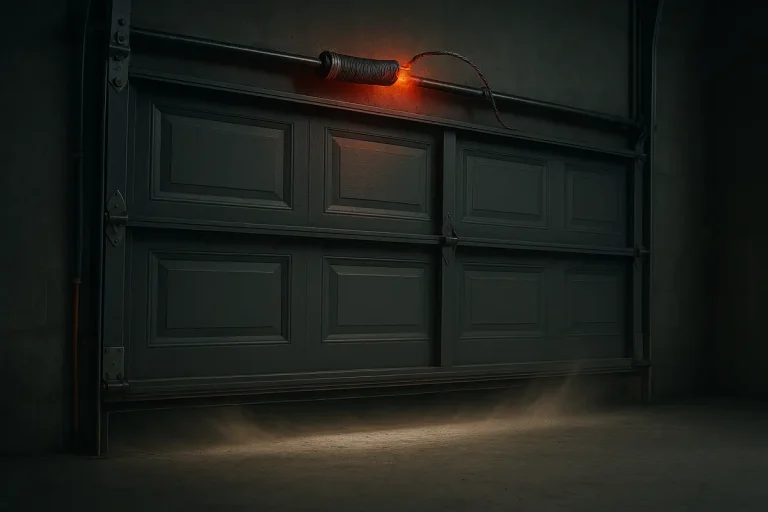
Garage Door Slamming Shut or Dropping Fast: What It Says About Springs and Cables
Published Date: Sep 23, 2026