





Wall-Mount Garage Door Opener: When It Fits a Connecticut Garage
Published: Nov 13, 2026
Replacing a garage door opener in Connecticut often comes with unique architectural hurdles. From historic colonial homes in Hartford with low-headroom basements to modern Fairfield County builds designed for car lifts and overhead storage, traditional central trolley openers don’t always fit the bill.
Wall-mount garage door openers—also known as jackshaft openers—mount directly to the wall beside your garage door frame. By eliminating the central ceiling rail, these units reclaim overhead real estate, eliminate ceiling vibration, and streamline modern garage conversions. However, wall-mount units require specific structural prerequisites to function properly.
Is a Wall-Mount Opener Right for Your Connecticut Home?
Traditional overhead openers suspended from ceiling joists transmit operational motor hum into living spaces directly above. Wall-mount systems attach to the masonry or end-stiles beside the door, transferring torque directly to the door’s torsion shaft. This structural isolation reduces structure-borne acoustic vibration into living spaces above by up to 75% compared to chain-drive units and 30% compared to belt-drive models.
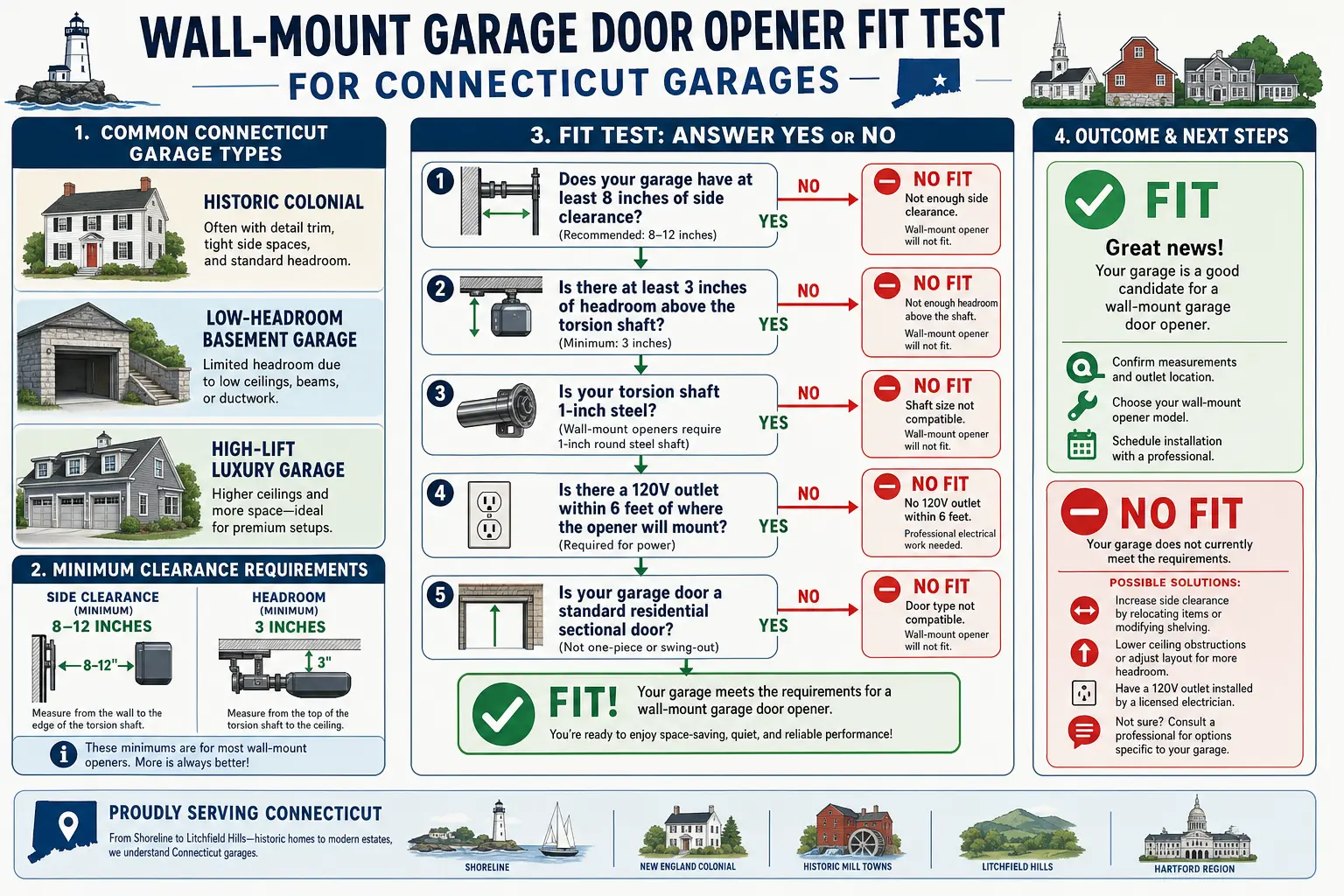 This visual checklist simplifies determining if a wall-mount garage door opener fits your Connecticut home by guiding you through critical measurements and compatibility questions for common local garage types.
Matching Jackshaft Openers to CT Garage Architecture
Connecticut home designs present distinct layout conditions:
- Historic Colonials and Cape Cods: Built with low-headroom basement garages, exposed wooden joists, or HVAC ducting running directly across the ceiling. Standard overhead openers block access or simply cannot fit. A wall-mount opener frees up headroom, making it a powerful solution when exploring options for a low headroom garage door opener.
- Suburban Homes with Bedrooms Above: Common across New Haven and Fairfield counties, where master suites sit directly over attached garages. The acoustic dampening of wall-mounted drives keeps late-night door cycles quiet.
- High-Ceiling Custom Builds: High-lift door conversions designed for vehicle stackers or overhead rack storage benefit from clear, open ceilings free of hanging motors and long metal rails.
The 4-Step Technical Compatibility Audit
Before committing to a wall-mount system, verify these mechanical requirements.
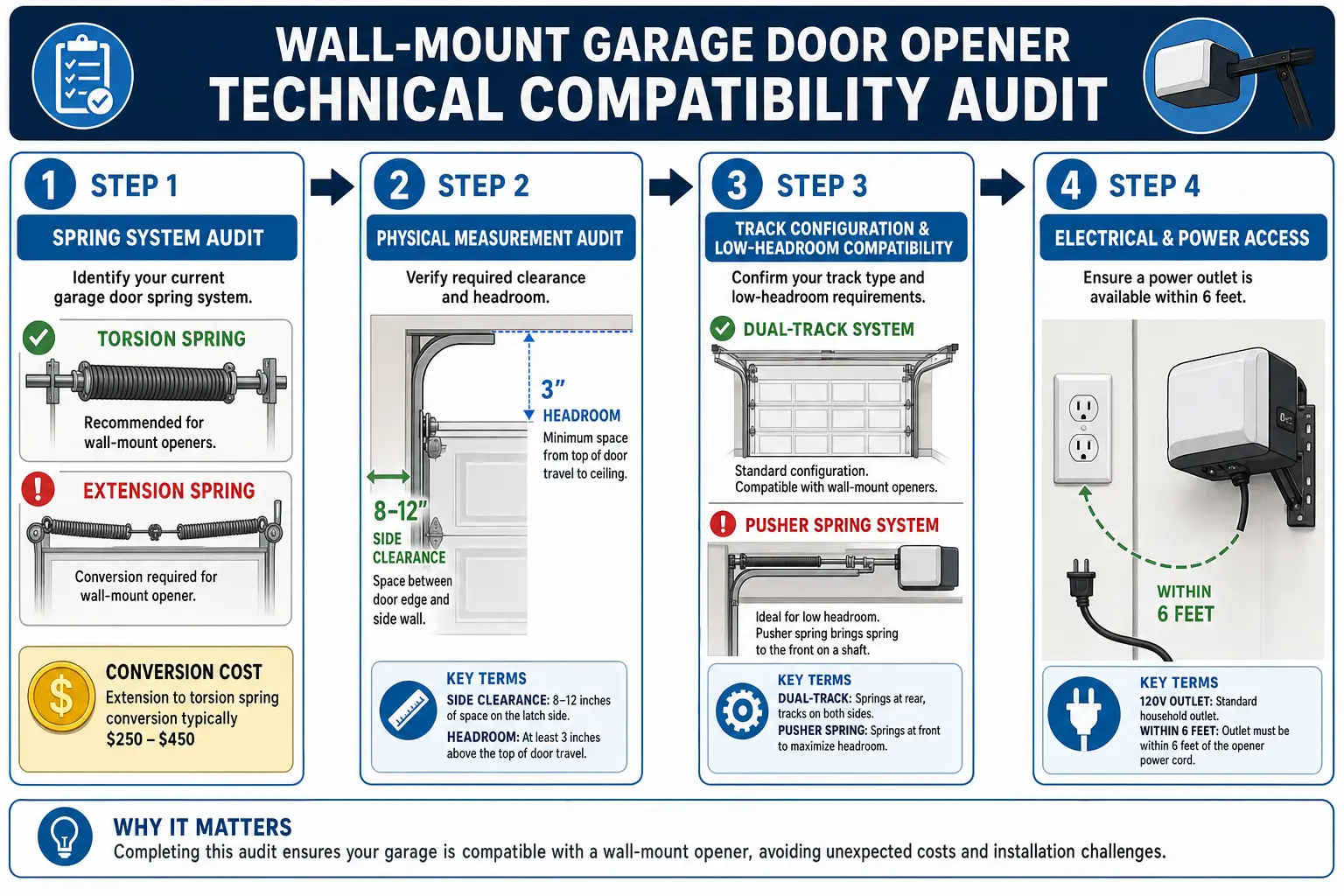 This process infographic clarifies the four essential audit steps for evaluating if your garage setup meets technical criteria for installing a wall-mount door opener, making complex details approachable.
- Spring System Verification: Jackshaft openers require a standard front-mount torsion spring system with a 1-inch diameter solid or hollow steel shaft. They are physically incompatible with side extension springs or rear-mount torsion setups without professional conversion.
- Physical Clearance Standards: You need a minimum of 8 inches of clearance on one side of the door (12 inches is ideal for future servicing) and at least 3 inches of clear headroom above the center of the torsion shaft.
- Track Pitch and Low-Headroom Doors: Because wall-mount openers turn the torsion shaft directly rather than pulling the door back, low-headroom dual-track configurations need proper door weight distribution. Installing push-down springs prevents cables from slipping off the drums when initiating the closing cycle.
- Electrical Proximity: The unit requires a grounded 120V outlet within 6 feet of the mounting location.
Evaluating these criteria helps determine if upgrading to the best wall mount garage door opener suits your space.
Connecticut Winter Performance and Storm Readiness
Sub-zero New England winter temperatures stiffen garage door track grease and contract spring wire, increasing resistance during operation. Jackshaft systems utilize electronic cable tension monitors that detect slack instantly. Proper spring balancing prevents winter cable throw when cold doors resist movement.
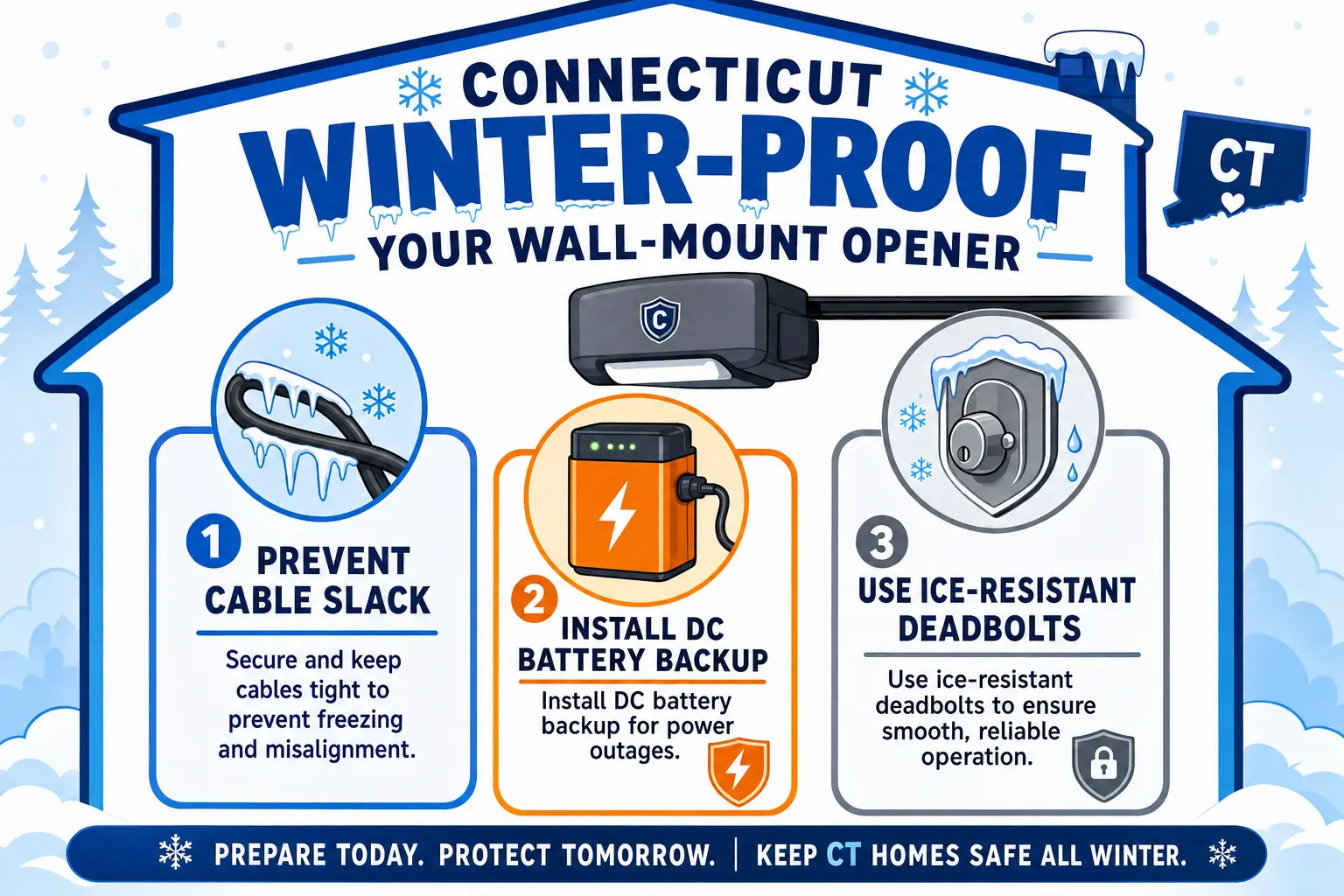 This visual mnemonic helps homeowners remember the key cold-weather maintenance steps to keep their wall-mount garage door opener operational during Connecticut winters and ice storms.
Coastal Nor’easters and winter ice storms frequently disrupt local grid power. Selecting a system equipped with an integrated garage door opener battery ensures 20 to 50 complete emergency operation cycles when utility power drops out.
Cost Expectations: Wall-Mount vs. Overhead Belt Drives
Evaluating the financial commitment involves balancing hardware cost against long-term operational benefits:
| Feature / Metric | Traditional Ceiling Belt-Drive | Wall-Mount Jackshaft Opener |
|---|---|---|
| Average Installed Cost | $350 – $650 | $700 – $1,400 |
| Side Wall Clearance Needed | None | 8″ – 12″ on shaft side |
| Headroom Above Shaft | 2″ – 3″ track clearance | 3″ shaft clearance |
| Overhead Space Restoration | Low (Rail blocks ceiling) | High (Ceiling completely open) |
| Vibration Reduction | Baseline | 75% quieter than chain drive |
| Spring System Compatibility | Extension & Torsion | Torsion Shaft Only (1″ steel) |
While initial investment for wall-mount units runs higher due to precise mounting requirements and potential spring conversions, the overhead storage utility and noise isolation deliver strong long-term value.
Frequently Asked Questions
Can I install a wall-mount opener on a door with extension springs?
No. Wall-mount jackshaft openers drive the door by rotating the torsion shaft. If your garage currently uses stretch-style extension springs along the upper tracks, a technician must convert your door to a front torsion spring system before installing a wall-mount unit.
What happens during a New England power outage?
Modern wall-mount openers feature DC motors with integrated battery backup systems. During grid failure, the battery power automatically engages, providing 20 to 50 full open-and-close cycles so your home remains accessible during ice storms.
Will a wall-mount opener fit if I have low ceiling joists?
Yes, as long as you meet the side clearance requirement (8 to 12 inches) and have 3 inches of space above the torsion bar. Wall-mount units eliminate central motor rail assemblies, making them ideal for garages with low joists or overhead ductwork.
Making the Right Choice for Your Garage
Choosing between a wall-mount and a premium ceiling belt-drive comes down to structural compatibility and how you intend to use your space. If your garage features a standard torsion assembly, adequate side clearance, and living space overhead, wall-mount systems offer clean aesthetics and smooth, ultra-quiet performance.
Up & Down Garage Doors brings over 15 years of family-owned field experience across Connecticut. Our licensed technicians perform complete site audits to ensure your garage door opener installation is executed cleanly, safely, and transparently.
You May Also Like

Commercial Sectional Door Section Replacement After a Truck Strike: The Evaluation Guide
Published Date: Nov 11, 2026
Extension Spring Safety Cables: Why Every Door Needs Them
Published Date: Nov 7, 2026
Frosted, Satin-Etched, and Obscure Glass: The Definitive Garage Privacy Guide
Published Date: Nov 6, 2026