





Extend the Life of Your Houston Garage Door with Proper Care
Published: Feb 16, 2026
It’s a sound every homeowner dreads. That sudden, violent BANG! from the garage that makes you jump. Or maybe it’s a slow, agonizing grind that’s been getting worse for weeks. Your garage door, the largest moving object in your home, is trying to tell you something.
Let’s be honest—most of us don’t think about our garage doors until they stop working. But understanding what’s happening behind the scenes can save you from stress, unexpected costs, and even dangerous situations.
Think of this as your friendly, over-the-coffee guide. We’ll translate the jargon, help you diagnose those strange noises, and give you the confidence to know when you can tackle a small task and when it’s absolutely time to call a professional in Houston.
Your Garage Door in 60 Seconds: The Key Players
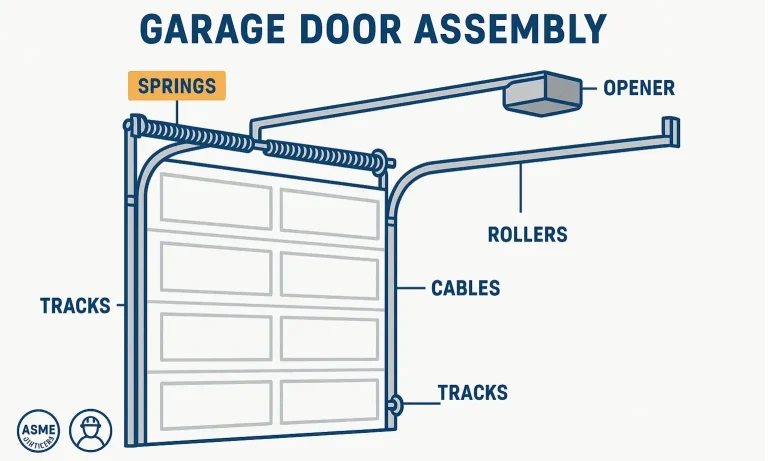
Before we dive into troubleshooting, let’s get familiar with the main components. Understanding how they work together makes diagnosing problems much easier.
- Torsion Springs: The powerhouse of the system. These tightly wound coils are mounted above the door and do the heavy lifting. They are under extreme tension and are the most dangerous part of the door.
- The Opener: The motorized unit that automates the lifting. While people often blame the opener, it’s usually just guiding the door—the springs are doing the real work.
- Rollers & Tracks: The wheels (rollers) run along a metal path (tracks) on either side of your door, guiding it up and down smoothly.
- Cables: These steel cables connect the spring system to the bottom of the door, helping to pull it up. Like springs, they are also under high tension.
The Homeowner's Diagnostic Chart: What's Your Garage Door Saying?
Every groan, squeak, and shudder has a meaning. Let’s decode the most common symptoms Houston homeowners experience.
Symptom #1: A Loud “BANG!” Followed by Silence
If you heard a noise that sounded like a firecracker going off in your garage, this is almost certainly the culprit: a broken torsion spring. The door will now be incredibly heavy, and the opener will likely be unable to lift it.
What Happened: The spring, which holds hundreds of pounds of tension, has snapped.
The Fix: This is a non-negotiable call a professional situation. A broken garage spring repair is one of the most common jobs for a technician, but attempting it yourself without the proper tools and training can lead to serious injury.
Symptom #2: Grinding, Squealing, or Scraping Noises
Constant noise during operation usually points to a lack of lubrication or worn-out parts.
Likely Causes: Worn-out rollers (especially if they are metal), dry hinges, or a garage door track that needs cleaning.
Aha Moment: The WD-40 Myth. Many people reach for a can of WD-40, but this is a mistake! WD-40 is a solvent, not a long-term lubricant. It can actually strip away existing grease and attract more dust and grime, especially in Houston’s humid climate. You need a silicone or white lithium grease-based spray specifically designed for garage doors.
Symptom #3: The Door Won’t Open or Close (or Reverses Mysteriously)
This is frustrating, but often has a simple solution.
First, Check the Simple Stuff: Are the batteries in your remote dead? Is the garage door opener unplugged or the breaker tripped?
Look at the Safety Sensors: At the bottom of your door tracks are two small “photo eyes.” If they are misaligned or blocked by an object (like a broom or a spiderweb), the door will refuse to close as a safety precaution. Check for a blinking light on one of the sensors—that’s your clue.
Opener Issues: If the simple fixes don’t work, you might be looking at an issue with the opener’s logic board or internal gears, which requires a professional diagnosis.
Symptom #4: The Door Looks Crooked or Comes Off the Track
A crooked or “derailed” door is a serious issue that makes the door unsafe and unusable.
Likely Causes: This is often caused by a broken lift cable on one side, which makes the door lift unevenly. It can also happen if a car bumps into the door, knocking the rollers out of the track.
The Fix: Don’t try to force the door open or closed. This can cause further damage. This situation often involves high-tension cables and requires a professional to safely reset the door. When panels are bent, a simple fix might not be enough, and you might need a service that specializes in garage door dent repair houston.
The Big Question: Should You DIY or Call a Houston Pro?
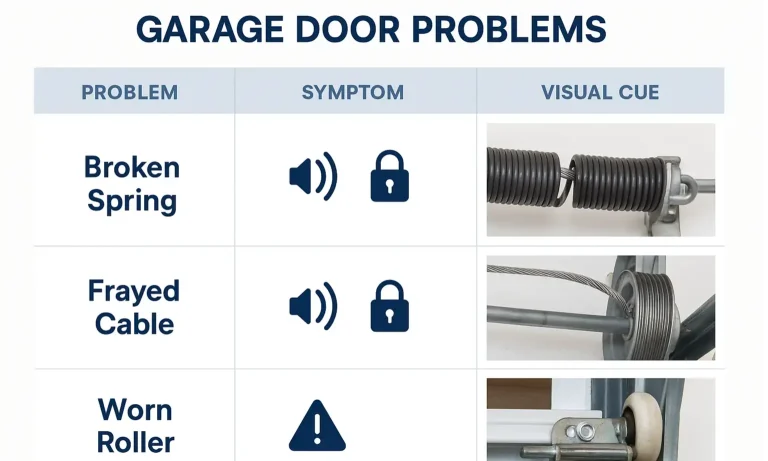
Empowerment is great, but safety is paramount. The single most important rule is: If the repair involves parts under high tension (springs or cables), always call a professional.
Here’s a simple scorecard to help you decide.
The bottom line is that while some maintenance is homeowner-friendly, most repairs require specialized tools and knowledge to be done safely and correctly. Attempting a complex repair can turn a manageable problem into a costly and dangerous one.
Your 10-Minute Annual Tune-Up: A Houston Homeowner's Checklist
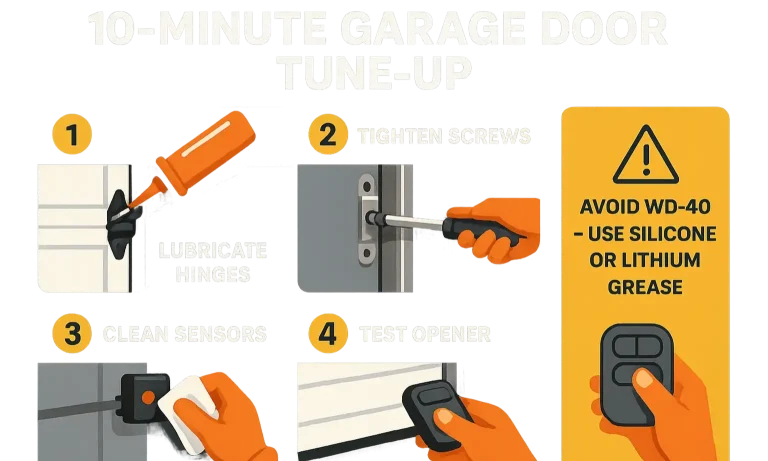
The best way to avoid surprise repairs is with a little preventative maintenance. Just 10 minutes a year can make a huge difference in the lifespan and performance of your door.
- Look and Listen: Open and close the door while watching it carefully. Does it move smoothly? Do you see any frayed cables or rusty parts? Listen for any new noises.
- Lubricate Moving Parts (The Right Way): Use a garage door-specific lubricant (silicone or white lithium grease) to spray hinges, rollers (just the stems, not the track itself), and the spring.
- Clean the Photo-Eye Sensors: Wipe the lenses of your safety sensors with a soft cloth to ensure nothing is obstructing their beam.
- Test the Door Balance: With the door closed, pull the red emergency release cord. You should now be able to lift the door manually with moderate effort. If it feels extremely heavy or flies up on its own, your springs are out of balance and need professional adjustment.
Frequently Asked Questions About Houston Garage Doors
Is it better to repair or replace my garage door?
Consider the “50% Rule.” If the cost of a repair is more than half the price of a new door, replacement is often the more sensible long-term investment, especially if the door is over 15 years old or has multiple issues like rusted sections and widespread damage.
How often should my garage door be serviced?
It’s a good practice to have a professional technician inspect and service your garage door once a year. They can spot and fix small issues before they become big, expensive problems.
What’s the best lubricant for Houston’s humid climate?
A silicone-based spray is excellent for Houston because it resists moisture and doesn’t attract as much dust and grit as heavier grease.
Can you fix just one bent panel?
Yes, in many cases a single panel can be replaced. However, the technician will need to determine if the panel model is still available and if the damage has compromised the structural integrity of the rest of the door.
Ready for the Next Step?
You’re now equipped with the knowledge to understand your garage door better than 90% of homeowners. You know what to listen for, what to check yourself, and when to pick up the phone.
Whether you’re looking for the best smart garage door opener to modernize your home, considering a full replacement from a team that knows all about Up & Down Garage Doors, or you just need a reliable expert to handle a tough repair, making an informed choice is the most important thing. Your home’s biggest moving part deserves the best care.
You May Also Like
Garage Door Lifespan: How to Make Yours Last Longer
How long do garage doors last, really? Most homeowners are surprised to learn that the average garage door lifespan ranges from 15 to 30 years, depending on maintenance, usage, and material. Whether you’re a…
Published Date: Feb 4, 2026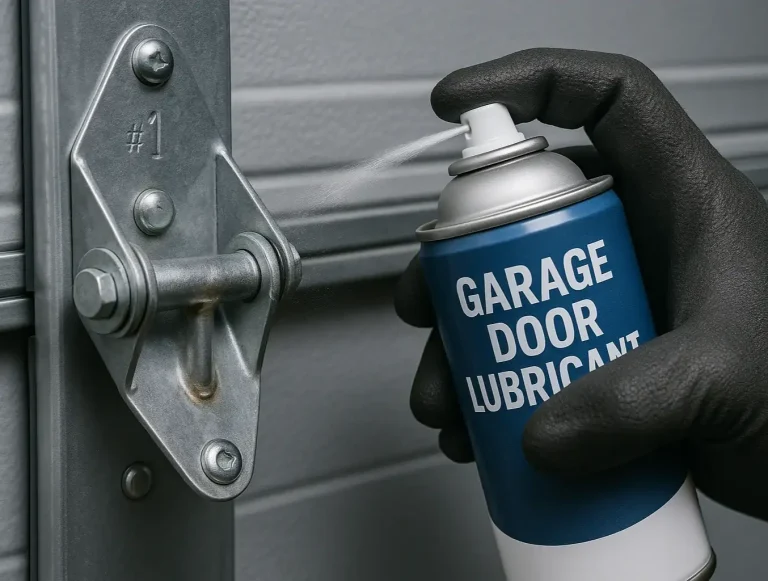
Maximizing Garage Door Hinge Lifespan
Is your garage door trying to tell you something? Those squeaks, groans, and stutters aren't just annoying noises—they're often cries for help from one of the hardest-working parts of the system: the hinges. Think of…
Published Date: Jan 28, 2026
How Extreme Weather Affects Garage Door Component Lifespan
Ever noticed how your garage door seems to have a personality of its own? It groans and complains on the coldest winter mornings and acts sluggish and stuck on the hottest summer days. It's not your imagination. The…
Published Date: Jan 22, 2026