





How to Reengage Your Garage Door Opener After a Power Outage
Published: Apr 7, 2026
The power flickers back on. The clocks are blinking, and you’re resetting the coffee maker when you hit the button for your garage door. Nothing happens. Or maybe you hear a hum, but the door doesn’t move. It’s a frustratingly common scenario, but don’t panic. You haven’t broken anything.
Your garage door opener has a simple, manual override system designed for exactly this situation. In a few minutes, you can safely get your door working again. This guide will walk you through not just the how, but the why, so you feel confident and in control.
Think of your opener’s emergency release as putting a car in neutral. It disconnects the door from the motor’s chain or belt, allowing you to move it by hand. Re-engaging it is just like shifting the car back into drive.
First Things First: Manually Opening Your Garage Door
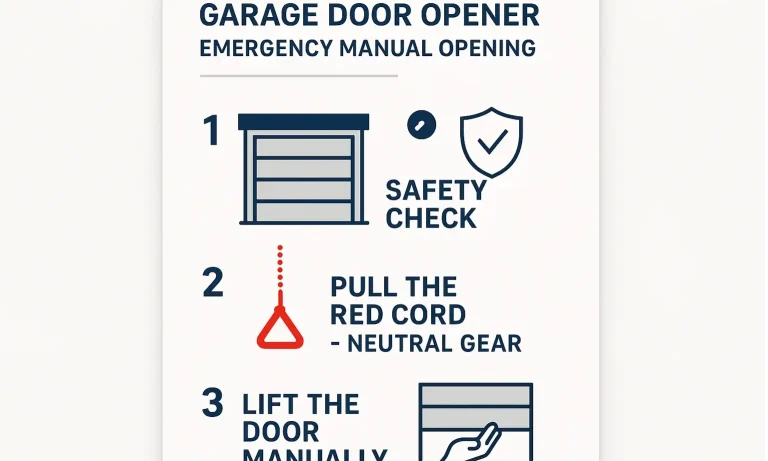
If you need to get your car out right now, this is your first step. Before you do anything, take a quick moment for safety.
Crucial Safety Check: Only disengage the opener when the garage door is fully closed. Pulling the release cord with the door open could cause it to slam shut, posing a serious safety risk. Keep people, pets, and your vehicle clear of the door’s path.
- Locate the Emergency Release Cord: This is the red rope hanging from the metal rail above your door. You can’t miss it. To learn more about this vital component, explore our guide on the garage door emergency release.
- Pull the Cord: Give the cord a firm, downward pull. You should hear a click as the trolley release arm disengages from the carriage.
- Lift the Door Manually: The door is now disconnected from the opener. You should be able to lift it by hand. If it feels extremely heavy or is difficult to lift, one or both of your springs may be damaged. In that case, do not force it. It’s time to call a professional. For more on this topic, review our tips on manual garage door safety.
Power's Back! How to Re-engage Your Garage Door Opener
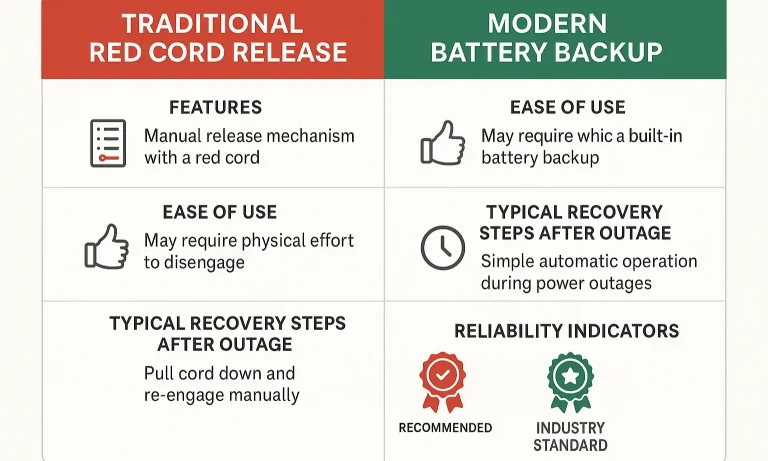
Once utility power is restored, you need to reconnect the door to the opener’s mechanism. This is where most people get a little confused, but it’s incredibly simple once you understand the parts you’re looking at.
The Core Concept: Trolley Meets Carriage
Let’s quickly look at the anatomy of your system. The motor moves a carriage back and forth along the rail. The trolley is the piece that’s attached to your door and has an arm that connects to this carriage. Pulling the red cord disconnects the trolley from the carriage. Your goal is to get them to lock back together.
There are two primary ways to re-engage the opener, depending on your model.
Method 1: The Pull-and-Run (Most Common)
- Re-engage the Release Lever: With the garage door closed, pull the emergency release cord down and toward the motor. This should flip the release lever back into its “connect” position.
- Run the Opener: Press the button on your wall control or remote. The opener’s carriage will travel along the rail until it bumps into the trolley, and they will automatically lock together with a loud CLICK.
Method 2: The Manual Connection
Align and Connect: If the first method doesn’t work, close the garage door. Use a stepladder if needed to manually lift the door arm (connected to the trolley) until it snaps back into the carriage. Again, you’re listening for that satisfying click.
For a more detailed breakdown of this process, our guide on how to reconnect garage door opener systems offers step-by-step visuals.
Once reconnected, run the opener through a full open and close cycle to ensure everything is moving smoothly.
Troubleshooting: What to Do When It’s Still Not Working
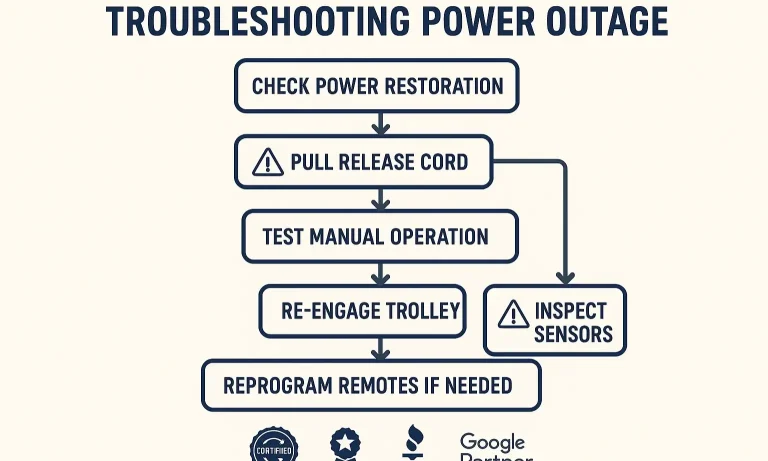
Sometimes, a power surge or outage can cause other issues. If your door is re-engaged but still won’t operate correctly, here’s what to check next.
- The Opener Light is Blinking: This is the most common sign that your safety sensors are misaligned. A power surge can sometimes trip them. The sensors are two small boxes near the floor on either side of your garage door opening. Make sure they are pointing directly at each other and that their indicator lights (usually green or red) are solid. If one is blinking, gently adjust it until it becomes solid. You can find more detail in our professional guide on how to align garage door sensors.
- The Door Reverses or Won’t Close: A power outage can sometimes scramble the opener’s logic board, causing it to “forget” its travel limits. This means it doesn’t know how far to open or close. You’ll need to reset these limits. The process varies by brand (LiftMaster, Chamberlain, Genie), but it typically involves pressing and holding adjustment buttons on the motor unit itself.
- The Remote Isn’t Working: It’s rare, but a strong power surge can sometimes wipe the codes from your remotes. If the wall control works but your remotes don’t, you may need to go through the steps of how to reprogram garage door opener remotes.
If you’ve tried these steps and are still stuck, our comprehensive DIY garage door opener troubleshooting guide can help you diagnose more complex problems.
Frequently Asked Questions (FAQ)
Do I need to reprogram my whole garage door opener after a power outage?
Usually, no. Most modern openers have non-volatile memory, meaning they remember their settings even without power. You typically only need to re-engage the trolley. Reprogramming is only necessary if the travel limits or remotes are not working correctly.
Why is my garage door moving so slowly after re-engaging it?
The first cycle after re-engaging can sometimes be a bit slower as the opener re-calibrates its force and travel settings. If it continues to be slow after two or three cycles, it could indicate a problem with the door’s balance or the motor.
I pulled the red cord while the door was open. What do I do?
First, clear the area completely. Carefully try to lower the door by hand. If it’s too heavy or moves too fast, stop immediately. You’ll need a professional to safely re-balance the door and reattach the opener. This is one of the biggest garage door maintenance mistakes you can make.
How can I avoid this problem in the future?
The best solution is a garage door opener with a battery backup. These units have a built-in battery that automatically kicks in when the power goes out, allowing you to operate your door normally for several cycles. Learning about smart garage door openers battery backup systems is a great next step for homeowners in areas with frequent outages.
Dealing with a dead garage door opener is an unexpected hassle, but by understanding the simple mechanics behind it, you can handle the situation safely and get on with your day. If you’ve tried these steps and your door still isn’t cooperating, the team at Up & Down Garage Doors is available 24/7 to help.
You May Also Like
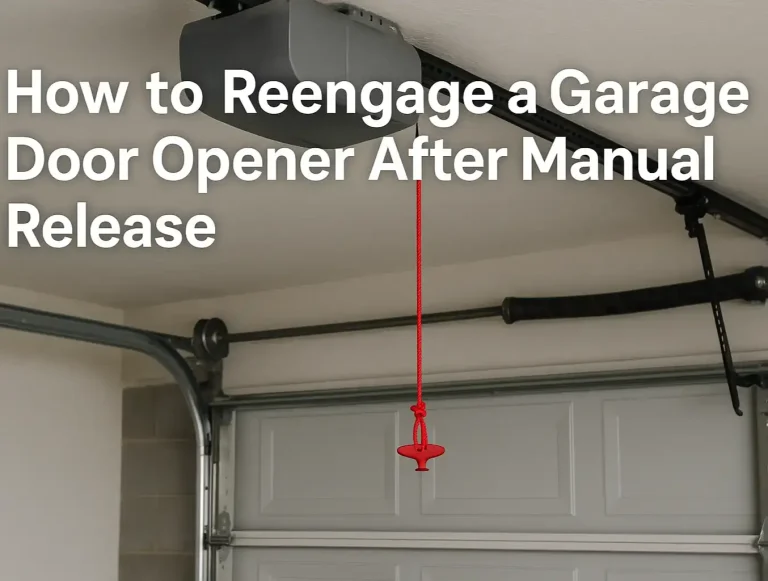
How to Reengage a Garage Door Opener After Manual Release
If you’ve ever needed to open your garage door manually (like during a power outage or a stuck door), you’ve probably used the emergency release cord. The tricky part comes afterward: figuring out how to reengage a…
Published Date: Aug 14, 2025
When NOT to Reengage Your Garage Door Opener: Identifying Safety Risks
You’re heading out, you press the button on your garage door remote, and… nothing. Or worse, a horrible grinding sound fills the air, and the door stops halfway, hanging at a crooked angle. Your first instinct is…
Published Date: Apr 6, 2026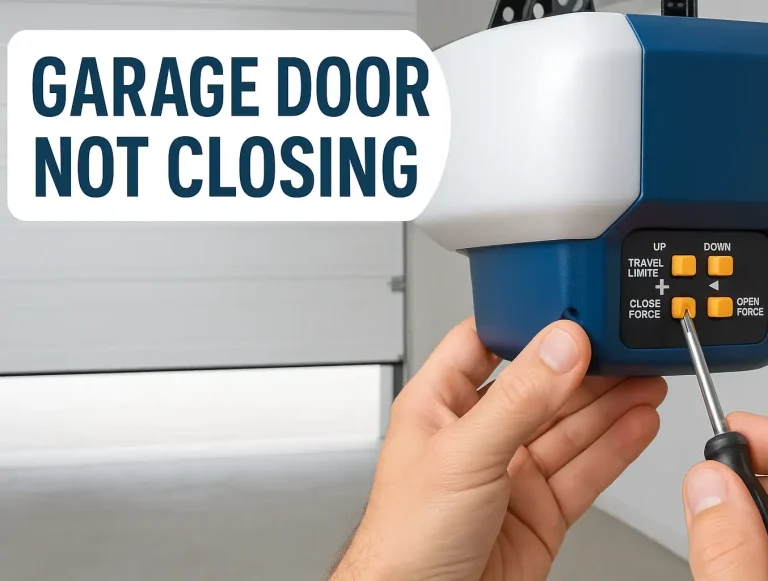
Force Settings After Garage Door Opener Installation
Ever had that moment? You hit the button, watch your garage door lower all the way to the ground, and just as it kisses the concrete... it immediately reverses and opens back up. It’s frustrating, confusing, and…
Published Date: Apr 2, 2026