





Understanding Garage Door Warning Signs in New Haven Homes
Published: Mar 3, 2026
It’s a sound every homeowner dreads. That sudden, jarring BANG from the garage. Or maybe it’s a more subtle grinding, a shuddering refusal to open, or a new, unsettling squeal. Your garage door, a machine you rely on every day, is suddenly sending a clear message: something is wrong.
For many in New Haven, the first instinct is to search online, where you’re met with a confusing mix of hyper-technical DIY videos and urgent calls to action. But what you really need is a clear, calm guide to help you understand what’s happening, what’s safe to handle yourself, and when it’s absolutely time to call in a professional.
This is that guide. We’ll help you translate your garage door’s strange new language, empowering you to make the safest, smartest decision for your home.
What's Your Garage Door Trying to Tell You? A Symptom Checker
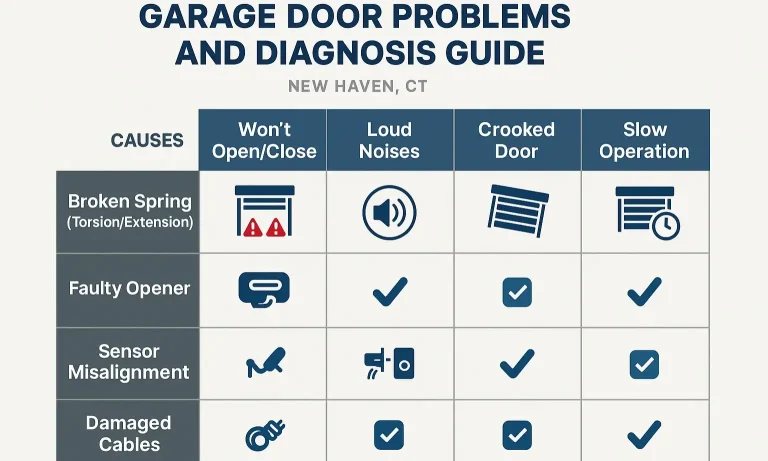
Your garage door’s behavior is a clue to the underlying problem. Users often start their search by describing a symptom, so let’s start there too. Find the issue you’re experiencing below to get a better idea of what might be going on.
Symptom: A Loud “Bang” Followed by an Inoperable Door.
Likely Cause: This is the classic sign of a broken torsion or extension spring. The “bang” is the sound of a spring, which is under immense tension, suddenly snapping.
Verdict: Call a professional immediately. This is the most dangerous component to handle without proper training and tools.
Symptom: The Door Won’t Open or Close, but the Motor is Running.
Likely Cause: The opener’s trolley may be disconnected from the door (the “disconnect cord” may have been pulled). It could also be a stripped gear inside the opener unit.
Verdict: Check the disconnect cord first (a simple DIY fix). If that’s not it, you’re likely looking at a mechanical issue within the opener that requires professional attention.
Symptom: The Door Closes Partway, Then Reverses.
Likely Cause: The safety sensors at the bottom of the door tracks are likely blocked or misaligned.
Verdict: A great DIY troubleshooting opportunity. This is one of the most common and easily fixable issues.
Symptom: The Door is Shaking, Shuddering, or Making Grinding Noises.
Likely Cause: This could be worn-out rollers, bent tracks, or parts that desperately need lubrication.
Verdict: Lubrication and minor cleaning are DIY-friendly. However, if you see bent tracks or broken rollers, it’s best to call a technician.
Safety First: Understanding Your Garage Door's Anatomy
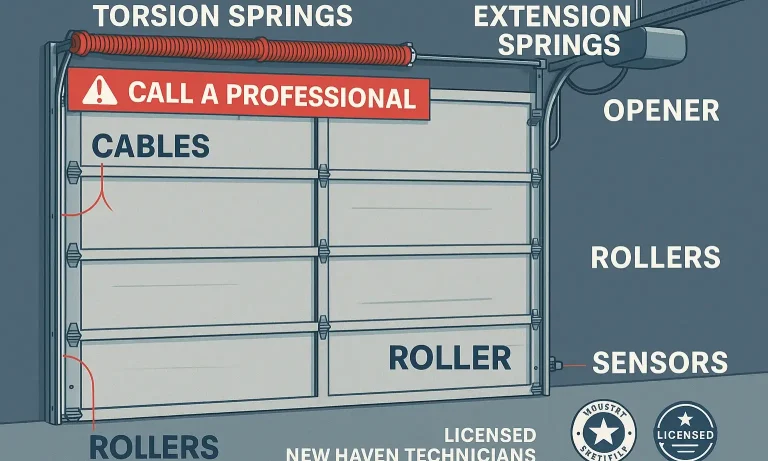
Before you even think about grabbing a wrench, it’s crucial to understand what you’re looking at. A garage door is a complex system of moving parts, and some of them are under extreme tension. Knowing which parts are which can literally save you from serious injury.
The Danger Zone: Springs and Cables
The single most important concept to grasp is that the springs—not the opener—do the heavy lifting. They are wound or stretched under immense pressure to perfectly counterbalance the weight of your door.
- Torsion Springs: These are mounted on a metal bar above the garage door opening. They are wound incredibly tight and are the most common type on modern doors. Never attempt to adjust or remove these yourself. A sudden release of energy can be destructive and even fatal.
- Extension Springs: These are found on either side of the door, running parallel to the horizontal tracks. While slightly less dangerous than torsion springs, they still carry enough tension to cause serious injury if they snap.
The cables work in tandem with the springs. If a cable looks frayed, rusted, or has snapped, it’s a sign of a critical failure. The system’s balance is compromised, making it unsafe to operate. If you suspect you need broken garage door spring repair, it’s essential to stop using the door and call for help.
Simple & Safe DIY Fixes (The 10-Minute Triage)
Feeling empowered to tackle a small issue is great, as long as it’s the right issue. Here are a few common problems that are generally safe for a homeowner to investigate.
1. The Safety Sensor Check
If your door reverses upon closing, this is your first stop.
What to do: Look for the two small sensor “eyes” near the floor on either side of your garage door tracks. Check if the small LED lights on them are lit and solid (not flickering).
The Fix:
- Clear away any cobwebs, dust, or obstructions.
- Gently wipe the lenses with a soft cloth.
- Check if the sensors have been bumped out of alignment. Loosen the wingnut, adjust until the lights are solid, and retighten.
Tool-O-Meter: Easy | Tools: Soft cloth | Time: 5 minutes
2. The Lubrication Lifesaver
A noisy door is often just a thirsty door.
- What to do: Use a silicone or lithium-based garage door lubricant (avoid WD-40, which can attract dust).
- The Fix: With the door closed, spray all the moving parts: the rollers, hinges, and springs. Then, open and close the door a few times to distribute the lubricant.
- Tool-O-Meter: Easy | Tools: Garage door lubricant, rag | Time: 10 minutes
- What to do: If your remote isn’t working, the first step is to replace the battery.
- The Fix: If a new battery doesn’t work, try reprogramming the remote. Check your opener’s manual for instructions—it usually involves pressing a “Learn” button on the motor unit. If it still doesn’t work, you may need a garage door opener repair specialist to diagnose an issue with the logic board.
- Tool-O-Meter: Easy | Tools: New battery, step ladder | Time: 5 minutes
3. The Remote Control Reset
Sometimes the simplest solution is the right one.
Red Flags: When to Immediately Call a Professional
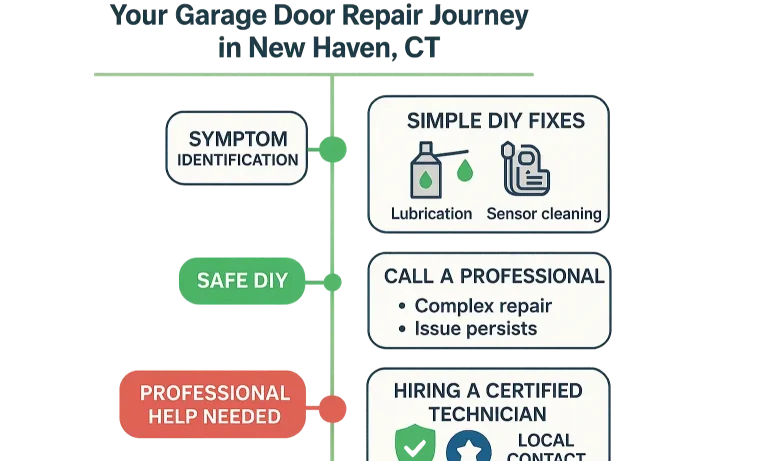
Your safety is paramount. The “aha moment” for every homeowner should be realizing that some jobs carry risks that far outweigh the potential cost savings of a DIY attempt. If you see any of these signs, stop what you’re doing and find a trusted garage door repair near me service.
- Broken Springs: As mentioned, this is the #1 non-negotiable. The stored energy in a spring is immense.
- Snapped or Frayed Cables: Cables are under the same tension as the springs. A snap can cause the door to crash down.
- Door is Off-Track: A door that has come out of its tracks is dangerously unstable. Trying to force it back can cause multiple panels to collapse.
- Damaged or Bent Panels: A bent panel compromises the structural integrity of the entire door, putting strain on all other components.
- The Door is Crooked or Sagging When Moving: This indicates a serious imbalance, likely due to a failing spring or cable on one side.
These situations often require an emergency garage door repair to secure your home and prevent further damage.
Frequently Asked Questions
Is it safe to repair my own garage door?
It depends entirely on the repair. Cleaning sensors, lubricating parts, and replacing remote batteries are safe. Anything involving springs, cables, or removing panels should be left to a trained garage door technician.
How often should my garage door be serviced?
It’s a good practice to have your garage door professionally serviced once a year. A technician can inspect, lubricate, and balance your door to catch small issues before they become major, costly problems.
My garage door is old. Should I repair or replace it?
Consider a replacement if:
- The repair cost is more than 50% of the cost of a new door.
- You have multiple damaged panels.
- The door lacks modern safety features like auto-reverse sensors.
- You’re looking to improve your home’s curb appeal and energy efficiency.
What’s the difference between a chain drive and a belt drive opener?
Chain drives are durable and affordable but are the noisiest option. Belt drives use a rubber belt and are significantly quieter, making them an excellent choice for garages with living spaces above or next to them.
What is a smart garage door opener?
A smart garage door opener connects to your home’s Wi-Fi. It allows you to open, close, and monitor your garage door from anywhere using a smartphone app. Many also offer features like delivery access and integration with other smart home devices.
Your Next Step to a Safe and Secure Garage
Understanding your garage door is the first step toward a safe and effective solution. By learning to identify the symptoms, respect the dangers, and tackle the simplest fixes, you’ve already empowered yourself.
For those moments when the problem is beyond a simple DIY fix, the most important decision is choosing a reliable professional. A qualified technician doesn’t just fix the problem—they ensure your entire system is safe, balanced, and ready for thousands more cycles. If you’re facing an issue that needs an expert eye, seeking out a trusted team for garage door repair in New Haven is the safest and most reliable path forward.
You May Also Like
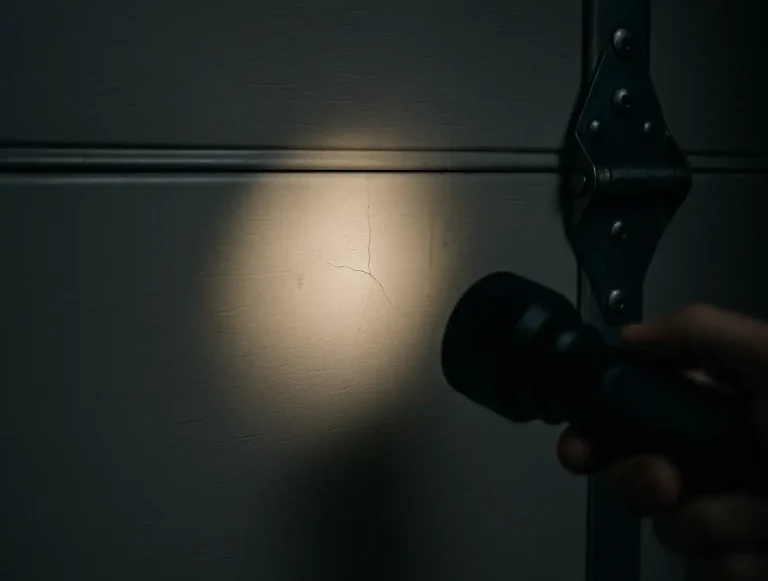
Detecting Micro-Cracks and Fatigue in Garage Door Hinges and Panels
That faint creak your garage door makes? Most of us ignore it. The tiny, web-like line near a hinge? We dismiss it as a scratch. We often assume garage door problems are loud, sudden, and obvious—a snapped spring, a…
Published Date: Jan 19, 2026
Understanding Garage Door Pinch Points and Anti-Pinch Panel Design
Your garage door is the largest moving object in your home. You probably know about the importance of its safety sensors—the little electronic eyes near the floor that stop the door from closing on an object. But…
Published Date: Jan 15, 2026
Top Benefits of Upgrading to Insulated Garage Door Panels
Upgrading to insulated garage door panels is one of the smartest home improvements you can make — especially if you live in an area with extreme temperatures. Whether you’re a homeowner, builder, or property manager,…
Published Date: Dec 12, 2025