




Garage Door Jamb and Brickmold Replacement Before a New Door
Published: Oct 6, 2026
Framing Your Investment: Why Replacing Rotten Garage Jambs and Brickmold Before a New Door is Non-Negotiable
You’ve finally selected your new garage door, scheduled the installation, and prepared your budget. Then, the estimator points to the bottom of your wood frame and delivers the bad news: the framing is rotted, and they cannot mount a new door to decaying wood.
Discovering rot right before a major residential garage door installation is incredibly common, yet highly stressful. Understanding what must be replaced, how to coordinate the work, and which materials actually protect your investment will turn this high-anxiety roadblock into a seamless upgrade.
Anatomy of a Garage Opening: Jambs vs. Brickmold vs. Stop Molding
To make an informed decision, you must first separate structural necessities from decorative trim. A standard garage door opening consists of three distinct layers, each serving a unique mechanical or protective purpose:
- Structural Jamb Boards (2×6 Lumber): This is the heavy-duty framing that runs vertically and horizontally along the interior opening. Your garage door tracks and high-tension spring assemblies are lag-screwed directly into these boards.
- Brickmold (Exterior Trim): This is the decorative molding framing the outside edge of the garage door opening.
- Stop Molding (Vinyl Weatherseal): The flexible vinyl flap attached to the brickmold that seals against the exterior face of the door when closed, preventing drafts and water penetration.
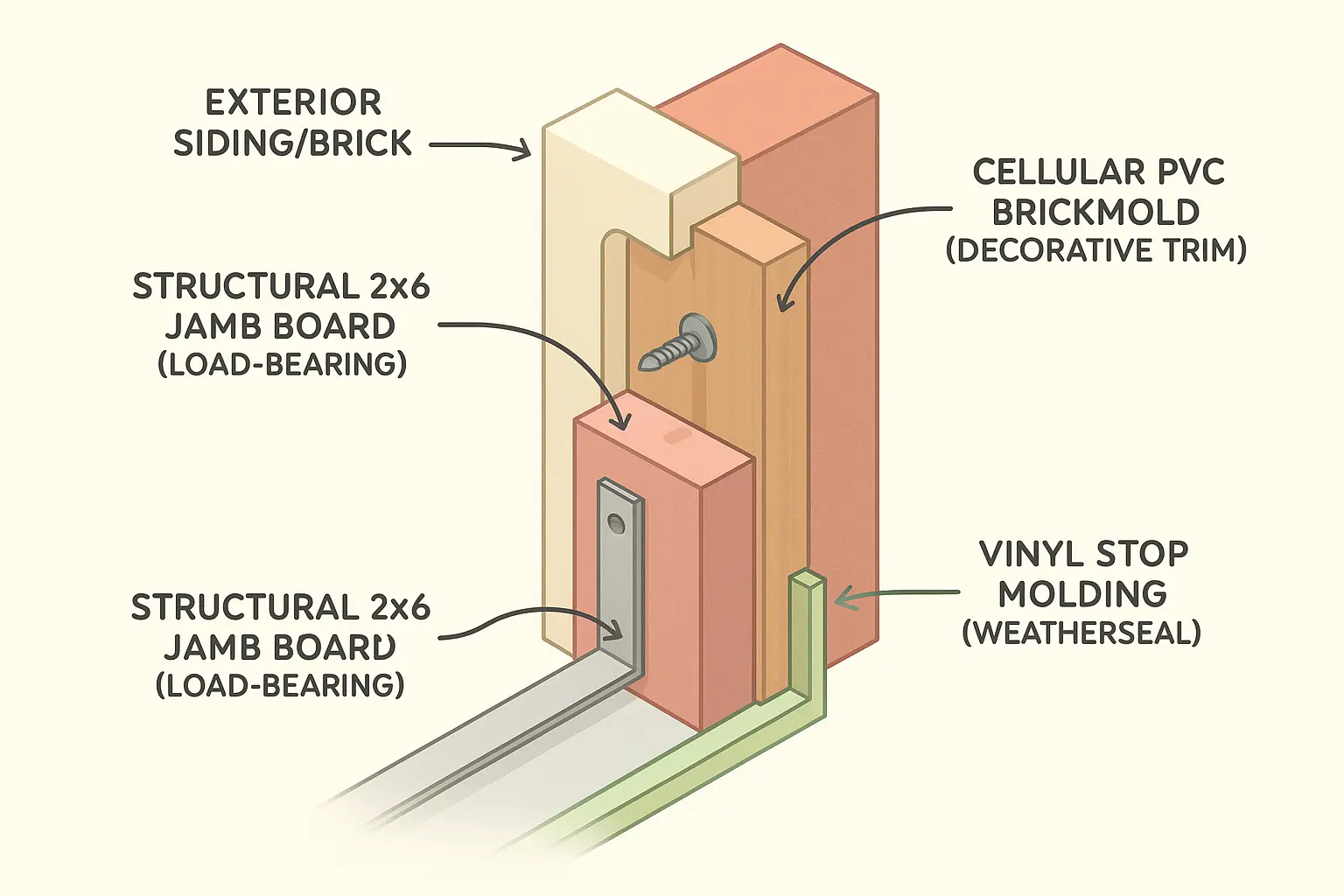
Caption: This exploded diagram shows the distinct components of a garage door frame: structural jamb boards support the door tracks, while brickmold and stop molding are decorative and sealing layers. Understanding this separation is crucial for safe and effective garage door replacement.
The Structural Reality: Why You Cannot Use Solid PVC for Jambs
A common point of confusion among homeowners is whether they can use maintenance-free, 100% cellular PVC for everything to prevent future rot. While cellular PVC is an exceptional choice for decorative exterior trim, it is highly dangerous to use as a structural jamb board.
According to DASMA Technical Data Sheets 156 and 161, vertical tracks and heavy torsion springs exert massive vibrational and mechanical forces during operation. These systems must be fastened using 3/8″ x 3″ lag screws that penetrate solid wood. Because cellular PVC has zero structural load-bearing capacity, those lag screws will quickly strip out under the high tension of a broken garage door spring or standard door travel, leading to catastrophic system failure. Your jambs must be solid structural wood, while your decorative brickmold and weathersealing can—and should—be PVC.
The "Golden Window": How to Coordinate the Replacement Timeline
Replacing structural framing while your old garage door is still hanging is incredibly difficult, and attempting to do so under live spring tension is lethal. Instead, smart homeowners leverage the “Golden Window”—the precise chronological gap between teardown and installation.
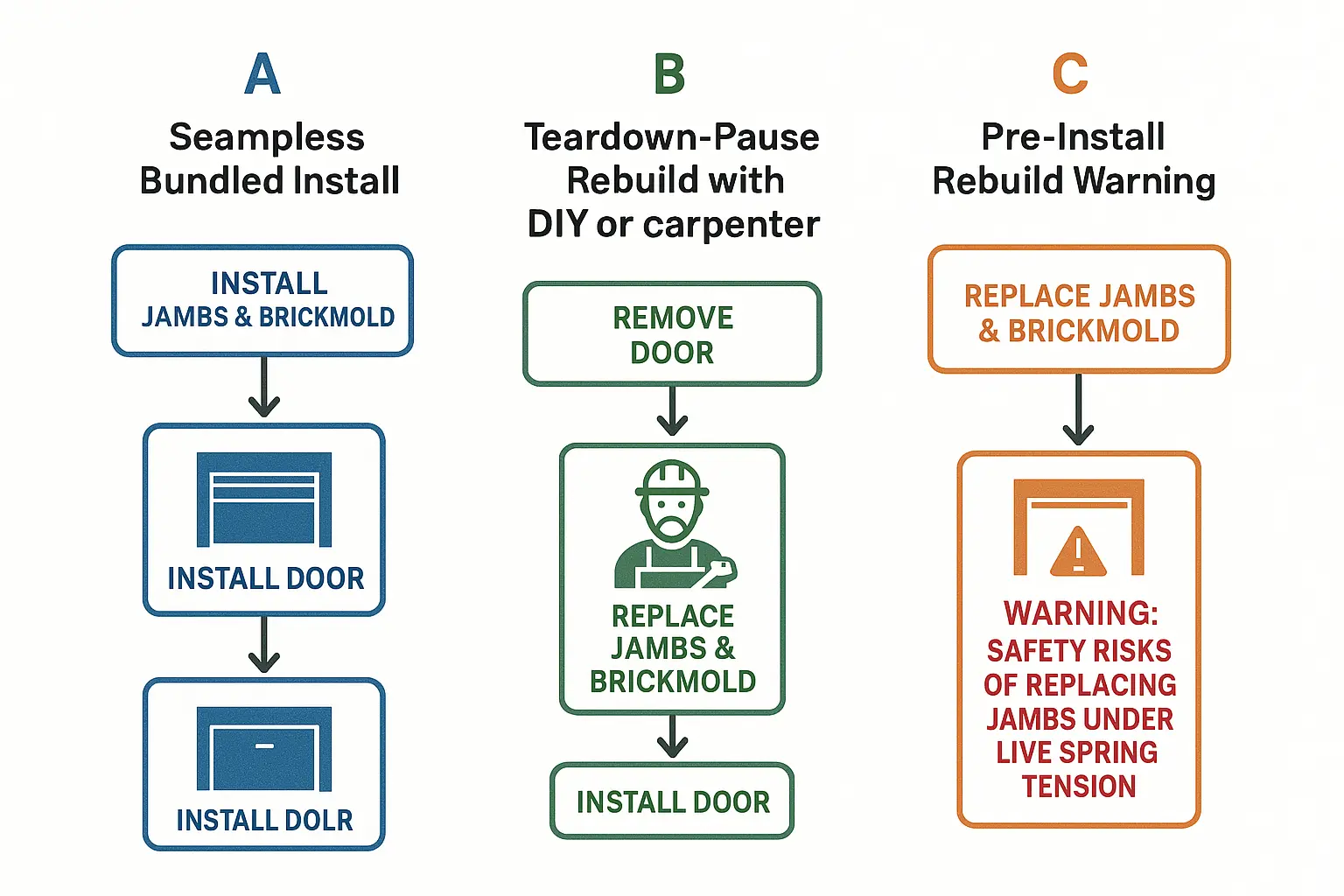
Caption: This flowchart guides homeowners through coordinating jamb and brickmold replacement timing with their door installation: from hiring bundled pros, to doing a careful teardown-pause-rebuild, to the risky pre-install rebuild path to avoid. Clear visuals help reduce scheduling anxiety and enhance safety awareness.
To manage this process seamlessly, evaluate these three logistical paths:
- Path A: The Seamless Bundled Install (Recommended): Work with a premium, full-service provider who offers comprehensive framing preparation. Their technicians tear down the old door, replace the rotted jambs and trim, and install the new system in a single visit, eliminating all scheduling friction.
- Path B: The Teardown-Pause-Rebuild Strategy: If you are hiring an outside carpenter or handling a DIY rebuild, coordinate with your door company to first uninstall and haul away the old door. This fully exposes the raw structural framing, allowing you or your carpenter to safely replace the 2×6 jambs and trim in a matter of hours, free from structural obstructions. The installers then return to mount the new door onto pristine, plumb wood.
- Path C: The Pre-Install Rebuild (High Risk): Trying to swap 2×6 jamb boards while old tracks and high-tension springs are still mounted is dangerous. Only decorative brickmold and exterior garage door gaps on sides should be replaced prior to the installation team’s arrival.
Material Comparison: Wood vs. Composite vs. PVC Wrapper
Selecting the right materials determines whether your new framing lasts five years or fifty. According to research from the USDA Forest Products Laboratory, wood-rot fungi only colonize and destroy lumber when its moisture content remains consistently above 30% (the fiber saturation point). Because the base of a garage door frame rests directly on a concrete slab, unprotected wood acts like a straw, wicking moisture upward via capillary action.
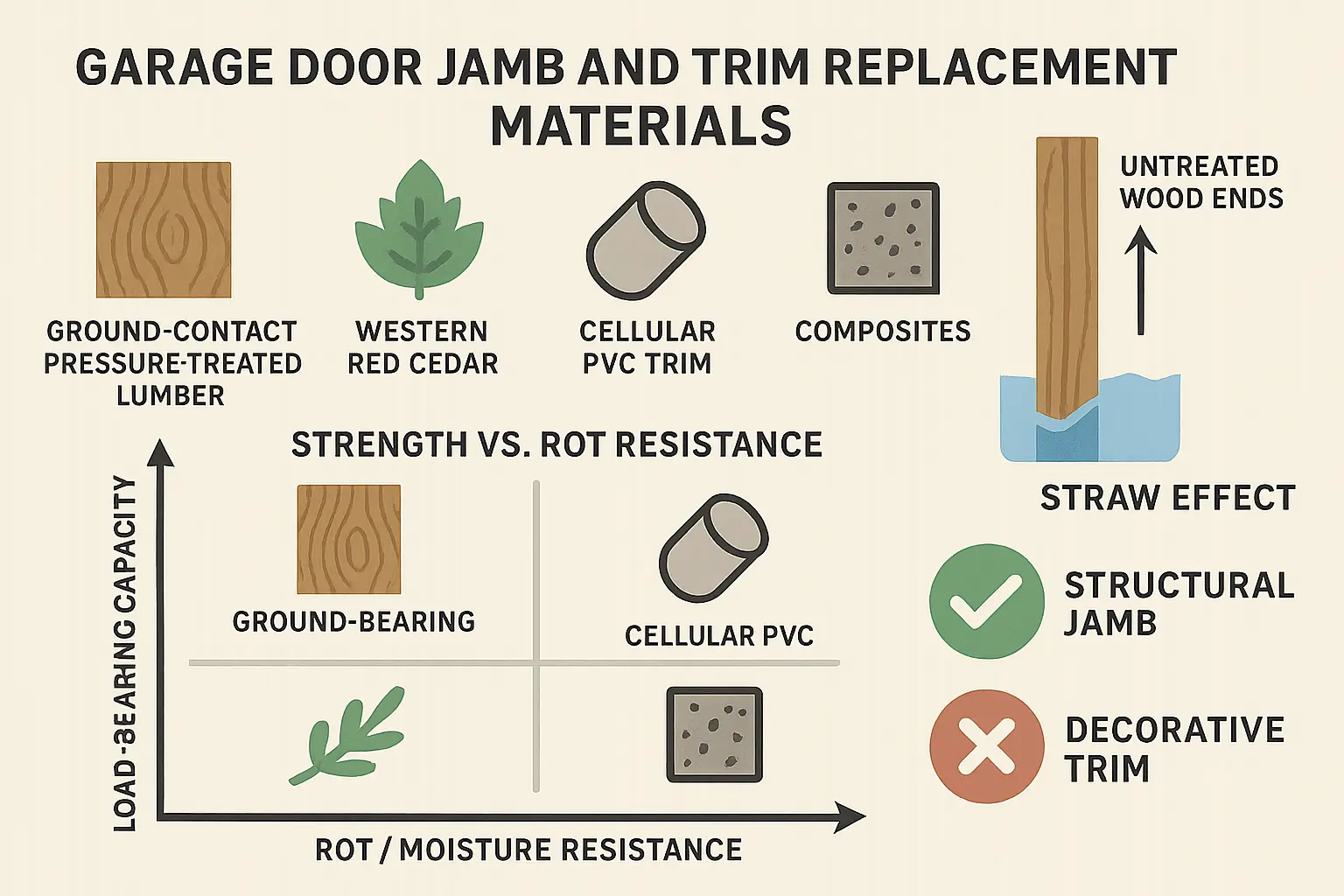
Caption: This infographic anchors key takeaways about garage door jamb and trim materials: only pressure-treated wood or cedar can safely bear structural loads, while cellular PVC excels as decorative trim for rot resistance. Visualizing the “straw effect” helps homeowners understand wood moisture risks.
- For structural jambs: Use Category-1 ground-contact pressure-treated lumber or naturally rot-resistant Western Red Cedar. To prevent the “straw effect,” ensure all cut ends—especially the bottom raw edge—are thoroughly primed and sealed before installation.
- For exterior brickmold: Opt for cellular PVC. It will never absorb moisture, rot, or attract termites, perfectly isolating your wood framing from the concrete driveway.
Protecting these components with proper exterior garage door seal failure signs vigilance and regular garage door maintenance checklist protocols will keep your entire system structurally sound for decades.
The Screwdriver Test: Diagnostic Self-Inspection
Before spending hundreds on replacements, perform a simple “Screwdriver Test” to evaluate the structural integrity of your frame:
- Take a flathead screwdriver and press it firmly against the bottom 12 inches of your garage jambs and brickmold.
- If the wood is solid and resists penetration, the rot is likely cosmetic surface damage that can be scraped, filled with exterior epoxy, and painted.
- If the screwdriver sinks easily into the wood, structural decay has compromised the core. A full replacement is required before any professional garage door openers installed or new doors can be safely mounted.
Frequently Asked Questions
Can a garage door company replace rotted wood during the new door installation?
Yes, premium garage door companies often offer framing preparation and jamb replacement as a bundled add-on service. Opting for a bundled installation is the most efficient choice, as the technicians can tear down the old system, install fresh, code-compliant wood, and hang your new door in a single, well-coordinated appointment.
How much does it cost to replace garage door jambs and brickmold?
A professional carpenter or specialized contractor typically charges between $350 and $800 per opening for labor and materials. If you choose to bundle the service with a reputable garage door company during a new installation, the cost often ranges from $150 to $350 per leg, providing a highly cost-effective and convenient solution.
Can I install a new garage door on slightly rotted wood to save money?
No, installing a new door on rotted framing is a severe safety hazard and will void your installation warranty. The immense weight and constant vibration of the door system require stable, structurally sound anchoring, which decaying wood cannot provide, potentially causing the entire track assembly to pull free.
A beautiful new garage door deserves a rock-solid foundation. Addressing rotted framing beforehand ensures a safe, durable, and highly secure installation. Contact Up & Down Garage Doors today to schedule an expert on-site evaluation and coordinate a seamless framing and door replacement package.
You May Also Like