





Stress Crack or Impact Damage? A Homeowner’s Guide to Reading Your Garage Door
Published: Jul 24, 2026
You see it one morning while grabbing the newspaper—a fine, spidery line across one of your garage door panels. Your first thought might be, “How did that happen?” Your second is probably, “How do I fix it?”
Before you search for a quick fix, it’s crucial to understand that not all cracks are created equal. A crack is a symptom, and simply patching it up without diagnosing the cause is like taking a cough drop for pneumonia. You might feel better for a moment, but you haven’t addressed the real problem. Misdiagnosing a crack often leads to failed repairs, wasted money, and the same damage reappearing weeks later.
The truth is, your garage door crack is telling a story. By learning to read the clues, you can move from a quick patch to a smart, lasting solution.
The Two Main Culprits: Stress Fatigue vs. Impact Damage
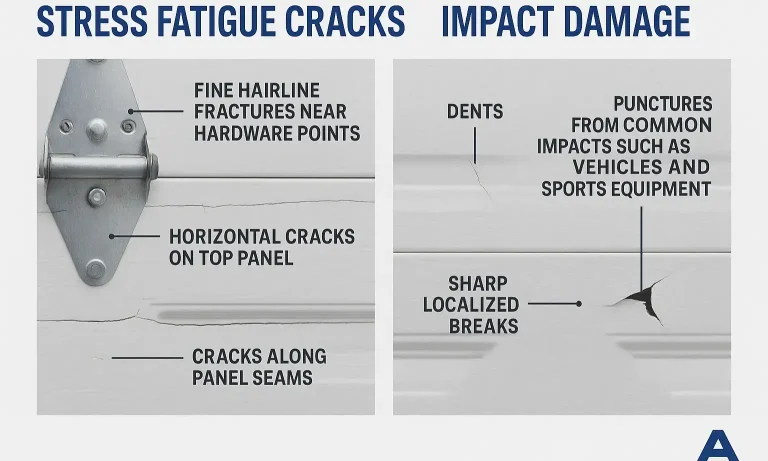
Nearly every crack in a garage door panel falls into one of two categories. Understanding the difference is the first and most important step in your diagnostic journey.
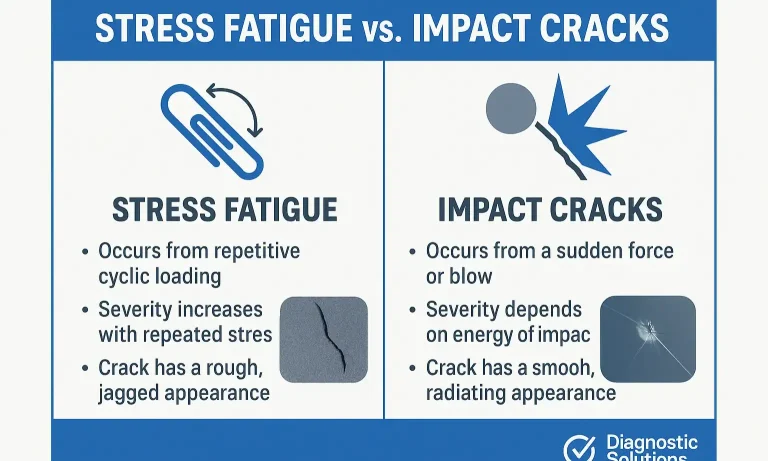
- Stress Fatigue: Think of this like bending a paperclip back and forth. The first few bends do nothing, but eventually, the metal weakens and snaps. Stress fatigue in a garage door is similar. It’s damage that happens over time from the repeated strain of opening and closing the door every day. Forces like thermal expansion, slight imbalances, or the constant pull of the garage door opener slowly weaken the panel material until a crack forms. These cracks are often subtle at first and grow over time.
- Impact Damage: This is the more obvious culprit. Impact damage is the result of a single, sudden event where something hits the door. Common examples include a car bumper tapping the door, a stray basketball, a falling ladder, or even a severe hailstorm. This force creates a concentrated point of damage, usually accompanied by a dent or crease.
The Visual Diagnosis Guide: Reading the Clues in the Cracks
Now, let’s play detective. Grab a flashlight and head to your garage. By looking closely at the crack’s characteristics, you can determine its origin story.
Chapter 1: Identifying Stress Fatigue Cracks
Stress cracks are the silent assassins of garage door health. Because they point to an underlying mechanical issue, they require careful attention. Look for these signs:
- Hairline Fractures: They often start as tiny, almost invisible lines. It’s important to detect micro-cracks early before they grow.
- Location Near Hardware: Check around hinges, struts, and the bracket where the opener arm connects to the door. These are high-stress points where fatigue cracks love to form.
- Horizontal Cracks on the Top Panel: A long, horizontal crack across the top section is a classic sign that the opener is putting too much strain on the panel.
- No Dents or Scuffs: The area around a stress crack is usually smooth, without any signs of a collision.
Chapter 2: Identifying Impact Damage
Impact damage is typically less mysterious but still requires a proper assessment. Here’s what to look for:
- Visible Dents or Creases: This is the smoking gun. If the crack is located within a dent, you have your answer. A proper garage door dent repair is often the first step.
- Sharp, Clean Breaks: Unlike the spreading nature of stress cracks, impact cracks can be sharp and well-defined.
- Scratched Paint or Scuff Marks: Look for evidence of the collision. You might see paint transferred from a car or scrapes from another object.
- Localized Damage: The damage is usually contained to one area, right where the impact occurred. If the garage door was hit by a car, the damage will be concentrated at bumper height.
What the Crack's Location Tells You About Your Garage Door's Health
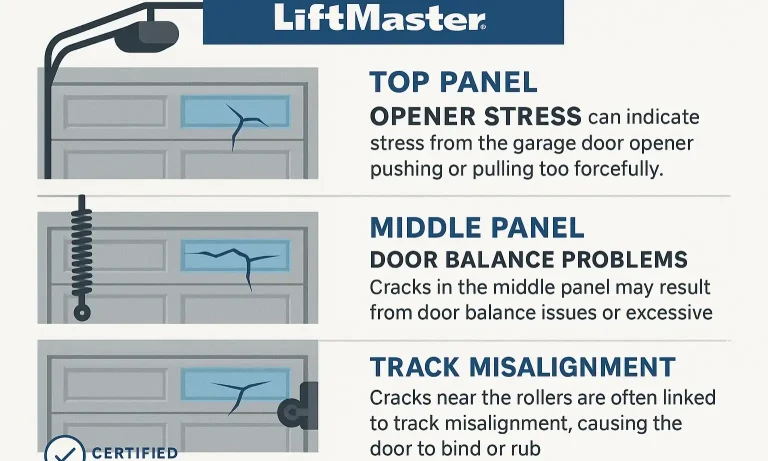
The location of the crack is your final clue. It doesn’t just tell you what happened; it tells you why it happened and what other problems might be lurking.
- Top Panel (Center): A crack here, especially a horizontal one, almost always points to stress from the garage door opener. The top panel takes the full force of the opener’s pull. Without proper reinforcement, it can buckle and crack over time. This is often a sign you need to repair a sagging garage door with a reinforcement strut.
- Middle Panels: Cracks in the middle sections can indicate a door that is out of balance. When the springs aren’t doing their job correctly, the panels bear more weight than they were designed for, leading to stress.
- Near Rollers/Tracks: Cracks that form near the edges of the door could signal a problem with the rollers or track alignment. If a roller is stuck or the track is bent, it creates a pinch point that puts immense stress on that section of the panel.
Choosing the Right Repair Strategy Based on Your Diagnosis
Once you’ve diagnosed the cause, you can choose a repair that actually solves the problem. A simple patch is rarely enough, especially for stress cracks.
For Stress Fatigue Cracks:
- The Golden Rule: You must address the underlying cause.
- Solution: The most common and effective solution is to install a garage door strut (a metal reinforcement bar) across the width of the cracked panel. This redistributes the force and prevents the crack from spreading.
- Next Steps: After reinforcing the panel, address the root problem. This may mean balancing the door, adjusting the opener’s force settings, or servicing the springs.
For Impact Damage Cracks:
- The Golden Rule: Assess the severity and material.
- Solution: For minor cracks in a steel door, a garage door panel repair kit with epoxy or Bondo can sometimes work, but it’s often a cosmetic fix that won’t restore structural integrity. For wooden doors, wood filler and sanding can be effective.
- Next Steps: For large cracks, multi-layered insulated doors, or severe dents, the only reliable solution is a garage door panel replacement. Trying to fix a badly damaged modern panel is often futile and can compromise the door’s safety and insulation.
The ultimate question of whether a damaged garage door can be repaired depends heavily on your diagnosis.
Frequently Asked Questions (FAQ)
Can I just drill holes at the ends of a stress crack to stop it from spreading?
While this technique (called stop-drilling) can work on some materials to temporarily halt a crack, it’s not a solution for a garage door. It doesn’t address the underlying stress that caused the crack in the first place. The panel will almost certainly crack again in a different spot.
What happens if I ignore a small stress crack on the top panel?
Ignoring a top panel stress crack is a risky gamble. The crack will continue to spread, and eventually, the panel can buckle completely. This could cause the garage door opener arm to rip out of the door, potentially dropping the door suddenly and creating a serious safety hazard.
Is a cracked wooden door panel repaired differently from a steel one?
Yes, absolutely. Wood is more forgiving. Small cracks can often be repaired with wood glue, filler, sanding, and repainting. Steel or aluminum doors, especially those with multiple layers and insulation, are much harder to repair cosmetically and structurally. Once the metal is creased or torn, it’s very difficult to make it look and perform like new.
Should I always add a reinforcement strut after repairing a crack?
For any stress-related crack, adding a strut is not just recommended—it’s essential. It’s the core of the repair. For small impact cracks that haven’t compromised the panel’s rigidity, it might not be necessary, but it never hurts to add extra support.
Your Next Step: From Diagnosis to Decision
You are now equipped with the knowledge to look at that crack not as a simple flaw, but as a diagnostic clue. By understanding the difference between gradual stress and sudden impact, you can make an informed decision that saves you time, money, and future headaches. A correct diagnosis is the foundation of an effective and safe repair, ensuring your garage door continues to operate reliably for years to come.
You May Also Like
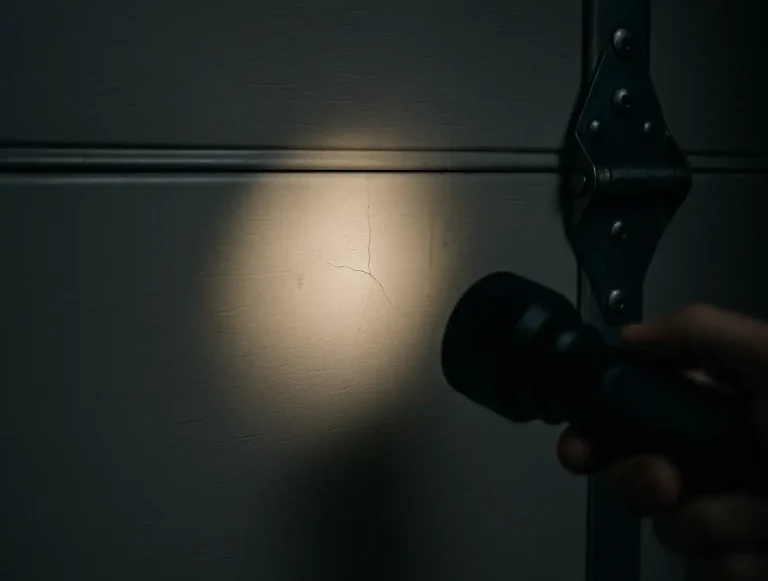
Detecting Micro-Cracks and Fatigue in Garage Door Hinges and Panels
That faint creak your garage door makes? Most of us ignore it. The tiny, web-like line near a hinge? We dismiss it as a scratch. We often assume garage door problems are loud, sudden, and obvious—a snapped spring, a…
Published Date: Jan 19, 2026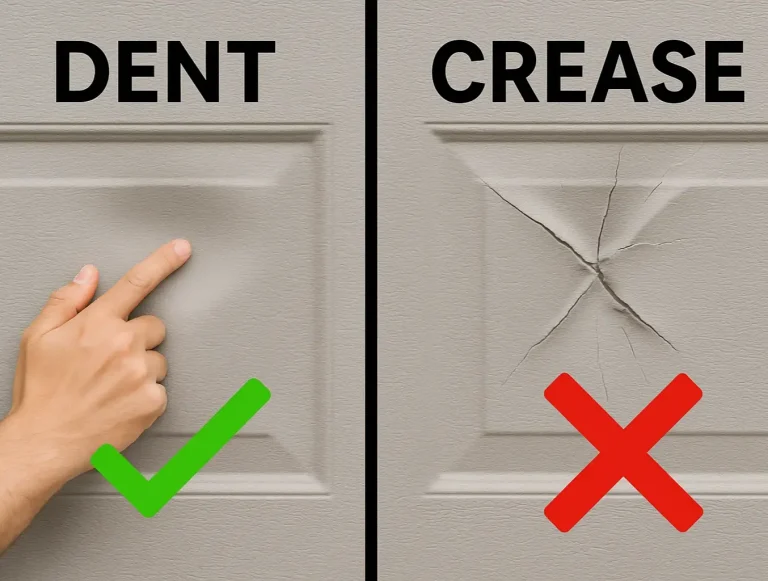
When a Bent Garage Door Panel Needs Replacement vs. Repair
It happens in a split second. A moment of distraction while backing out, an icy patch on the driveway, or a misplaced sports ball—and now there’s a noticeable bend in your garage door. The first feeling is…
Published Date: Jun 17, 2026
High-Speed Fabric vs. Rigid Panel Doors for Manufacturing
Choosing a new high-speed door for your facility can feel like a simple equipment purchase. You look at specs, compare prices, and pick one. But here’s an insight many facility managers learn the hard way: the wrong…
Published Date: Jun 5, 2026