





What’s Wrong With My Garage Door? A Cypress Homeowner’s Diagnostic Guide
Published: Feb 12, 2026
It’s a scenario every Cypress homeowner dreads. You’re rushing to leave for work, you press the button on your remote, and… nothing. Or worse, a horrible grinding sound fills the air, and the door shudders to a halt halfway up. Your car is trapped, your home isn’t secure, and your day has just been derailed.
That moment of frustration is universal. But what comes next doesn’t have to be a mystery. Is it a simple fix? A serious problem? Can you tackle it yourself, or do you need to call in a professional?
This guide is your first step. We’re going to pull back the curtain on the most common garage door issues, moving from symptom to cause to solution. Think of this as your friendly, over-the-coffee explanation to help you understand what your garage door is trying to tell you.
Anatomy of Your Garage Door: Understanding the System
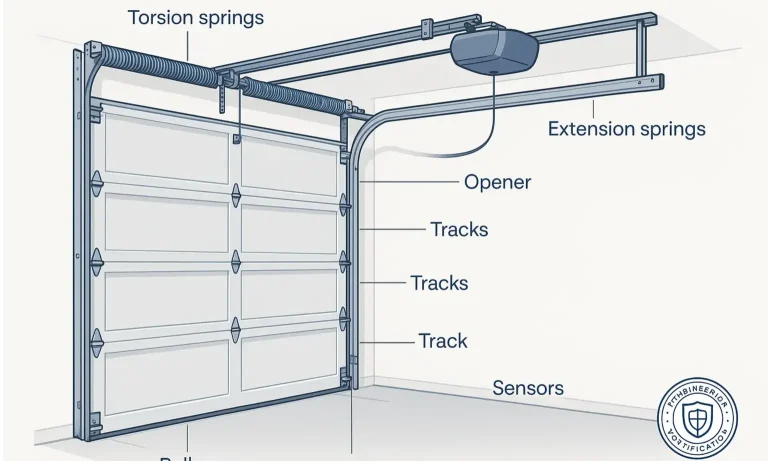
Before you can diagnose a problem, it helps to know the key players. Your garage door isn’t just a slab of metal; it’s a complex system where every part has a critical job. Understanding how they work together is the “aha moment” that makes troubleshooting so much easier.
- Springs (Torsion or Extension): These are the true muscles of the system. The springs—not the opener—do the heavy lifting. Torsion springs are mounted above the door, while extension springs run along the sides.
- Cables: These steel cables connect the springs to the bottom of the door, transferring the lifting force.
- Rollers & Tracks: The rollers are the wheels that guide the door along the metal tracks on either side of the opening.
- Opener (Motor): The motorized unit that, guided by you, initiates the opening and closing. It controls the movement but doesn’t provide the primary lifting power.
- Sensors (Photo Eyes): The small safety devices near the floor on either side of the door. They project an invisible beam, and if it’s broken, the door will reverse to prevent an accident.
When one of these parts fails, the whole system is affected. That’s why a grinding noise could be a roller issue, while a door that won’t close might be a simple sensor problem.
The DIY Safety Guide: What You Can Fix vs. When to Call a Pro
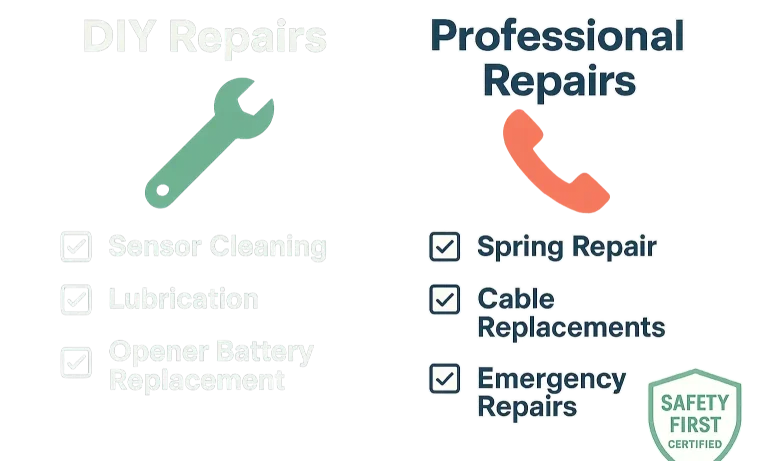
The temptation to fix things yourself is strong. While some tasks are perfect for a Saturday morning, others carry serious risks. The single most important rule of garage door repair is this: Never attempt to adjust, repair, or remove garage door springs or cables yourself.
These components are under extreme tension—enough to cause severe injury or worse. Discerning between a safe DIY task and a job for a professional is the smartest thing any homeowner can do.
Green Light: Safe for DIY
- Cleaning Safety Sensors: Wiping the lenses of the photo eyes with a soft cloth.
- Checking Power: Ensuring the opener is plugged in and the circuit breaker hasn’t tripped.
- Clearing Obstructions: Removing anything blocking the door’s path or the sensor beam.
- Lubricating Moving Parts: Applying a silicone-based lubricant to rollers, hinges, and springs (but not the tracks).
Red Light: Call a Professional Immediately
- Broken Spring: A loud “bang” from the garage is the tell-tale sign. A broken spring is the most common major repair and is extremely dangerous to handle without proper tools and training. For broken garage door spring repair, always trust a pro.
- Frayed or Snapped Cables: If you see loose or broken cables, the door is unstable. This requires immediate professional garage door cable repair.
- Door Off Track: A door that has come out of its tracks is heavy, unstable, and can fall unexpectedly.
- Damaged Panels: Attempting to fix a significantly dented or broken panel can compromise the door’s structural integrity.
When in doubt, the safest call is to a trusted garage door service in Cypress, TX. A professional can diagnose and fix the problem correctly and, most importantly, safely.
Troubleshooting by Symptom: What is Your Door Doing?
Let’s get to the core of the problem. Find the symptom below that best matches your situation.
Symptom 1: The Door Won’t Open or Close at All
This is the most common issue. Before you panic, run through this simple checklist:
- Check the Power: Is the opener plugged into a working outlet? Check your home’s circuit breaker or fuse box.
- Check the Remote & Wall Button: If the wall button works but the remote doesn’t, you may just need to replace the remote’s batteries.
- Check the Manual Lock: Is the manual lock on the inside of the door engaged?
- Check the Safety Sensors: Look at the two small sensor boxes near the floor. Are their indicator lights on and steady? If one is blinking, it means they are misaligned or something is blocking their path. Clear any obstructions and adjust them until both lights are solid.
Symptom 2: The Door is Making a Loud, Unsettling Noise
Unusual sounds are your door’s way of crying for help. The specific sound is a major clue:
- A Loud BANG: This almost always means you have a broken torsion spring. The sound is the spring releasing its immense tension all at once. Stop using the door immediately and call for emergency service.
- Grinding or Squeaking: This points to worn-out rollers or a lack of lubrication on the moving parts. This is a problem that will only get worse, leading to more strain on the opener and other components.
- Rattling: This could indicate loose hardware, like nuts and bolts, that need to be tightened by a professional.
- A Broken Extension Spring: If your door uses springs on the side, one may have broken, causing one side to lift while the other doesn’t.
- A Snapped Cable: One of the lifting cables has broken, leaving one side of the door to bear the full weight.
Symptom 3: The Door is Crooked, Jammed, or Off-Track
A crooked door is a sign of an unbalanced system, often caused by one of two things:
In either case, the door is unstable and dangerous. Do not try to move it. This is a clear signal to call a professional for garage door repair in Cypress TX.
Choosing the Right Repair Service
When you’ve determined a pro is needed, you want a reliable garage door technician in Cypress, TX who is transparent and trustworthy. Look for companies with a strong local presence, clear pricing, and 24/7 availability for emergencies—because these problems rarely happen at a convenient time.
Annual Maintenance & Next Steps: Preventing Future Problems
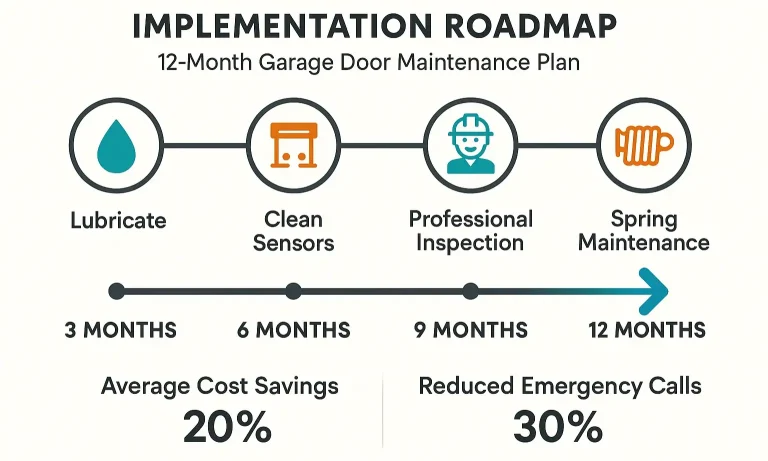
The best repair is the one you never have to make. A little preventative care can go a long way in extending the life of your door and preventing costly breakdowns.
Your 15-Minute Annual Garage Door Check-Up:
- Look and Listen: Operate the door and watch it move. Does it run smoothly, or is it jerky? Are there any new, loud noises?
- Check Balance: With the door closed, pull the red emergency release cord. You should be able to lift the door manually with relative ease. If it feels extremely heavy or flies up, the springs are out of balance and need professional adjustment.
- Test the Reversal Feature: Place a 2×4 board flat on the ground in the door’s path. When the door touches the board, it should immediately reverse. If it doesn’t, the safety mechanism in your opener needs service.
- Inspect Rollers and Cables: Visually inspect the rollers for cracks or wear. Look at the cables for any signs of fraying or rust. Do not touch them if they look damaged.
Frequently Asked Questions
Can I just replace one panel on my garage door?
Yes, in many cases, a single damaged panel can be replaced. A technician can help you determine if a garage door panel replacement is possible and match the new panel to your existing door.
How long do garage door springs last in the Texas climate?
Standard torsion springs are rated for about 10,000 cycles (one open/close is one cycle). For the average family, this translates to 7-10 years. However, the heat and humidity in Cypress can affect their lifespan. Regular maintenance can help maximize it.
Is a smart garage door opener worth it?
A smart garage door opener offers incredible convenience and security. You can open/close your door from anywhere with your phone, get alerts if it’s left open, and grant temporary access to visitors or deliveries. If you’re considering an upgrade, our guide on choosing the best smart garage door opener can help.
By understanding how your garage door works and what its symptoms mean, you’re no longer in the dark. You’re empowered to handle the small stuff and know exactly when to call for help with the big stuff. If you find yourself facing a problem that’s beyond a simple DIY fix, the team at Up & Down Garage Doors is here to help. Our family is dedicated to providing honest, reliable, and professional garage door services to our neighbors across Cypress, TX, 24/7.
You May Also Like
The Anatomy Of A Standard Garage Door
It's common knowledge that a garage door consists of many interconnected components. Each of these parts ensures the operation of the entire mechanism, so it is important to understand how it works. Of course, it is…
Published Date: Aug 6, 2024
10 Most Common Reasons Why Your Garage Door Won’t Open
If your garage door doesn't open, there are a few potential things that could be causing the issue; sometimes it's as simple as a loose wire, whereas other times the entire garage door opener unit might need…
Published Date: Aug 6, 2024
Garage Door Maintenance Tips
The garage door is one of the most important parts of your home. Its functioning is responsible not only for your convenience but also for your safety. In addition, it is also the largest and heaviest moving…
Published Date: Aug 6, 2024