





Garage Door Designs for Home Gyms and Offices
Published: Jul 3, 2026
Converting an underutilized garage into a high-performance home gym or a distraction-free home office is one of the most effective ways to expand your home’s square footage. According to Remodeling Magazine’s national data, replacing your garage door remains one of the highest-yielding home improvement projects, averaging a remarkable 102.7% return on investment.
However, standard garage doors are engineered for cars, not human comfort. When transitioning a garage into a lived-in space, the door must change from an industrial utility into a highly insulated, aesthetically sophisticated thermal wall. Navigating the delicate balance between high-end exterior curb appeal and interior environmental performance requires moving past basic product catalogs to understand the precise technical decisions that govern premium conversions.
Conversion Dilemma: Aesthetics vs. Livability
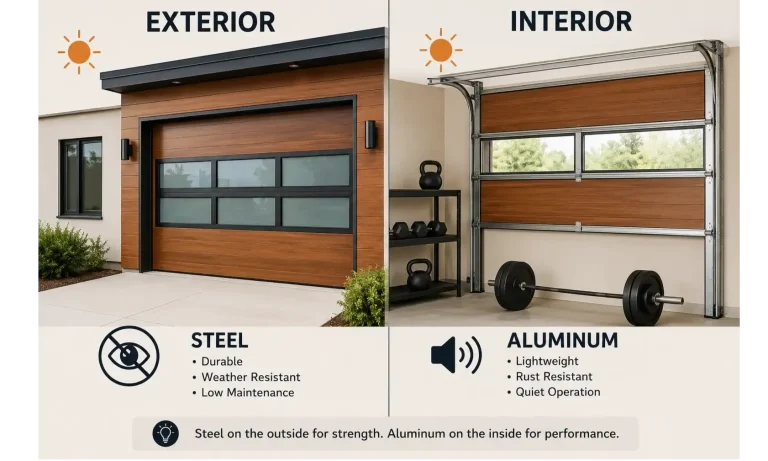
Planning a successful garage door conversion requires resolving a fundamental design conflict: how the door looks from the street versus how it performs from the inside.
An exterior facade demands architectural integration that elevates the home’s existing style, whether modern, craftsman, or traditional. Inside the space, the requirements split dramatically. A home office requires a quiet, distraction-free environment with controlled, glare-free light that serves as a professional background for video calls. Conversely, a home gym thrives on high energy, open ventilation, and massive natural light to mimic an outdoor environment.
The challenge lies in choosing a door system that provides the exact visual statement you want for your neighborhood, while ensuring you do not feel like you are sitting in an unconditioned, drafty garage.
Thermal & Acoustic Engineering of Conversions
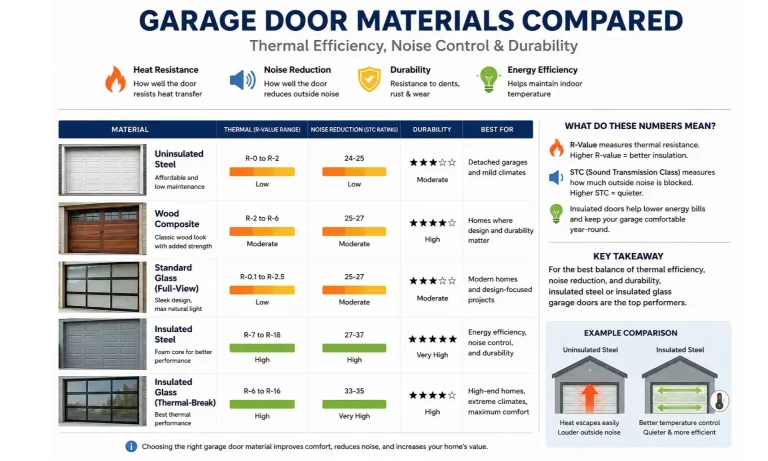
To ensure your workspace or gym remains comfortable year-round, you must look closely at performance metrics like R-values and Sound Transmission Class (STC) ratings.
The R-Value Reality Gap
Many homeowners are drawn to modern glass garage doors due to their striking visual appeal. However, a standard full-view aluminum glass door with insulated glass typically tops out at an R-value of 3.0 to 4.5. Compared to a premium double-skin polyurethane-insulated steel door, which can achieve a garage door insulation r value of 12.0 to 18.4, this represents an 80% drop in thermal efficiency.
To make a glass door viable in cold or extremely hot climates without overworking your HVAC system, you must specify thermal-break aluminum frames and Argon-filled, low-E double-pane glass. Alternatively, choosing a high-performance insulated garage door featuring flush, insulated composite or steel panels will dramatically reduce heat transfer.
Acoustic Barriers (STC)
Standard, uninsulated garage doors provide virtually zero acoustic barrier, holding a low Sound Transmission Class (STC) of 15. When trying to record a presentation or focus on a call, outside street traffic can be highly disruptive. Upgrading to polyurethane-injected sandwich doors outfitted with dual-contact perimeter weather-stripping raises the STC rating to 25–28. This helps to keep your space quiet while preventing the low-frequency thuds of dropped gym weights from disturbing your neighbors.
Solving the Fishbowl: The Privacy-to-Light Spectrum
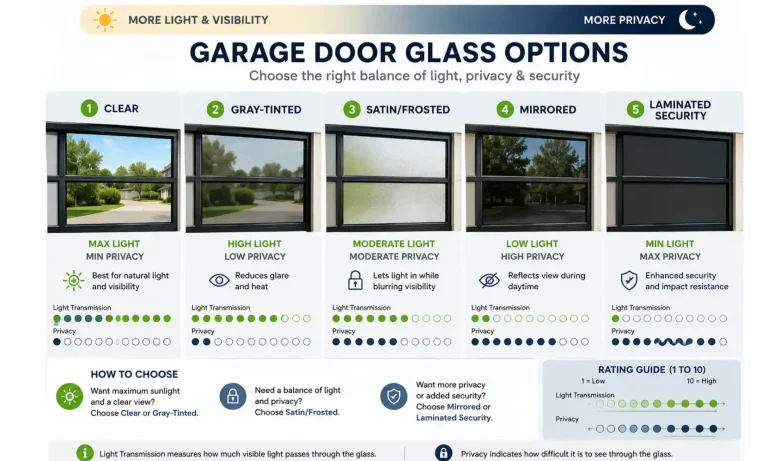
Maximizing natural light while maintaining privacy is a major design hurdle. You want sunlight, but you don’t want to feel exposed to passersby. This is where selecting the correct glass type is critical.
The Glass Association of North America indexing reveals a sharp trade-off between light and privacy:
- Sandblasted or Satin Glass: Allows up to 70% light transmission while maintaining a Level 9 privacy rating. This obscures shapes completely, even when backlit at night, making it ideal for both home gyms and offices.
- Gray-Tinted Glass: Offers an ultra-modern aesthetic and reduces screen glare (40% light transmission), but drops to a Level 1 privacy rating at night when interior lights are on, creating a total “fishbowl” effect.
- Mirrored Glass: Delivers maximum daytime privacy but is highly reflective and reverses its privacy behavior once the interior room is illuminated.
When evaluating these choices, understanding the pros and cons of garage door materials is highly beneficial. For instance, pairing a steel or wood-composite frame with satin-etched glass panels allows you to select customized garage door colors that tie your home’s exterior aesthetic together while establishing a comfortable, private interior.
The "Garage Door Inside" Problem: Architectural Hardware Hacks
The most common aesthetic complaint of any garage conversion is looking at raw industrial hardware—tracks, rollers, and heavy overhead springs—while trying to work or exercise. To make the conversion look and feel like a true room addition, utilize these professional hardware strategies:
- Track Relocation: Traditional tracks curve inward at a low height. By executing a custom high lift garage door conversion or a full vertical lift garage door configuration, the track profile is extended straight up the wall. This keeps the physical hardware flush against the ceiling and completely out of your primary line of sight.
- Side-Mount Jackshaft Openers: Instead of a noisy central ceiling-mount motor and track, specify a wall-mounted operator. Side-mount models act as an incredibly quiet garage door opener system, freeing up overhead space and leaving the ceiling clean and modern.
- Wicket Doors: Also known as pedestrian pass-through doors, these are integrated directly into the main garage door panel. They allow quick entry and exit for a stretch or coffee break without needing to raise the entire door and let out your carefully conditioned air.
Frequently Asked Questions
What R-value is required for a comfortable home office?
For most four-season climates, a door with a minimum R-value of 12.0 to 18.4 is recommended. This level of insulation minimizes heat loss and prevents the drafts common to older garage structures.
Can I soundproof a garage door completely?
While a garage door cannot be 100% soundproofed due to its moving joints, you can reduce noise transfer by up to 60%. This is accomplished by upgrading to a double-skin insulated door, sealing gaps with heavy-duty acoustic seals, and replacing metal rollers with ultra-quiet nylon ones.
How do I hide the tracks to make the space look like a real room?
Upgrading to a high-lift track system keeps the rails tucked tightly against the ceiling. You can also work with your builder to construct custom architectural soffits or wood-wrapped joists that completely conceal the tracks when the door is closed.
Realizing Your Conversion Vision
A premium garage conversion is more than just a home renovation—it is an investment in your lifestyle, health, and daily productivity. Creating a space that feels like an organic extension of your home requires prioritizing high-quality materials, precise thermal specs, and professional mechanical engineering.
At Up & Down Garage Doors, we bring over 15 years of family-owned, licensed expertise to every custom project. As authorized dealers of top manufacturers like Clopay and LiftMaster, our experienced technicians specialize in designing, installing, and servicing the high-lift and fully insulated door systems needed for high-end office and gym conversions. Ready to turn your garage into your favorite room in the house? Connect with our team of specialists today.
You May Also Like
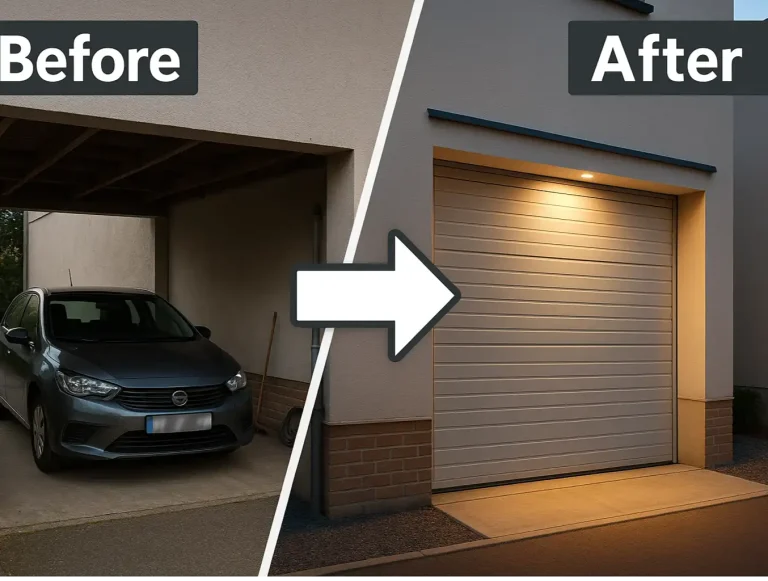
Converting Carports to Garages in Small Footprint Properties
You look at that carport every day. It does a decent job of keeping frost off the windshield and the worst of the rain off your car, but you can't help but dream of what it could be. A secure, fully-enclosed garage.…
Published Date: Jun 25, 2026
Durability and Maintenance for High-Use Converted Garage Doors
Converting a garage into a home office, gym, playroom, or rental suite is a brilliant way to maximize your home's footprint. However, most homeowners don’t realize that converting this space changes the thermodynamic…
Published Date: Jul 3, 2026
Converting Your Garage Into a Functional Space
Transforming your garage into a functional living space can significantly enhance your home's usability and value. Whether you envision a cozy guest suite, a home office, or a versatile recreational area, the…
Published Date: Sep 23, 2024