





Manual Garage Door Lock Selection and Installation Guide
Published: Aug 21, 2026
For many homeowners, the garage is the primary entry point to the home, yet it is often the most physically vulnerable. According to national burglary statistics, roughly 9% of residential break-ins occur directly through the garage door. Because more than 55.7% of these successful break-ins involve forcible entry—such as crowbar prying on bottom door panels—relying solely on standard automated trolley locks may leave your property exposed.
If you are planning a garage door lock installation to upgrade your home defense, choosing and installing the right manual lock hardware is critical. This guide provides a technical blueprint to help you evaluate manual locks, navigate material compatibilities, and execute a damage-free installation.
Types of Manual Garage Door Locks
Selecting the best locking mechanism depends on whether your priority is daily keyed access or deep-level security for long vacations.
- Slide Bolts (Interior Track Locks): These cost-effective, heavy-duty deadbolts mount directly to the inside face of the door panel and slide a physical steel bolt into a slot in the vertical track. They are highly secure but can only be operated from the inside.
- T-Handle & L-Handle Keyed Systems: Typically used on manual garage doors without automatic openers, these exterior keyed handles connect to interior spring-loaded latch mechanisms via cables or metal chains. Turning the exterior key retracts the latches from the track.
- Cylinder Rim Locks and Deadbolts: Heavy-duty physical bars thrown across center stiles, perfect for commercial spaces or detached garages requiring double-sided keyed security.
If you find yourself facing an emergency lockout or a sudden power failure, you may need to secure your home immediately. Knowing how to lock garage door when power is out is invaluable. In a pinch, the “Emergency C-Clamp Trick”—clamping a standard C-clamp onto the track directly above one of the rollers—acts as an instant, zero-cost physical stop.
Compatibility of Manual Locks with Different Garage Door Materials
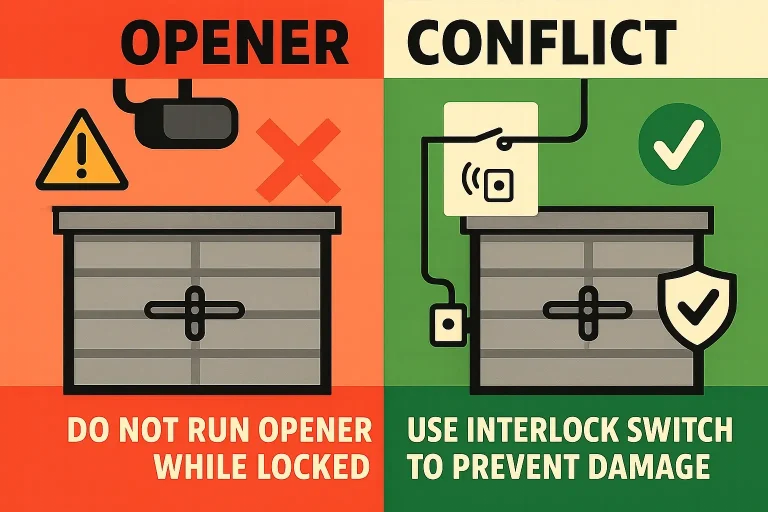
Selecting hardware is only half the battle; matching the lock to your door’s exact engineering is vital to avoid catastrophic structural damage.
- Insulated Sandwich Doors: These doors feature a layer of foam insulation sandwiched between two thin steel skins. Tightening mounting bolts directly onto a sandwich door will crush the foam, warping the panels. You must use rigid plastic or metal spacer sleeves (compression tubes) cut to the exact thickness of the door to protect panel structural integrity.
- Single-Skin Steel (Pan Doors): Lacking insulation, these doors are lightweight. Hardware must align with the pre-punched holes in the vertical stiles to prevent the sheet metal from tearing under physical stress.
- Traditional Wood Doors: While structurally sturdy, wood is vulnerable to splitting and rotting. Pre-drilling pilot holes is mandatory, and all mounting fasteners must have anti-corrosive coatings.
- Fiberglass and Vinyl Doors: These materials crack easily under concentrated torque. Installing a metal backing plate is essential to distribute the compression force evenly across the panel face.
Step-by-Step Installation Blueprints
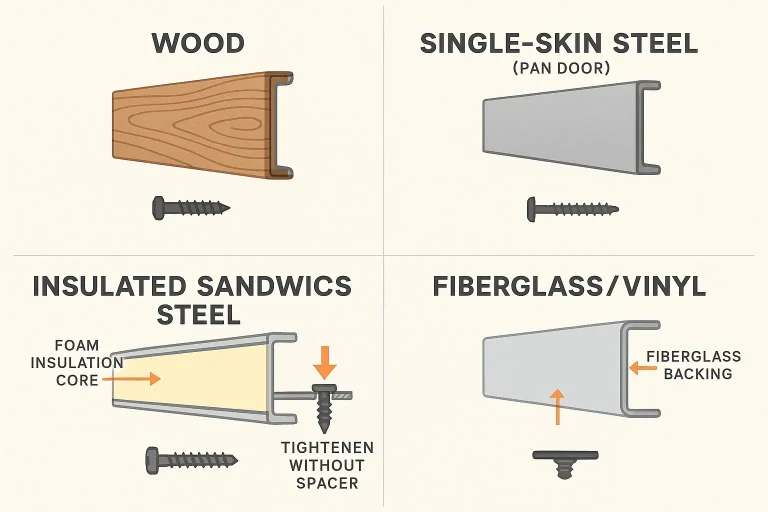
Before attempting a DIY install, verify your track alignment and door balance. A mismatched or misaligned lock will cause immediate garage door lock repair headaches down the line.
Blueprint A: The 15-Minute Interior Slide Lock
- Positioning: Locate a horizontal stile on the second panel from the bottom. Align the slide bolt so it sits centered over the vertical track slot.
- Clearance Check: Maintain a 1/8-inch vertical clearance between the top of the bolt and the slot edge so the door’s rollers do not snag on the hardware during standard operation.
- Fastening: Secure the slide lock chassis to the steel stile using self-tapping sheet metal screws (or heavy lag screws for wood doors). Do not over-torque.
Blueprint B: The Keyed T-Handle System
- Two-Step Drilling: Drill a 3/16-inch pilot hole entirely through the door panel. From the outside, enlarge the center shaft hole using a 3/8-inch bit, keeping the interior hole small to secure the backplate.
- Mounting: Insert the exterior T-handle, slide on the interior mounting plate, and bolt it tight.
- Cable Tension Calibration: Connect the latch cables to the center turning mechanism. The cables must be taut with exactly 1/4-inch of physical deflection under light finger pressure. If too tight, the door will not lock; if too loose, the exterior handle will spin without retracting the latches.
Safety Protocols: The "Opener Conflict" Solution
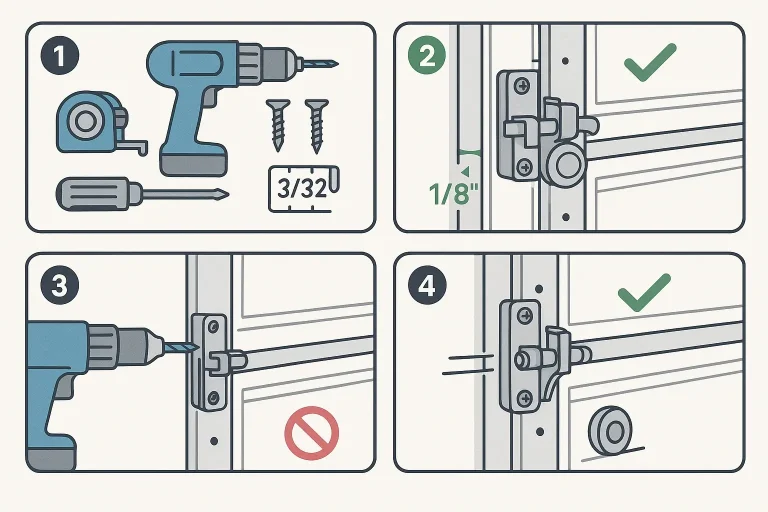
A major risk of manual locks is the “opener conflict.” If someone activates an automatic garage door opener while a manual slide bolt or latch is physically engaged, the motor will pull against the immovable steel bolt. This conflict can twist the top panel, warp the vertical tracks, snap lifting cables, or burn out the opener motor.
If you run an automatic system but want manual locking capabilities (for vacation security, for example), you must establish physical safety boundaries.
- The Interlock Switch Option: Wire a micro-limit switch directly to your slide lock. When the bolt is thrown, the switch physically breaks the circuit to the opener, preventing it from receiving electrical power.
- Smart Automation: Plug your automatic opener into a smart outlet configured to shut down power whenever your home security system or door sensor indicates the manual lock is active.
For homes requiring regular keyed entry, exploring keyless garage door lock solutions can completely bypass the manual lock risk by integrating digital security directly into the opener’s motor intelligence.
Frequently Asked Questions
Can I use a manual slide bolt on a door with an automatic opener?
Yes, but only if you take precautions. You must physically unplug the opener while the manual lock is engaged to avoid accidental motor damage, or install a safety interlock switch to cut power automatically.
How do I know if my manual lock is failing?
Common warning signs of a garage door lock not working include keys sticking in the cylinder, cables sagging, or latches failing to seat completely inside the track. Regularly test cable deflection to ensure it maintains the proper 1/4-inch tolerance.
Should I choose DIY or professional installation?
If you are comfortable drilling through steel panels, balancing cable tension, and cutting spacer sleeves, a manual lock can be a satisfying weekend DIY project. However, if you are dealing with double-skin insulated sandwich panels, heavy commercial manual garage door setups, or specialized electrical interlock switches, professional installation ensures structural protection and warranty preservation.
Securing Your Peace of Mind
Investing in high-quality manual lock hardware is one of the most effective strategies within modern how to secure garage door frameworks. Whether you decide to install an interior slide bolt for travel protection or execute a complete how to change a garage door lock overhaul for a newly purchased home, precision and material awareness are non-negotiable.
If you are ready to fortify your garage with robust, professionally verified security systems, contact Up & Down Garage Doors today. Our highly trained, family-operated service teams are available 24/7 to install, calibrate, and secure your garage door assets with unmatched industry expertise.
You May Also Like
When to Call a Professional for Complex Garage Door Lock Repairs
It’s a frustrating moment we’ve all faced. You go to lock or unlock your garage door, and something feels… wrong. The key spins endlessly, the handle grinds with a gritty protest, or the lock simply refuses to…
Published Date: Apr 3, 2026
Garage Door Lock Frozen: A 5-Minute Guide to Safely Getting In
That sinking feeling is unmistakable. It’s freezing outside, you’re in a hurry, and your garage door is completely, stubbornly stuck. You turn the key, and it won’t budge. You press the remote, and nothing happens.…
Published Date: Apr 2, 2026
How to Install a Garage Door Lock for Better Security
Looking to improve your garage door security without spending a fortune? Whether you’re a homeowner or a property manager, learning how to install a garage door lock can help protect your space from break-ins. This…
Published Date: Oct 30, 2025