





The Ultimate Seasonal Garage Door Lubrication Schedule for Any Climate
Published: Jul 30, 2026
You wouldn’t. Just like you adjust your wardrobe for the season, your garage door maintenance needs a climate-adaptive approach. Sticking to a one-size-fits-all schedule is the fastest way to deal with grinding noises, frustrating jams, and premature wear and tear.
This guide will help you move beyond reactive fixes and create a proactive, year-round lubrication plan tailored to your specific environment. It’s the secret to a quieter, smoother, and longer-lasting garage door, no matter what the weather throws at it.
Why Your Garage Door Hates the Weather (And What Lubrication Does About It)
At its core, a garage door is a complex system of moving metal parts. Its biggest enemies are friction and corrosion, both of which are supercharged by extreme weather.
- In the Cold: Metal contracts, lubricants thicken into a sticky sludge, and moisture freezes, causing parts to grind, strain, and even break.
- In the Heat: Lubricants can thin out and evaporate, leaving parts unprotected. Dust and grit get kicked up, mixing with old grease to form an abrasive paste that wears down components.
- In Humidity: Moisture is the primary cause of rust and corrosion, which can seize hinges, weaken springs, and eat away at your door’s essential hardware.
Proper lubrication creates a protective barrier that reduces friction, repels moisture, and prevents corrosion, allowing everything to move as it should. It’s the single most effective piece of preventative maintenance you can do.
What to Lube and What to Leave Alone
Before you grab a can of spray, it’s critical to know your targets. Applying lubricant to the wrong parts can cause more harm than good. Focus on these metal-on-metal contact points:
- Hinges: Lubricate the pivot points on all the door’s hinges.
- Rollers: If you have metal rollers, apply lubricant to the ball bearings inside them. Avoid spraying nylon rollers.
- Springs (Torsion & Extension): A light coating on your overhead springs helps prevent corrosion and ensures a smooth, quiet operation. Completing proper garage door spring maintenance is crucial for safety and longevity.
- Bearings & Bearing Plates: These are located at each end of the spring bar and need lubrication to turn smoothly.
- Lift Cables: A very light wipe-down can help prevent corrosion in humid climates.
The 2 Biggest Garage Door Maintenance Mistakes to Avoid
Getting lubrication right is as much about what you don’t do as what you do. Avoid these two common pitfalls that can damage your door.
- Using WD-40 as a Lubricant: It’s a common misconception, but WD-40 is a solvent and degreaser, not a long-term lubricant. It’s great for cleaning off old, gummy grease but will quickly evaporate, leaving parts unprotected and attracting more dirt.
- Lubricating the Garage Door Tracks: The tracks are the pathways for your rollers, and they need to be clean, not greasy. Lubricating them will cause the rollers to slide instead of roll, attracting a messy buildup of dirt and debris that will eventually jam the door. Simply wipe them clean with a cloth.
Avoid common maintenance errors: WD-40 is not a lubricant, and garage door tracks should never be lubricated. Follow expert advice for long-term door health.
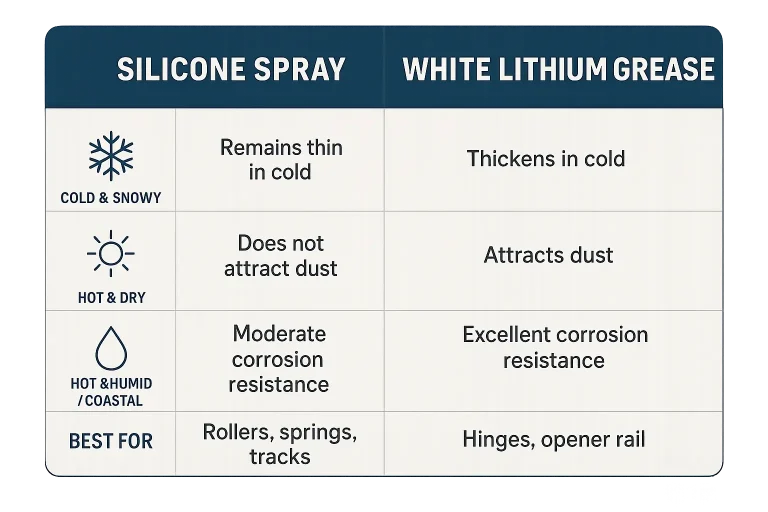
Choosing Your Climate's Champion: Silicone vs. White Lithium Grease
The two best choices for garage door lubrication are silicone spray and white lithium grease. The key is knowing which one to use for your climate and specific part. The costs of neglecting garage door lubrication are high, so choosing the right product is a small investment with a big payoff.
- Silicone Spray: This is your go-to for most applications. It goes on thin, penetrates tight spaces, and dries to a film that doesn’t attract dust. It’s excellent in a wide range of temperatures.
- White Lithium Grease: This is a thicker, more durable lubricant. It’s ideal for metal-on-metal joints like the garage door opener’s chain or screw drive, but can get gummy in extreme cold and attract dirt in dusty areas.
Silicone Spray and White Lithium Grease: Choose the right lubricant tailored to your climate to maximize garage door performance and durability.
For Extreme Cold & Snowy Regions (e.g., Chicago, Denver) Your main enemy is grease thickening and parts freezing.
- Best Choice: Silicone-based spray. It remains effective in freezing temperatures and won’t gum up like heavier greases.
- Frequency: Lubricate in late fall to prepare for winter, and again in late spring to clean away road salt and grime. For High Heat & Dry, Dusty Areas (e.g., Phoenix, Las Vegas) Your challenge is dust and grit creating an abrasive paste.
- Best Choice: Silicone-based spray. Its fast-drying formula doesn’t leave a sticky residue that attracts sand and dirt.
- Frequency: Lubricate every 3-4 months. More frequent, light applications are better than a single heavy one to keep parts clean. For High Humidity & Coastal Climates (e.g., Miami, Houston) Rust and corrosion from moisture and salt air are your primary concerns.
- Best Choice: Silicone spray for most moving parts due to its excellent moisture-repelling properties. For heavy-duty metal joints that need extra protection, a sparing application of white lithium grease can provide a more durable barrier against salt.
- Frequency: A quarterly schedule is ideal. Inspect for any signs of surface rust regularly, especially after major storms.
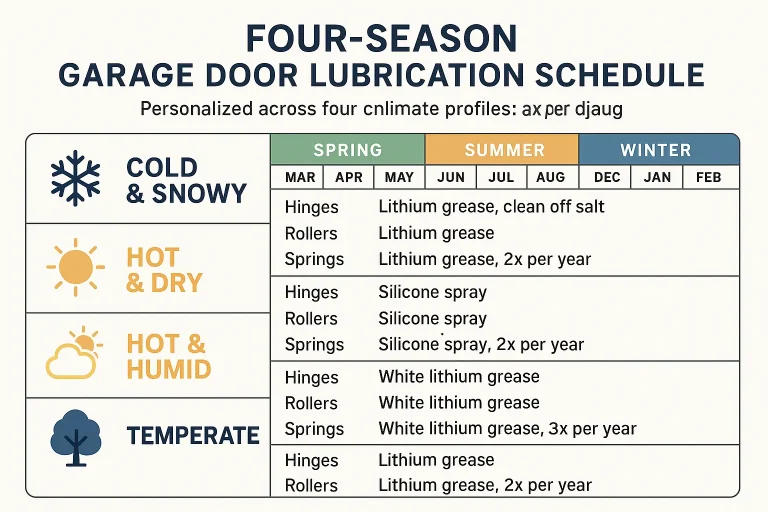
The Climate-Adaptive Lubrication Schedule
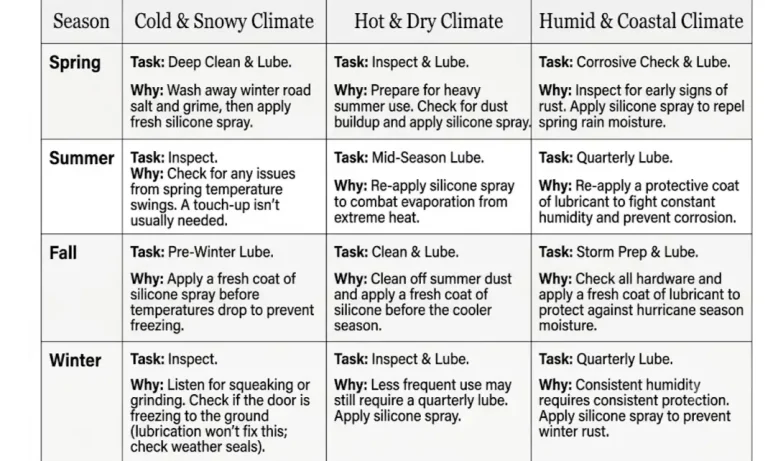
Stop guessing and start planning. Use this schedule as your guide, adjusting it based on your door’s usage and your specific local conditions. Answering how often to lubricate a garage door depends on your local climate and daily usage.ge door depends entirely on where you live.
A customized seasonal lubrication plan ensures your garage door performs optimally year-round, reducing repair costs and extending service life.
Your 5-Step Guide to a Perfectly Lubricated Garage Door
Ready to get started? It only takes about 15 minutes. Here’s how to lubricate a garage door safely and effectively.
Safety First: Before you begin, disconnect the power to your garage door opener to prevent it from being accidentally activated.
1. Clean All Surfaces: Grab a rag and wipe down the hinges, rollers, and springs. You want to apply lubricant to a clean surface, not trap dirt and grime. For thick, old grease, use a degreaser first.
2. Shake the Can: Shake your can of silicone spray lubricant for at least 20-30 seconds to ensure the contents are properly mixed.
3. Apply Sparingly: Less is more. A light, targeted spray on each hinge pivot point, roller bearing, and along the springs is all you need. Use the straw attachment for precision.
4. Wipe Away Excess: Take a clean cloth and wipe off any drips or excess lubricant. This is key to preventing it from attracting dirt or dripping onto your car.
5. Reconnect and Test: Plug the opener back in and run the door up and down a few times. This will help distribute the lubricant evenly and you should immediately notice a quieter, smoother operation.
Frequently Asked Questions (FAQ)
Can I use WD-40 on my garage door?
No. WD-40 is a solvent and degreaser, not a true lubricant. It will clean parts but evaporates quickly, leaving them unprotected. Always use a silicone or white lithium grease-based lubricant designed for garage doors.
How do I know if my garage door needs lubrication?
Your door will tell you! Loud noises like squeaking, grinding, or scraping are the most obvious signs. Another key indicator is a jerky or hesitant motion. If you notice your garage door sticking when opening, it’s a clear signal that the parts need attention.
What parts of the garage door should you lubricate?
Knowing what parts of the garage door should you lubricate is critical. Focus on all moving metal parts: hinges, metal roller bearings, springs, and the opener’s chain or screw drive. Never lubricate the tracks or nylon rollers.
How often should I really lubricate my garage door?
It depends entirely on your climate. A good baseline is twice a year, but for extreme climates (very hot, cold, or humid), a quarterly schedule is better. Refer to our Climate-Adaptive Schedule above for a tailored plan.
Keep Your Door Running Smoothly Year-Round
A few minutes of preventative maintenance each season can save you from the headache of a stuck door, the annoyance of a noisy operation, and the expense of a premature repair. By tailoring your lubrication strategy to your climate, you’re not just maintaining your garage door—you’re extending its life and ensuring it works safely and reliably every time you press the button.
And if you’ve followed these steps and are still having issues, it might be a sign of a deeper problem. That’s when it’s time to call in the professionals.
You May Also Like
Your Ultimate Guide to Garage Door Spring Lubrication
That ear-splitting screech your garage door makes isn’t just an annoying wake-up call. It's a cry for help from the hardest-working part of the entire system: the springs. Before you resign yourself to the noise or…
Published Date: Apr 7, 2026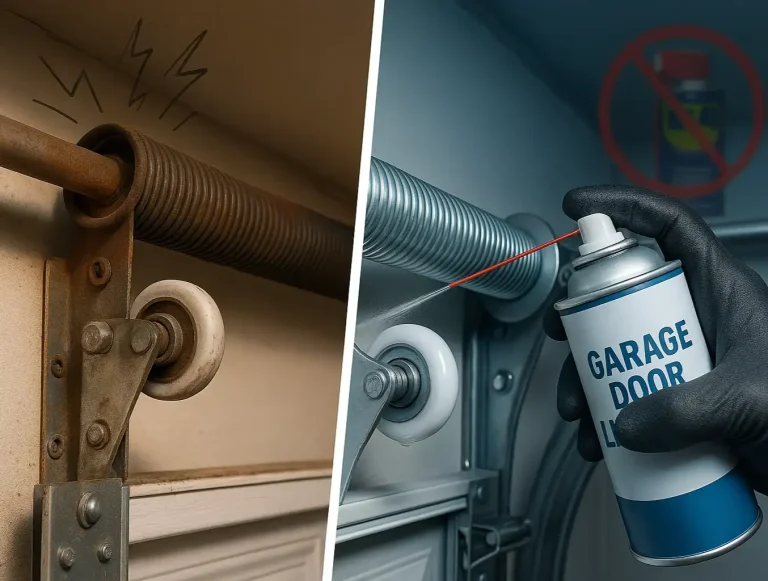
Silence the Squeal: Your Ultimate Guide to Garage Door Lubrication
Is your garage door the loudest thing on the block? That shuddering, grinding, and high-pitched squealing isn’t just an annoying wake-up call—it’s a cry for help. The metal components of your door are in a constant…
Published Date: Jan 27, 2026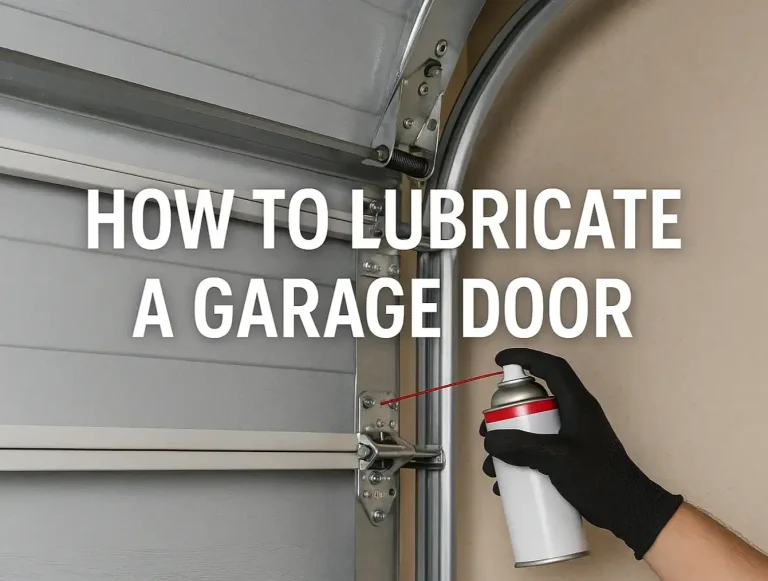
How to Lubricate a Garage Door: A Quick Maintenance Guide
A noisy or jerky garage door isn’t just annoying — it’s a sign your system needs a little attention. Many homeowners ask, “How do you lubricate a garage door without making a mess or damaging anything?” The good…
Published Date: Jul 31, 2025