





The Impact of Sensor Removal on Garage Door Opener Warranty
Published: May 13, 2026
It’s a familiar story. You’re rushing out, you hit the button, and the garage door starts to close… only to reverse and open again. The lights on your opener flash, and a quick online search points to the safety sensors. You find a video promising a “quick hack” to bypass them—just tape them together or twist some wires. It seems like a simple solution to a persistent annoyance.
Before you reach for the duct tape, let’s talk about the hidden costs of that “easy fix.” Disabling your garage door’s safety sensors isn’t just a minor tweak; it’s a decision that can instantly void your warranty, dramatically shorten the life of your opener, and lead to repair bills that dwarf the cost of a simple sensor adjustment.
Foundation: Why Sensors are the Brains of Your Opener
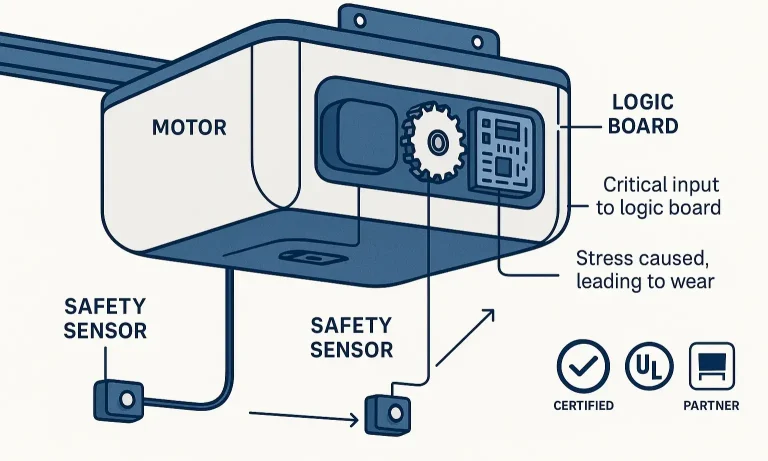
It’s easy to think of safety sensors as simple on-off switches that just prevent the door from closing on something. While that is their most critical safety function, they play a much deeper role in the health of your entire garage door system.
Think of the sensors as vital inputs for your opener’s logic board—the central computer that controls its operation. This logic board relies on a clear signal from the sensors to confirm the path is unobstructed. When it receives that signal, it operates the motor under normal, expected parameters. When you bypass the sensors, you’re essentially tricking the logic board, forcing the system to operate in a way it was never designed for. This doesn’t just create a safety hazard; it puts the machinery itself under constant, unnecessary stress.
Building: The Three Hidden Consequences of Sensor Removal
That five-minute hack can trigger a cascade of expensive problems. Most homeowners are completely unaware of these consequences until it’s too late.
1. You Will Almost Certainly Void Your Warranty
This is the big “aha moment” for most homeowners. Garage door opener manufacturers like LiftMaster, Chamberlain, and Genie build their products with safety as a top priority. Federal law has mandated the inclusion of safety reversing mechanisms since 1993. Tampering with or disabling these core safety features is a direct violation of the terms of use.
If your opener fails while the sensors are disabled, the manufacturer has every right to deny your warranty claim. What could have been a free replacement part suddenly becomes a full-cost repair. Understanding your typical garage door warranty is crucial, and the first rule is to never modify its safety systems.
2. You’ll Drastically Reduce Your Opener’s Lifespan
Bypassing your sensors is like disabling the oil pressure light in your car and just hoping for the best. Without the sensors to confirm a clear path, the opener’s internal mechanics are put under immense strain.
If the door encounters an actual obstruction, the motor won’t get the signal to reverse. It will continue to push down, trying to force its way through. This can:
- Strip the drive gear: This plastic or nylon gear is designed to be a failure point to protect the motor, but replacing it is a complex job.
- Burn out the motor: The sustained strain can cause the motor to overheat and fail completely. A full garage door motor replacement is one of the most expensive repairs.
- Damage the door panels: The force can bend, crack, or break the panels themselves, turning a simple opener problem into a major door repair.
These issues chip away at the expected garage door opener lifespan, turning a 10-15 year machine into one that might fail in just a few years.
3. You’ll Face Significantly Higher Future Repair Costs
The temptation to bypass sensors often comes from a desire to avoid a small repair bill. The irony is that this decision almost always leads to much larger ones. Let’s compare the costs.
A simple fix for a sensor issue might be free—like removing a cobweb or realigning the sensor by hand. Even a professional service call to replace faulty sensors is a minor expense compared to the cost to repair a garage door opener motor that has burned out from unnecessary strain.
Mastery: The Right Way to Solve Sensor Problems
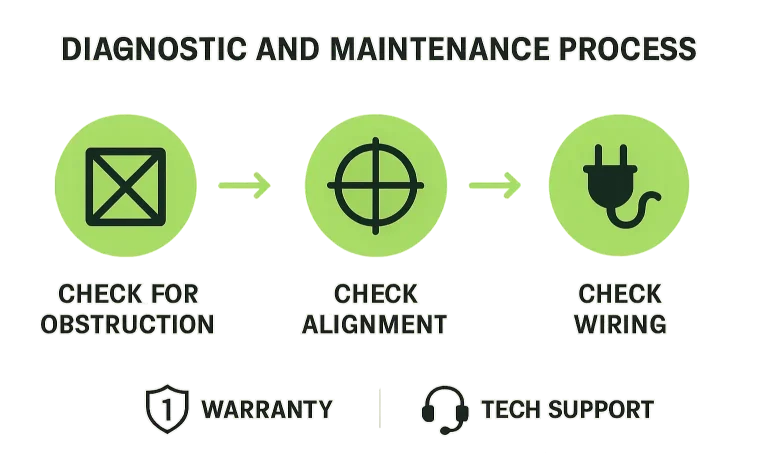
Instead of resorting to a dangerous bypass, 99% of sensor issues can be solved with a few simple checks. Before calling a professional, take a couple of minutes to troubleshoot the right way. Faulty or misaligned garage door sensors are the most common reason for a door that won’t close.
1. Check for Obstructions
The most common culprit is the simplest. Make sure nothing is blocking the path between the two sensors. This includes spiderwebs, dust, leaves, or even a rake handle leaning against the wall. Learning how to clean garage door sensors with a soft cloth can often solve the problem instantly.
2. Check for Alignment
The sensors must be pointed directly at each other to work. One sensor will have a sending LED and the other a receiving LED. Usually, both lights should be solid (one green, one amber/red). If a light is flickering or off, the sensors are likely misaligned. Gently adjust them by hand until both lights are solid. Our guide on how to align garage door sensors provides step-by-step instructions.
3. Check the Wiring
Look at the wires connected to the back of each sensor and where they connect to the motor unit. A loose or frayed wire can interrupt the signal. If you see visible damage, it’s best to call a professional.
Frequently Asked Questions (FAQ)
What exactly do garage door sensors do?
Garage door sensors (or “photo-eyes”) project an invisible infrared beam near the floor across the garage door opening. If anything breaks this beam while the door is closing, the sensor sends a signal to the opener’s logic board, which immediately reverses the door’s direction to prevent an accident.
Is it illegal to bypass garage door sensors?
While you won’t get a ticket for it, federal law (UL 325) requires all garage door openers manufactured and sold in the U.S. since 1993 to have this safety feature. Disabling it creates significant liability for you as the homeowner. If an accident occurs and your sensors were intentionally disabled, your homeowner’s insurance may not cover the damages or injuries.
Why do my sensors keep malfunctioning?
The most common reasons are misalignment from being bumped, dirt or dust on the lenses, loose wiring, or direct sunlight interfering with the infrared beam. Regular, simple maintenance can prevent most issues.
I bypassed my sensors. Is it too late to fix it?
Absolutely not! The first step is to remove the bypass and reconnect the sensors correctly. Then, perform the alignment and cleaning checks. If they still don’t work, the sensors themselves may need to be replaced, but this is a far better option than leaving the system compromised.
Protect Your Investment, Don't Bypass It
Your garage door opener is a significant investment in your home’s convenience and security. The safety sensors are there not just to protect your family and property, but to protect the opener itself.
While the temptation to use a “quick fix” is understandable, the long-term risks to your warranty, your opener’s lifespan, and your wallet are far too high. Taking a few moments to properly diagnose the issue is always the smarter choice. If you’re struggling to find the problem, don’t risk it—a professional can diagnose and fix your garage door opener safely and correctly, preserving your warranty and peace of mind.
You May Also Like
How Garage Doors Detect Obstructions When Photo-Eyes Fail
We all know the little electronic "eyes" at the bottom of our garage door tracks. They project an invisible beam, and if anything breaks that beam while the door is closing, the door instantly reverses. They are the…
Published Date: May 12, 2026
Will a Garage Door Work Without the Sensors And Still Be Safe
Many homeowners wonder if a garage door will work without the sensors, especially when the door won’t close and you need it down fast. While the opener can sometimes move without the garage door safety sensors, this…
Published Date: Nov 20, 2025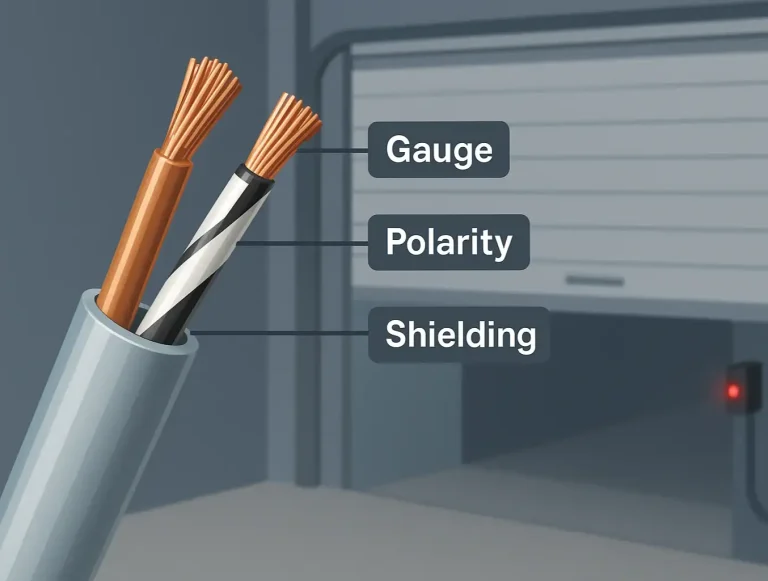
Understanding Garage Door Sensor Wire Types
You’ve been there. You hit the button on your garage door remote, hear the familiar hum of the motor, but then… it stops. The door reverses, and the lights on your opener start blinking frantically. You check for…
Published Date: May 7, 2026