




Garage Door Opens, Then Goes Back Down: A Technician’s Diagnosis Guide
Published: Sep 22, 2026
It is 11:00 PM, the wind is howling, and your garage door refuses to stay closed. You trigger the opener, it starts its cycle, and then—unexpectedly—it reverses back to where it started. This mechanical ambiguity is deeply frustrating. Whether you are dealing with a lockout panic or trying to figure out if you need a professional service call, this guide replicates a licensed technician’s exact troubleshooting path to get your door secured and functioning correctly.
Emergency Quick-Secure Guide
When your home is left vulnerable, diagnostic theories can wait. You need to secure your house immediately. The fastest bypass is the Hold-To-Close method. By walking over to your wall button console and pressing and holding the button down continuously without letting go, you override the safety sensors. This forces the motor to complete its downward cycle. If you cannot get the motor to cooperate at all, locate the red emergency release cord, pull it down and back toward the motor to disconnect the carriage, and slide the door shut manually to lock it for the night.
The Directional Diagnostic Split
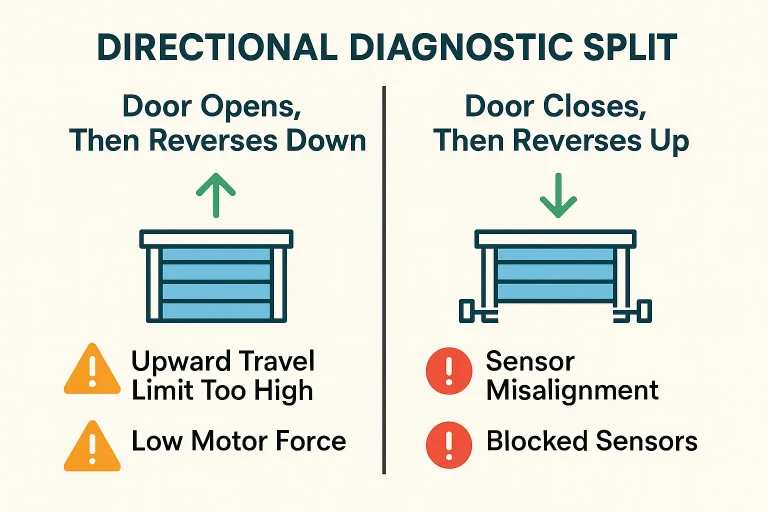
To pinpoint the issue, we must analyze what technicians call the Twin Reversal Phenomena. Most diagnostic guides conflate upward and downward reversals, wasting hours of your time. Observe your system closely:
- Behavior A (Upward Reversal): The door starts to open, but stops and reverses back down before completing its cycle. This often points to high physical resistance, an incorrect upward travel limit, or a weakening spring system.
- Behavior B (Downward Reversal): The door starts to close, hits the floor (or reverses halfway down), and pops back open. This typically signals a sensor issue, an over-extended downward travel limit, or a physical obstruction.
Step-by-Step Diagnostic Tree
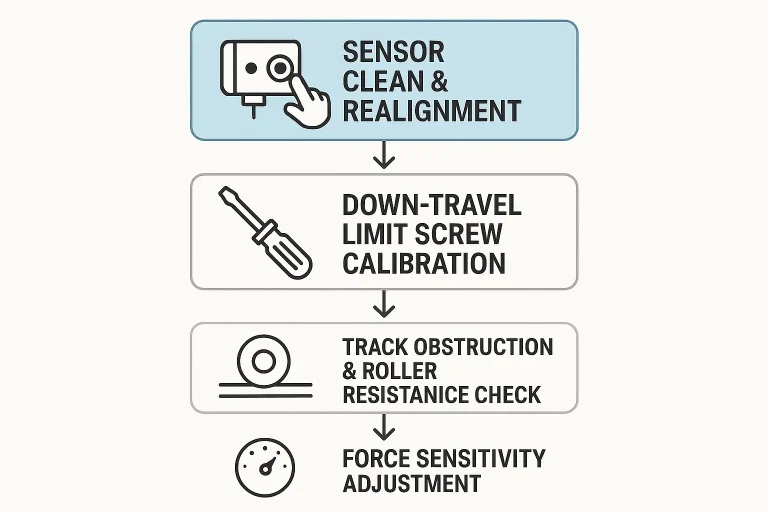
Run through these critical checks in order from the simplest fix to the most complex mechanical adjustments.
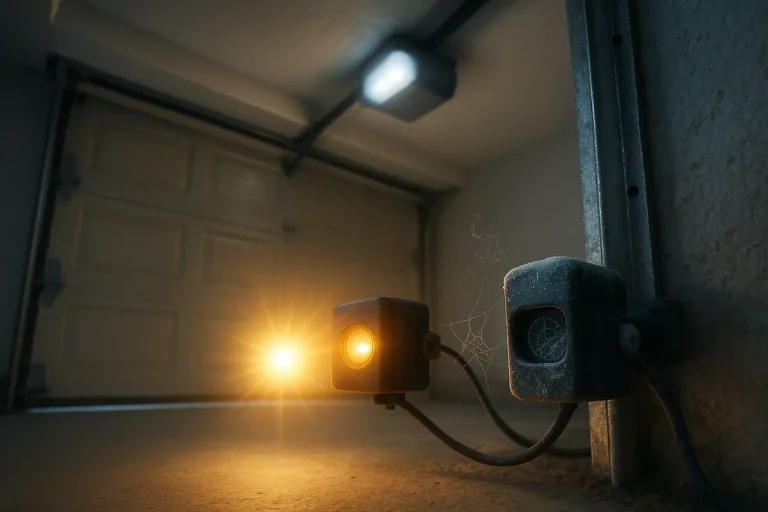
- Clean and Realign Photo-Eyes: Industry data shows that 75% to 80% of unexpected reversals stem from safety sensors. If your infrared lenses are dirty, misaligned, or shifting on warped brackets, the system halts. Use a microfiber cloth to clean both lenses. If you experience intermittent daytime failures, you may be facing “sunlight blindness” where ultraviolet rays overpower the receiving sensor. Execute a sensor swap: relocate the green receiving LED away from direct morning or evening sun, or fabricate a temporary cardboard shroud to shade the lens. If you need a deeper look, check our guide on how to garage door safety sensor troubleshoot.
- Calibrate the Travel Limits: If your door reverses immediately upon hitting the floor, your opener is programmed to travel deeper than the actual floor level. The motor senses the ground, assumes it is an obstruction, and reverses to prevent damage. Learn how to adjust garage door travel limits on your unit using the limit screws or programmatic buttons on the motor head.
- Inspect Tracks and Rollers: Physical friction can mimic an obstruction. Pull the manual release cord and raise the door by hand. If you feel garage door sticking or binding, your tracks may be out of alignment. Standard garage door track alignment involves loosening the track brackets, tapping the rails back into a parallel path, and tightening them securely.
- Perform a Force Sensitivity Test: If mechanical resistance is normal, the motor’s force thresholds may be set too low. Perform a safety 2×4 Wood Block Test: place a 2-inch solid block on the floor directly in the path of the closing door. If the door hits the block and does not immediately reverse, your downward force is too high, posing a safety hazard. Adjust the plastic force dials on the rear of your opener to find the balance between reliable operation and physical safety.
Brand-Specific Diagnostic Code Cheat Sheet
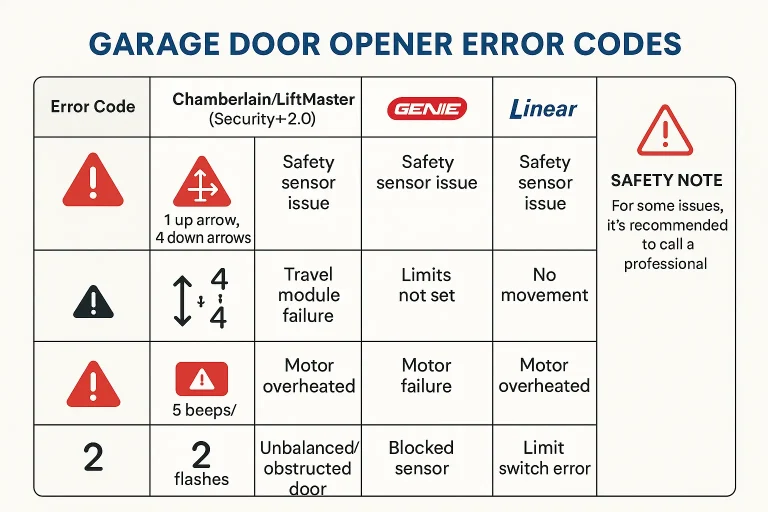
Modern openers speak to us through flashing lights and auditory codes. Rather than digging through old manuals, use this breakdown to decode your unit’s diagnostics:
- Chamberlain, LiftMaster, and Craftsman (Security+ 2.0):
- The 10-Flash Rule: Standard units built after 1997 flash the main overhead light bulb 10 times to signal a safety sensor fault. If you are experiencing this, read up on why you have a why is garage door light blinking and not opening error.
- The 5-Beep Rule: Modern smart units manufactured after November 15, 2020, emit 5 beeps and flash 5 times if they reverse due to physical obstructions or incorrect limits.
- 1 Up, 4 Down Arrows: System indicates safety sensors are misaligned or blocked. Use our detailed chamberlain garage door opener troubleshooting or liftmaster garage door opener troubleshooting resource.
- Genie Openers:
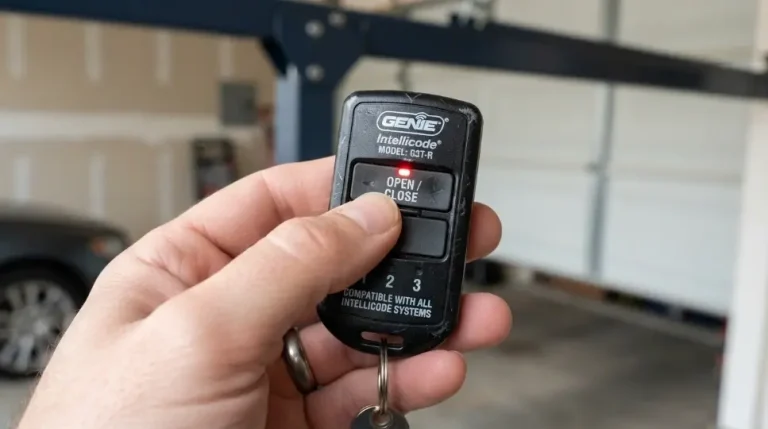
- Blinking Red LED: Safety sensors are blocked or misaligned. Read more tips in our genie garage door opener repair handbook.
- Solid Red/Blinking Green: System limits need to be reprogrammed.
DIY vs. Professional Safety Thresholds
While sensor cleaning and travel adjustments are highly safe, some tasks carry severe physical risks. You should know when to tackle the issue yourself and when to call a professional team:
- Safe DIY Repairs: Aligning photo-eyes, lubricating rollers, adjusting travel limits, and clearing minor track obstructions.
- Professional Intervention Required: A garage door motor running but door not opening often points to internal gear damage. If you notice signs your garage door spring is broken, step away immediately. Understanding how does a garage door spring work helps you appreciate that these springs hold thousands of pounds of tension; attempting a DIY replacement can result in catastrophic injury. The same safety standard applies to snapped cables—always hire a professional for a garage door cable replacement.
If your diagnostics point to a failing spring, damaged cables, or complex electrical faults, let Up & Down Garage Doors’ certified, licensed technicians restore your peace of mind with 24/7 emergency service.
Frequently Asked Questions
Why does my garage door open then close immediately?
This is typically due to an over-extended up-travel limit or excessive motor force setting. The opener runs too far up the track, encounters physical resistance at the header, and reverses back down as a built-in safety measure.
How do I bypass the safety sensors in an emergency?
You can temporarily bypass the safety sensors by physically holding down the wall button until the garage door is fully closed. Release the button only after the cycle is complete.
Why is my opener flashing its main light bulb ten times?
For Chamberlain, LiftMaster, and Craftsman openers manufactured after 1997, a 10-flash sequence of the overhead light bulb indicates that the safety sensor circuit is open, misaligned, or obstructed during close-travel.
You May Also Like