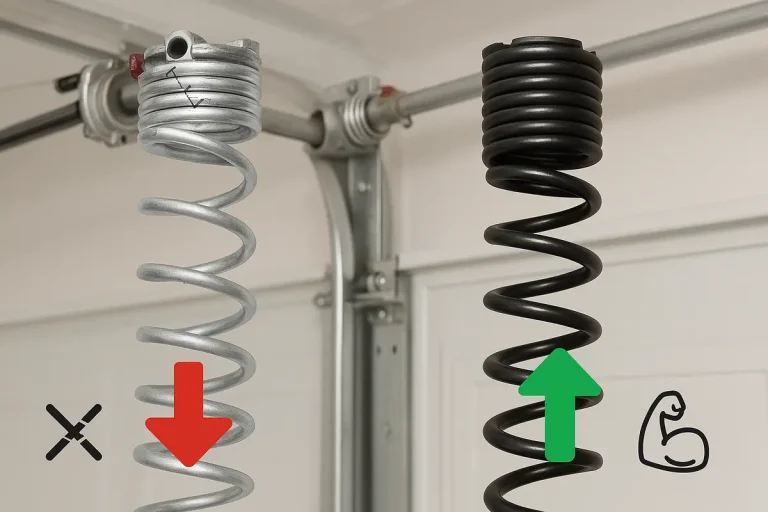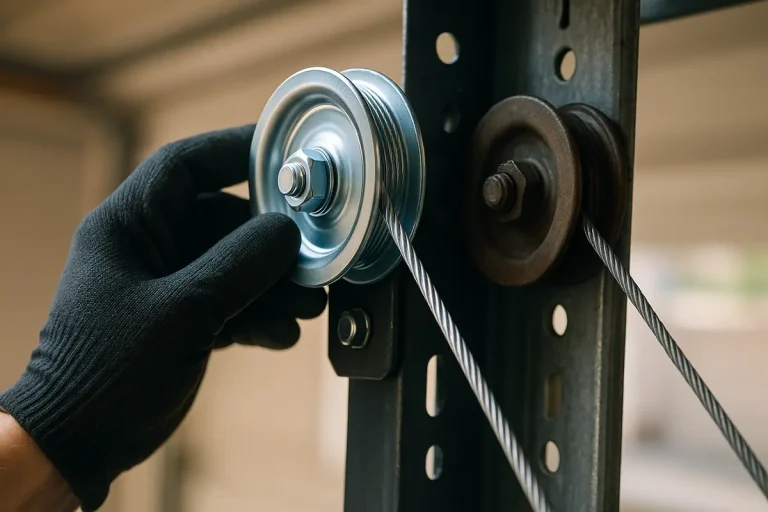





Extension Spring Safety Cables: Why Every Door Needs Them
Published: Nov 7, 2026
When evaluating garage door safety, homeowners frequently face a common dilemma: is an extension spring safety cable an absolute necessity, or is it just an optional repair upsell?
If your garage door relies on extension springs, the answer is clear. Safety cables are not an accessory—they are a critical containment system designed to prevent catastrophic structural damage and severe injury. Understanding the mechanics, building codes, and hardware options will empower you to make a secure and compliant decision for your home.
The Anatomy of a Hidden Hazard
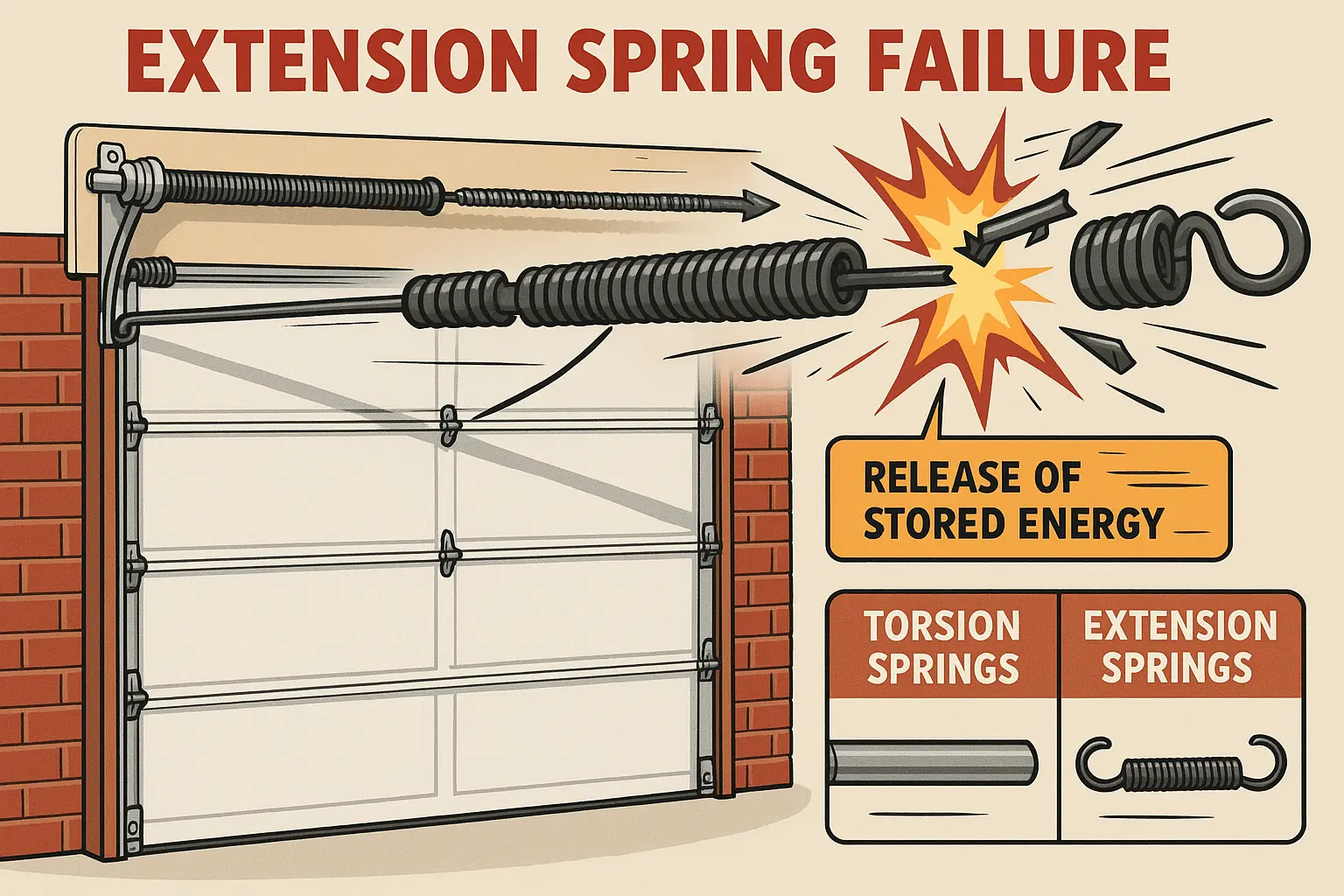
Unlike torsion systems that are mounted and contained on a solid steel shaft, extension springs are suspended in mid-air along the horizontal tracks. When your garage door is fully closed, these springs stretch to their maximum limit, storing a massive amount of mechanical energy.
A standard residential spring holds between 120 and 200 pounds of tension. If a broken garage door spring snaps, this accumulated energy releases in less than 0.1 seconds. This transformation of potential energy launches jagged, heavy steel fragments at speeds exceeding 100 mph (160 km/h). Without a physical containment barrier, this metal projectile can easily tear through drywall, shatter car windshields, or cause severe physical trauma to anyone nearby.
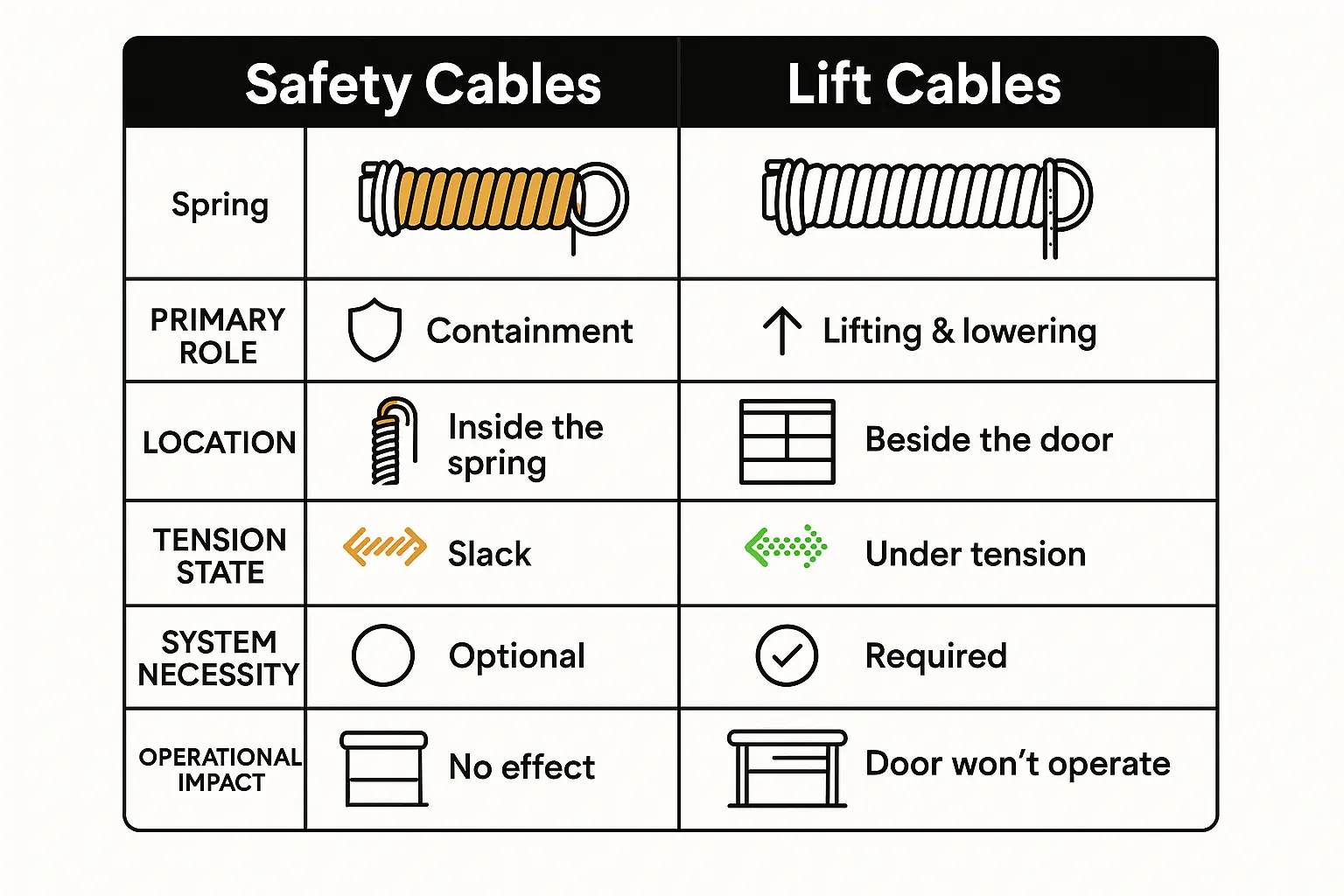
Understanding how your system functions is the first step toward safety. If you are comparing configurations, you can learn more about how they differ in our detailed guide on torsion spring vs extension spring mechanisms.
Terminological Decryption: Safety Cables vs. Lift Cables
A primary point of confusion for homeowners is distinguishing between the two types of cables used in a garage door assembly. Many assume that because their door has lift cables, it is already protected.
To clarify this confusion, consider this structural comparison:
| Metric | Safety Cable (Containment) | Lift Cable (Power Transmitter) |
|---|---|---|
| Primary Role | Catches and contains a broken, snapping spring. | Transmits spring tension to physically raise/lower the door. |
| Location | Threads directly through the hollow center of the spring. | Runs along the outside edges of the door track to the bottom fixture. |
| Tension State | Sits completely slack during normal door operation. | Remains under extreme, continuous tension at all times. |
Understanding this difference is critical when addressing a frayed garage door cable or performing a complete garage door cable replacement.
National Building Codes and Insurance Compliance
Safety cables are not just recommended by technicians—they are legally mandated under strict industry safety guidelines:
- ANSI/DASMA 103-2017: This standard requires all residential sectional overhead garage doors using extension springs to feature a tested containment device.
- International Residential Code (IRC) Section R309: This code specifies that all residential garage door installations with extension springs must utilize containment systems.
Omitting these safety cables can lead to serious legal and financial liabilities. Homes lacking proper containment systems regularly fail standard real estate inspections. Furthermore, ignoring a known hazard can complicate a garage door insurance claim if uncontained parts cause structural property damage.
Hardware Specifications Blueprint
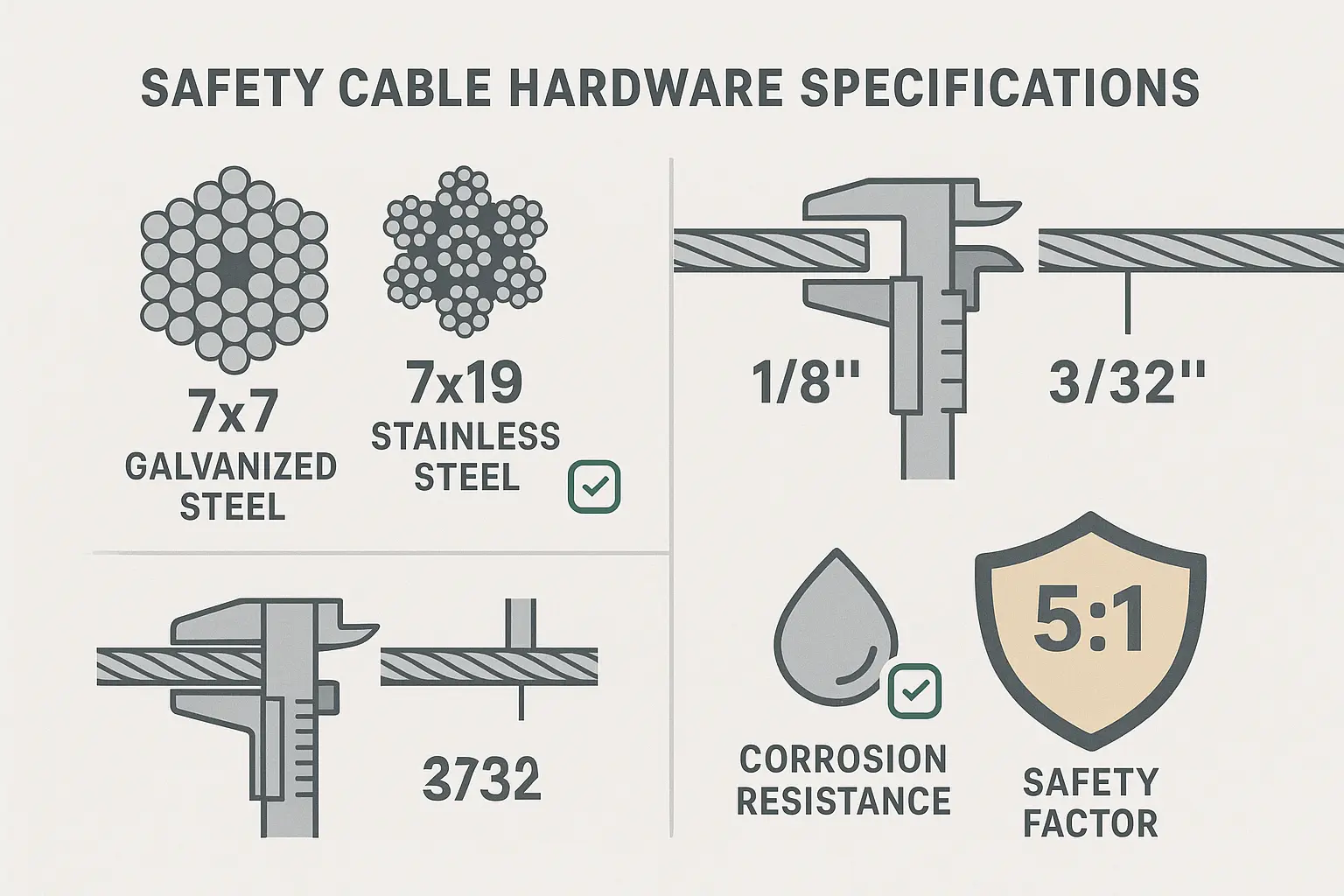
Selecting the correct materials ensures your safety cable can successfully absorb a high-velocity failure. Look for the following engineering-grade specifications:
- Metallurgy: Marine-grade 304 Stainless Steel offers superior rust resistance in humid garages, while Hot-Dipped Galvanized Carbon Steel provides maximum tensile strength and cost efficiency.
- Weave/Strand: A 7×7 aircraft cable (seven bundles of seven wires) balances durability and flexibility. Larger doors benefit from ultra-flexible 7×19 configurations.
- Thickness: Insist on a minimum thickness of 1/8-inch (0.125″) or 3/32-inch (0.093″).
- Safety Factor: Select assemblies rated with a 5:1 safety factor relative to your door’s weight.
Evaluating DIY vs. Professional Installation
While DIY kits are inexpensive, replacing or installing safety cables requires working near high-tension systems. If you choose to inspect or install these cables yourself, always secure the door in its fully open position to relieve spring tension.
If you are uncomfortable handling high-tension components, searching for a qualified expert to replace garage door spring near me ensures safe and compliant alignment. Incorporating safety cable installation during routine garage door spring maintenance is a cost-effective way to secure your garage without extra service fees. Use a thorough garage door safety checklist to audit other structural components simultaneously.
Frequently Asked Questions
What happens if an extension spring breaks without a safety cable?
Without a safety cable, the broken spring acts as an uncontrolled projectile. It can puncture walls, damage vehicles, shatter glass, or cause severe bodily harm.
Are safety cables required by the International Residential Code?
Yes, under IRC Section R309, residential garage door installations with extension springs must feature an approved containment system to pass structural inspections.
How do safety cables differ from lift cables?
Lift cables are under continuous tension and physically raise the door. Safety cables remain slack and only engage to catch the spring if it fractures.
Protect your garage, home, and family from sudden spring failures. Let the experienced, licensed technicians at Up & Down Garage Doors install your safety containment system today. Reach out for transparent pricing and dependable 24/7 emergency services.
You May Also Like