





Navigating the Garage Door Insurance Claim Process: A Step-by-Step Guide
Published: Sep 4, 2026
When a vehicle backs into your garage door or severe weather strikes, panic is often followed by a complex question: Will my insurance cover this, and is it worth filing a claim?
Understanding how to navigate the insurance claim process can save you thousands of dollars. As a homeowner, you need to weigh repair costs, policy deductibles, and future premium hikes before making your move. This guide breaks down the claim journey, giving you the technical and financial leverage to make an informed decision.
The Immediate Triage: Is Your Garage Door Safe?
Before snapping photos or calling your agent, address immediate safety. A damaged door can weigh hundreds of pounds and remains under extreme tension.
First, conduct basic safety checks. Look for frayed cables, twisted tracks, or a broken spring. If you notice structural issues, do not attempt to operate the door. If you suspect a snapped spring, learn how to tell if your garage door spring is broken to avoid serious injury.
If the door is hanging precariously, you may need to know how to put garage door back on track or call for professional help. For immediate security risks, utilize a 24/7 emergency garage door service to secure your home.
Step-by-Step: The Garage Door Insurance Claim Roadmap
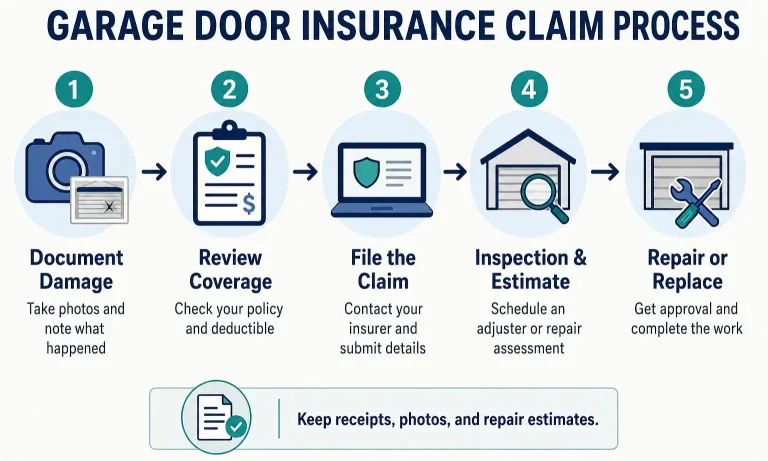
Navigating a property claim requires strict chronological execution.
1. Document the Damage: Take high-resolution photos and videos from multiple angles. Focus on panel alignment, tracks, hinges, and structural attachments.
2. Determine Coverage Type: If the door is attached to your home, it falls under Coverage A (Dwelling). If it is on a detached garage, it falls under Coverage B (Other Structures).
3. Get an Independent Repair Estimate: Always secure a professional quote before contacting your insurer. You need to know if you are looking at a simple fix or a complete garage door installation.
4. File the Claim: Present your photos and independent estimate to your agent. Use precise terms like garage door storm damage if weather was the cause.
5. Prepare for the Adjuster: Provide them with your independent technician’s written diagnostic report to prevent underpayment.
The "Secret Weapon": Discontinued Panels & State Matching Laws
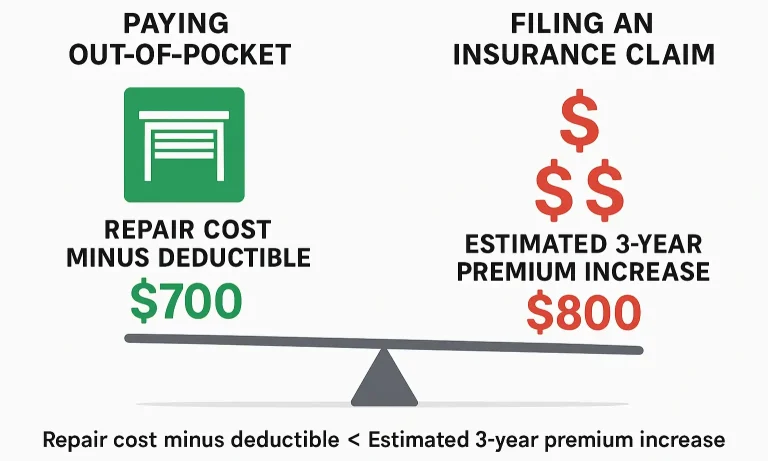
If only one panel is damaged, insurers will try to pay for a single panel replacement. However, if your door is older, finding matching garage door replacement panels might be impossible.
This is where “Line of Sight” and Uniformity regulations protect you. In states like Florida, Ohio, Minnesota, and Kentucky, insurers are legally prohibited from leaving you with an aesthetically mismatched exterior. If a matching panel is discontinued, the insurance company must pay to replace the entire garage door system to maintain uniform curb appeal.
Complex Scenarios: Tenant Damage & Vehicle Collisions
Who pays when things get complicated?
• Your Car vs. Your Door: Your auto insurance policy will not cover the door due to first-party property exclusions. However, your homeowners insurance policy will cover the door (subject to your deductible), while your auto policy covers the vehicle damage.
• Tenant Damage: If a tenant damages the door, your landlord’s homeowners policy covers the physical repairs, but your insurance carrier will likely pursue subrogation against the tenant’s renters or auto insurance to recoup the payout.
• Hit-and-Runs: If a third party hits your door and flees, file a police report. This allows the claim to be categorized under vandalism or property damage, preventing negative rating hikes on your policy in many jurisdictions.
Frequently Asked Questions
Does homeowners insurance cover broken garage door springs?
Generally, no. Standard wear and tear or aging is not covered. However, if a covered peril—such as lightning or a falling tree limb—directly snaps your spring, the repair is covered.
Will my home warranty cover my garage door?
No. Home warranties typically cover home appliances and mechanical systems like HVAC and plumbing. Structural items, including garage doors, panels, and tracks, are excluded.
What is the difference between ACV and RCV in a claim?
Actual Cash Value (ACV) pays out the replacement cost minus depreciation. Replacement Cost Value (RCV) pays the actual market price to buy and install a new door today without deducting for age.
Your Next Steps
Navigating an insurance claim doesn’t have to be overwhelming. If your garage door has sustained damage, contact Up & Down Garage Doors today. Our certified technicians will provide a detailed, transparent, and code-compliant repair estimate that you can confidently hand to your insurance adjuster. Let us help you restore your home’s security and curb appeal seamlessly.
You May Also Like

My Garage Door Opens and Closes By Itself: An Emergency Guide
It’s a feeling that can send a shiver down your spine. You’re sure you closed the garage door when you left, but you come home to find it wide open. Or worse, you hear it creaking open on its own in the middle of the…
Published Date: Jul 21, 2026
Your Garage Door Is Stuck Halfway: An Emergency Action Plan
There’s a unique, sinking feeling that comes with the sound of your garage door grinding to a halt midway. It’s more than just an inconvenience; it’s a sudden breach in your home’s security and a potential safety…
Published Date: Jul 20, 2026
Engineering the Threshold: Guide to Emergency Service Garage Door Applications
For station chiefs, municipal architects, and facility managers, specifying a commercial door is not merely an aesthetic choice. It is a critical operational decision balancing rapid emergency response, facility…
Published Date: Jul 14, 2026